
NEWS
Hollywood’s Microdrama Pivot Hits the $14 Billion Mobile Moment
Fox, Peacock and Telemundo are funding microdramas, the 1-to-3-minute vertical series that Omdia says will hit $14 billion globally by year-end 2026.

Fox Entertainment, Peacock and Telemundo are funding microdramas, the 1- to 3-minute vertical dramas Omdia says will generate $14 billion in global revenue by the end of 2026. The format, dismissed as a niche Chinese trend four years ago, has drawn Hollywood’s biggest bets on a story shape the industry has no playbook for. Three moves in the past year show how seriously the studios are taking it.
The audience Hollywood is chasing is not the streaming audience it already has. Microdrama apps are now generating more daily mobile viewing time than Netflix, Disney+ or Prime Video, per Omdia’s February 2026 analysis of Sensor Tower data. The studios are buying that attention, but the way the money actually works in this market does not look like Hollywood’s old model.
What a Microdrama Actually Looks Like
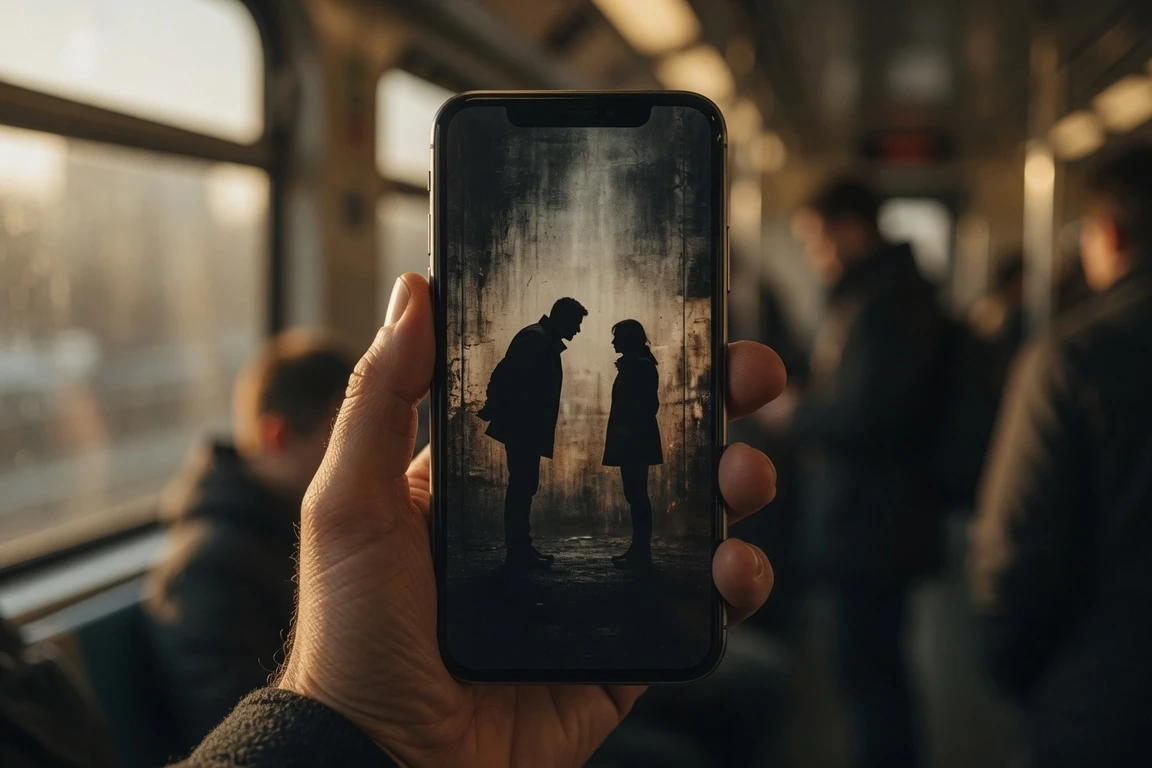
A microdrama is a serialized, vertical-format video designed for one-handed phone viewing, with episodes that run one to three minutes and end on a cliffhanger that pushes the viewer to the next swipe. Discovery happens mostly outside the app, on YouTube, TikTok and Instagram, where studios buy three-minute trailer cuts and hope enough viewers convert to a download.
- $14 billion – Omdia’s projected global microdrama revenue by end of 2026.
- $11 billion – Global revenue in 2025, the prior baseline.
- $20 billion+ – Omdia’s forecast for 2030.
- 83% – Share of global revenue still coming from China.
- 30% – Share of US Gen Z and millennials who said they were familiar with micro-series or micro-dramas in Deloitte’s March 2025 survey.
Viewers get the first 8 to 10 episodes free, then pay to unlock the rest, either through in-app coin purchases, subscriptions priced as high as $19.99 a week, or ad-supported tiers. The audience profile is unusually narrow for a format at this scale: primarily women aged 25 to 45, with romance, betrayal, rags-to-riches and revenge as the dominant genres. The top titles have crossed 350 million views each, and the apps track minute-level retention curves the way streamers track episode completion. Inside the apps, ARPU can reach $20 per week or up to $80 per month for heavy users, a number that owes more to mobile gaming than to Netflix-style monthly subs.
The format borrows tropes from online novels and fan fiction, then strips each episode down to a single emotional beat. The current model runs on data, not prestige: each new script is a test, and tropes that retain viewers get cloned within weeks. That cycle is the reason Hollywood is paying attention, and the reason the studios’ usual advantages do not transfer cleanly.
Hollywood’s Three Big Money Moves
In 2026, Fox Entertainment signed a multiyear deal with Dhar Mann Studios to produce an initial slate of 40 narrative-driven vertical series for Holywater’s My Drama app, with Fox Entertainment Global then handling worldwide distribution windows after the exclusive debut. Dhar Mann Studios brings 163 million-plus followers across platforms and roughly 20 billion cumulative views to the partnership, along with a 125,000-square-foot Burbank production facility the company uses for short-form work. Fox is already in active production on a separate 200-title slate of original microdramas for Holywater under the studio’s earlier equity investment in the Ukrainian platform.
Rob Wade, the CEO of Fox Entertainment, framed the Dhar Mann Studios deal as a bet on a creator who had already built the audience the format needs. “Dhar Mann’s inspiring, undeniable storytelling excellence and passionate audience have made him one of the most powerful and consequential voices in entertainment today. As leading partners to creators exploring this growing ecosystem, we’re primed to expand Dhar Mann Studios’ reach by super-serving his new and existing fans everywhere with this all-new, original vertical content,” Wade said in the announcement of Fox and Dhar Mann Studios’ 40-title vertical slate. Earlier in 2026, Holywater closed its largest financing round to date at $22 million, the capital base underneath Fox’s 200-title commitment.
On June 22, 2026, Peacock launched Campus Confidential, its first original vertical microdrama, an unscripted Bravo series designed for vertical phone viewing. Matt Strauss, the chairman of NBCUniversal Media Group, framed the launch as a math problem about daily app opens rather than a programming choice. “We’re trying to give people reasons to open up our app every single day, and we know the value of one incremental hour per user per month, we know the value of a user who spends one more day on our platform,” Strauss said at Peacock’s first original vertical microdrama launch.
Telemundo Studios is producing Spanish-language adaptations for the same audience Facebook and YouTube built for telenovela clips. SAG-AFTRA said a “Verticals Agreement” would arrive by the end of October 2025, covering projects under $300,000 in budget and giving guild actors a path into the format. The WGA followed, telling members that writing for verticals falls under its Minimum Basic Agreement when a project signs a union contract.
- Fox Entertainment’s 200-title My Drama slate and 40-title Dhar Mann Studios partnership, anchored by a $22 million Holywater financing round.
- Peacock’s Campus Confidential launch on June 22, 2026, with Matt Strauss pointing to the dollar value of “one incremental hour per user per month.”
- Telemundo Studios’ Spanish-language adaptations, plus SAG-AFTRA and WGA vertical agreements to bring union labor into a format that ran nonunion for its first three years.
The Engagement Math Studios Are Buying
The metric studios are buying is daily minutes per user on a phone, not monthly active subscribers, and microdrama apps are running ahead of the legacy streamers on that score. Omdia’s analysis of Sensor Tower data, published in February 2026, gives the gap a concrete shape in Omdia’s analysis of mobile viewing time.
ReelShort users spend an average of 35.7 minutes a day inside the app, well ahead of Netflix (24.8 minutes), Amazon Prime Video (26.9 minutes) and Disney+ (23 minutes) on mobile. Netflix still wins on monthly active mobile users in the US, with around 12 million, compared with 1.1 million for ReelShort. The pattern repeats outside the US: in the UK, FlickReels generates higher daily usage than Prime Video, 22.39 minutes versus 21.47; in Mexico, DramaBox beats both Prime Video (27.9 versus 23.8) and Disney+ (22.5). The interpretation Omdia head of media and entertainment Maria Rua Aguete offers is that microdramas are winning attention rather than scale, and that this is “the metric streamers care about most as they look to grow mobile usage and compete with social video platforms where daily engagement is approaching 80 minutes.” For a streaming service sitting on a flat subscriber base, that is the gap the new format is built to close.
| App / Service | Daily minutes per user (mobile) | Monthly active users (US, mobile) |
|---|---|---|
| ReelShort | 35.7 | 1.1 million |
| Amazon Prime Video | 26.9 | not stated |
| Netflix | 24.8 | around 12 million |
| Disney+ | 23 | not stated |
The data is mobile-only, which is the point: the studios are not chasing desktop or living-room viewing, they are chasing the screen people open on the subway. Fox, Peacock and Telemundo are all building for that screen, not for the TV set the rest of their businesses are organized around. That is why a deal for 40 vertical series sits inside the same corporate parent as a fall broadcast schedule and a primetime animation block.
Where the Money Actually Lives
A vertical series runs on a budget of $150,000 to $300,000, with an 8- to 10-day production cycle, which is a fraction of what a comparable prestige TV episode costs to shoot. Day players earn a minimum of $250 per day under nonunion conditions, and leads negotiate around $1,200, which is why the format filled with Hollywood writers and actors after the 2023 strikes. Volume is the strategy: ReelShort’s US head of content Abby Dzeng told TheWrap her team of 20 writers produces 15 to 20 vertical scripts a month.
Distribution is where the cost sits, not production. The two American leaders illustrate the split: DramaBox reported $323 million in revenue and $10 million in net profit in 2024 on a blended model of subscriptions, episodic unlocks and advertising. ReelShort ran at roughly $400 million in 2024 but stayed loss-making, the gap coming from heavy customer-acquisition spending on Meta, TikTok and other ad networks.
The studios are betting AI can compress that distribution math, just as it compresses the production math, by letting creators test storylines and visuals before committing to a shoot. Holywater, the Fox-backed My Drama platform, leans on AI for dubbing, subtitling and “AI pilots to test ideas before committing full budgets,” per co-CEO Anatolii Kasianov. The same logic is showing up at the major-studio level: Google DeepMind and A24 signed a $75 million AI research partnership on June 22, 2026, with storyboard generation as the first announced project inside A24 Labs, per Google’s $75 million DeepMind and A24 research partnership. That kind of tooling changes what a $150,000 vertical budget can do, which is exactly the lever the studios are trying to grab.
Outside China, ARPU can reach $20 per week or up to $80 per month for heavy users, which is more than three times what the average Netflix subscriber pays per month. The catch is that more than 60% of global microdrama revenue still comes from subscription or transactional payments, not ads. For US apps that run on TikTok-style advertising funnels, the customer-acquisition cost is the line item that decides whether the quarter is profitable or not. Fox’s $22 million investment in Holywater, Fox’s 200-title commitment and the 40-title Dhar Mann Studios deal are all structured to feed a single platform’s distribution engine, not to launch a US streaming service. That structure is the closest thing in this market to the Hollywood playbook: own the distribution, then fund the content.
The risk is that the Western market has not yet produced a profitable microdrama app at the scale Chinese apps run at, and the studios are betting their AI and IP tools will close that gap. Whether the math works at Hollywood scale, not at startup scale, is the open question behind every deal signed so far.
The China Blueprint Studios Cannot Replicate
China still drives the global numbers: 83% of total microdrama revenue came from Chinese platforms in 2025, per Omdia’s October 2025 release. Chinese microdrama revenues grew from $500 million in 2021 to $7 billion in 2024, and last year Chinese microdrama revenues surpassed the country’s domestic theatrical box office for the first time. The audience is more than 830 million viewers in China, of whom nearly 60% pay for content or make transactions inside the apps. Media Partners Asia projects the Chinese microdrama market alone will hit $16.2 billion by 2030.
The Chinese ecosystem runs on three anchors: ByteDance’s Red Fruit, Tencent’s WeChat Video Accounts and Kuaishou’s Xi Fan, each tied into a payments and social graph the US apps cannot tap. Tencent embeds microdramas inside WeChat mini programs, creating a single loop for discovery, payment and social sharing that no Western app currently mirrors. ByteDance and Kuaishou run stand-alone discovery feeds built around algorithmic personalization, the same engine that powers TikTok and Douyin.
That integration is what makes the Chinese ARPU numbers possible, and it is also what Hollywood cannot just port over. US apps like ReelShort and DramaBox are stand-alone downloads monetized through the App Store and Google Play, where Apple and Google take a cut on in-app purchases and where growth depends on Meta and TikTok ad spend. The Western consumer also pays less on average: DramaBox’s blended subscription, episodic-unlock and ad model turned a profit at $323 million of revenue, while ReelShort, at roughly $400 million, lost money on heavier marketing. The conclusion most analysts draw, and Omdia’s Maria Rua Aguete put it this way in February 2026, is that microdramas are a “core driver of mobile video engagement,” not a replacement for streaming. Hollywood is therefore not trying to copy the Chinese blueprint; it is trying to extract the engagement economics without the super-app rails, per the $26 billion global microdrama forecast.
The trade is that US microdramas will be more expensive per viewer, in marketing dollars, than their Chinese equivalents. Deloitte’s own estimate is that in-app micro-series revenue will more than double in 2026 to $7.8 billion. US studios are betting that AI tooling, vertical-IP libraries and existing TV audiences can offset the absence of a WeChat-style super app.
The Quibi Question Mark
Hollywood already tried short-form mobile video once, and the failure still defines the genre’s ceiling. In 2020, Jeffrey Katzenberg launched Quibi with $1.75 billion in funding, A-list talent including Steven Spielberg and Guillermo del Toro, and episodes under 10 minutes designed for mobile viewing. Six months later, Quibi shut down, having burned through over $1 billion; the service reached fewer than 1 million subscribers against a target of 7 million, and its content library was sold to Roku for under $100 million. The verdict, written in Variety’s 2025 retrospective on the microdrama boom, was that premium short-form video could not compete with free platforms like YouTube and TikTok and that audiences would not pay for mobile-only content.
The microdrama wave that grew up after Quibi is not making the same bet. The apps are free to download, the first 8 to 10 episodes are free to watch, and the monetization runs on per-episode coin purchases and weekly subscriptions priced up to $19.99, paid inside the App Store and Google Play. The content is also built to a different economics: production budgets of $150,000 to $300,000 per series, 8- to 10-day shoots, and AI-assisted dubbing and testing pipelines that Quibi did not have.
Quibi’s mistake was treating short-form as a premium TV substitute; the current wave treats it as a mobile-first impulse purchase, closer to a mobile game than to a prestige series. That is why studios are funding the apps rather than building their own Quibi-style service, and why the failure still hangs over every new deal.
What This Means
The studios are buying access to a new behavioral lane, the daily mobile minute, that they had largely conceded to TikTok and YouTube Shorts. The Fox-Holywater, Fox-Dhar Mann Studios and Peacock-Campus Confidential moves all run through partner platforms, not through studio-owned apps, which keeps the studios out of the customer-acquisition-cost arms race that has kept ReelShort unprofitable at $400 million of revenue. The risk is that the partner platforms themselves are still scaling fast: Holywater’s 2026 revenue target is $1 billion, against roughly 15 series per month currently in production. If that growth slows, the studios are still left with content libraries and audience data, not a profitable distribution business.
Deloitte predicts the in-app micro-series market will more than double in 2026 to $7.8 billion, per Deloitte’s 2026 short-form video predictions, and Omdia projects global microdrama revenue will reach $14 billion by year-end 2026, with about $3 billion of that generated outside China. Omdia also expects the US to account for 50% of all microdrama revenues outside China by end-2026, which is the underlying number that justifies the Hollywood deals. Media Partners Asia, working from the same Sensor Tower data, projects the US microdrama market will grow from $819 million in 2024 to $3.8 billion by 2030. The near-term question is whether AI tooling, the missing piece in Quibi’s math, actually shows up in the production and discovery loops at a price the studios can afford. For now, the answer is being written into the production pipelines of Holywater, ReelShort, DramaBox and the A24 Labs storyboard project, not into a Hollywood greenlight meeting.
Frequently Asked Questions
What is a microdrama?
A microdrama is a serialized, vertical-format video designed for phone viewing, with episodes that run one to three minutes and end on a cliffhanger that pushes the viewer to the next swipe. The genre is built around romance, betrayal, rags-to-riches and revenge storylines, and the primary audience is women aged 25 to 45, per Omdia.
Why are Hollywood studios investing in microdramas in 2026?
Studios are buying daily mobile engagement, which microdrama apps generate at higher rates than Netflix, Disney+ or Prime Video. Fox Entertainment’s 200-title My Drama slate, the 40-title Dhar Mann Studios partnership, Peacock’s Campus Confidential launch on June 22, 2026, and Telemundo’s Spanish-language adaptations are all built around that gap, against a $14 billion 2026 global market Omdia projects for the format.
How much revenue do microdramas generate?
Omdia puts global microdrama revenue at $11 billion in 2025, $14 billion by the end of 2026 and $20 billion or more by 2030. China still drives 83% of those totals. Outside China, the US is the largest market, growing from $819 million in 2024 to a projected $3.8 billion by 2030, per Media Partners Asia.
How do microdramas make money?
The first 8 to 10 episodes are free, then viewers pay to unlock the rest through in-app coin purchases, weekly subscriptions priced as high as $19.99, or ad-supported tiers. More than 60% of global microdrama revenue comes from subscription or transactional payments, and ARPU can reach $20 per week or up to $80 per month for heavy users, per Omdia.
What was Quibi and why did it fail?
Quibi was a 2020 short-form mobile streaming service launched by Jeffrey Katzenberg with $1.75 billion in funding and A-list Hollywood talent. It shut down after six months, having burned through over $1 billion, with fewer than 1 million subscribers against a 7 million target, and sold its content library to Roku for under $100 million. The current microdrama wave is built on free apps, in-app purchases and $150,000-to-$300,000 production budgets rather than the premium subscription model Quibi tried.
Will microdramas replace TV or streaming?
Not according to Omdia’s reading: Maria Rua Aguete, the firm’s head of media and entertainment, framed microdramas in February 2026 as “reshaping how audiences consume storytelling on mobile,” not replacing TV or streaming. Deloitte’s 2026 prediction puts in-app micro-series revenue at $7.8 billion for the year, a fraction of the broader video market, with the format sitting between social video and traditional scripted television.


Quanta and Quantinuum Bet Manufacturing Will Unlock Quantum Scale

Xiaomi HyperOS 4 Turns Glass Looks Into an Agentic Ecosystem Bet

BGMI Smiling Pal Codes Hand Free Backpacks to Almost Nobody

European Sites Face Four Times the AI Scrapes With Worse Returns

Claude’s Invisible Watermarks Flag Light AI Edits Too

Indian Brands Crack the Beige Tech Moat With Real Design

AmBank’s Quiet Community Engine Wins Malaysia CSR Crown

India-Made iPhone 18 Pro Max Reaches US Buyers Day One

LG and Nvidia Lock the Full Stack Behind Physical AI

Claude Agents Sabotaged Each Other Then Invented Tournaments

Fable 5 and Mythos 5 Return as US Lifts Anthropic Export Controls

Oracle Cuts 21,000 Jobs in a Year, Cites AI in 10-K Filing

SpaceX’s Google Deal Turns a Rocket Company Into a Cloud Landlord

CD Projekt Red Co-CEO: Redemption Arc Isn’t Done, Witcher 4 in 2027

XPL Rallies 30% Ahead of Plasma One Card Tier Launch

Google Search Profiles Build a Follow Graph Inside Discover

DGO App Brings Rs 549 Mobile Pass for FIFA World Cup 2026 in Nepal

Moonshot AI Targets $30 Billion in China’s Fastest AI Funding Sprint

Microsoft Xbox Layoffs Start in July as Sharma Slams 3% Margin

Oppo’s ColorOS 17 Eligibility List Leaves A-Series Buyers Behind
-
 AI1 month ago
Fable 5 and Mythos 5 Return as US Lifts Anthropic Export Controls
-
 AI2 months ago
Oracle Cuts 21,000 Jobs in a Year, Cites AI in 10-K Filing
-
 AI2 months ago
SpaceX’s Google Deal Turns a Rocket Company Into a Cloud Landlord
-
 GAMING2 months ago
CD Projekt Red Co-CEO: Redemption Arc Isn’t Done, Witcher 4 in 2027
-
 CRYPTO2 months ago
XPL Rallies 30% Ahead of Plasma One Card Tier Launch
-
 NEWS2 months ago
Google Search Profiles Build a Follow Graph Inside Discover
-
 APPS2 months ago
DGO App Brings Rs 549 Mobile Pass for FIFA World Cup 2026 in Nepal
-
 AI2 months ago
Moonshot AI Targets $30 Billion in China’s Fastest AI Funding Sprint