
AI
Samsung’s Personal AI Bet Lands at Galaxy Unpacked on July 22
Samsung CEO TM Roh argues personal AI will beat raw intelligence. Galaxy Unpacked on July 22 in London will show whether the lineup can prove it.

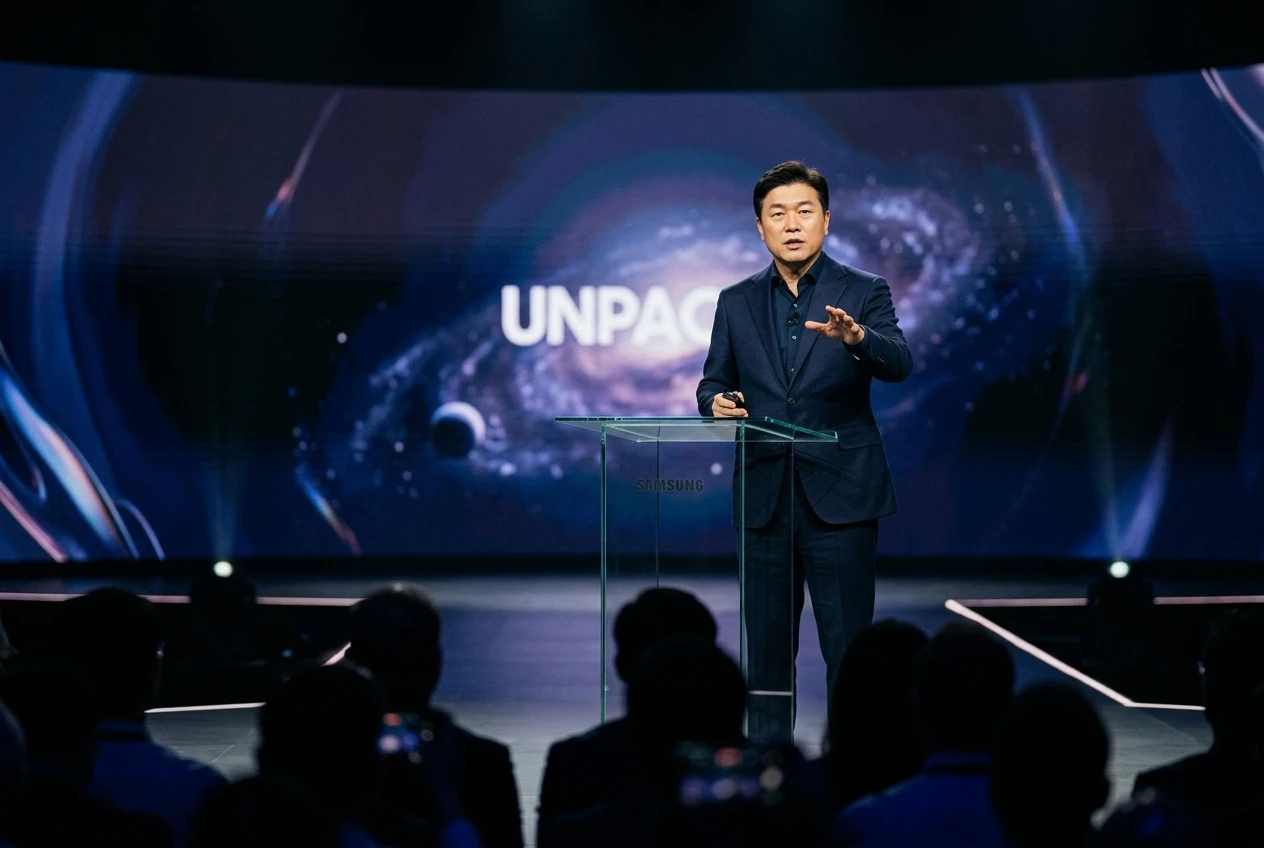
Samsung Electronics CEO TM Roh published an editorial on Wednesday arguing that the company which understands its users best will define the next AI era, not the one with the smartest model. The piece lands 14 days before the company’s summer hardware showcase, Galaxy Unpacked, scheduled for July 22 in London. The lineup Samsung stages on that stage will be the first live test of whether the wager holds.
Both Samsung and Apple now describe the AI edge in nearly identical words. Roh frames Galaxy AI as personal and trustworthy, built around the user. Apple’s June 8 unveiling of its next-generation Apple Intelligence frames “truly helpful AI” as grounded in “personal context” and built with privacy at every step. The phrasing lands within weeks of Roh’s editorial. The race to ship that idea as a device is what July 22 is really about.
The Bet Stated Plainly
The editorial was published today on Samsung’s US newsroom and on the Wall Street Journal’s paid-program section, bylined by TM Roh as CEO and President of Samsung Electronics. The framing is a paid program, so the wager is on the record with attribution. Roh writes as the head of the company, not as an analyst watching it.
Roh reaches for four historical analogies in his opening. Electricity changed society not with power plants but when a switch appeared in homes. The internet became ours through the browser. The phone became powerful through the ecosystem of apps that grew on top of it. AI, he argues, will follow the same pattern: the breakthrough is not raw intelligence, it is the moment intelligence reaches into daily life.
From there the wager lands in a single sentence. “The question that opens the next era is not who has the smartest AI, but who understands people best, and turns that understanding into experiences they can trust.” That sentence is the spine of the editorial and the spine of the July 22 event. Read TM Roh’s full personal AI editorial in full to see the argument behind it.
Where Intelligence Meets the User
The argument hinges on a phrase Roh repeats throughout the piece. The next chapter of AI will be defined by where, how, and into whose hands the intelligence reaches. The closest, most frequent contact with the user wins the trust build. From that premise the editorial names six entry points where Galaxy devices sit in a person’s day.
Phone, tablet, watch, TV and home appliances, foldables, and intelligent eyewear. Each carries a different signal into the same on-device picture. The phone is closest to the user and with them daily. The tablet is where work and learning concentrate. The watch reads signals like sleep and heart rate through the day and night. The TV and connected home appliances add ambient context. Foldables reshape how a task fits on a screen. Intelligent eyewear expands where AI meets the user into first-person visual context. Samsung’s claimed entry points map as follows:
| Device | Where it sits in your day | What it adds to the AI’s picture of you |
|---|---|---|
| Phone | “closest to us, with us daily” | The most frequent, always-on signal source |
| Tablet | “where we create and learn” | Long-form work and study surface |
| Watch | reads “signals like sleep and heart rate” | Continuous biometric context |
| TV and connected home appliances | “add context from where we live” | Ambient environment |
| Foldables | “fold into your hand or open a larger stage” | Task-shape awareness as the screen reshapes |
| Intelligent eyewear | “expand where AI meets us” | First-person visual context |
Underneath the entry points sits the on-device Personal Data Engine inside One UI 8, Samsung’s Android interface layer. The engine learns from user preferences locally rather than shipping the signals to the cloud. Knox Enhanced Encrypted Protection isolates information inside the app where it is used. The personalization pitch rests on the claim that what the AI knows about the user never leaves the device.
Openness is the framing Samsung offers as the counterweight to a closed-walled-garden approach. SmartThings brought devices, services, and partners into one connected experience built around industry open standards, the editorial notes. The platform that changed the world, Roh argues, was the most open. That is the antitrust-shaped defense Samsung leans on as Apple enters the same idea with a tighter grip on its own stack.
The Knox Floor Under the Wager
The wager has a precondition. The user has to believe the understanding is safe. Roh names the foundation in the next paragraph: Samsung Knox. The wager cannot stand on personalization alone if personalization feels exposed.
Knox now protects each Galaxy device and the connections between them. As intelligence moves across devices, the editorial argues, protecting what flows between them is crucial. The most personal data stays on the device so people can understand how AI is working and remain in control. That is the on-device claim Samsung has staked the personalization pitch on, and it is the one that has to ship with the hardware on July 22. The wager, then, is not a slogan. It is a contract about where the data sits and who can see it.
The question that opens the next era is not who has the smartest AI, but who understands people best, and turns that understanding into experiences they can trust.
That sentence comes from TM Roh, CEO and President of Samsung Electronics, in the editorial published today on Samsung Newsroom and on the Wall Street Journal’s paid-program section.
What Lands in London on July 22
The event Samsung will use to test the wager runs on July 22 in London, with the livestream beginning at 2 p.m. BST, 9 a.m. EDT, and 3 p.m. CEST on Samsung.com, the newsroom, and Samsung’s YouTube channel. The company is holding its first summer Unpacked in London, a venue choice that puts Samsung roughly two months ahead of Apple’s expected fall announcement of its first foldable iPhone. See the official Unpacked July 22 invitation for the live stream details and reservation terms.
Samsung confirmed the date on Tuesday after months of leaks. The slate is unusually broad for a single Samsung event. Three foldables, two watches, and the first commercial Galaxy Glasses are expected to share the stage.
The foldable slate includes the Galaxy Z Fold 8 Ultra, the direct successor to last year’s Galaxy Z Fold 7. Samsung is reportedly holding the base 256GB model at $1,999, matching the Fold 7’s original 2025 launch price. Higher tiers absorb component cost pressure: leaked pricing puts the 512GB model at $2,199 and the 1TB configuration at $2,499. Beside it sits the new Galaxy Z Fold 8 Wide, a book-style foldable that unfolds into a 7.6-inch display at a 4:3 aspect ratio, closer to a small landscape tablet than any previous Galaxy Fold. When folded, the Wide sits shorter and wider than the standard Fold, with a 5.4-inch cover screen and roughly 200 grams of weight. Samsung has reportedly raised production targets for the Wide to match those of the standard Fold 8 Ultra, a supply-chain signal that the company does not view this as a niche experiment. The clamshell Galaxy Z Flip 8 is the one 2026 Samsung foldable running the Exynos 2600, Samsung’s own 2nm silicon, while both Fold models use Qualcomm. Five figures worth knowing:
- $1,999 – Expected base price Samsung is holding for the Galaxy Z Fold 8 Ultra, matching the Fold 7’s 2025 launch price
- 25% – Samsung’s global foldable share in Q1 2026, up from 14% a year earlier (Android Headlines, citing SAG data)
- 40% – Huawei’s share of the foldable market in Q1 2026, down from 54% year over year
- 89% – Quarter-over-quarter surge in LPDDR5X 12GB mobile DRAM prices in Q2 2026, per SigmaIntel
- 130% – Gartner’s projected year-end 2026 surge in combined DRAM and SSD prices, what it calls “memflation”
Beyond the phones, the lineup includes the Galaxy Watch 9 series and the commercial debut of Galaxy Glasses, co-designed with premium eyewear brand Gentle Monster and running Google’s Android XR platform with Gemini built in. Speakers handle audio output, microphones capture voice, a single camera handles first-person photography, and there is no heads-up display element. The hardware profile mirrors Meta’s Ray-Ban smart glasses closely, with the Gentle Monster design partnership adding credibility to the fashion positioning.
The lineup physically stages the wager. The Fold 8 Wide is the most consequential device on the stage because its 4:3 geometry is reportedly aimed at users Samsung expects to compare it directly against Apple’s anticipated first foldable, which multiple supply-chain reports place at a September 2026 announcement above $2,000. The Apple’s September 2026 foldable iPhone launch sets the benchmark the Wide is designed to face first.
The Three Forces Pulling the Other Way
The first force is Apple, which on June 8 unveiled its next-generation Apple Intelligence, grounded explicitly in “personal context” – the same words Samsung uses. The new architecture integrates Apple Foundation Models across iPhone, iPad, Mac, Apple Watch, AirPods, and Apple Vision Pro. Read the next-generation Apple Intelligence announcement for the full product surface.
Craig Federighi, Apple’s senior vice president of Software Engineering, framed “truly helpful AI” as centered on users’ needs, deeply integrated into the products they rely on every day, grounded in personal context, and built with privacy at every step. That phrasing lands within weeks of Roh’s editorial. Both companies are now selling the same idea, and the question is which side can ship the supporting hardware first. Apple Intelligence features begin developer testing in June and reach users this fall with iOS 27.
The second force is Google’s Gemini. Galaxy Glasses run on Android XR with Gemini built in, meaning the device Samsung will showcase as expanding where AI meets the user is running on a model Samsung does not own. The bet on personal AI is partly a bet on a partner’s model behaving the way Samsung’s framing promises it will.
The third force is invisible on the spec sheet. A global memory tax driven by AI data center demand has pushed LPDDR5X prices up 89% quarter-over-quarter in Q2 2026, and Gartner projects a 130% surge in combined DRAM and SSD prices by year-end. Samsung can hold the entry-tier foldable at $1,999 only because it is also the world’s largest memory producer. That dual role as memory maker and device vendor gives Samsung leverage no other phone brand has. It is also the one structural advantage that survives whether the personal AI wager lands or not.
What Would Falsify the Wager
The data on the wager is already in motion. Samsung’s foldable share jumped from 14% in Q1 2025 to 25% in Q1 2026, while Huawei slipped from 54% to 40% and HONOR climbed from 11% to 19%, according to a SAG report cited by Android Headlines. The top three foldable makers now control 84% of the global market, up from 79% a year ago. Samsung is gaining share against a contracting competitive field outside China, led by Galaxy Z Fold 7 and Z Flip 7 promotions in South Korea, Japan, North America, and Europe.
IDC, in a December 2025 forecast, projects that Apple’s first foldable will capture over 22% of foldable unit share and 34% of foldable market value in its first year, with an expected $2,400 average selling price. IDC senior research director Nabila Popal called 2026 “exciting” with 30% YoY growth for the category, building on the momentum of the Galaxy Z Fold 7 in 2025. IDC vice president of client devices Francisco Jeronimo said Apple’s entry will “mark a turning point for the foldable segment,” with foldables representing over 10% of total smartphone market value by 2029. The wager on July 22 is whether Samsung can ship the bet before Apple’s larger installed base ships the same idea in September.
Frequently Asked Questions
When is Samsung Galaxy Unpacked 2026?
July 22, 2026, in London. The livestream begins at 2 p.m. BST (9 a.m. EDT, 3 p.m. CEST) on Samsung.com, Samsung Newsroom, and Samsung’s YouTube channel. Samsung confirmed the date on Tuesday, July 7, after months of leaks.
What devices is Samsung expected to announce on July 22?
Three foldables: the Galaxy Z Fold 8 Ultra as the successor to the Fold 7, the new Galaxy Z Fold 8 Wide with a 4:3 aspect ratio, and the Galaxy Z Flip 8 running Samsung’s Exynos 2600. The Galaxy Watch 9 series and the commercial debut of Galaxy Glasses, co-designed with Gentle Monster and running Android XR with Gemini built in, are also expected.
What is Samsung’s personal AI strategy?
Personalization over raw intelligence. TM Roh’s July 8 editorial argues the company that understands the user best through on-device signals across phones, watches, foldables, eyewear, and home devices will define the next era, with Samsung Knox keeping the most personal data on the device.
How does Samsung’s approach compare with Apple Intelligence?
Both companies now describe the edge in the same words. Apple’s June 8 Apple Intelligence announcement frames “truly helpful AI” as grounded in “personal context” and built with privacy at every step, mirroring Samsung’s personal-and-trustworthy framing. Samsung ships on July 22. Apple’s next-generation Apple Intelligence reaches users this fall with iOS 27.


CAA Demands Meta Default Muse Image to Opt-In Consent

Memory Costs Are Quietly Squeezing Low-End Phones and PA Suppliers

Social Media Algorithms Now Reward Watch Time, Not Conversation

ResMed Cuts a $490 Million Deal to Exit MatrixCare Software

Nothing’s Phone (4b) Lands at £299, Just £50 Below the Better 4a

Parents’ Phone Distraction Tied to Teen Insecure Attachment

AirPods Custom EQ and Adaptive Audio Slider Arrive in iOS 27 (9A5314b)

EU Court Rejects Apple’s Three Challenges to Its Gatekeeper Status

Black Flag Resynced Playable Build Leaks Ahead of July 9 Launch

Penton Publications Enters Liquidation on 3 July 2026

Microsoft Xbox Layoffs Start in July as Sharma Slams 3% Margin

Google Search Profiles Build a Follow Graph Inside Discover

Google DeepMind and A24 Sign $75 Million AI Partnership Deal

DGO App Brings Rs 549 Mobile Pass for FIFA World Cup 2026 in Nepal

Oracle Cuts 21,000 Jobs in a Year, Cites AI in 10-K Filing

Oppo’s ColorOS 17 Eligibility List Leaves A-Series Buyers Behind

Anthropic Tells Senators Alibaba Ran the Largest Claude Distillation Attack

Apple Strikes Preliminary Deal For Intel To Make iPhone And Mac Chips

Andreessen Horowitz Bets $2.2B on Crypto’s Quiet Cycle

Google Home Spring Update Adds Gemini 3.1 And Old Nest Cam AI
-
 GAMING4 weeks ago
Microsoft Xbox Layoffs Start in July as Sharma Slams 3% Margin
-
 NEWS1 month ago
Google Search Profiles Build a Follow Graph Inside Discover
-
 AI2 weeks ago
Google DeepMind and A24 Sign $75 Million AI Partnership Deal
-
 APPS4 weeks ago
DGO App Brings Rs 549 Mobile Pass for FIFA World Cup 2026 in Nepal
-
 AI2 weeks ago
Oracle Cuts 21,000 Jobs in a Year, Cites AI in 10-K Filing
-
 NEWS1 month ago
Oppo’s ColorOS 17 Eligibility List Leaves A-Series Buyers Behind
-
 AI2 weeks ago
Anthropic Tells Senators Alibaba Ran the Largest Claude Distillation Attack
-
 NEWS2 months ago
Apple Strikes Preliminary Deal For Intel To Make iPhone And Mac Chips