
APPS
Why Most Cab App Safety Complaints in India End in Silence
Indian commuters say cab app safety complaints vanish into AI chatbots with no human in the loop. How the two-tier system works, what drivers say, and what Safe Delhi changes.

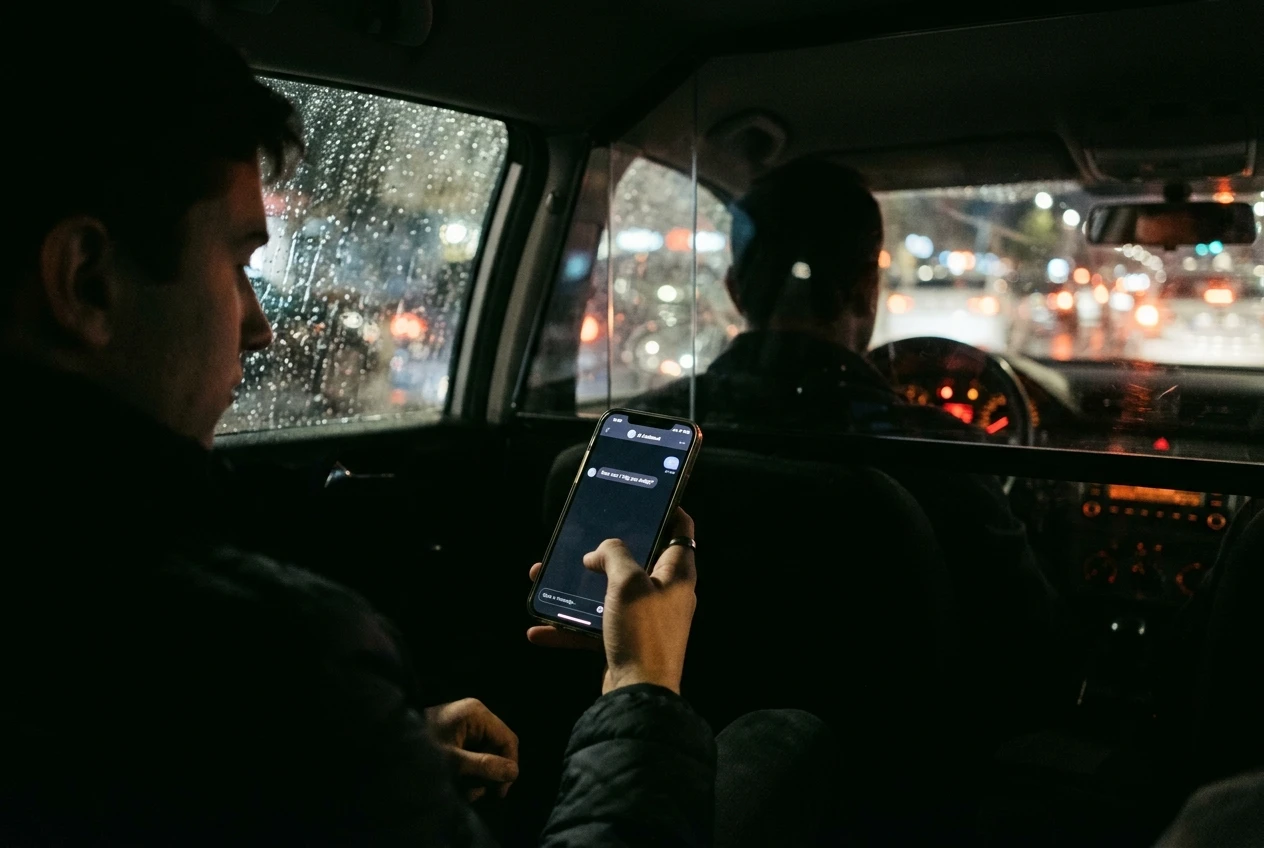
A 27-year-old woman named Shweta was on her way home from a hospital with her mother inside an app cab when the driver began complaining about the route. Then he demanded extra money. When she refused, he asked them to get out well before the drop-off point. Shweta reached into the app for help. A chatbot answered. There was no option to speak to a person.
Shweta’s case is the spine of a wider pattern reported in the Times of India investigation of cab app complaints published on July 7, 2026. Across eight commuters in Delhi, the sequence repeats with grim consistency: a problem on the road, an AI bot on the screen, a generic apology by email, and no follow-up. Cab app complaint redressal in India, the reporting shows, runs through a system that is opaque to the rider by design.
The chatbot stood between Shweta and a human
Shweta was 27 and recovering from a hospital visit with her mother when the ride went wrong. The driver first pushed back on the route, then asked for additional fare. When she refused, “he rudely asked us to get off well before the drop-off point,” Shweta told the newspaper. The cab’s behaviour got worse. She tried to reach the platform for help. The platform, instead, sent her a chatbot.
There was no human in the loop. Shweta gave the trip a one-star rating and typed the details of the confrontation into the in-app feedback box. The reply she received was what the system sends everyone: a generic apology. Only after she got home and sent a follow-up email did the aggregator tell her the driver had been blacklisted. No evidence of the action was shared with her.
The case surfaces the pecking order inside most app cabs. The first responder is an algorithm, not a person. A human support agent appears only when the system itself classifies the complaint as serious enough to escalate.
How the redressal system is actually layered
When the Times of India put questions to an official of a top cab aggregator, he described the architecture in two tiers. “Complaints submitted through ratings and feedback are treated as service-related inputs and are generally not followed up,” the official said. The implication is plain: a one-star rating, on its own, does not start a process.
Serious safety incidents, by the platform’s own definition, are routed through a different door. Altercations, route deviations, aggressive behaviour are flagged via the “Need Help with the Ride” option, where a customer support agent picks up. Inside the company, driver behaviour is then tracked through an internal scoring system. Repeated complaints can lead to temporary suspension, the official said. Severe or repeated violations can lead to removal from the platform. Riders who need urgent help during the trip have a safety helpline, accessible during the ride and for up to thirty minutes after it ends. An SOS button connects them to the nearest police station and shares live location, vehicle registration, and the driver’s history on the platform. A law enforcement response team, the official added, coordinates with the police on these cases.
| Channel | Who responds | What it triggers |
|---|---|---|
| Rating or in-app feedback (post-trip) | AI-processed, no human reply | Categorised as service input; not generally followed up |
| “Need Help with the Ride” | Customer support agent | Internal driver scoring; suspension on repeat violations |
| Safety helpline (in-trip + 30 minutes after) | Phone and email follow-up | Connects to LERT if escalated |
| SOS button | Routes to the nearest police station | Live location, vehicle registration, driver history shared with police |
The four channels look like a system. They also tell riders something else. The platform that built the rating box treats it as a signal, not a case. Only an explicit, in-the-moment flag crosses the line into a real complaint file.
The internal driver scoring system that decides whether a driver is suspended is not visible to riders. There is no published threshold, no record of how many suspensions a given complaint produces, no public dashboard. The opacity is structural, not accidental.
What the platform says happens behind the curtain
The platform official described a clean escalation path. A driver whose record crosses a threshold is suspended. A driver who crosses it again is removed. Repeated complaints, in his telling, carry consequences; severe ones carry heavier ones.
The in-trip safety rails are real. The safety helpline is reachable during the ride and for up to 30 minutes after. The SOS button shares the rider’s live location, vehicle registration number, and the driver’s history on the platform with the police. A law enforcement response team (LERT) sits between the platform and the police and responds to requests in such cases.
Live location, vehicle registration number, driver’s history on the platform and other relevant information are then shared with the police to facilitate prompt action. A law enforcement response team (LERT) coordinates with the police and responds to requests in such cases.
On the legal front, the platform drew a hard line. The official told the Times of India that the onus of initiating legal proceedings sits with the passenger. The aggregator can share ride records and other information whenever these are sought for a case. So the same system that built the safety net is not the system that opens the file.
The drivers’ answer to what happens after a complaint
What the platform describes from the outside, drivers describe very differently from the inside. A 37-year-old driver with seven years on the platform was asked by the newspaper what really happens after a commuter files a complaint. His answer explained the opacity.
Penalties, he said, attach to evidence. Screenshots, voice recordings, anything the platform’s review team can verify. Without that, the most common outcome is what Shweta received: a simple apology. In his network of drivers, he had not seen a peer removed for a complaint.
In most cases, even if it’s a serious complaint, a simple apology is enough. In my circle of drivers, I have never seen anyone getting delisted or banned because of a complaint.
The pattern lands directly on the cases above. Shreyanshi, a 25-year-old PR executive, had screenshots of a driver abusing her on a call; the platform took no follow-up she could see. Kavita, 23, was promised action after a driver messaged her friend with a sexual innuendo; the outcome was never clarified. Shweta’s “blacklisting” came only after she escalated by email. The system moved when she moved.
How the app handles the registration gap
Several riders told the Times of India they had been picked up by a car whose registration did not match the one on the app. A 46-year-old driver, recently joined to an aggregator, gave a partial reason: a nearby driver is sometimes reassigned the booking to cut waiting time.
The platform’s official line contradicted that. “The platform does not replace one car with another, as suggested by the driver. That is an action left to the rider,” the official said. The instruction to riders is to verify the driver’s identity and vehicle registration number before boarding. If either does not match, the trip can be cancelled by selecting the “details did not match” option. The warning that follows is the platform’s own: “A ride taken in an unregistered vehicle or with an unauthorised driver may not be accurately tracked during an emergency.” The control falls back on the rider at the moment a rider has the least time to act. To curb the same pattern, Uber has been running a Real-Time ID Check since its 2017 launch in India, periodic selfies drivers take to confirm the account on file matches the person driving, as described in how Uber describes its Real-Time ID Check in India. The system exists. The gap has not closed.
What the rule book and the Safe Delhi app now require
Once a case reaches the police, the system moves. A police officer told the Times of India that an FIR is registered when a commuter files a complaint, the aggregator is asked for details, and absconding drivers are traced and apprehended. The Delhi government and Delhi Police are also building a layer above the apps: the Safe Delhi app, designed to push an SOS from a rider’s voice to the control room without any tap at all.
A senior Delhi government official said the app is built around a voice command. Saying “Help” three times activates the SOS, transmits the user’s live location to the Delhi Police control room in less than a second, and opens real-time audio and video streaming from the phone. The application also proposes GPS-based tracking, safer-route suggestions for women travelling alone, and the facility to send emergency alerts to family members and trusted contacts through SMS and WhatsApp. A pilot of the app has shown encouraging results in central Delhi, the official said.
- Rider says “Help” three times
- App wakes and transmits live location to Delhi Police control room
- Real-time audio and video streaming opens from the phone
- Safer-route suggestions activate for solo women riders
- Emergency alerts fan out to family and trusted contacts via SMS and WhatsApp
The wider regulation track is moving in parallel. On December 15, 2025, the Ministry of Road Transport and Highways issued an amendment to the Motor Vehicles Aggregators Guidelines 2025, covered in the December 2025 amendment banning advance tipping on cab apps. Tipping prompts can now appear only after a ride ends, the full tip must go to the driver without deduction, and a new clause requires aggregators to offer female passengers the option of choosing a female driver, where one is available.
The complaint that still ends with a generic apology
Pull back to the cab, and to the chatbot. Shweta’s ride did not end with a human voice on the other end. It ended with a one-star rating, a templated reply, and an emailed blacklist she cannot verify. The drivers in the story describe the same loop from their side. The platform describes the safety rails. The government describes the next rails, the voice-activated SOS, the December amendment, the female-driver option.
The cab aggregator official and the Delhi Police both told the Times of India there is no human in the loop by default at the first touchpoint, and that the system is built to escalate only when the system itself decides it must. Madhu, the woman at Delhi airport, did not even reach that point. The driver messaged her after the ride asking for Rs 100 more. She blocked his number. She did not file a complaint. The system, in her case, never had to act.
Frequently Asked Questions
What happens after you file a complaint on a cab app in India?
The platform describes a two-tier process. Ratings and in-app feedback are treated as service-related inputs and are generally not followed up. Safety incidents go through the “Need Help with the Ride” option, where a support agent reviews the case and feeds it into an internal driver scoring system. Repeated complaints can trigger temporary suspension, and severe or repeated violations can lead to removal from the platform.
Can a rider speak to a human on Uber or Ola in India for a safety issue?
Yes, through two doors. “Need Help with the Ride” inside the app routes serious incidents to a customer support agent. The in-trip safety helpline is accessible during the ride and for up to 30 minutes after, according to the platform. Riders who hit a chatbot first can also escalate by email to the aggregator’s grievance cell.
Does filing a complaint actually get a cab driver banned?
The platform’s stated policy is yes, after repeat or severe violations. A seven-year driver quoted by the Times of India said the most common outcome in his experience is a simple apology, and that he has not seen a peer delisted for a complaint. Penalties, he added, attach to hard evidence such as screenshots or voice recordings.
What is the Safe Delhi app, and when does it launch?
It is a Delhi government and Delhi Police project, in pilot as of the Times of India report. The app activates an SOS by voice command (“Help” thrice), sends the user’s live location to the Delhi Police control room in less than a second, opens real-time audio and video streaming, suggests safer routes for solo women riders, and alerts family and trusted contacts via SMS and WhatsApp. The senior Delhi government official quoted in the report said a pilot has shown encouraging results in central Delhi.
What should a rider do right after a problem ride in India?
Use “Need Help with the Ride” inside the app for any safety incident, and the safety helpline during the ride or up to 30 minutes after. Preserve screenshots, recordings, or text messages, since drivers and platforms both treat unverified complaints as low-priority. Verify that the driver and vehicle registration match the app before boarding, and cancel via the “details did not match” option if they do not.


South Korea Retail Investors Face Reckoning After KOSPI AI Rally Collapses

Surrey AI Maps Three Heart Attack Paths and Their Molecular Roots

Germany Locks Neutral Apple ATT Prompts Across Most of Europe

Apple’s 5% EU Fee Quietly Rewrites Alternative App Store Math

Apple’s EU Fee Truce Cuts Complexity but Leaves Rivals Fuming

Pixel 11 Pro Fold Trades Thinness for Durability and Seven-Year Stay

Mayo AI Flags HCM Obstruction From Everyday Ultrasound Videos

Indian Brands Quietly Scale Landmark Screens and Home Tech

Navin Vatsa Turns Grief Into a Lifetime of Quiet Seeing

Google Bets Pixel 11 Agentic AI Will Redefine Phones

Oracle Cuts 21,000 Jobs in a Year, Cites AI in 10-K Filing

Fable 5 and Mythos 5 Return as US Lifts Anthropic Export Controls

SpaceX’s Google Deal Turns a Rocket Company Into a Cloud Landlord

CD Projekt Red Co-CEO: Redemption Arc Isn’t Done, Witcher 4 in 2027

XPL Rallies 30% Ahead of Plasma One Card Tier Launch

Google Search Profiles Build a Follow Graph Inside Discover

DGO App Brings Rs 549 Mobile Pass for FIFA World Cup 2026 in Nepal

Moonshot AI Targets $30 Billion in China’s Fastest AI Funding Sprint

Oppo’s ColorOS 17 Eligibility List Leaves A-Series Buyers Behind

Microsoft Xbox Layoffs Start in July as Sharma Slams 3% Margin
-
 AI2 months ago
Oracle Cuts 21,000 Jobs in a Year, Cites AI in 10-K Filing
-
 AI2 months ago
Fable 5 and Mythos 5 Return as US Lifts Anthropic Export Controls
-
 AI3 months ago
SpaceX’s Google Deal Turns a Rocket Company Into a Cloud Landlord
-
 GAMING2 months ago
CD Projekt Red Co-CEO: Redemption Arc Isn’t Done, Witcher 4 in 2027
-
 CRYPTO2 months ago
XPL Rallies 30% Ahead of Plasma One Card Tier Launch
-
 NEWS3 months ago
Google Search Profiles Build a Follow Graph Inside Discover
-
 APPS2 months ago
DGO App Brings Rs 549 Mobile Pass for FIFA World Cup 2026 in Nepal
-
 AI3 months ago
Moonshot AI Targets $30 Billion in China’s Fastest AI Funding Sprint