
AI
AI Ends Knowledge Scarcity and Forces Universities to Rebuild
Sungkyunkwan and Toronto host AI university forum as surveys show students doubt curricula and faculty readiness, accelerating judgment-focused reforms.

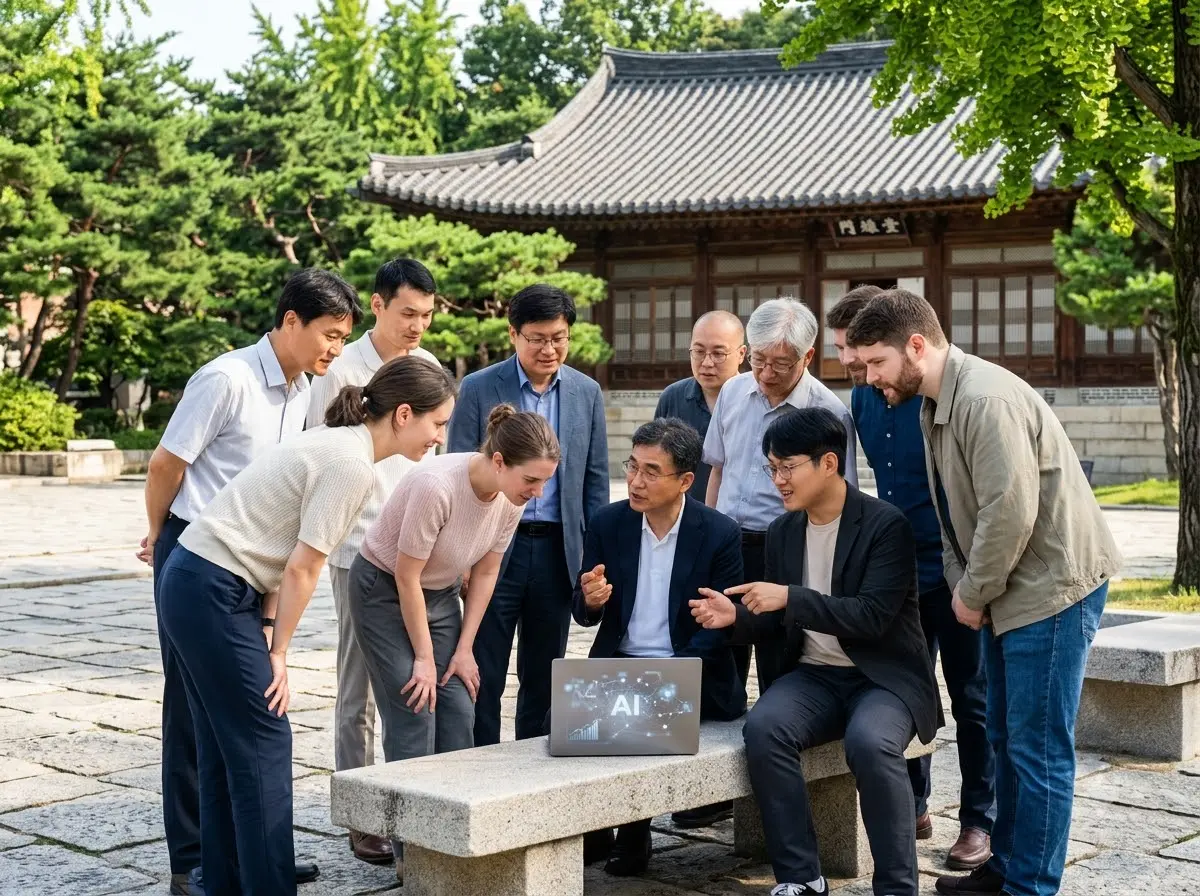
Sungkyunkwan University and the University of Toronto hosted the 2026 Seoul Forum on AI and University on July 27 at SKKU’s Seoul campus. Speakers told the room that generative AI has ended the era when human intellectual labor was scarce, and universities that keep treating knowledge transfer as their core product will lose their reason to exist.
The gathering pulled scholars from Seoul National University, Carnegie Mellon, and both hosts. It sat inside a wider Korea-Canada push that already moves students and research money. The argument was blunt: rebuild around judgment, ethics, and creative collaboration or watch employers and students walk away.
That bluntness set the tone for every later session. The day was not framed as a software rollout or a faculty workshop series. It was framed as an existential redesign of what a campus sells, how it tests students, and which partners it needs to stay credible.
What the Keynote Demanded of Every Campus
Myaeng Sung-hyon, professor emeritus of computer science and engineering at the Korea Advanced Institute of Science and Technology, delivered the central warning.
In an era when human intellectual labor is no longer scarce, universities must reinvent themselves as places where people reflect on what they should learn and how they should exercise judgment, rather than serving merely as institutions for knowledge transfer and skills training.
He called for curricula built on AI literacy, critical thinking, ethical reflection, and creative collaboration. Kim Jang-hyun, dean of SKKU’s Graduate School of Information and Communication Engineering and director of the Seoul ANCHOR Global Innovation Center, framed the whole event around a single question: why do universities exist at all in the AI age?
Kim said the forum aimed at reforming curricula, assessment systems, and academic policies from that starting point. Oh Sam-gyun, distinguished professor of library and information science at SKKU, called the mix of AI, humanities, and university futures especially meaningful. The room treated AI as a force that changes human work and identity, not just another campus software tool.
The sequence of those three voices mattered. A computer scientist named the scarcity collapse. A dean of information and communication engineering tied the collapse to concrete policy levers. A library and information science scholar insisted the humanities belong in the redesign, not on the sidelines. Together they closed the usual escape hatch of treating AI as an IT procurement issue.
Reforming assessment systems sat beside curriculum change for a reason. If generative models can draft the essays and problem sets that once proved mastery, the old grading pipeline loses its signal. Kim’s starting question forces campuses to decide what still counts as evidence of learning once the scarce resource has shifted from information to judgment.
The Korea-Canada Pipeline Already Running
The forum was not an isolated talk shop. It landed on the opening day of a concrete student program the two universities already operate together.
University of Toronto’s Faculty of Information and SKKU run a four-week AI entrepreneurship bootcamp that began July 27 in Seoul and continues in Toronto through August 21. Each side sends 20 graduate students. Teams work in mixed groups on AI-driven ventures, visit Samsung and Naver labs, meet mentors, and end with a pitch competition. English is the working language. Government of Canada funding covers key travel and housing pieces for eligible U of T students.
| Piece | Details | Timing |
|---|---|---|
| Seoul Forum on AI and University | Scholars from SKKU, U of T, SNU, Carnegie Mellon; focus on curricula, humanities, industry role | July 27, 2026 |
| International Entrepreneurship Bootcamp | 40 students total, AI × entrepreneurship workshops, industry visits, final pitch | July 27-August 21, 2026 |
| Seoul ANCHOR Global Innovation Center | Kim Jang-hyun directs; expands Korea-Canada industry-academia-research links | Ongoing, post-forum push |
SKKU said after the forum it will widen those industry-academia-research ties through ANCHOR for regional innovation and growth. Joint research and educational projects are next on the list. The philosophy from the keynotes already has a delivery vehicle.
Timing is the point. The forum did not announce a future pilot still years away. It opened on the same morning the first cohort began mixed-team work. Scholars debated judgment and ethics while forty graduate students started building ventures that would test those same capacities under mentor and industry pressure.
- July 27, 2026: Forum convenes at SKKU Seoul campus; bootcamp opens the same day.
- Late July into August: Mixed SKKU and U of T teams run AI entrepreneurship workshops and visit Samsung and Naver labs.
- Through August 21, 2026: Program shifts to Toronto for continued work, mentoring, and a closing pitch competition.
- Post-forum, ongoing: ANCHOR expands industry-academia-research links and prepares joint research and educational projects.
English as the working language removes a common friction in cross-border graduate work. Government of Canada support on travel and housing lowers the barrier for eligible U of T students. The design treats mobility and mixed teams as features, not logistics afterthoughts.
Numbers That Show Why the Old Model Is Breaking
Global data matches the urgency speakers described. The Digital Education Council’s 45,398-response global AI survey of students and faculty across 35 countries paints a clear picture of the gap.
- Only 15% of students say AI is integrated into many of their courses; 43% see it in a few; 43% report none.
- Just 29% of students believe their instructors are well equipped to guide them on AI use (17% in the US and Canada).
- Only 28% feel most or many assessments reflect the skills and judgment needed in an AI-enabled workplace.
- 37% of students express serious doubts that their program is relevant for AI and the future; only 30% agree it feels current.
APAC faculty show more optimism: 57% are excited that AI can make learning more effective. In the US and Canada that figure drops to 26%, while 55% of faculty there see serious risk to human intellectual development. Faculty intent to use AI in teaching also fell nine points in North America from 2025 to 2026. Employers in a related DEC workplace report said 80% believe higher education is not keeping up with industry change.
Students already use the tools. Institutions have not redesigned the underlying work of teaching, assessment, or credentialing. That mismatch is the disruption.
The assessment figure is the sharpest single signal. When only 28% of students see their evaluations reflecting workplace judgment skills, the credential itself starts to weaken. Employers reading that same gap have little reason to treat a traditional transcript as proof of readiness.
| Group | Stance on AI in learning | Share |
|---|---|---|
| APAC faculty | Excited that AI can make learning more effective | 57% |
| US and Canada faculty | Excited that AI can make learning more effective | 26% |
| US and Canada faculty | See serious risk to human intellectual development | 55% |
| Employers (DEC workplace report) | Believe higher education is not keeping up | 80% |
North American faculty intent falling nine points in a single year compounds the student-side doubt. Excitement and risk perception are moving in opposite directions by region. That split helps explain why a Korea-Canada partnership can move faster on joint programs than many peer networks still locked in caution.
Humanities Step Into the Center
Forum participants spent real time on the humanities’ new job. When generative models handle routine synthesis and drafting, the scarce skill becomes deciding what is worth knowing, spotting bias, weighing ethical trade-offs, and collaborating across difference. Those capacities sit in philosophy, history, literature, information science, and the social sciences more than in pure coding drills.
Myaeng’s list (AI literacy plus critical thinking, ethical reflection, creative collaboration) is not a STEM-only menu. SKKU’s own library and information science voices were on the stage for a reason. The same shift appears in outside commentary: some observers argue the lecture-based 19th-century university is already obsolete and that surviving campuses will focus on research, testing absorption, and experiential labs rather than one-way knowledge dumps.
Campuses that treat humanities as optional electives while racing to bolt AI tools onto existing syllabi will miss the point. The judgment layer is the product.
Oh’s presence on the program made that claim concrete. Library and information science already trains people to evaluate sources, trace provenance, and design systems that serve human inquiry. Those habits map directly onto bias detection and ethical framing once models generate fluent text on demand. The forum did not ask humanities departments to become coding schools. It asked them to own the layer machines cannot supply.
Creative collaboration rounds out the list because judgment rarely happens alone. Mixed teams, cross-border cohorts, and industry mentors force students to negotiate goals, divide labor, and defend choices under time pressure. That is closer to workplace reality than solitary essay production ever was.
Who Gains Ground and Who Falls Behind
Early movers that pair philosophy with working pipelines pull ahead.
- SKKU and U of T gain a ready student exchange, shared research agenda, and brand as places that treat AI as a full redesign problem rather than a workshop series.
- Students in the bootcamp leave with cross-border networks, real venture prototypes, and exposure to Samsung, Naver, and Canadian venture scenes that pure classroom time cannot match.
- Industry partners get graduates already trained in AI-aware entrepreneurship and ethical framing.
- Laggard universities that keep grading the same essays AI can draft, or that treat AI literacy as a single elective, lose signaling power with both students and employers.
- Faculty who resist redesign face declining student confidence; those who rebuild assessment around oral defenses, process evidence, and judgment tasks stay relevant.
Regional differences matter. APAC’s higher excitement levels give Korean and Canadian partners room to experiment faster than more cautious North American peers. The Seoul ANCHOR effort is explicitly aimed at turning that into regional growth.
Brand effects compound quickly. A campus known for mixed teams, lab visits, and pitch-backed credentials sends a clearer signal than one still advertising the same lecture catalog with an AI elective bolted on. Students choosing programs, and employers screening graduates, both read that difference.
Faculty incentives tilt the same way. Declining student confidence in instructor readiness, especially the 17% figure in the US and Canada, raises the cost of standing still. Rebuilding around oral defenses and process evidence is harder than adding a tool demo, yet it is the path that keeps teaching work legible once drafting is cheap.
What SKKU Plans to Build Next
After the forum SKKU committed to deeper Korea-Canada collaboration through ANCHOR. Joint research projects and educational innovation sit at the top of the list. The university’s English-language site and graduate programs in language and AI already signal the direction; the Sungkyunkwan University English portal lists related innovation and industry centers that can absorb the new work.
Curriculum redesign talks covered undergraduate and graduate levels, assessment systems, and academic policies. AI literacy and critical thinking appear as shared priorities. Industry collaboration and social responsibility were framed as evolving university duties, not side projects.
The bootcamp itself supplies an immediate test bed. Forty students are living the model for four weeks. Their pitches and feedback will feed the next round of program design. If the pattern holds, more dual programs, shared faculty, and joint labs follow.
ANCHOR’s brief is wider than a single cohort. Kim’s dual role as graduate school dean and center director links day-to-day academic policy with the industry-academia-research network the center is meant to grow. That structure reduces the usual gap between forum rhetoric and operational follow-through.
Undergraduate and graduate redesign moving together matters because the scarcity collapse does not stop at one degree level. A master’s bootcamp that teaches judgment while bachelor’s courses still reward pure recall would leave the pipeline incoherent. Shared priorities on AI literacy and critical thinking are an attempt to keep the layers aligned.
The Bootcamp Puts Judgment Under Pressure
Four weeks of mixed-team venture work is a short cycle, yet it compresses the capacities the keynotes named. Students must decide which problems are worth solving, how far to trust model output, and how to divide creative labor across cultures and training backgrounds.
Industry visits to Samsung and Naver labs add an external standard. Mentors and a closing pitch competition force teams to defend choices in front of people who ship products, not only in front of classmates. That is closer to the ethical reflection and creative collaboration Myaeng listed than a take-home essay can be.
- AI literacy gets tested when teams choose tools and spot weak model output under deadline.
- Critical thinking shows up in problem selection and in the decision to discard a fluent but hollow draft.
- Ethical reflection appears when ventures touch user data, labor displacement, or biased recommendations.
- Creative collaboration is continuous: twenty SKKU and twenty U of T graduate students, English as the working language, shared prototypes.
Feedback from the pitches then loops back into program design. The bootcamp is not a side festival attached to a talking forum. It is the first delivery vehicle for the philosophy the speakers outlined, running on the same calendar.
Employers Already Vote With Their Doubts
The related DEC workplace finding that 80% of employers believe higher education is not keeping up turns student anxiety into a market signal. When more than a third of students doubt program relevance and only 30% say their program feels current, the two sides of the labor market are describing the same lag.
Campuses that still treat knowledge transfer as the core product are selling into a market that no longer prices that product as scarce. Generative systems collapsed the cost of routine synthesis. Employers now look for graduates who can frame problems, audit machine output, and work across difference. Those are the same capacities the Seoul speakers put at the center of curriculum reform.
SKKU and Toronto’s bet is that a visible pipeline of joint research, mixed cohorts, and industry-facing pitches will restore signaling power. Laggards that leave assessment untouched will keep issuing credentials employers discount. The gap is already measurable; the forum simply refused to treat it as someone else’s problem.
The old scarcity of intellectual labor is gone. Universities that become the places people go to learn judgment will keep their place. The ones still selling knowledge transfer will not. SKKU and Toronto have already started building the replacement.


Workers Still Trust Judgment Over the AI Tools They Use

DigitalOcean’s $894 Million Backlog Rewrites the Old Cloud

Companies Froze Job Design and Called AI a People Problem

AI Capex Looks Unique Because the Chips Wear Out

Samsung Medison’s HERA Z10 Aims at the Sonographer Shortage

GPT-6 Astra Ships as OpenAI’s First Critical Cyber Model

Palms Sells Clean Air Without Ending Casino Smoking

OnlyFans Promo Bots on X Now Pass the Humanity Tests

Datamaran Drops the ESG Label After Winning the Argument

Xiaomi’s Own Chip Lands While Apple Argues Over Color

Oracle Cuts 21,000 Jobs in a Year, Cites AI in 10-K Filing

Fable 5 and Mythos 5 Return as US Lifts Anthropic Export Controls

SpaceX’s Google Deal Turns a Rocket Company Into a Cloud Landlord

CD Projekt Red Co-CEO: Redemption Arc Isn’t Done, Witcher 4 in 2027

XPL Rallies 30% Ahead of Plasma One Card Tier Launch

Google Search Profiles Build a Follow Graph Inside Discover

DGO App Brings Rs 549 Mobile Pass for FIFA World Cup 2026 in Nepal

Moonshot AI Targets $30 Billion in China’s Fastest AI Funding Sprint

Oppo’s ColorOS 17 Eligibility List Leaves A-Series Buyers Behind

Microsoft Xbox Layoffs Start in July as Sharma Slams 3% Margin
-
 AI3 months ago
Oracle Cuts 21,000 Jobs in a Year, Cites AI in 10-K Filing
-
 AI2 months ago
Fable 5 and Mythos 5 Return as US Lifts Anthropic Export Controls
-
 AI3 months ago
SpaceX’s Google Deal Turns a Rocket Company Into a Cloud Landlord
-
 GAMING3 months ago
CD Projekt Red Co-CEO: Redemption Arc Isn’t Done, Witcher 4 in 2027
-
 CRYPTO3 months ago
XPL Rallies 30% Ahead of Plasma One Card Tier Launch
-
 NEWS3 months ago
Google Search Profiles Build a Follow Graph Inside Discover
-
 APPS3 months ago
DGO App Brings Rs 549 Mobile Pass for FIFA World Cup 2026 in Nepal
-
 AI3 months ago
Moonshot AI Targets $30 Billion in China’s Fastest AI Funding Sprint