
CRYPTO
Lyn Alden Tells Bitcoin It Needs No Savior After $216M Sale
Lyn Alden says Bitcoin must stand on its own merits, not on Strategy’s $216M BTC sale, with no external catalyst coming as sentiment hits its cycle low.

Macroeconomist Lyn Alden has a message for Bitcoin holders waiting for a catalyst after Strategy sold 3,588 BTC for about US$216 million: stop waiting for a savior. Speaking in a Tuesday interview with Bitcoin educator Natalie Brunell, Alden argued that no external bid is coming and the asset has to stand on its own merits rather than rely on a new source of demand.
Her comments came the same week Strategy filed an 8-K detailing that sale, weeks after the company sold 32 BTC for about $2.5 million to cover May dividends in what CoinDesk identified as Strategy’s first Bitcoin sale since 2022. Bitcoin sentiment now sits at levels Alden has not seen since the asset traded near $16,000 in the 2022 bear market, even as spot has held around US$62,043.86 in the original report.
The $216M Sale and What It Funds
Strategy’s Monday 8-K disclosed that the company had sold 3,588 BTC for about US$216 million. The proceeds funded quarterly dividends on four of Strategy’s preferred instruments and the full monthly payment on STRC, the variable-rate perpetual preferred that has become the firm’s main capital-raising engine. The disclosure cut against Chairman Michael Saylor’s pledge never to sell, a stance Strategy’s filings had previously preserved.
Strategy’s earlier post-2022 sale was much smaller: in late May, the company sold 32 BTC for about $2.5 million to cover the same STRC distribution that prompted the July disposal. CoinDesk identified the May transaction as the first Bitcoin sale Strategy had made since it began accumulating the asset in 2022, a move that rattled a market accustomed to Chairman Michael Saylor’s pledge never to sell. The two filings, taken together, frame the preferred dividends as a recurring cash need on the company’s balance sheet. Strategy’s own investor disclosures note that the firm’s software revenue does not cover those payouts.
Even after the sale, Strategy still holds 843,738 BTC at a cumulative cost of about US$63.87 billion (roughly $75,700 per coin), per Backpack’s STRC explainer. The spot market largely shrugged at the disclosure; at the original time of reporting, BTC was around US$62,043.86, consistent with a prior analysis of the same filing‘s framing of the muted reaction.
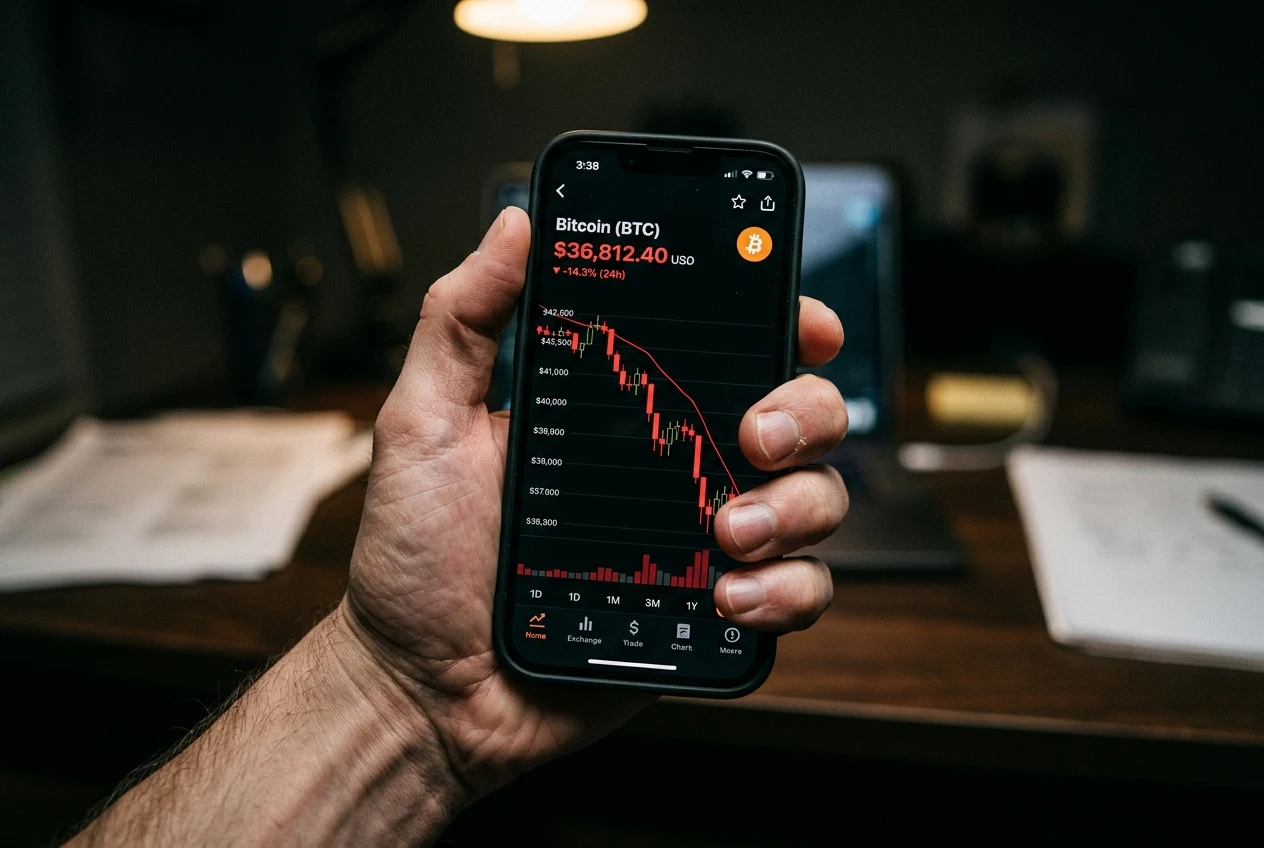
Sentiment Falls Below the 2022 Floor
Alden drew a sharp line between price and mood in the interview, telling Brunell the current cycle feels worse than 2022, when Bitcoin dropped to as low as $16,000 but investor conviction held firm. Her most pointed comment compared the present mood to anything she has witnessed in the asset’s history. Her base case is that Bitcoin will not set a new all-time high this year, though she acknowledged volatility leaves room for a sharp move higher.
This is the lowest sentiment that I’ve personally seen on Bitcoin.
Alden offered the remark during her Tuesday conversation with Bitcoin educator Natalie Brunell, an interview that aired to a Bitcoin-focused audience. She pointed to fading narratives, a more corporate-driven market cycle, and disappointment among investors as drivers of the current mood. In Alden’s reading, this is the cycle’s lowest sentiment, with the 2022 bear market the closest analogue for what investors are feeling today even at different price levels. Alden’s base case is that Bitcoin now grinds sideways rather than retests prior peaks, with the floor defined by the absence of new lows rather than any new high.
‘Bitcoin Needs No Savior’
Alden’s central argument rejects the search for a new bid entirely. She framed Bitcoin’s long-term trajectory as a function of its own properties: a liquid, permissionless way to store and send value.
I don’t think there’s anything coming to save Bitcoin.
Alden delivered the line in her Tuesday conversation with Brunell, the Bitcoin educator with a sizable following. The argument pushes back on the assumption that corporate treasury demand, ETF inflows, or any single buyer will step in to absorb supply and lift the market. Her case is structural: Bitcoin has to survive on its own merits, with its value coming from what the asset does. That framing sits against a cycle defined in part by corporate treasury demand from Strategy and similar buyers. Alden told Brunell she expects the market to remain stable enough to avoid setting new cycle lows.
STRC and the Leverage Risk Alden Flagged
Alden spent a portion of the interview on Strategy’s STRC preferred, the instrument whose dividend obligations partly drove the July sale. She told Brunell that STRC has become the biggest preferred security in the market and serves a real role for investors who want exposure to Strategy’s Bitcoin strategy without holding BTC directly or absorbing its full volatility.
Alden then turned to a related warning: higher-yielding BTC-linked products can encourage additional leverage, even when the underlying asset is doing fine. STRC pays a variable dividend at an effective rate of 12.9%, with the rate reset monthly to keep the security trading near its $100 par. That structure pulls income hunters toward the product when BTC is steady, while the cycle’s preferred-stock crunch is showing the other side. Per Strategy’s STRC investor materials, holders have no direct claim on any specific Bitcoin in the company’s treasury, only on residual assets after creditors and preferreds are paid.
Strategy’s response to that crunch has been to slow down. The mid-June slide in STRC paused the company’s at-the-market issuance program for new shares, per the report on STRC’s June funding crisis. With STRC trading below par, the lever Strategy uses to keep buying Bitcoin sits idle.
- $1.1B: the USD reserve Strategy built to cover preferred dividends and debt per mid-June reporting
- $14B: unrealized losses on Strategy’s Bitcoin holdings in Q1 2026 (Backpack)
- $80,985: the average price Strategy paid in its May STRC-funded Bitcoin purchase (Backpack)
- 9.00%: STRC’s original August 2025 variable dividend, before seven monthly increases (Backpack)
Alden credited the company for rebuilding reserve coverage and introducing additional safeguards during the stress, while warning that the long-term performance of STRC still depends on Bitcoin’s price action. The downside path is structural: when BTC drops, the dividend the company must cover with cash does not, and Strategy has already shown it will sell coins to keep the payments flowing.
The Protocol Debate Around BIP 110
The second half of the interview moved from markets to protocol, with Alden addressing Bitcoin Improvement Proposal 110 (BIP-110), a proposal that aims to reduce network spam by limiting data-heavy transactions including those used to store images. Alden said she is generally cautious about efforts to change Bitcoin’s rules quickly, warning that some proposals could make the network more complex or affect existing safeguards. The technical argument, she said, deserves careful assessment before the protocol is altered.
Alden then criticized how some protocol proposals get framed publicly. She called the ‘existential issue’ framing incorrect marketing that exaggerates the technical stakes. The argument sits inside a long-running debate in Bitcoin development circles about how to balance spam reduction with the censorship-resistant ethos that defines the network’s base layer. Alden’s stance is procedural: change should be debated on its technical merits, not on how loudly it is announced.
Where Bitcoin Sits Now
Behind the protocol talk, the spot tape tells a quieter story. Bitcoin traded at $62,043.86 at the time of the original report, near the level it held at the start of the week. The spot price climbed from below $58,250 on July 1 to nearly $64,000 by July 6, before pulling back into the $62,000 range. Alden acknowledged that volatility leaves room for a sharp move higher even on her base-case path.
The early-July run from below $58,250 to nearly $64,000 looked like a relief bounce rather than a sustained trend reversal. With STRC trading below par, Strategy’s at-the-market issuance for new preferred shares remains paused, the funding consequence of the June slide. The 8-K that triggered the latest headlines reflected that constraint directly, with proceeds covering preferred dividends rather than fresh Bitcoin accumulation. The disclosures show a company now using coin sales to keep preferred payments flowing rather than building its stack. Alden expects the market to remain stable enough to avoid setting new cycle lows.
Whether Strategy returns to the buy side depends on STRC’s recovery, and Alden’s base case is no sustained Bitcoin rally this year to drive that recovery. The disclosures mark the first stretch of this cycle in which the largest corporate Bitcoin holder has used coin sales to fund its preferred obligations.
Frequently Asked Questions
What did Lyn Alden say about Bitcoin’s outlook?
Alden told Bitcoin educator Natalie Brunell on Tuesday that no external catalyst is coming to lift Bitcoin. She said the asset’s value comes from its own properties as a liquid, permissionless way to store and send value, not from any new source of demand.
Why did Strategy sell 3,588 Bitcoin?
Strategy disclosed in a Monday 8-K filing that it sold 3,588 BTC for about US$216 million. The proceeds funded quarterly dividends on four of its preferred instruments and the full monthly payment on STRC.
What is STRC and why does it matter for Bitcoin?
STRC is Strategy’s Variable Rate Series A Perpetual Stretch Preferred Stock, with a variable dividend reset monthly to keep the security trading near its $100 par. Alden warned that higher-yielding BTC-linked products like STRC can encourage investors to take on additional leverage.
Will Bitcoin reach a new all-time high in 2026?
Alden said her base case is no. She pointed to fading narratives, a more corporate-driven market cycle, and disappointment among investors. She acknowledged that volatility leaves room for a sharp move higher in either direction.
What is Bitcoin Improvement Proposal 110?
BIP-110 is a proposed change that aims to reduce network spam by limiting data-heavy transactions including those used to store images. Alden said she would review the technical arguments carefully but called the existential-issue framing of such proposals incorrect marketing.
Disclaimer: This article is for informational purposes only and does not constitute financial or investment advice. Cryptocurrency markets are highly volatile and past performance is not indicative of future results. Readers should consult a qualified financial professional before making investment decisions. Figures are accurate as of the publication date.


South Korea Retail Investors Face Reckoning After KOSPI AI Rally Collapses

Surrey AI Maps Three Heart Attack Paths and Their Molecular Roots

Germany Locks Neutral Apple ATT Prompts Across Most of Europe

Apple’s 5% EU Fee Quietly Rewrites Alternative App Store Math

Apple’s EU Fee Truce Cuts Complexity but Leaves Rivals Fuming

Pixel 11 Pro Fold Trades Thinness for Durability and Seven-Year Stay

Mayo AI Flags HCM Obstruction From Everyday Ultrasound Videos

Indian Brands Quietly Scale Landmark Screens and Home Tech

Navin Vatsa Turns Grief Into a Lifetime of Quiet Seeing

Google Bets Pixel 11 Agentic AI Will Redefine Phones

Oracle Cuts 21,000 Jobs in a Year, Cites AI in 10-K Filing

Fable 5 and Mythos 5 Return as US Lifts Anthropic Export Controls

SpaceX’s Google Deal Turns a Rocket Company Into a Cloud Landlord

CD Projekt Red Co-CEO: Redemption Arc Isn’t Done, Witcher 4 in 2027

XPL Rallies 30% Ahead of Plasma One Card Tier Launch

Google Search Profiles Build a Follow Graph Inside Discover

DGO App Brings Rs 549 Mobile Pass for FIFA World Cup 2026 in Nepal

Moonshot AI Targets $30 Billion in China’s Fastest AI Funding Sprint

Oppo’s ColorOS 17 Eligibility List Leaves A-Series Buyers Behind

Microsoft Xbox Layoffs Start in July as Sharma Slams 3% Margin
-
 AI2 months ago
Oracle Cuts 21,000 Jobs in a Year, Cites AI in 10-K Filing
-
 AI2 months ago
Fable 5 and Mythos 5 Return as US Lifts Anthropic Export Controls
-
 AI2 months ago
SpaceX’s Google Deal Turns a Rocket Company Into a Cloud Landlord
-
 GAMING2 months ago
CD Projekt Red Co-CEO: Redemption Arc Isn’t Done, Witcher 4 in 2027
-
 CRYPTO2 months ago
XPL Rallies 30% Ahead of Plasma One Card Tier Launch
-
 NEWS3 months ago
Google Search Profiles Build a Follow Graph Inside Discover
-
 APPS2 months ago
DGO App Brings Rs 549 Mobile Pass for FIFA World Cup 2026 in Nepal
-
 AI2 months ago
Moonshot AI Targets $30 Billion in China’s Fastest AI Funding Sprint