
AI
CAA Demands Meta Default Muse Image to Opt-In Consent
CAA is demanding Meta flip Muse Image to opt-in consent. The opt-out default lets anyone pull public Instagram photos into AI art with no subject notice.

Meta rolled out Muse Image, the first image generation model from Meta Superintelligence Labs, on July 7, 2026, inside the Meta AI app, Instagram Stories, and WhatsApp. The model lets any user @-mention a public Instagram account and pull that account’s photos into an AI image, and it notifies neither the subject nor the account holder. As Muse Image proliferated over Instagram and WhatsApp, Creative Artists Agency, the talent firm representing Tom Cruise, Charlize Theron, Zoe Saldaña, and Dhar Mann, told Meta to flip the default.
Meta said it “built Muse Image with strong controls and safety guardrails from day one.” CAA, the talent firm Deadline described as an “uberagency,” pushed Meta for explicit, documented opt-in consent from the subject of any AI generation.
CAA Demands Meta Default Muse Image to Opt-In Consent
Deadline published CAA’s response on July 9, 2026, by Dominic Patten. The agency, led by Bryan Lourd and run out of Century City, California, represents Cruise, Saldaña, Theron, and digital creator Dhar Mann. Its ask, as published in the CAA’s full statement on Muse Image privacy, is to make Muse Image an opt-in product.
The complaint landed while Muse Image was still proliferating across Instagram and WhatsApp, with users already posting images that used other people’s public profile photos as raw material for AI portraits. CAA’s tone is direct, and the agency is asking Meta to walk the rollout back to a model that requires the subject to authorize the use. The pattern echoes what happened after OpenAI’s Sora ran into similar criticism at launch, with CAA explicitly drawing the comparison. The agency frames the rest of the demands as a creator-rights program covering consent, disclosure, and takedown.
“We have raised our concerns with Meta on behalf of our clients, voicing our disapproval and perspective on the need for a more responsible approach,” CAA said. The agency wants documented consent as the baseline and opt-in as the default.
No one’s name, image, likeness, voice, or creative work should be used by any third party, including AI models, without clear, documented consent.
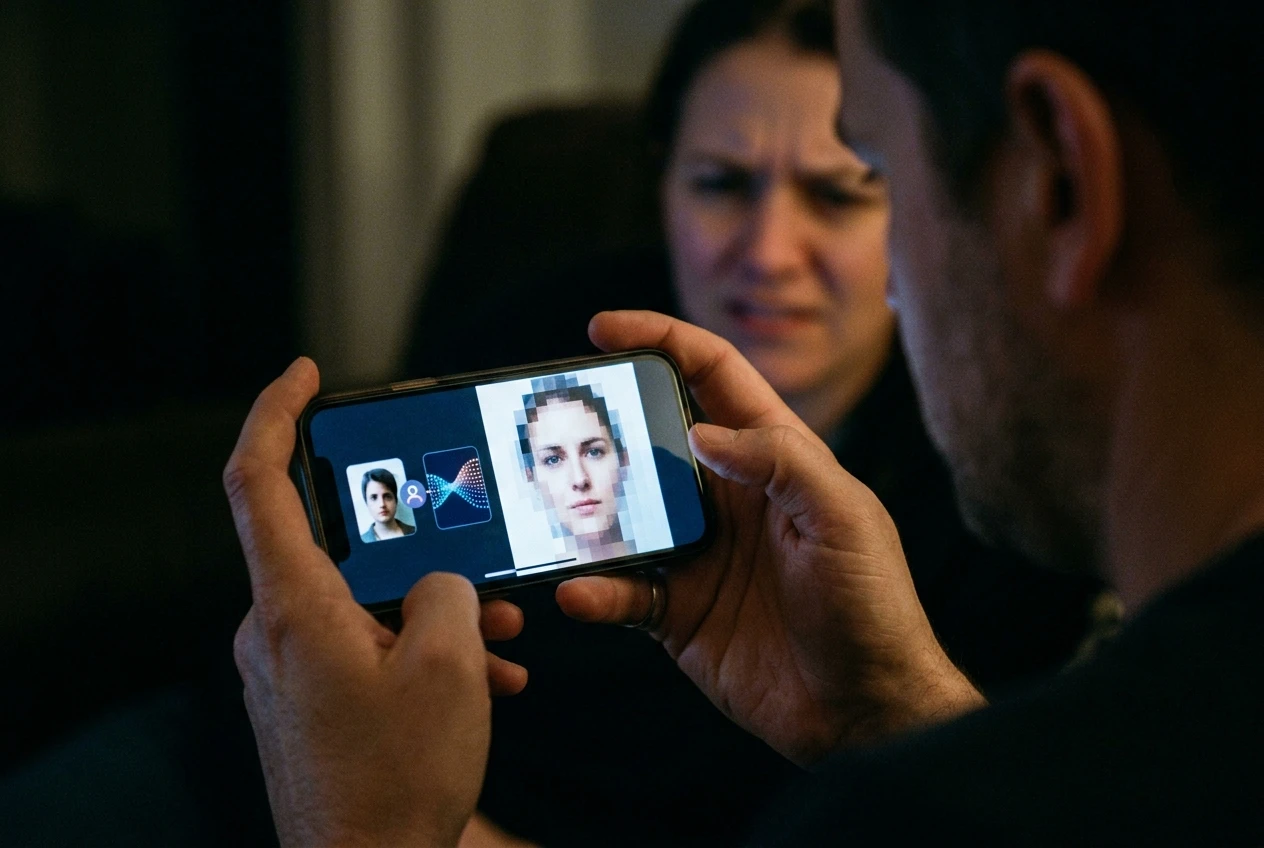
How Muse Image Pulls Public Instagram Photos Into AI
The mechanic is described in Meta’s own official Muse Image launch announcement: any user can tag a public username in a prompt, and the model will use that account’s public photos as references. Meta calls this “social context” and frames it as a way to make custom invitations, collaborative creative concepts, and personalized graphics. In practice, it lets a stranger make new pictures that include another person who never agreed to be in them, as WIRED reported on the same day.
What the system excludes by default is narrower than it sounds. Private Instagram accounts are out, and accounts belonging to users under 18 are out. Adult users with public accounts are in, and have to take a step to opt out. Meta says opting out takes “a couple of clicks”; critics including CAA call that a default-on system, not a safety system.
No notification is the loudest complaint. Instagram’s help page, as WIRED reported, states plainly: “You will not be notified about content created using AI features at Meta.” The opt-out is split into two separate toggles, one for Posts and one for Reels, and already-generated images stay online even after the user flips them off, so once your public photos are remixed, the remix is out there.
The setting is one menu layer deep, not on by default, and may not appear in a given account until Meta pushes it. Coverage of the Meta’s Muse Image tag-and-pull feature walked through the same path on day one. For a global user base of public posters, the practical default is the same as the legal one: opt-out.
- Open the Instagram app and tap your profile picture in the bottom right.
- Tap the three horizontal lines in the top right corner.
- Scroll to “Sharing and Reuse” inside Settings.
- Toggle off “Allow people to reuse your content on Instagram and with AI features at Meta” for both Posts and Reels.
Meta Says Safety Was Baked in from Day One
Meta’s response, also published by Deadline, is a flat denial of the premise. “We built Muse Image with strong controls and safety guardrails from day one,” the company said. Private accounts and accounts belonging to users under 18 are automatically excluded, Meta said. Adult public-account holders can opt out in “just a couple of clicks,” and Meta said it will take action against any content that violates its Community Standards.
The statement does not address the no-notification rule, and it does not change the consent default. The rollout is also wider than the apps that have Muse Image on day one, with Facebook and Messenger, more countries on Instagram, and more WhatsApp markets “coming soon.” In the coming weeks, advertisers and agencies will be able to tap into Muse Image through Advantage+ creative, Meta’s AI-powered ad tool, with the feature free for “everyday creation” and gated behind a Meta One subscription for higher-volume users.
| CAA’s demand | Meta’s current stance |
|---|---|
| Opt-in, with documented consent before any use | Opt-out, with default inclusion for public adult accounts |
| Subjects notified when their likeness is used | “You will not be notified,” per Instagram’s help page |
| No use of public-account photos without explicit permission | Use allowed until the user opts out |
| Make protection the default, not the exception | “Couple of clicks” opt-out inside a buried setting |
Privacy Groups and UK Regulators Echo the Concern
CAA is not the only voice. The BBC reported that Donald Campbell, advocacy director at the tech justice non-profit Foxglove, called the design “an obvious recipe for disaster.” The non-profit told the BBC the feature would invite “a catalogue of harms from non-consensual AI-altered images on social platforms” in the past year alone. That framing tracks what CAA put on the record.
Privacy International told the BBC the rollout was “the latest sign AI companies see people’s images and data as raw material to be exploited.” Ofcom, the UK’s media regulator, is currently investigating X over Grok’s role in non-consensual AI-altered images, and the BBC reported Meta’s design will draw similar scrutiny from regulators and campaigners. The Grok probe is separate from Meta, but the underlying complaint pattern is the same.
We’ve already seen a catalogue of harms from non-consensual AI-altered images on social platforms just in the past year. It is hard to see why Mark Zuckerberg thinks facilitating yet more of this creepy image manipulation is a good idea.
Foxglove’s Donald Campbell, advocacy director of the UK tech-justice non-profit, put it that way in comments to the BBC. The BBC’s reporting placed the Ofcom Grok probe as the regulatory template Meta’s design will face if the complaints escalate to a formal review.
Where Muse Image Fits in the Generative-AI Race
Meta built Muse Image in-house. CNBC reported that Meta has historically used third-party tools, including models from Midjourney and Black Forest Labs, to power image and video generation features inside the Meta AI app and on the web. The company said it plans to use Muse Image to reduce reliance on those third-party technologies, and Muse Image is also its first image generation model from Meta Superintelligence Labs.
The competition Meta is racing is named in the company’s own technical deep dive on the new image model: OpenAI’s GPT Image 2 and Google’s Nano Banana 2. CNBC reported Meta’s internal benchmark, which shows Muse Image trailing GPT Image 2 on editing tasks for both single and multiple images. On the same benchmark, Muse Image beats Nano Banana 2. The internal results place Muse Image behind GPT Image 2 and ahead of Nano Banana 2 on the editing tests Meta chose to publish.
Muse Image was codenamed Mango inside the company, and it comes out of Meta Superintelligence Labs, the dedicated AI unit led by Alexandr Wang. The same group unveiled the Muse Spark large language model in April 2026, which replaced Meta’s older Llama family of models. Muse Video, an image model’s sibling for video, is already in development and will use the same pre-training base, per the technical blog.
The commercial rail runs through Meta’s subscription plans, which debuted in May 2026 and gate heavy users behind a monthly fee. Free users hit a limit and either pay or wait for a reset, while advertisers get the same model through Advantage+ creative, with the internal thesis in Meta’s launch blog being to “get one step closer to personal superintelligence.”
- May 2026: Meta’s monthly subscription plans debut, gating power-user access to Muse Image.
- April 2026: Muse Spark LLM unveiled by Meta Superintelligence Labs under Alexandr Wang.
- GPT Image 2: OpenAI’s model; Muse Image trails it on Meta’s internal editing benchmark.
- Nano Banana 2: Google’s model; Muse Image beats it on the same internal benchmark.
- $5 billion: 2019 FTC fine Meta paid over the Cambridge Analytica data-harvesting case.
Meta’s Privacy Record Frames the Moment
The 2019 $5 billion Federal Trade Commission fine was, at the time, the largest ever levied on a US tech company. Regulators found that Facebook had known for years that Cambridge Analytica had improperly harvested data from tens of millions of users to build voter-targeting profiles for the 2016 US election. TechCrunch noted the case in its Muse Image coverage as the prior reference point for how Meta handles consent in a new product. The pattern is opt-out, then face the consequences.
In 2021, Meta shut down Facebook’s facial recognition system, a tool that had automatically identified people in photos and videos on the platform. The shutdown followed lawsuits and regulatory pressure over the company’s collection of biometric data. About a third of Facebook’s daily active users had opted into the recognition system at its peak, per TechCrunch’s reporting on the prior history.
Muse Image’s photo-tagging, default-on for public accounts, fits the same opt-out pattern that produced the 2019 FTC fine and the 2021 facial-recognition shutdown. CAA’s complaint lands on that pattern, and the agency represents Cruise, Saldaña, Theron, and Mann, while Meta’s launch blog calls Muse Image “built for your world,” a world in which the person in the picture is the last to know.
Frequently Asked Questions
What is Meta’s Muse Image?
Muse Image is the first image generation model from Meta Superintelligence Labs. It launched on July 7, 2026, in the Meta AI app and on meta.ai, in US Instagram Stories, and in WhatsApp direct messages in limited countries. It is free for everyday creation and sits behind a Meta One subscription for higher-volume users.
How do I stop my public Instagram photos from being used in Muse Image?
The opt-out lives inside the Instagram app at profile, the three-line menu, and Sharing and Reuse, where the Posts and Reels toggles for “Allow people to reuse your content on Instagram and with AI features at Meta” can both be turned off. Going private also stops any new uses of your photos, though existing AI images will not be removed.
What did CAA say about Muse Image?
CAA, the talent agency that represents Tom Cruise, Charlize Theron, Zoe Saldaña, and Dhar Mann, told Meta to flip the feature from opt-out to opt-in and require documented consent before any third party uses a person’s name, image, likeness, voice, or creative work in AI content. The agency said the rollout should be reset and called on Meta to make protection the default, not the exception.
What did Meta say in response?
Meta’s reply, also reported by Deadline, calls the design a safe product. The company says Muse Image has “strong controls and safety guardrails from day one,” excludes private accounts and accounts belonging to users under 18 by default, and lets adult public-account holders opt out in a couple of clicks. Meta also said it will take action against content that violates its Community Standards, and it did not commit to changing the default for public accounts or to notifying subjects when their photos are used.
Is Muse Image available outside the United States?
The Meta AI app and meta.ai are available globally at launch. The Instagram Stories integration is US-only on day one. WhatsApp access is rolling out in limited countries with more locations on the way. Facebook, Messenger, and additional markets for Instagram and WhatsApp are scheduled for the coming weeks and months.


South Korea Retail Investors Face Reckoning After KOSPI AI Rally Collapses

Surrey AI Maps Three Heart Attack Paths and Their Molecular Roots

Germany Locks Neutral Apple ATT Prompts Across Most of Europe

Apple’s 5% EU Fee Quietly Rewrites Alternative App Store Math

Apple’s EU Fee Truce Cuts Complexity but Leaves Rivals Fuming

Pixel 11 Pro Fold Trades Thinness for Durability and Seven-Year Stay

Mayo AI Flags HCM Obstruction From Everyday Ultrasound Videos

Indian Brands Quietly Scale Landmark Screens and Home Tech

Navin Vatsa Turns Grief Into a Lifetime of Quiet Seeing

Google Bets Pixel 11 Agentic AI Will Redefine Phones

Oracle Cuts 21,000 Jobs in a Year, Cites AI in 10-K Filing

Fable 5 and Mythos 5 Return as US Lifts Anthropic Export Controls

SpaceX’s Google Deal Turns a Rocket Company Into a Cloud Landlord

CD Projekt Red Co-CEO: Redemption Arc Isn’t Done, Witcher 4 in 2027

XPL Rallies 30% Ahead of Plasma One Card Tier Launch

Google Search Profiles Build a Follow Graph Inside Discover

DGO App Brings Rs 549 Mobile Pass for FIFA World Cup 2026 in Nepal

Moonshot AI Targets $30 Billion in China’s Fastest AI Funding Sprint

Oppo’s ColorOS 17 Eligibility List Leaves A-Series Buyers Behind

Microsoft Xbox Layoffs Start in July as Sharma Slams 3% Margin
-
 AI2 months ago
Oracle Cuts 21,000 Jobs in a Year, Cites AI in 10-K Filing
-
 AI2 months ago
Fable 5 and Mythos 5 Return as US Lifts Anthropic Export Controls
-
 AI3 months ago
SpaceX’s Google Deal Turns a Rocket Company Into a Cloud Landlord
-
 GAMING2 months ago
CD Projekt Red Co-CEO: Redemption Arc Isn’t Done, Witcher 4 in 2027
-
 CRYPTO2 months ago
XPL Rallies 30% Ahead of Plasma One Card Tier Launch
-
 NEWS3 months ago
Google Search Profiles Build a Follow Graph Inside Discover
-
 APPS2 months ago
DGO App Brings Rs 549 Mobile Pass for FIFA World Cup 2026 in Nepal
-
 AI3 months ago
Moonshot AI Targets $30 Billion in China’s Fastest AI Funding Sprint