
APPS
App Stores Now Hold a Million-Plus Apps. Discovery Hasn’t Caught Up
Apple’s App Store holds ~1.9M apps and Google Play ~1.68M today. Both stores spent years adding and now spend time subtracting. Discovery has not kept up.

Apple introduced the App Store on July 10, 2008 with 500 apps, an opening inventory Apple later called a cultural and economic phenomenon. That first catalog fit on a single results page. Eighteen years later, the two dominant storefronts each list more than a million apps, and yet users of either platform routinely spend more time searching for the one they need than they spend inside it.
The growth phase took less than a decade. Apple’s App Store crossed 50,000 apps at WWDC in June 2009, the year after launch. Google rebranded the Android Market to Google Play on March 6, 2012, opening the new storefront with 450,000 Android apps already on hand. Both catalogs kept growing through the 2010s, peaking above two million on each side of the fence, and then began to shrink.
How Two App Stores Came to Hold a Million-Plus Apps
The history is short and steep. The App Store opened with 500 apps in July 2008. Nine months later, at WWDC 2009, Apple was reporting 50,000 apps. Google Play inherited the Android Market on March 6, 2012 and started life with 450,000 apps already migrated. By the end of 2017, Google Play had more than 3.5 million apps published, and Apple’s App Store sat at roughly 2.2 million. The Wikipedia entry on the App Store records the peak and the subsequent decline in one sentence: the store peaked around 2.2 million in 2017 and slid to 1.9 million as of 2024.
The growth phase is over for the moment. Both stores hit ceiling. The interesting question is what happens at the ceiling, and the answer is that the storefronts have started to subtract as aggressively as they once added.
Catalog size, then and now:
- Apple App Store at launch (July 10, 2008): 500 apps, per Apple Newsroom
- Apple App Store at WWDC 2009: 50,000 apps, per TechCrunch
- Google Play at launch (March 2012): 450,000 Android apps, per Android Authority
- Apple App Store peak (2017): ~2.2 million apps, per Wikipedia
- Google Play peak (end of 2017): 3.5 million apps, per Wikipedia
Why the Catalogs Are Already Shrinking
Both stores entered a paring phase in the late 2010s, and the paring accelerated after 2023. Google’s Play Store fell from 3.5 million apps at the end of 2017 down to 1.68 million in 2024, a drop of more than half in seven years. Apple’s App Store followed the same arc more gently, slipping from a 2017 peak of about 2.2 million to roughly 1.9 million apps as of 2024. The cuts are visible to anyone who has searched for a familiar utility and found it missing.
Apple says the removals target dead and 32-bit apps, alongside guideline violations. Google says its 2024 purge was driven by enforcement of developer policies that had been tightened over the previous two years. Both stories check out against the public App Store Transparency Report, which lists tens of thousands of removals in 2024 under fraud and guideline grounds.
The pruning contradicts the older narrative that app stores would grow forever. The catalogs are not still rising. They have crested, and the next ceiling is the one set by what a phone screen and a search box can actually hold.
Why Every Brand Now Wants Its Own App
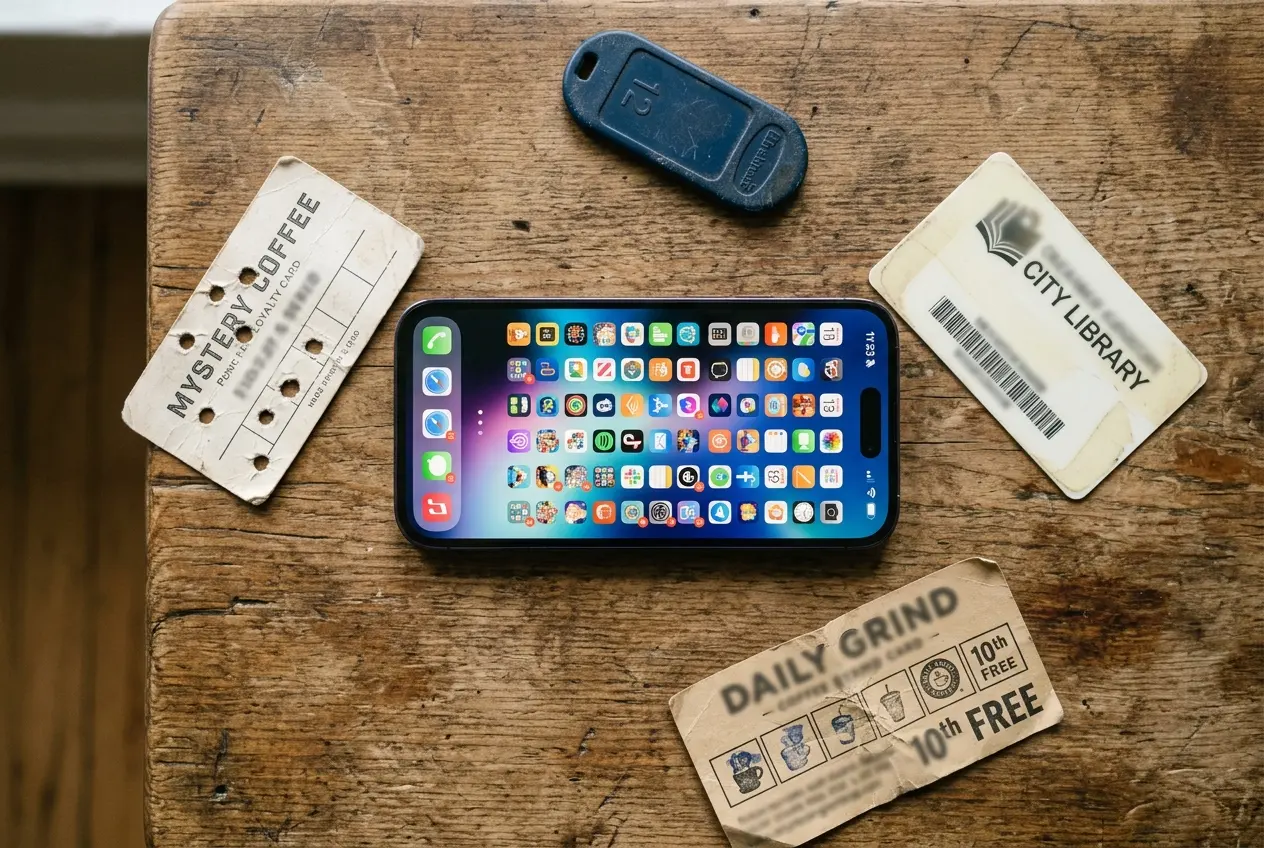
The store size is only half the story. The other half is on the home screen, and the second half is the larger problem. Every gym, every bank, every library, every government service, every airline loyalty program has decided that a dedicated app is a prerequisite for service. The list grew steadily through the 2010s as phones took over as the primary credential a person carries.
The same organizations that once mailed plastic key fobs and stamped paper loyalty cards now require a download. A fitness check-in, a public locker access, a one-time intake form, a parking validation at a single venue: each one is a brand-new icon, a brand-new permission grant, and a brand-new row in the user’s settings. The displacement is real, and it is accelerating, because phones are now treated as the primary form of identity for everything from transit passes to health records.
The Hidden Cost on Your Phone
The catalog size does not feel like the problem on a phone. What feels like the problem is what every installed app takes from the user it lives on. There are at least four taxes, and the user pays all of them silently.
Storage and battery are the two most visible. Many modern apps weight in at multiple gigabytes, and iOS and Android now both ship storage dashboards that show downloads eating space on a weekly basis.
- Storage, increasingly measured in multiple gigabytes per app
- Notifications and attention, since each app competes for re-engagement
- Background data collection tied to permissions granted at install
- Battery drain from background processes and wake-locks
These taxes are small per app, and that is the reason they survive. A single rarely used app that asks for location and pushes a few notifications a week is a rounding error in any one day. Multiply across sixty-plus installed apps and the aggregate is no longer a rounding error. It is the difference between a phone that lasts the day and one that does not, and between a feed of useful pings and a feed of noise.
What App Stores Could Fix in Discovery
The storefronts have shipped more powerful search and recommendation features in the last decade, and both Apple and Google have added privacy nutrition labels, per-store rating systems, and deeper category browsing. None of that has solved the underlying problem: a user arriving at the store to find a fitness or travel or wallet app has no fine-grained way to compare what permissions, what billing models, or what battery behavior two candidates will carry.
The community has been asking for permission filtering for years. Android’s own product team has shipped a version of it through Android 13’s permission changes, and Google Play exposes basic listing metadata. A clean filter, exposed at the search results page, that lets a user exclude apps which request location, contacts, or unrestricted battery use is the kind of change the storefronts could ship in a release cycle.
UI upgrades would help too. The default alphanumeric home screen grid is brittle at this scale, and the storefronts could surface grouping, or piles, by purpose. A nudge to delete apps not opened in 30 days already exists at the OS level on both platforms (iOS Screen Time, Android Digital Wellbeing). Surfacing that nudge inside the storefront, on every visit, would quietly clean the average home screen without the user opening settings.
What remains missing is permission filtering at the search bar, and the same goes for app size, battery behavior, and monetization model. Both stores know how to ship these filters. The reason they have not is that recommendations and discovery ads are the more profitable product.
How the two storefronts compare today:
| Attribute | Apple App Store | Google Play |
|---|---|---|
| Catalog size (2024) | ~1.9 million apps | 1.68 million apps |
| Peak catalog size | ~2.2 million (2017) | 3.5 million (end of 2017) |
| Sideloading by default | Not allowed globally; EU exemption from January 25, 2024 | Allowed on Android since launch |
| Regulatory pressure on the storefront | EU DMA enforcement (2024) | Epic v. Google ruling (US); EU DMA applies |
Closing the permission filters gap is the single most concrete change available. It would also be the one that best matches what the stores actually sell: trust.
Where Regulation Is Already Forcing Change
The first move against the closed store model came from regulators, not from the stores. The European Commission began enforcing the Digital Markets Act against Apple in 2024, and the result, from January 25 of that year, was that iPhone users in the European Union gained the right to install apps from third-party stores and to sideload. Apple’s own explanation of the change is blunt: it now carries more security risk for EU users, a trade-off the company says the law requires it to accept.
Other regions are following. The Epic v. Google ruling in the United States pushed Google’s Play Store toward lower commission tiers and alternative billing, and the same DMA framework applies to Google inside the EU. Discovery pressure is moving in parallel, as related coverage of the Epic v. Google decision has noted, but more on billing than on browse.
The pattern is unmistakable. The storefronts are being pulled apart by regulators and courts at the same time that they are being asked by users to make browsing easier. Both of those facts land in 2024 and 2025, and the store design of the next two years will look quite different from the page users scroll today.
Frequently Asked Questions
How many apps are in the Apple App Store today?
Apple’s App Store held about 1.9 million apps as of 2024, down from a peak of roughly 2.2 million in 2017, per Wikipedia.
How many apps are in the Google Play Store today?
Google Play carried 1.68 million Android apps in 2024 after a major purge, down from the more than 3.5 million it had published by the end of 2017.
Why are app stores removing apps?
Both Apple and Google have tightened their developer and content guidelines in recent years. Apple removed tens of thousands of apps from the App Store in 2024 under review guideline enforcement, and Google cut down its Play Store substantially in the same period through policy reviews.
Why do so many companies force you to use their app?
An app gives a company direct access to user data such as location, a persistent notification channel, and a way to replace physical cards and tags, all of which can be monetized or used for marketing.
Is app sideloading available now?
Android has always allowed sideloading. On iPhones, the European Union’s Digital Markets Act forced Apple to allow sideloading and third-party app stores inside the EU from January 25, 2024.


YouTube Joins Meta’s Appeal of the Social Media Addiction Verdict

Russian Realtors Could Soon Verify Credentials via Max Messenger

Apple’s Maps Ad Rules Quietly Dodge Google’s Messiest Ad Categories

Globe Telecom Backs Regulating Social Media Access for Under-16s

Argentina Inspects Pickford’s Water Bottle After Beating England Anyway

Eye Doctors Warn Childhood Myopia Is Rising Faster Than Ever

OnePlus to Exit India, US and Europe in OPPO’s Broader Retreat

Xero Shares Rebound to A$69.83 as CEO Pay Fight Overshadows Gains

OnePlus Faces a Deeper Retreat as India Joins Oppo’s 2027 Exit Plan

Bitcoin’s Quantum Threat Needs 500,000 Qubits, Not Today’s 105

Google Search Profiles Build a Follow Graph Inside Discover

Microsoft Xbox Layoffs Start in July as Sharma Slams 3% Margin

Oracle Cuts 21,000 Jobs in a Year, Cites AI in 10-K Filing

Moonshot AI Targets $30 Billion in China’s Fastest AI Funding Sprint

WhatsApp Meta Business Agent Reaches India, With a New Pricing Meter

Oppo’s ColorOS 17 Eligibility List Leaves A-Series Buyers Behind

Google DeepMind and A24 Sign $75 Million AI Partnership Deal

SpaceX’s Google Deal Turns a Rocket Company Into a Cloud Landlord

Meta’s Iris AI Chip Enters Production in September, Tests Clean

OCC Issues AML Consent Order Against Wise and Crypto.com Sponsor Bank
-
 NEWS1 month ago
Google Search Profiles Build a Follow Graph Inside Discover
-
 GAMING1 month ago
Microsoft Xbox Layoffs Start in July as Sharma Slams 3% Margin
-
 AI3 weeks ago
Oracle Cuts 21,000 Jobs in a Year, Cites AI in 10-K Filing
-
 AI1 month ago
Moonshot AI Targets $30 Billion in China’s Fastest AI Funding Sprint
-
 AI6 days ago
WhatsApp Meta Business Agent Reaches India, With a New Pricing Meter
-
 NEWS1 month ago
Oppo’s ColorOS 17 Eligibility List Leaves A-Series Buyers Behind
-
 AI3 weeks ago
Google DeepMind and A24 Sign $75 Million AI Partnership Deal
-
 AI1 month ago
SpaceX’s Google Deal Turns a Rocket Company Into a Cloud Landlord