
AI
RT-One Will Run AI Workloads Before Its Campuses Open
RT-One is the first AMPHIX customer, using a Colusa center of excellence to start AI service before its Latin American campuses exist.

RT-One became the first commercial customer of the AMPHIX AI Infrastructure Platform on Aug. 11, 2026. RAVEL and Strata Expanse will host the work at a Center of Excellence near Colusa, California, so client environments can come online months before RT-One’s campuses in the Americas are finished.
Fernando Palamone, chief executive of RT-One, sells contracted capacity with a firm date and a performance spec. The company pays if it misses either. AMPHIX is how he starts that clock in California, then copies the same block into Brazil and, he said, Paraguay and Colombia.
The Revenue Clock Starts in Colusa
AMPHIX bundles prepared land, power, edge networking, certified compute, and RAVEL’s Orchestrate AI software. Customers can test the setup they will actually run, and in some cases serve their own users from the center while permanent halls are still going up. For RT-One, that is not a faster pour of concrete. It is earlier revenue on a stack that has already been proven under load.
Denise Muyco, chief executive of RAVEL, tied the product to GPU scarcity and stack complexity, which she said leave more capital at risk and stretch the wait before a production workload ever runs. Greg Wood, senior director at Strata Expanse, said his firm supplies the physical base (land, power, cooling, and secure links) so operators can put compute on a site that is already live.
THE AMPHIX CLOCK
- First tenant: RT-One is the platform’s first commercial customer, named on Aug. 11, 2026.
- Pilot ceiling: RAVEL puts a traditional production-grade pilot at up to 9 months and up to $4 million, often without matching the final stack.
- Colusa power target: partners plan onsite generation past 100 MW within 18 months of the March 31, 2026 tribal energy pact, or about Sept. 30, 2027.
- Brazil flagship: RAVEL describes RT-One’s Uberlândia campus as a 400 MW project still under development.
RAVEL certifies the technology set, checks the design, and trains operators. Strata Expanse, a REIT based in The Woodlands, Texas, sells that physical layer as Gray Space as a Service. Available Infrastructure adds a zero-trust network under the SanQtum name. RT-One arrives as the first party willing to put paying clients through that chain.
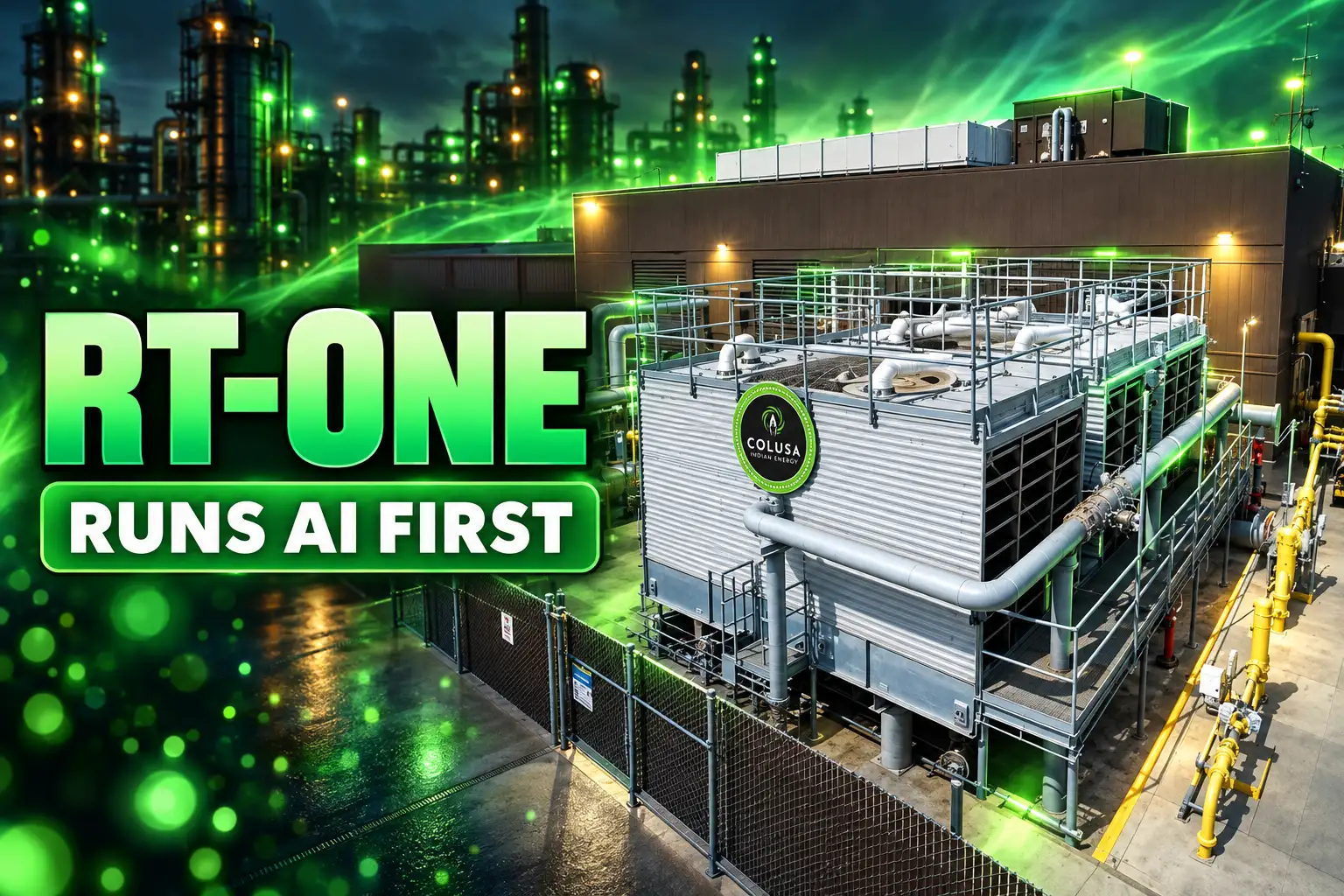
What the Colusa Center of Excellence Certifies
Near Colusa, RT-One will lock a high-performance stack, tune policies for speed, energy, and cost in Orchestrate AI, train its operations crews, and stand up customer environments before its own campuses open. The compute, network, thermal, and orchestration profile that survives those tests becomes the company’s standard deployment block. Local rules can still force changes at each site. The rest of the stack is meant to travel.
JOBS THE COLUSA CENTER TAKES ON
- Live proof: run the same power, heat, and performance conditions the production halls will see, not a lab approximation.
- Early service: host client environments, and in some cases serve end users, while permanent campuses are unfinished.
- Policy work: set energy, cost, and performance rules in Orchestrate AI on the stack that will ship.
- Crew training: put operators on the final tools before they walk into Brazil or another new hall.
RAVEL and Strata Expanse already describe an AI Centers of Excellence network as the way to test once and move a workload without rebuilding the architecture. Certified partners named around the Colusa site include DDN, Supermicro, NVIDIA, Intel, and AMD. RT-One’s June 23, 2026 pact with RAVEL is what this center now has to make real: a federated, sovereign cloud that treats sites in Brazil and the United States as one platform.
Power From a Tribal Microgrid With 14 Years of Uptime
Colusa is one of the largest planned AMPHIX sites. Power is supposed to come from a microgrid built and run by Colusa Indian Energy, a Section 17 company wholly owned by the Cachil Dehe Band of Wintun Indians of the Colusa Indian Community. The March 31, 2026 pact with Strata Expanse was the REIT’s first deal with a Tribal Nation, and the center sits on trust land.
The community’s flagship microgrid has run off-grid in island mode for more than 23 years. Colusa Indian Energy says that run includes 14 years without a power interruption. The same team cites more than 2.5 GW of capacity installed in more than 100 countries. Proofs of concept were slated to interconnect to the existing microgrid at once, with onsite generation past 100 MW planned over the next 18 months from that March announcement.
COLUSA POWER AND THE AMPHIX CALENDAR
- Dec. 19, 2025: Strata Expanse, RAVEL, and Supermicro open the first AI Center of Excellence in Ironton, Ohio, and describe a 30-site national rollout.
- March 9, 2026: RAVEL, Strata Expanse, and Available Infrastructure launch AMPHIX, billed as debuting at 30 U.S. sites, ahead of NVIDIA GTC 2026.
- March 31, 2026: Colusa Indian Energy and Strata Expanse announce the tribal-land campus and the 100 MW generation plan.
- June 23, 2026: RT-One names RAVEL as the orchestration partner for a federated sovereign platform across the Americas.
- Aug. 11, 2026: RT-One becomes AMPHIX’s first commercial customer and points that work at Colusa.
Kevin Blaser, vice president of business development at Colusa Indian Energy, has described the first slice of the campus as using surplus from the community’s existing 6 MW off-grid microgrid, with more generation added as tenants arrive. A U.S. Department of Energy snapshot puts the 290-acre Colusa Indian Community reservation about an hour north of Sacramento, along the Sacramento River, with tribal homes and businesses already on a tribally owned cogeneration plant and microgrid. That is the power story hiding under the customer announcement: the CoE can go live because this community already runs its own grid, not because a utility queue suddenly opened.
One Stack for Brazil, Paraguay, and Colombia
RT-One’s public campus map is still Brazil-heavy. On June 23, RAVEL said it would help run hybrid, spread-out sites as one system, including an Uberlândia campus of 400 MW then under development and described as Latin America’s largest AI data center project, on renewable power. On Dec. 18, 2025, RT-One said it had secured R$ 15 billion (about $3 billion) for AI data centers in Brazil, with Uberlândia’s first phase contracted at 100 MW and combined initial capacity with a Paraná site of up to 200 MW.
Palamone’s AMPHIX quote still names Paraguay and Colombia as places he does not want to re-prove the same points. Those two countries do not show up as specified RT-One campus files in the same way Uberlândia and Maringá do. They sit in the speech as reuse markets for a block that will be born in California.
RT-ONE SITES ON THE AMPHIX PLAN
| Site | Role | Power plan | What is live now |
|---|---|---|---|
| Colusa, California | AMPHIX Center of Excellence; certify the standard block and host early client environments | More than 100 MW of onsite generation planned by about Sept. 30, 2027; proofs on the existing tribal microgrid | Named as one of the largest planned AMPHIX sites; interconnection to the community microgrid was the immediate path |
| Uberlândia, Minas Gerais | Brazilian flagship campus in the federated design | 400 MW campus as described by RAVEL; 100 MW contracted in the first phase | Still under development when AMPHIX named RT-One as its first customer |
| Maringá / Paraná | Second Brazilian campus in the same program | With Uberlândia, combined initial capacity up to 200 MW | Planned; first operational delivery for the Brazil program was set for 2026 |
That table is the second-order point in numbers. The only site that can take a production-shaped workload in the near term is the California center. The Brazilian halls are the ones RT-One has been selling as Latin America’s AI parks. Colusa is where those parks get a working twin before the walls are up.
Nine Months and $4 Million for a Pilot That Still Guessed
RAVEL’s knock on the old method is specific. A production-grade pilot can take up to 9 months and cost up to $4 million, and still fail to test the configuration that later goes into the hall. Firms then scale on guesswork. AMPHIX prices the center on a consumption basis and lets a tenant validate the exact environment, tune models and governance on it, and train on it.
That pitch is aimed at operators who already sold GPU time against a calendar. It is also a warning about Colusa’s own power curve. The center can start on an existing microgrid. The 100 MW build-out was given 18 months from late March 2026. A tenant that wants a full AI factory, not a proof rack, is still waiting on generation that has not been installed yet. The shortcut is real. It is not infinite.
Strata Expanse has also talked about using the Colusa campus as a test bed for lower water use, heat capture, and long-duration storage, with partners such as Photon Vault, Syntropic Power, and Vaire. Those systems sit beside the commercial claim, not in place of it. RT-One is not buying a research park. It is buying a certified block it can drop into the next country with a land-and-power plan.
Palamone’s Customers Already Bought a Delivery Date
Palamone put the penalty in plain language. Land and energy strategy, he said, are already secured across the Americas. What the center adds is the chance to certify the same standardized block, stack, and operating policies while campuses are under construction, instead of after they open. Each hour spent in Colusa is an hour his crews do not spend proving the same point again in Brazil, Paraguay, or Colombia.
Our customers buy contracted capacity with a firm delivery date and defined performance standards; we pay a price if we miss either.
Fernando Palamone, CEO of RT-One, Aug. 11, 2026 announcement
He called that the gap between capital commitment and revenue service, and said the gain is not speed on a single site. It is certify once, deploy many times. Muyco’s matching line is that customers can validate and run the kit against real workloads before they make the big infrastructure spend, and that RT-One is the first to run that model.
Sovereign cloud is the political layer on the same mechanics. RT-One wants governments and regulated firms to keep control of data while jobs move across borders. The reference copy of that architecture will be born on tribal land in California. The company says local rules can still rewrite the layers that law requires. Everything else is meant to be a stamp.
After 30 Promised Sites, AMPHIX Finally Has a Tenant
AMPHIX spent the spring of 2026 as a booth story. The March 9 launch counted 30 U.S. sites and a first Ohio center that had opened in December. Five months later it still needed a campus operator that would put clients through the CoE and then copy the result. RT-One is that operator. The public conversation around the August deal was thin, which fits a wholesale infrastructure sale more than a gadget launch, and it leaves the penalty clause as the loudest fact in the file.
GPU supply is still the constraint that sits behind every one of those dates. Packaging and assembly houses have been saying the same thing on the component side, including ASE Technology’s warning that AI chip demand is now the bottleneck, which is why a firm delivery date is a dangerous thing to sell. A certified Colusa block does not mint extra GPUs. It cuts the second wait, the one that starts after the hardware exists: months of a one-off pilot that never matches the hall.
The bet now has a physical address. Client environments are supposed to rise next to a microgrid that has already run for more than two decades, while RT-One’s 400 MW Uberlândia campus and its Paraná pair are still in the build cycle that the company itself dated to 2026. If the Colusa copy is faithful, Palamone collects on contracts before those halls open. If it is not, he will still have paid to prove a stack in California, and he will still owe the dates he sold.

Instagram Plus Tests a Read-Only Mode That Cuts Stories

Altman Asks the Public to Accept Some AI Harm

Google Freezes OSS VRP Product Reports After AI Flood

AI Agents Make Payment Rails the Scarce Prize

Turkey’s Crypto Boom Now Runs Through Three Banks

Fable 5 Came Back Under a Commerce On-Off Switch

Google’s SpaceX GPU Lease Has a Sept. 30 Deadline

Plasma One’s XPL Locks Face a 1.81 Billion Cliff

DGO’s Rs 549 World Cup Pass Cost Fans Sleep and Data

Moonshot AI’s $30 Billion Ask Became a $35 Billion Close
-
 AI4 months ago
Fable 5 Came Back Under a Commerce On-Off Switch
-
 AI4 months ago
Google’s SpaceX GPU Lease Has a Sept. 30 Deadline
-
 CRYPTO4 months ago
Plasma One’s XPL Locks Face a 1.81 Billion Cliff
-
 APPS4 months ago
DGO’s Rs 549 World Cup Pass Cost Fans Sleep and Data
-
 AI4 months ago
Moonshot AI’s $30 Billion Ask Became a $35 Billion Close
-

 NEWS4 months ago
ColorOS 17 Device List Spans Oppo, OnePlus and Realme
-

 GAMING4 months ago
Xbox Cuts 3,200 Jobs After Five Years of Thin Returns
-

 GAMING4 months ago
The RTX 4050 Under Rs 70,000 Hides a Wattage Gap