
NEWS
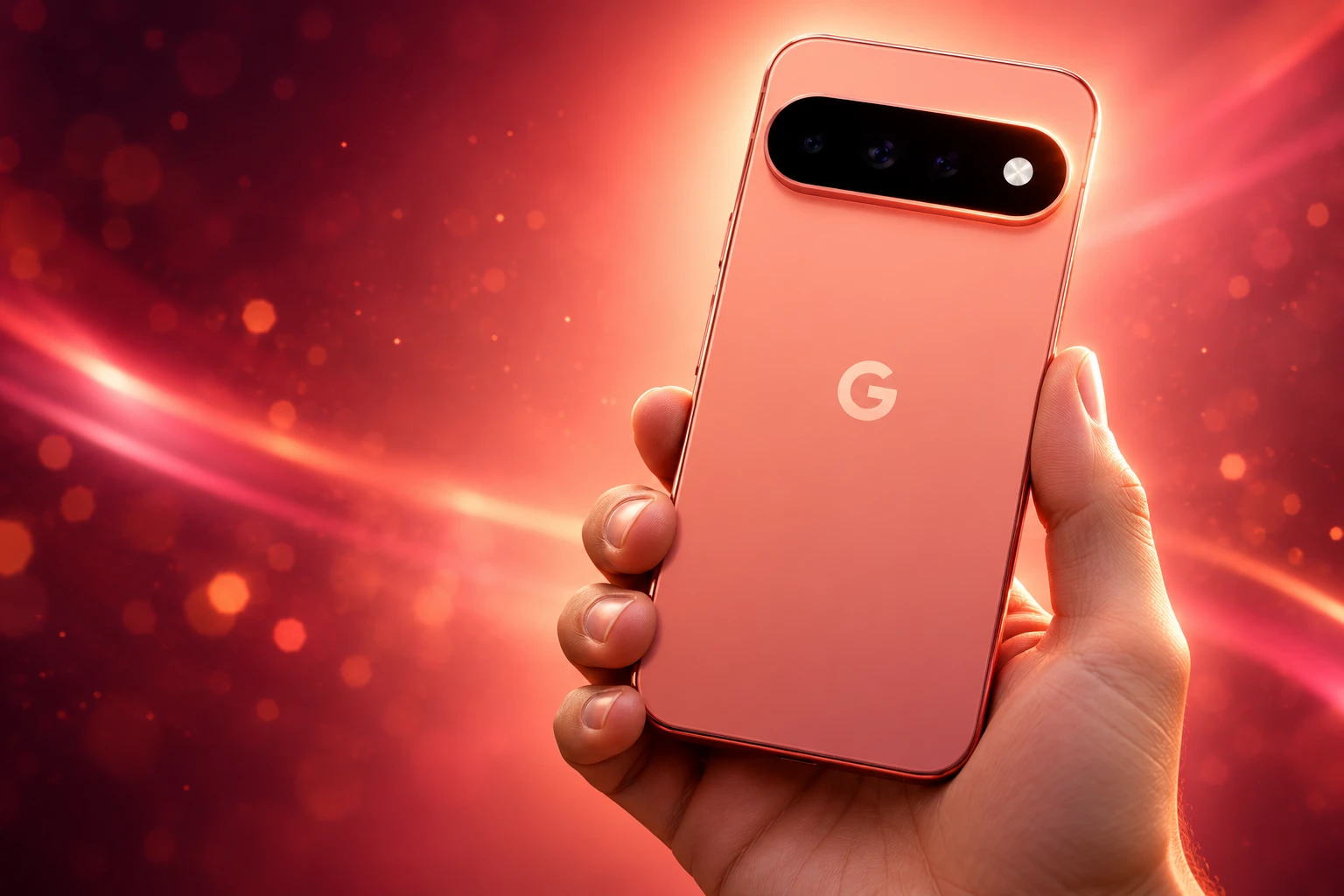
Google Bets Pixel 11 Can Let Gemini Run the Phone
Pixel 11 puts Gemini on apps, photos and dubs. Magic Capture is the bet owners use; booking and groceries still slip as Siri AI faces the same test.

Google’s Pixel 11 phones reached stores on August 20 with Gemini Intelligence built to run apps, pick photos, and dub video. The company is wagering that people will ask Gemini to finish the job instead of tapping OpenTable, Instacart, or the shutter themselves.
A month of hands-on use has split that wager in two. Magic Capture is the half owners actually fight about. Booking a table and building a grocery cart is the half that still hands the phone back.
A Phone Designed for Gemini Intelligence
Shenaz Zack, senior director of product management for Pixel, introduced the lineup as hardware more than 40 apps and counting can drive through Gemini, with Magic Capture and Live Translate riding along. Preorders opened August 12. Pixel 11 starts at $899, Pixel 11 Pro at $1,099, and Pixel 11 Pro XL at $1,299, each with 256GB as the floor and 12GB of RAM. All three run Google’s Tensor G6 chip and carry seven years of OS, security, and Pixel Drop updates. Pro models add six months of Google AI Pro.
The Google Store’s line for the software is “Less tapping, more living.” Mindy Brooks, vice president of product management, put the wider Android pitch in blunter terms in May, when Gemini Intelligence first rolled toward Galaxy and Pixel phones.
As Android transitions from an operating system into an intelligence system, your devices are becoming even more helpful with upgrades that will save you time.
Mindy Brooks, VP, Product Management, Google
On Pixel 11 that means Rambler, which turns speech full of ums and ahs into cleaner text; glanceable cards that can surface a flight status inside a chat; and Proactive Assistance, which tries to lock a dinner reservation from a text thread with one tap. The base Pixel 11 also gets a new 48-megapixel main camera with 56% more light sensitivity and 30x Super Zoom. Instant Night Sight on the Pro phones is up to 4.5 times faster than it was on Pixel 10, Pixel 9, and Pixel 8.
THE PIXEL 11 LINEUP
| Model | Starting price | What is extra |
|---|---|---|
| Pixel 11 | $899 | 48MP main, 30x Super Zoom |
| Pixel 11 Pro | $1,099 | HiLight, 6 months of Google AI Pro |
| Pixel 11 Pro XL | $1,299 | HiLight, 6 months of Google AI Pro |
HiLight, the colored light on the back, is a Pro and Fold extra. It is not on the $899 phone. Third-party tools already do more with that LED than Google ships, which is a small tell: the hardware gesture is ahead of the software Google is willing to turn on.
The Assistant Still Hands the Job Back
Gemini Intelligence is supposed to walk through apps the way a person would. Google spent months tuning multi-step flows on Pixel 10 and Galaxy S26 for food and rideshare, then widened the net. Ask it to book a table and it should open OpenTable. Ask it to fill a cart and it should talk to Instacart, which in May called itself the first grocery partner on Gemini.
The demo dies in the handoff. In a week with a $1,099 Pixel 11 Pro, one tester held the side button, asked Gemini to book a table for two at Zuni Café in San Francisco, saw OpenTable slots, then lost those slots after checking a time with a partner. The OpenTable app itself still showed plenty of tables. Google said it was working on that stall.
The Power Button That Restarts the Phone
The grocery run failed for a dumber reason. The same tester started reading a long Costco list, diapers, wipes, sugar, brown sugar, toilet paper, paper towels, and the phone shut off. Hold the side button for 60 seconds and Pixel restarts. That button is also how you summon Gemini. Google’s own Gemini Intelligence post tells you to long press the power button over a grocery list and ask it to build a cart. Google later said you can let go after Gemini wakes. In that test, letting go made the assistant stop listening.
WHERE THE AGENT STILL BREAKS
- Restaurant holds: OpenTable slots can vanish from the Gemini sheet while the real app still has tables.
- Long voice lists: A Costco order read aloud ran long enough to trip a 60-second restart.
- Listen gap: Releasing the side button, as Google advises, can make Gemini stop hearing the rest of the list.
Paying flagship money for that loop is the objection that will not die. Some Pixel owners are simply skipping this generation because Gemini Intelligence is not a reason to buy a new phone. The louder problem is not that an assistant exists. It is that the assistant still needs you to finish the booking.
Magic Capture Is Splitting Pixel Owners
Magic Capture is the other half of the bet, and it is the one people keep using. Open Camera, tap the Gemini star, and the phone records a clip while on-device models plus Gemini scan around 400 frames for a smile, a laugh, or an action beat. It writes 12-megapixel stills, can crop or unblur if you opt in, and keeps the video so you are not hopping modes. Google’s pitch is a birthday candle you do not miss because you were busy hunting a shutter press.
Zack has been selling that “stay present” line since the phones were on preorder.
My mom used to joke that my phone is my oxygen 😆 (and she wasn't wrong).
Balancing work, family, and personal time while staying present is a juggling act, but Pixel 11 features like HiLight, Gemini Intelligence, and Magic Capture have made a huge difference in clearing my… pic.twitter.com/onVqYpRSHV
— Shenaz Zack (@shenazz) August 26, 2026
The stills are not a frame grab from 4K video. Extra data captured during the session is used to rebuild an HDR+ photo. In one 15-second clip, the first picks looked flat until a Gemini pass about a minute later filled in detail. A 14-second river-surf clip came back with the highlights a human editor would have wanted. Output stays 12-megapixel, which is a different product from the 48-megapixel main sensor in Photo mode.
WHERE TESTERS DISAGREE
- The buy-it case: Some owners who spent a month shooting kids and pets on Pixel 11 Pro and Fold units call Magic Capture the reason to get the phone, because it saved frames they would have missed while living the moment.
- The skip-it case: Other testers got a neutral face on a two-year-old when they wanted the closed-eye smile in the same clip, or found the AI set worse than a burst they would have shot and culled themselves.
- Google’s out: A spokeswoman said you can pick another frame if you dislike Gemini’s taste. That flexibility is real, and it also puts you back in the old job of choosing.
People already like shooting a lot, sitting with the roll later, and keeping the weird frame. Handing that ritual to a model feels like a chore to one camp and like relief to another. The feature is Pixel 11 only. Google has not said it will come back to older Pixels.
What Live Translate Can Dub Right Now
The third leg of the software pitch is the one that keeps landing. While a YouTube video or a podcast plays, Pixel 11 can pop a window and dub the audio into a language you choose, trying to keep the speaker’s voice. Google says the work runs on device on Tensor G6. It is not instant, and it is not in every app.
Launch dubbing is a short list. Google’s Pixel help page for Live Translate names six media languages.
LIVE TRANSLATE MEDIA LANGUAGES
- German
- English
- Spanish
- French
- Italian
- Japanese
Chat translation on Pixel already covers a longer set, including Arabic, Hindi, Korean, Portuguese, and Chinese. The new wow is the dubber, and it is the short list. A French pass on English cooking clips with Tom Holland and Matt Damon talking pizza sounded close enough to follow and too literal to a native speaker who checked the same files. If the models get less stiff, this is the feature that will travel. Apple already ships live translation in AirPods. Pixel is putting a similar trick on the speaker in the video.
Voice Translate on calls is a separate tool, on Pixel 10 and later, with its own pair list that includes Hindi, Indonesian, Russian, and Swedish. Do not mix the two. One is a dubbed YouTube window. The other is a phone call that tries to speak in your voice.
Google Holds 3% of U.S. Phone Shipments
This has not to sell in huge numbers for Google to keep running the experiment. Counterpoint Research’s U.S. quarterly tracker put Google at 3% of smartphone shipments in the second quarter of 2026, after a 7% spike in the third quarter of 2025 when Pixel 10 launched. Apple held 54% in that same Q2 2026 print. Samsung held 30%.
U.S. SHARE IN TWO QUARTERS
- Q3 2025: Google 7% of U.S. smartphone shipments, Pixel 10’s launch window.
- Q2 2026: Google 3% of U.S. smartphone shipments, flat with the prior quarter.
- Q2 2026 rivals: Apple 54%, Samsung 30%, Motorola 11%.
That 3% still moves the rest of the industry. Best Take, Magic Eraser, and call screening showed up on Pixel first and then in other camera apps and dialers. Samsung already ships a cousin of Magic Capture as Single Take. Apple will spend the fall asking Siri to do the multi-step work Gemini is failing in public. Pixel is the lab. The phones most people buy are the exam.
Siri AI Gets the Same Multi-Step Homework
Apple unveiled Siri AI on June 8 as a rebuilt assistant with personal context, on-screen awareness, and a dedicated app that syncs threads over iCloud. Craig Federighi, Apple’s senior vice president of Software Engineering, said the new Siri is meant to help people find information and get things done, and to take action across apps more naturally.
With access to broad world knowledge for up-to-date answers on virtually any topic, along with onscreen awareness and personal context understanding, Siri AI can help users take action across apps more naturally than ever.
Craig Federighi, senior vice president of Software Engineering, Apple newsroom
Apple set an English-language beta for Siri AI with iOS 27 on September 14, with French, Japanese, Korean, Portuguese, and Spanish listed for October. The floor is iPhone 15 Pro and iPhone 16 or later. Apple’s newsroom frames the stack as Apple Intelligence and Private Cloud Compute. Federighi has also described a collaboration that draws on technologies behind Google’s Gemini family of models, while stressing that Siri is not the Gemini app with a new coat of paint.
So the interesting collision is not Pixel versus iPhone share. It is two assistants, both chasing multi-step work across apps, going public weeks apart. Pixel 11 already showed what happens when the agent meets a real reservation book and a power button that can reboot the phone. Siri’s version of that test is the one most phone buyers will actually see.
The Pixel Tricks That Already Survived
Google has been shipping odd Pixel software for years. Only a few pieces stuck with people who do not care about Gemini keynotes. Magic Eraser, or the one-tap removal of a photo bomber, is one. Call screening that catches scam rings is another. Auto-transcribing a recorded call is a third. None of those replaced the home screen. They made a single job less stupid, then got copied.
Live Translate is the new candidate for that list, once more languages ship and the French stops sounding like a phrasebook. Rambler, the voice typer that keeps your meaning and drops the filler, is the quiet one reviewers keep using even when they shrug at Proactive Assistance. Magic Capture may join them for parents and anyone shooting motion, or it may remain a mode you forget is there, like last year’s Magic Cue.
The agent that books the table is the part Google cannot yet add to that list. Until Gemini can hold an OpenTable slot and hear a full grocery list without rebooting the phone, Pixel 11 is still a camera-and-translate story wearing an operating-system pitch. Siri AI now has to clear the same bar, on many more phones, with the same class of apps in the way.

Instagram Plus Tests a Read-Only Mode That Cuts Stories

Altman Asks the Public to Accept Some AI Harm

Google Freezes OSS VRP Product Reports After AI Flood

AI Agents Make Payment Rails the Scarce Prize

Turkey’s Crypto Boom Now Runs Through Three Banks

Fable 5 Came Back Under a Commerce On-Off Switch

Google’s SpaceX GPU Lease Has a Sept. 30 Deadline

Plasma One’s XPL Locks Face a 1.81 Billion Cliff

DGO’s Rs 549 World Cup Pass Cost Fans Sleep and Data

Moonshot AI’s $30 Billion Ask Became a $35 Billion Close
-
 AI4 months ago
Fable 5 Came Back Under a Commerce On-Off Switch
-
 AI5 months ago
Google’s SpaceX GPU Lease Has a Sept. 30 Deadline
-
 CRYPTO4 months ago
Plasma One’s XPL Locks Face a 1.81 Billion Cliff
-
 APPS4 months ago
DGO’s Rs 549 World Cup Pass Cost Fans Sleep and Data
-
 AI5 months ago
Moonshot AI’s $30 Billion Ask Became a $35 Billion Close
-
 NEWS5 months ago
ColorOS 17 Device List Spans Oppo, OnePlus and Realme
-

 GAMING4 months ago
Xbox Cuts 3,200 Jobs After Five Years of Thin Returns
-
 GAMING4 months ago
The RTX 4050 Under Rs 70,000 Hides a Wattage Gap