
AI
AI Girlfriend Users Are the Ones Calling It Cheating
Current AI girlfriend app users are the Americans most likely to call a partner’s AI romance cheating, a 1,709-person U.S. survey finds.

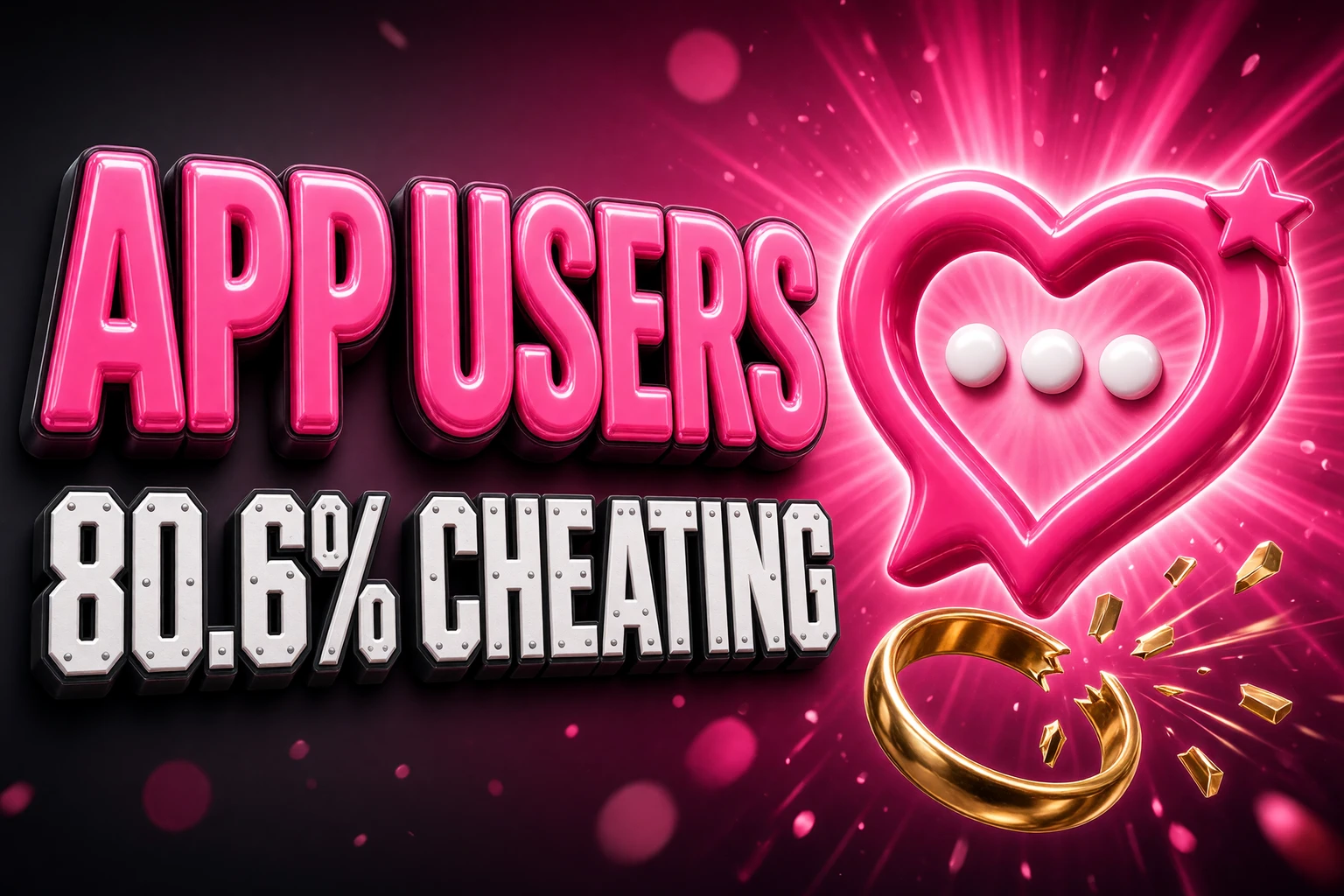
Current users of AI girlfriend and boyfriend apps are the group most likely to call a partner’s AI romance cheating, at 80.6%. That finding sits inside a U.S. survey released by AI Girlfriend Coach on September 7, 2026.
Across 1,709 quality-screened U.S. responses, 50.5% said a partner’s romantic or sexual relationship with an AI can count as cheating. Among people who could imagine developing romantic feelings for an AI, the share rose to 73.0%.
Current Users Police the Boundary Hardest
Ranji Mercado, who publishes AI Girlfriend Coach and paid for the fieldwork, ran the questionnaire through SurveyMonkey Audience on August 26 and 27, 2026. The firm collected 2,150 completed answers from U.S. adults 18 and older, then dropped 441 that showed a repeated contradictory pattern, leaving 1,709 for analysis. Age and gender were census-balanced; region and household income were not.
Of those 1,709 people, 422 had used an AI girlfriend or boyfriend app. That is 24.7% of the analyzed sample, split evenly into 211 current users (12.3%) and 211 former users (12.3%). The cheating question did not get softer as experience rose. It got harder.
WHO CALLS A PARTNER’S AI ROMANCE CHEATING
| Group | Share calling it cheating |
|---|---|
| Current app users | 80.6% |
| People open to romantic feelings for an AI | 73.0% |
| Former app users | 60.2% |
| Never-users | 44.0% |
| People who said they could never develop those feelings | 41.2% |
Mercado’s write-up treats “open to romantic feelings” as two answers combined: people who said they could genuinely fall in love with an AI, and people who said maybe, if the AI became realistic enough. The survey cannot show that using an app caused the stricter view. It shows that the people who already take AI intimacy seriously are the least willing to file it under harmless software.
Can you cheat on someone with someone who isn’t human?
Ranji Mercado, founder, AI Girlfriend Coach, on X
https://x.com/ranjimercado/status/2096201010272178283
He has spent more than $3,000 of his own money across more than 75 companion platforms. The public fight around those apps still leans on a simple test: the bot is not a person, so the chat cannot be an affair. His sample does not follow that test.
The Main Draw Is Someone to Talk To
When every respondent, user or not, had to pick one main reason someone would use an AI companion, romance was a distant fourth. Company led by a wide margin, and it led in every subgroup the firm checked.
MAIN REASON GIVEN FOR USING AN AI COMPANION
- Someone to talk to: 56.6% chose having someone to talk to or feeling less lonely.
- Mental health: 18.5% chose improving mental health or coping with depression.
- Confidence: 14.6% chose confidence or self-esteem.
- Romance or sex: 10.3% chose affection, romance, or sexual interaction.
Users of the girlfriend and boyfriend apps were not a male club. Of the 422 current and former users, 50.7% were men (214) and 49.3% were women (208). Men still leaned more toward the romantic pitch: 13.5% of men were current users, against 11.3% of women, and 34.5% of men said they could develop romantic feelings for an AI, against 24.5% of women. On the reason question, 16.0% of men picked affection, romance, or sex, against 5.2% of women, about three times as high, which still left 84% of men picking something else.
That mix helps explain why the cheating question will not stay in the novelty bin. If the stated draw is a standing conversation, the injury a partner feels is the time and the secrecy, not a body in a hotel room. In the long argument about these apps, that is the point people keep returning to, even when they refuse the word cheating: repeated use can still read as a verdict that the human partner is not enough.
Twice the Usage Inside Marriage
The lonely-single story also fails the marital split. Engaged or married respondents were nearly twice as likely as singles to have used an AI girlfriend or boyfriend app, 30.7% against 16.3%. They were also more likely to apply the cheating label: 54.8% of engaged or married respondents said AI romance can be cheating, against 42.2% of singles.
Engaged or married women drew the hardest inner line. Among that group, 39.8% said any romantic or sexual interaction with an AI already counts as cheating, compared with 30.1% of engaged or married men and 21.9% of single men.
A separate Canadian survey of 1,815 adults, led by researchers David Lafortune, Ellfie Chen, and Valerie A. Lapointe, landed in a similar place. About half of those respondents treated a partner’s romantic companion use as infidelity, and roughly three-quarters said they would react badly. Cisgender women were about twice as likely as cisgender men to use the cheating label. Nearly two-thirds of companion users in that sample had kept the use from their partner. The authors flagged the work as unpublished and preliminary, and still useful as a second country’s echo of the same half-and-half split.
Character.AI has said it supports about 20 million monthly active users, a reminder that the products in this debate already sit at consumer scale, including personas built to simulate girlfriends and boyfriends.
Four Answers to the Cheating Question
The headline 50.5% figure, 863 of 1,709, hides a four-way split. Respondents had one choice, so the shares add to 100%.
WHERE THE SAMPLE DREW THE LINE
| Answer | Share of 1,709 |
|---|---|
| Any romantic or sexual AI interaction is cheating | 33.4% |
| It becomes cheating once emotional or sexual attachment develops | 17.1% |
| Not cheating, but still uncomfortable | 21.2% |
| Not cheating, because an AI is not a real person | 28.3% |
Add the first three rows and 71.7% put some kind of relationship limit around AI romance. Only 28.3% dismissed the question on the grounds that the software is not a person. For the 17.1% who waited for attachment, the machine was not the problem. The feeling was.
That is a closer cousin to an emotional affair than to porn, and it matches how the public argument actually runs. People who wave the chat through still often say they would leave if it became a habit. People who reach for the cheating word are usually talking about diverted care, not about whether the model has a pulse.
Secret Soulmates and a Stability Drop
The AI Girlfriend Coach sample is adults of all ages. Work aimed at partnered 18-to-30-year-olds, published in May 2026 by the Wheatley Institute at Brigham Young University and the Institute for Family Studies, fills in what those chats look like when a human partner is already in the picture. In that national sample of more than 2,000 young adults, 1 in 7 (15%) of dating, engaged, and married respondents said they regularly interact with AI romantic chatbots. Another 20% to 30% said they had at least tried one. A Gallup figure cited in the same write-up put monthly use among 18-to-28-year-olds at 10%.
WHAT PARTNERED YOUNG ADULTS REPORTED
- Sexual use: 13% said they often roleplay romantically or sexually with an AI companion, and 11% said they often use one to generate sexually explicit content.
- Secrecy: 30% said their real-life partner had no knowledge of the use, 11% said the partner was only somewhat aware, and 14% said the partner was mostly but not fully aware.
- Motive to hide: 69% said it was somewhat or extremely important that their partner not learn about their full use.
- Comparison to the human: 68% said it was somewhat or completely true that it was easier to talk to the AI about their feelings than to real people, 50% wished their partner behaved more like the AI, and 56% wished their conversations with their partner were more like the AI chats.
Regression models in that report associated regular AI-companion use with a 46% drop in the likelihood of being in a stable relationship and a 40% drop in the likelihood of high-quality communication with the human partner. Reported satisfaction ran the other way, higher among regular users, which the authors read as a short-term soothing effect during conflict. Jason S. Carroll, a marriage researcher and director of the family initiative at the Wheatley Institute, has said the data undercuts the idea that AI companions belong only to people with no human partner.
Family Lawyers Meet the Chatbot
Households are already being asked to name the line in writing. Julia Rodgers, founder and chief executive of Hello Prenups, has said some clients want agreements that treat romantic or sexual use of an AI chatbot, virtual companion, or avatar as an affair. Lisa Zeiderman, a New York family lawyer, has said the same dispute is showing up in divorce work, with clients who say a spouse spent more time with an AI companion than with them or their children.
A Pew Research Center survey of 5,023 U.S. adults, fielded June 9 to 15, 2025, helps explain why that clause does not sound exotic to a lot of people. Far more adults said AI will worsen forming meaningful relationships (50%) than said it will improve them (5%). About two-thirds said AI should play no role in judging whether two people could fall in love. Among adults under 30, 58% said AI will make people worse at forming meaningful relationships with other people.
Mercado posted the full tables, tests, and questionnaire in a 41-page master research report. The next argument this survey points to is not whether half the country will pick the word cheating. It is what couples do with a product that its own users already treat as serious enough to betray someone over.
Frequently Asked Questions
Does the Survey Represent All U.S. Adults?
It is a census-balanced sample on age and gender only. Mercado’s team asked 10 questions on use, motives, attachment, cheating, and human relationships, and it did not weight the 1,709 analyzed answers by region or household income, so those cuts should be read as patterns inside this panel, not as a full national map.
Which Age Group Is Most Open to an AI Partner?
Millennials, not Gen Z. In this sample, 44.7% of Millennials said they would consider an AI girlfriend or boyfriend, compared with 31.6% of Gen X, 12.5% of Gen Z, and 8.6% of Boomers, the reverse of the usual “kids and chatbots” sketch.
Do Americans Prefer Dating Apps or AI Partners?
Dating apps, by a wide gap. Asked to choose, 52.2% preferred dating apps and 7.8% preferred an AI girlfriend or boyfriend, and 64.6% said an AI could never replace a human relationship in their own life.
Would Former Users Try an AI Companion Again?
Most said they would. Among former users, 74.4% would consider using an AI girlfriend or boyfriend again, close to the 96.2% of current users who would keep going, and far above the 11.7% of never-users who would consider trying one.


DigitalOcean’s $894 Million Backlog Rewrites the Old Cloud

Companies Froze Job Design and Called AI a People Problem

AI Capex Looks Unique Because the Chips Wear Out

Samsung Medison’s HERA Z10 Aims at the Sonographer Shortage

GPT-6 Astra Ships as OpenAI’s First Critical Cyber Model

Palms Sells Clean Air Without Ending Casino Smoking

OnlyFans Promo Bots on X Now Pass the Humanity Tests

Datamaran Drops the ESG Label After Winning the Argument

Xiaomi’s Own Chip Lands While Apple Argues Over Color

Pixel 11 Trails Galaxy Phones That Last as Long

Oracle Cuts 21,000 Jobs in a Year, Cites AI in 10-K Filing

Fable 5 and Mythos 5 Return as US Lifts Anthropic Export Controls

SpaceX’s Google Deal Turns a Rocket Company Into a Cloud Landlord

CD Projekt Red Co-CEO: Redemption Arc Isn’t Done, Witcher 4 in 2027

XPL Rallies 30% Ahead of Plasma One Card Tier Launch

Google Search Profiles Build a Follow Graph Inside Discover

DGO App Brings Rs 549 Mobile Pass for FIFA World Cup 2026 in Nepal

Moonshot AI Targets $30 Billion in China’s Fastest AI Funding Sprint

Oppo’s ColorOS 17 Eligibility List Leaves A-Series Buyers Behind

Microsoft Xbox Layoffs Start in July as Sharma Slams 3% Margin
-
 AI3 months ago
Oracle Cuts 21,000 Jobs in a Year, Cites AI in 10-K Filing
-
 AI2 months ago
Fable 5 and Mythos 5 Return as US Lifts Anthropic Export Controls
-
 AI3 months ago
SpaceX’s Google Deal Turns a Rocket Company Into a Cloud Landlord
-
 GAMING3 months ago
CD Projekt Red Co-CEO: Redemption Arc Isn’t Done, Witcher 4 in 2027
-
 CRYPTO3 months ago
XPL Rallies 30% Ahead of Plasma One Card Tier Launch
-
 NEWS3 months ago
Google Search Profiles Build a Follow Graph Inside Discover
-
 APPS3 months ago
DGO App Brings Rs 549 Mobile Pass for FIFA World Cup 2026 in Nepal
-
 AI3 months ago
Moonshot AI Targets $30 Billion in China’s Fastest AI Funding Sprint