
AI
Driscoll Pushes Nine Defense Giants to Open Code at Fort Carson

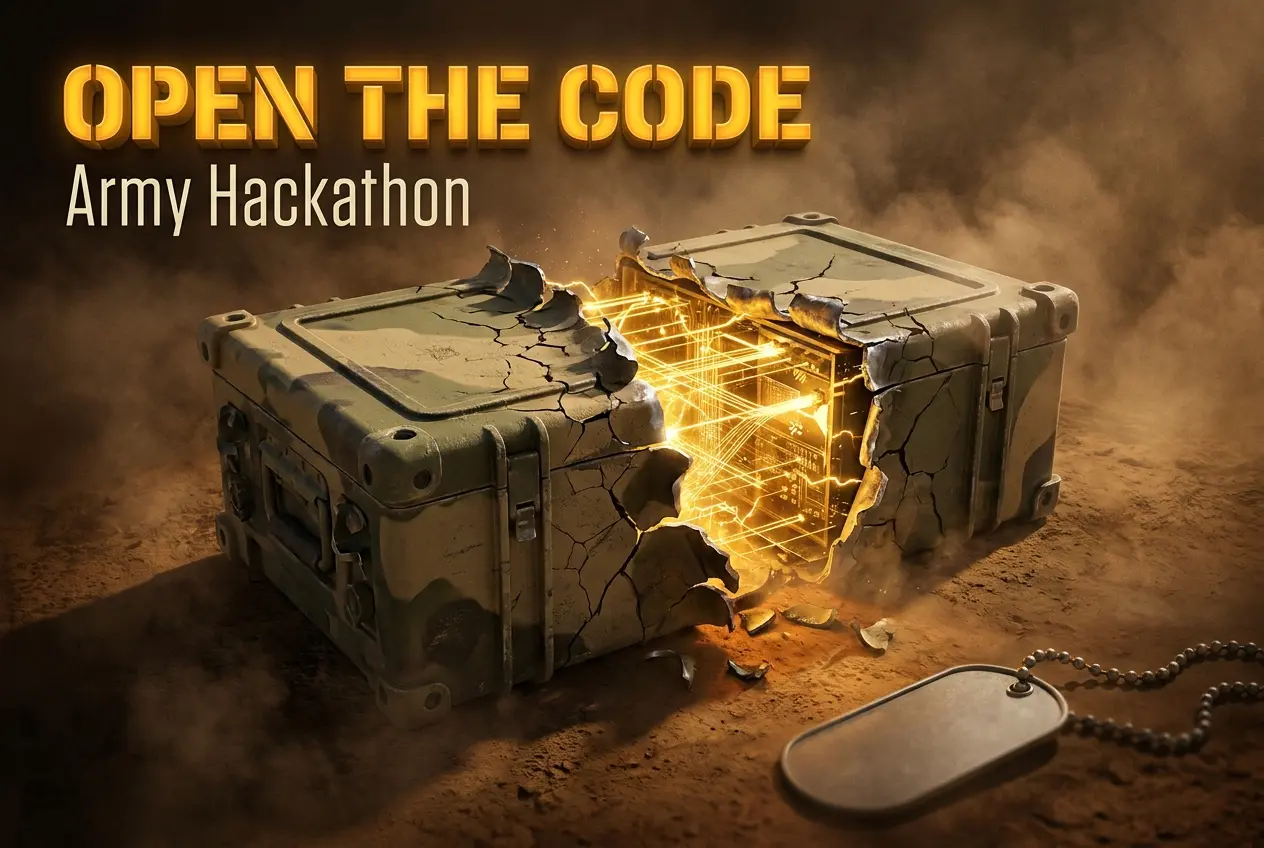
The U.S. Army is putting nine of its biggest contractors in the same room later this month and asking them to do something the Pentagon has begged for since the 1990s. Make their proprietary weapons systems talk to each other. Army Secretary Daniel Driscoll announced the program, called Right to Integrate, on Tuesday, with the first hackathon convening at Fort Carson, Colorado. Engineers from Anduril, Boeing, General Dynamics, L3Harris, Lockheed Martin, Northrop Grumman, Palantir, Perennial Autonomy, and RTX will show up with hardware and code-level access to test whether their systems can share a common AI-ready data layer.
The pitch sounds clean. Get the platforms to share data so artificial intelligence can sit on top. The reality is messier. Driscoll is running this play four months after a damning internal memo nearly torpedoed the Army’s flagship command-and-control program, and seven months after his own staff publicly conceded “very high risk” inside a battlefield network Anduril and Palantir already built.
Fort Carson is the proof point. Either nine companies that compete for the same contracts open their interfaces in front of each other on the same floor, or the program collapses back into the same fragmented stack the Army has been paying for since the early Bush years. Driscoll, who took the job in February 2025 according to the Army’s announcement of his swearing-in as 26th Secretary, has staked his tenure on breaking that stack.
What Right to Integrate Actually Asks the Vendors to Hand Over
The hackathon is structured as a series of one-day working sessions, not a contract action. The goal, per the Tuesday release, is to “deconflict” the operating systems of existing weapons platforms so they can pass data without bespoke middleware, custom adapters, or vendor-specific gateways.
Translated, that means handing rival vendors enough technical detail to make fire-control software, drone autopilots, sensor packages, and back-end data layers behave as a single stack. That is not a small ask in a sector built on locked APIs and recurring license revenue. Each vendor is expected to bring real assets, not slideware.
- A representative system from its current Army portfolio
- Engineers and scientists with code-level authority
- Compatible APIs or a documented path to one
- Real-time integration testing on Army-issued hardware
The September Memo Still Hanging Over Fort Carson
Driscoll’s hackathon does not happen in a vacuum. It happens after Gabriele Chiulli, the Army’s authorizing official on the Next Generation Command and Control prototype, signed a September 5, 2025 internal memo describing the Anduril-Palantir-built system as carrying so many open holes the service had to treat it as “very high risk.”
The memo, first reported by Reuters in October, found that any authorized user could access every application and dataset on the platform regardless of clearance level, with no logging to track misuse. One application carried 25 high-severity code vulnerabilities. Three more averaged over 200 unassessed vulnerabilities each.
We cannot control who sees what, we cannot see what users are doing, and we cannot verify that the software itself is secure.
That sentence, attributed to Chiulli, set the political ceiling for everything that follows. The Army said in October the critical issues had been mitigated. Anduril called the report an “outdated snapshot” of a program it had detailed in its July 2025 prototype announcement. Driscoll cannot just tell vendors to integrate faster now. He has to prove the integration model can survive a service-level cyber audit.
The Nine Companies Coming to the Fort Carson Floor
The vendor mix shows what Driscoll is really doing. He is not picking a single prime to write the operating system. He is putting traditional and Silicon Valley contractors in direct competition over the data layer, with the Army keeping the integration referee role for itself.
| Company | Headquartered | Existing Army Stake |
|---|---|---|
| Anduril | Costa Mesa, CA | $99.6M NGC2 prototype lead, $20B enterprise ceiling |
| Palantir | Denver, CO | $10B 10-year enterprise agreement, NGC2 data layer |
| Lockheed Martin | Bethesda, MD | NGC2 OTA awarded September 2025 |
| RTX | Arlington, VA | Patriot, sensor and radar portfolio |
| Northrop Grumman | Falls Church, VA | IBCS battle-management franchise |
| Boeing | Arlington, VA | Apache, MQ-25, Army aviation systems |
| General Dynamics | Reston, VA | Abrams, networking, ground vehicle electronics |
| L3Harris | Melbourne, FL | Tactical radios, ISR sensors |
| Perennial Autonomy | Santa Clara, CA | Robotics and autonomy startup |
Why Driscoll Keeps Pointing Back to Ukraine
Driscoll’s framing of the hackathon kept circling one place. “The war in Ukraine showed the world that speed matters and an open architecture construct is highly effective in high-intensity warfare,” he said in the Tuesday announcement. “We’ve known for a long time that our systems, weapons, and sensors need to talk to each other so that we can dominate the battlefield.”
That comment is doing real work. Ukrainian forces have published technical specs that mandate compatibility between drones, sensors, and weapons platforms, often built on off-the-shelf hardware. U.S. contractors historically built bespoke systems that connect only through expensive middleware, generating recurring license revenue and slowing every software refresh.
Army Chief Technology Officer Alex Miller, the technical face of the rollout, was blunter in the same release. “We have seen standards come and go in the department for decades, but are still beholden to sub-par implementation, closed and proprietary interfaces,” said Miller, who frames Right to Integrate as the moment the service stops accepting that posture.
A $30 Billion Bet on Two Silicon Valley Startups
The hackathon is the visible part of a much larger spending shift. Over the past year the Army has consolidated 120 separate Anduril contracts into a single enterprise agreement with a $20 billion ceiling over up to ten years, and 75 Palantir contracts into a $10 billion ten-year deal. The two startups now sit on combined Army ceiling commitments roughly the size of Lockheed Martin’s annual missiles and fire control segment.
That trajectory accelerated in July 2025. The Army awarded Anduril a $99.6 million Other Transaction Authority deal to deliver a division-level NGC2 prototype in 11 months, with Palantir, Microsoft, Striveworks, Govini, Instant Connect Enterprise, Research Innovations, and Rune Technologies on the team, per the Army’s NGC2 prototype contract award announcement.
Eight weeks after the deal was signed, the 4th Infantry Division ran NGC2 in a live-fire exercise called Ivy Sting 1, with Anduril’s Lattice Mesh and Palantir’s Target Workbench on the targeting chain. Palantir’s U.S. Army defense solutions overview details the data-fabric layer that ties those targeting workflows together.
Wall Street noticed. Palantir shares dipped on the October memo, then rebounded as the service said cyber issues had been remediated. William Blair analysts pegged Palantir’s NGC2 cut at roughly $30 million now, with potential to push past $150 million in annual recurring revenue inside three years.
The Right to Integrate hackathon protects that revenue. If the seven traditional primes refuse to align their systems to a Palantir or Anduril data layer, the entire $30 billion bet sits in a silo while older middleware contracts keep printing money for the same primes the Army wants to discipline.
Driscoll’s Quiet War on the Prime Contractor Model
Driscoll has not hidden where this is going. “I will measure it as success if in the next two years, one of the primes is no longer in business,” he said in a May 2025 Breaking Defense interview, a remark that reads very different now that nine of those primes are walking into Fort Carson with code-level access. He has paired that posture with the cancellation of the M10 Booker light tank, a pause on the robotic combat vehicle award, and a redirect of roughly 8 percent of non-lethal Defense Department spending into innovative weaponry, detailed in the Army’s plan to eliminate programs not contributing to lethality.
The service has also commissioned four senior tech executives, from Palantir, Meta, OpenAI, and Thinking Machines, as lieutenant colonels in a new unit. The Army’s launch of Detachment 201 as an Executive Innovation Corps places those advisors directly inside the same software-stack debates the hackathon will surface.
Right to Integrate is the operational expression of that posture. A prime that cannot or will not integrate at the data layer in May 2026 will likely lose ground to a vendor that does, and Driscoll has built the hackathon as the moment that loss becomes visible to everyone in the room at once.
Frequently Asked Questions
What Is the Army’s Right to Integrate Initiative?
It’s a series of one-day hackathons announced May 5, 2026 by Army Secretary Dan Driscoll. The first event runs later in May 2026 at Fort Carson, Colorado, and convenes engineers from nine major Army vendors to deconflict their software interfaces and feed a shared command-and-control data layer. There is no contract award attached. Vendors who integrate cleanly are positioned for follow-on NGC2 task orders.
Why Is the Army Calling It a Hackathon Instead of a Procurement?
Because it isn’t a contract action. It’s a working session where vendor engineers physically open their APIs in front of Army CTO Alex Miller’s team. Vendors that resist face exclusion from the next NGC2 task order. The structure also lets the Army avoid the year-long protest cycle that follows traditional awards, since no money changes hands at Fort Carson.
Does Right to Integrate Replace the Anduril-Palantir NGC2 Prototype?
No. NGC2 is the underlying command-and-control system that the integration sessions feed into. Anduril leads NGC2 under a $99.6 million Other Transaction Authority with Palantir on the data layer. Right to Integrate forces the other seven Fort Carson vendors to make their existing weapons platforms compatible with that NGC2 stack rather than running parallel ones, which is where most of the Army’s recent acquisition pain has lived.
What About the Security Flaws the Army Flagged in NGC2 Last Year?
The September 5, 2025 memo from Army authorizing official Gabriele Chiulli described “very high risk” cybersecurity gaps in early NGC2 builds, including over 200 unassessed code vulnerabilities in some apps. The Army said in October it had mitigated the critical issues. Anduril called the memo an “outdated snapshot.” Watch the next service-level cyber audit, expected before the 4th Infantry Division’s full operational deployment.
Fort Carson in late May 2026 will be the first place the United States tests whether nine companies that have spent decades writing closed code can, in a single room, agree on one open interface. Driscoll’s bet is that the threat of losing $30 billion in combined Anduril and Palantir ceiling commitments is finally enough leverage to break the model. The vendors who walk out integrated will write the next decade of Army software.


AMD’s Data Center Revenue Jumps 57% as Its Stock Bets on Execution

Microsoft Loses an Xbox Lawsuit Just as Sony Kills Physical Discs

Bethesda Union Says HR Tore Down Its Memorial for Laid-Off Staff

Google Pixel 11 Pro Fold Price Leaks Point Toward a $2,000 Foldable

Smart Scales Promise Lab-Grade Body Fat Numbers, and the Science Pushes Back

Amap’s Ride-Hailing Hits 1,000 Cities Amid Security Warnings

Ulys’s Automatic Toll Billing Draws Scammers to 7 Million Drivers

Google’s Veo AI Video Tools Threaten VFX Jobs Far Beyond Hollywood

Music Industry Unveils AI Labels, but Streaming Giants Haven’t Signed On

Apple Sues OpenAI and Two Ex-Employees Over Stolen Trade Secrets

Microsoft Xbox Layoffs Start in July as Sharma Slams 3% Margin

Google Search Profiles Build a Follow Graph Inside Discover

Oppo’s ColorOS 17 Eligibility List Leaves A-Series Buyers Behind

Oracle Cuts 21,000 Jobs in a Year, Cites AI in 10-K Filing

Google DeepMind and A24 Sign $75 Million AI Partnership Deal

OCC Issues AML Consent Order Against Wise and Crypto.com Sponsor Bank

DGO App Brings Rs 549 Mobile Pass for FIFA World Cup 2026 in Nepal

Anthropic Tells Senators Alibaba Ran the Largest Claude Distillation Attack

Apple Strikes Preliminary Deal For Intel To Make iPhone And Mac Chips

Meta’s Iris AI Chip Enters Production in September, Tests Clean
-
 GAMING1 month ago
Microsoft Xbox Layoffs Start in July as Sharma Slams 3% Margin
-
 NEWS1 month ago
Google Search Profiles Build a Follow Graph Inside Discover
-
 NEWS1 month ago
Oppo’s ColorOS 17 Eligibility List Leaves A-Series Buyers Behind
-
 AI3 weeks ago
Oracle Cuts 21,000 Jobs in a Year, Cites AI in 10-K Filing
-
 AI3 weeks ago
Google DeepMind and A24 Sign $75 Million AI Partnership Deal
-
 CRYPTO2 months ago
OCC Issues AML Consent Order Against Wise and Crypto.com Sponsor Bank
-
 APPS1 month ago
DGO App Brings Rs 549 Mobile Pass for FIFA World Cup 2026 in Nepal
-
 AI3 weeks ago
Anthropic Tells Senators Alibaba Ran the Largest Claude Distillation Attack