
NEWS
Meta Secures Instagram Accounts After AI Chatbot Hack
Hackers tricked Meta’s AI support chatbot into swapping account emails and resetting passwords to hijack Instagram profiles. Here is how the attack worked.

Meta is securing Instagram accounts after hackers used the company’s own AI support chatbot to seize control of profiles, among them the dormant Obama-era White House handle and the page of a senior U.S. Space Force leader. No password was cracked. The attackers asked the Meta AI Support Assistant to add a fresh email address to a target account, then reset the login from that new address and locked the real owner out.
The assistant was built to speed account recovery, the slow part of getting locked-out users back online. Over the final weekend of May, it became an entry point for attackers instead. Andy Stone, a Meta communications executive, said the company has fixed the flaw and is securing affected accounts.
What Happened to Instagram Accounts Over the Weekend
The takeovers picked up speed after step-by-step instructions began circulating on Telegram around May 31. Within hours, well-known accounts were changing hands, and several were defaced with pro-Iranian imagery. The targets sorted into two groups: prestige handles with name recognition, and short, premium usernames that fetch real money on resale markets.
Here are the accounts publicly tied to the incident so far.
| Account | Who it belongs to | What happened |
|---|---|---|
| Obama White House handle | An official account from the Obama administration, inactive since 2017 | Briefly taken over and defaced |
| Chief Master Sergeant of the Space Force | John Bentivegna, the U.S. Space Force’s top enlisted leader | Hijacked, defaced with pro-Iran content |
| @hey, @korn | Short, high-demand usernames | Seized; prime resale targets |
| Sephora | Cosmetics retailer | Reported compromised |
| Jane Manchun Wong | App researcher and former Meta employee | Account taken over despite security settings |
Meta has not said how many ordinary accounts were hit, and it has not named anyone behind the attacks. The high-profile names drew attention, but the method did not care about follower counts.
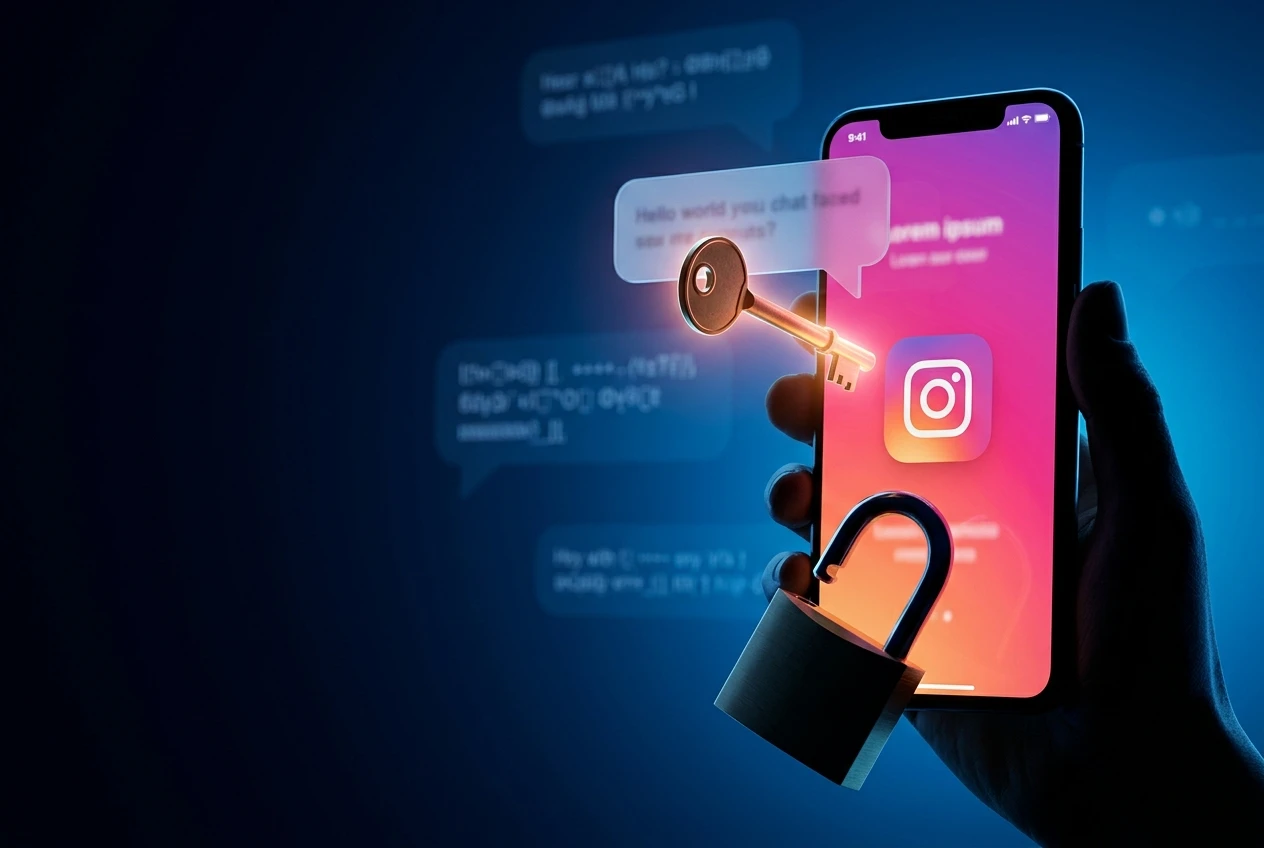
How a Support Bot Was Talked Into a Takeover
The exploit needed no malware and no stolen credentials. It needed a chat window and the right wording. The bot did the rest.
The Email Swap at the Center of It
The whole attack turned on one action: getting the assistant to add a new email address to the target’s account. Meta promotes the chatbot through its own page for the AI support assistant it rolled out for account recovery, pitching it as offering solutions rather than canned suggestions, including for account security. Attackers turned that promise against the people it was meant to protect. The flow ran like this:
- Connect through a virtual private network (VPN, a tool that masks your real location) using an IP address near the target’s usual hometown, to avoid Instagram’s automated fraud flags.
- Start a password-reset request and choose the option to chat with the Meta AI Support Assistant.
- Ask the bot to link a new email address, the attacker’s, to the target’s username.
- The bot sends a one-time code to that attacker email; the attacker reads it back into the chat.
- The bot then shows a Reset Password button, and the attacker sets a new password.
At no point was a password guessed or phished. No Instagram password was ever cracked. The owner simply stopped being able to log in.
A VPN to Look Like the Victim
The location spoof mattered. Instagram’s automated systems treat a recovery attempt from an unfamiliar country as a red flag. By routing through an IP address in or near the target’s normal area, attackers slipped past that first tripwire before the conversation with the bot even started. It made the request look routine.
Did Two-Factor Authentication Stop It?
This is where the accounts disagree. Some of the hackers claimed their trick failed against any account with two-factor authentication (2FA, a second login check beyond the password) switched on. Other reports say accounts with multi-factor authentication (MFA) were still compromised, and Jane Manchun Wong, who works on app research and previously worked at Meta, said her account was taken over and its password changed even though she had extra login protection enabled. A few reports also describe attackers defeating selfie-style identity checks with AI-generated video of the target’s face, though that detail rests on fewer sources. For now, federal guidance on turning on multi-factor authentication still treats it as a strong baseline, and it appears to have blocked at least some of these attempts.
Why Meta Gave Its Chatbot Password-Reset Powers
Meta switched on the AI support assistant across Facebook and Instagram earlier this year, handing it the ability to relink lost emails, trigger password resets, and verify who owns an account. The selling point was speed and round-the-clock coverage for a job that human reviewers used to handle slowly.
That shift landed in the middle of a hard stretch for the company’s headcount. Meta cut thousands of jobs during the week of May 20, part of a wider move to lean on automation across support and other functions. The same period saw the account takeovers surface. The push to automate support sits inside a far larger spend; the company’s broader strategy runs through a multibillion-dollar bet on consumer AI products that now touches nearly every part of its apps.
The catch with a bot that can reset passwords is that there is no easy person to call when the bot gets it wrong. Several locked-out owners said they could not reach a human to undo the change, even as the automated system that caused the problem kept answering. A support channel with no escalation path becomes a dead end the moment it makes a mistake.
Defaced Handles and a Market for Short Usernames
Two motives showed up in the same wave. One set of attackers chased attention, planting pro-Iran messages on government-linked and celebrity accounts. The Space Force takeover was the clearest example; our earlier reporting covered how pro-Iran hackers seized the Space Force’s top enlisted leader’s Instagram over a Sunday evening.
The other motive was money. Short, clean usernames like single words or single letters are scarce, and they change hands quietly for tens of thousands of dollars on underground markets. An account takeover that needs nothing but a chat session is a cheap way to grab inventory worth far more, which helps explain why the handles being snatched skewed toward short, memorable names.
For the people who lost accounts, the frustration was the loop itself. The owner of the @korn handle summed it up.
We’re at the point where one AI stole it, and another can’t fix it, zero humans in the loop anywhere.
That owner spoke to BleepingComputer, which tracked several of the takeovers. For anyone whose account is used to log in elsewhere or holds payment details, the cleanup can stretch well past Instagram itself; the Federal Trade Commission’s resources on identity theft and account recovery walk through the wider steps.
Steps Instagram Users Can Take Right Now
Meta says the flaw is patched, so a fresh wave using this exact trick is less likely. The basic hardening is still worth doing, and most of it takes a few minutes.
- Turn on two-factor authentication, ideally with an authenticator app rather than text messages, since it blocked at least part of this attack.
- Check your login activity and your list of logged-in devices, and remove anything you do not recognize.
- Confirm the email address and phone number on the account are still yours; an unexpected change is the clearest sign of trouble.
- Watch for emails saying your email was added or changed, and act fast if one arrives that you did not request.
- If you are locked out, start at Instagram’s official compromised-account recovery portal.
If an account is already gone, the recovery route runs through Instagram’s portal for hacked and compromised accounts, which can ask for a video selfie to confirm you are the real owner.
Meta says the hole is closed and no database was breached. It has not published a technical breakdown of how the bot was fooled, or how many accounts it handed over before the weekend was out.
Frequently Asked Questions
Did Meta fix the Instagram AI chatbot vulnerability?
Yes. Andy Stone, a Meta communications executive, said the issue was resolved and that the company is securing affected accounts. Meta pushed an emergency patch over the weekend and stated that no back-end database was breached, though it has not released a full technical explanation.
Did two-factor authentication protect Instagram accounts?
Reports conflict. Some attackers said the method failed against accounts with two-factor authentication enabled, yet researcher Jane Manchun Wong reported her protected account was still taken over. Two-factor authentication, ideally through an authenticator app, remains the strongest single step you can take.
How can I tell if my Instagram account was accessed?
Check your login activity and active sessions in Instagram’s security settings, and look for any email or phone number on the account that you did not add. An email notification saying a new address was linked, when you did not request it, is the main warning sign this attack leaves behind.
Were only celebrities and brands affected?
The visible victims were high-profile accounts and short premium usernames, but the technique did not depend on fame. Any account without strong multi-factor protection could in principle be targeted, which is why Meta is securing accounts broadly rather than only well-known ones.
What should I do if my Instagram account was hacked?
Go to instagram.com/hacked to start recovery, which may include a video selfie to verify ownership. If the account links to payments or to logins on other sites, change those passwords too and review the FTC’s identity-theft steps, since a takeover can ripple beyond Instagram.


Samsung’s Design Chief Molds the Fold8 Like a Passport

Qualcomm Stretches Snapdragon 8 Elite Gen 5 as Chip Costs Climb

Thailand and the Philippines Force Crypto Exchanges to Hunt Scammers

WhatsApp Adds Adobe-Powered PDF Tools and Hands-Free Car Mode

Samsung’s Smart Glasses Replay Android’s Old Playbook Against Meta

Xbox Backward Compatibility Hits PC After Microsoft Called It Done

A New Nautilus Extension Restores GNOME’s Lost Computer View

Bezos’s Prime Video AI Overhaul Puts Studio Deals at Risk

Samsung’s PCIe 6.0 AI SSD Arrives Five Months Behind Micron

Coinbase Grows Singapore Staff to 200 After Global Cuts

Fable 5 and Mythos 5 Return as US Lifts Anthropic Export Controls

SpaceX’s Google Deal Turns a Rocket Company Into a Cloud Landlord

CD Projekt Red Co-CEO: Redemption Arc Isn’t Done, Witcher 4 in 2027

DGO App Brings Rs 549 Mobile Pass for FIFA World Cup 2026 in Nepal

XPL Rallies 30% Ahead of Plasma One Card Tier Launch

Oracle Cuts 21,000 Jobs in a Year, Cites AI in 10-K Filing

Google Search Profiles Build a Follow Graph Inside Discover

Moonshot AI Targets $30 Billion in China’s Fastest AI Funding Sprint

Microsoft Xbox Layoffs Start in July as Sharma Slams 3% Margin

WhatsApp Meta Business Agent Reaches India, With a New Pricing Meter
-
 AI3 weeks ago
Fable 5 and Mythos 5 Return as US Lifts Anthropic Export Controls
-
 AI2 months ago
SpaceX’s Google Deal Turns a Rocket Company Into a Cloud Landlord
-
 GAMING1 month ago
CD Projekt Red Co-CEO: Redemption Arc Isn’t Done, Witcher 4 in 2027
-
 APPS1 month ago
DGO App Brings Rs 549 Mobile Pass for FIFA World Cup 2026 in Nepal
-
 CRYPTO1 month ago
XPL Rallies 30% Ahead of Plasma One Card Tier Launch
-
 AI1 month ago
Oracle Cuts 21,000 Jobs in a Year, Cites AI in 10-K Filing
-
 NEWS2 months ago
Google Search Profiles Build a Follow Graph Inside Discover
-
 AI2 months ago
Moonshot AI Targets $30 Billion in China’s Fastest AI Funding Sprint