
NEWS
Headwind MDM’s Self-Hosted Android Pitch Runs Into Google’s Own Limits
Headwind MDM’s self-hosted Android platform skips subscriptions, but Google’s 2026 Play Protect restriction is narrowing the independence it promises IT buyers.

Headwind MDM this week detailed a permanent license for its self-hosted Android device management platform, an alternative to the per-device subscriptions most rivals charge indefinitely. The Community Edition is free and open source under the Apache License. Commercial tiers add support and source code access, and the whole system is built to run without touching Google’s cloud services at all.
That independence has a ceiling. Google has spent years narrowing the exact path Headwind’s software depends on, and the company’s own documentation now admits the squeeze got tighter in 2026.
One Payment, No Monthly Meter
The pitch starts with money. Headwind MDM runs on what the software industry calls open core: a free Community Edition sits underneath paid commercial tiers that add enterprise features, technical support and access to the source code behind the managed Android agent.
Instead of billing every device every month, Headwind sells perpetual licenses tied to a specific software version. Each covers a defined number of devices and a fixed window of updates. Once that window closes, the customer keeps running the version already installed, with no forced monthly meter ticking in the background.
Buyers are not asking for free software. They want to own the risk instead of renting it.
Vsevolod Maiorov, founder and chief executive of Headwind MDM, said in the announcement. That framing targets a specific buyer: an IT department that wants a fixed line item instead of a contract renewed every year on someone else’s terms. The structure also lets those departments review source code before deployment, choose exactly where the system is hosted, and plan multi-year budgets without leaning on one outside vendor’s roadmap.
How Headwind Keeps Google Out of the Loop
The technical pitch matches the financial one. Headwind’s platform runs entirely inside a company’s own network, with no dependency on an outside vendor’s servers. It manages AOSP-based Android hardware, the open source core of Android, without requiring Google Mobile Services to be installed at all.
Administrators enroll new hardware by scanning a QR code, a method the company says works without binding the device to Android Enterprise, Google’s standard enterprise management framework. Because nothing has to phone home to an external server, the same architecture supports air-gapped networks: fleets that never touch the public internet at any point.
The open source agent behind all of this is still actively maintained. Its public listing on F-Droid shows version 6.36, updated in May 2026 and requiring Android 8.0 or newer, alongside the company’s own estimate that each managed device saves four to six hours of employee time and one to two hours of IT time every month.
From Checkout Lines to Government Basements
Headwind’s own case list reads like a tour of places where a phone or tablet has to keep working with no help desk nearby.
- Retail checkout tablets – point of sale hardware that has to keep scanning barcodes even when a store’s internet connection drops.
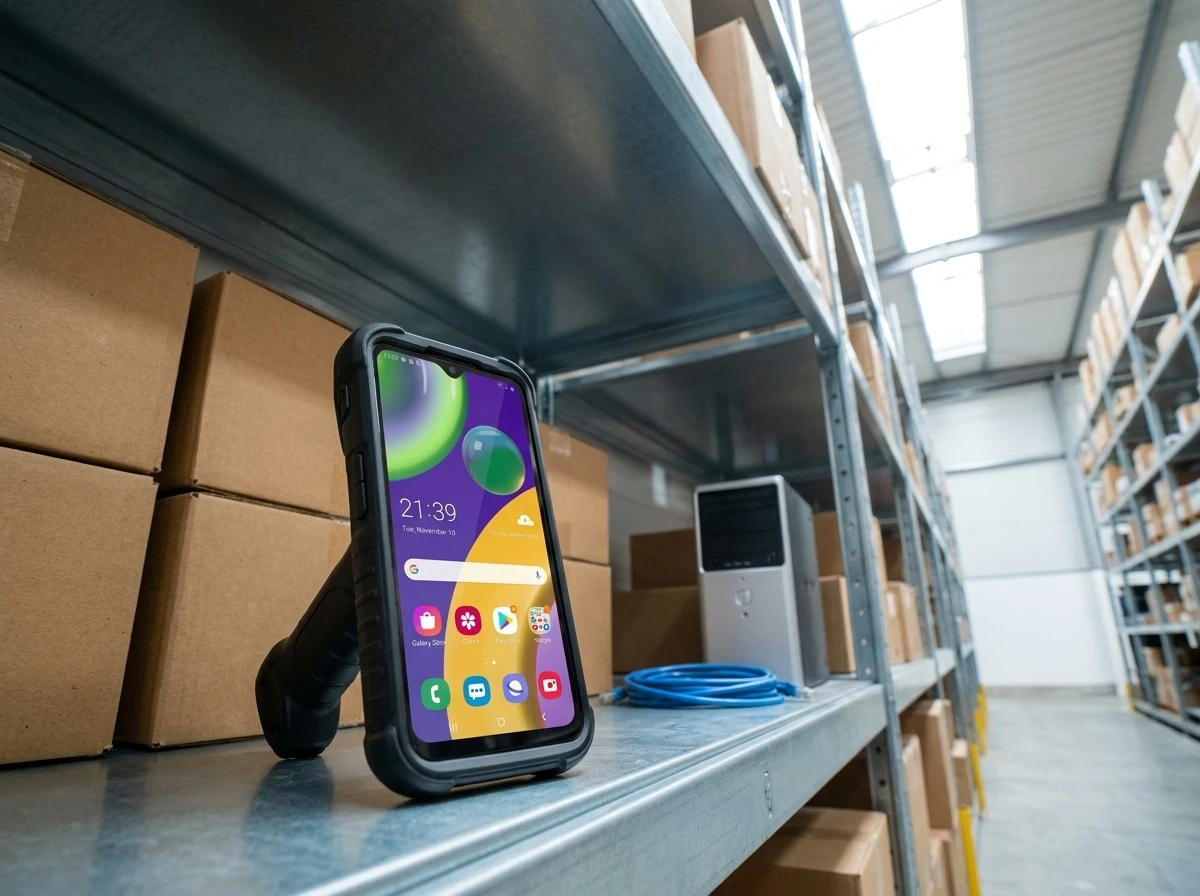
- Rugged manufacturing scanners – handheld devices on factory floors, often running for years between resets.
- Logistics driver devices – handhelds that travel with delivery fleets far outside any single office’s network.
- Government operations – agencies that require isolated internal infrastructure and cannot route device data through an outside company’s cloud.
Every one of those environments needs a connection that does not fail. Several also need to keep a foreign vendor’s cloud servers away from the network entirely, which is precisely the gap Headwind is pricing itself to fill.
Does Headwind MDM Still Work Without Google’s Blessing?
Mostly, but with real friction. Headwind’s own documentation says Google’s Play Protect has restricted custom-built versions of its launcher app since 2026, closing off the path that let developers compile and rebrand their own copies. Standard enrollment through officially distributed builds still works; the fully do-it-yourself route now runs into Google’s own security gate.
The company’s site lays out the limits plainly. Since 2026, provisioning devices with custom builds of the Headwind launcher has been blocked by Play Protect at the enrollment step, and the company points hopeful self-hosters toward a narrow set of workarounds instead.
- What we know: Google blocks custom-compiled builds of Headwind’s launcher through Play Protect, and the company points buyers toward devices sold on the local Chinese market without Google services, or custom ROMs such as Murena’s /e/OS, as working alternatives.
- What’s unconfirmed: Headwind says developers can still rename and re-sign a custom package with their own keys, but the approval Google requires at enrollment is, in the company’s own words, opaque, with no published criteria or timeline for how long it takes.
Enterprise customers get a partial workaround of their own: paid licenses include access to the agent’s source code through a protected repository, letting technical teams inspect the software even where they cannot freely rebrand and redeploy it the way Community users once could.
A Nudge That Started Eight Years Ago
The Play Protect restriction did not appear out of nowhere. Google has been steering every Android fleet manager, not just Headwind, away from the legacy tools that once made independent device management simple.
Google’s own engineering documentation says the original device admin API, introduced with Android 2.2 back in 2010, is being phased out for enterprise use because it no longer meets the needs of modern device management. Google first flagged the change in 2017, then made it official with Android 10, forcing IT admins at Samsung, Citrix and IBM’s MaaS360 team alike to migrate fleets to Android Enterprise or lose controls like password policies and camera locks.
Headwind’s QR code enrollment threads a needle inside that shrinking space. It still avoids binding a device to Android Enterprise, the exact path Google keeps pushing everyone toward, but it depends on Google continuing to tolerate that gap. Google is not obligated to keep tolerating it.
Big Vendors Still Hold the Bigger Checkbook
Whatever friction Google adds, the market Headwind is chasing keeps growing, at least on paper. Research firms disagree sharply on how big that market already is, which says more about how young and fragmented device management tracking still is than about any single figure.
| Research Firm | 2026 Market Estimate | Longer-Term Forecast |
|---|---|---|
| Mordor Intelligence | $11.11 billion | $26.04 billion by 2031 (18.57% CAGR) |
| Fortune Business Insights | $20.44 billion | $105.58 billion by 2033 (22.80% CAGR) |
| Fact.MR | $13.4 billion | $34.1 billion by 2036 (9.8% CAGR) |
| Grand View Research | $7.67 billion (2024 base) | $28.37 billion by 2030 (24.5% CAGR) |
Despite the gap between those estimates, the firms mostly agree on who currently holds the market. Mordor Intelligence names VMware, Microsoft’s Intune, IBM, Citrix and SAP as the leading vendors, and puts cloud-hosted platforms at 65% of 2025 revenue, the exact dependency Headwind is pricing itself against.
Fact.MR points to a different engine for future growth: government procurement. The firm ties demand to zero-trust mandates and NHS clinical device fleets, alongside South Korea’s mobile security rules and the European Union’s NIS2 critical infrastructure requirements, while noting that pricing pressure from bundled unified endpoint platforms is squeezing standalone MDM contract values generally. Those are close to the exact buyers Headwind lists as current customers, agencies and regulated operators that need isolated infrastructure and cannot route device data through a foreign cloud. Headwind’s own materials still point hopeful self-hosters toward Chinese-market hardware or a custom ROM if they want that independence in full.
Frequently Asked Questions
What does open core mean for Headwind MDM’s software?
Open core describes a business model where the base product is free and open source while advanced features stay proprietary. Headwind’s Community Edition is released under the Apache License and covers core functions like QR code enrollment and app management, while paid tiers add enterprise features, support and source code access to the managed Android agent.
Why would a company want Android management that avoids Google Mobile Services?
Google Mobile Services bundles the Play Store, Play Protect and account sync into most Android phones, all of which route data through Google’s servers. Devices running AOSP without GMS, common on hardware sold in China or on custom ROMs, can be managed without that dependency, which matters most to buyers in air-gapped networks or regulated sectors that cannot route device data through an outside company at all.
Is Headwind MDM’s Community Edition free for businesses to use?
Yes, the Apache License lets any business run it at no cost, though the company positions Community as best suited to students, technicians and developers rather than large-scale enterprise deployment. Businesses that need ongoing support, source code access to the managed agent, or help managing large device fleets are steered toward the commercial tiers instead.
What happens after a perpetual license’s update period ends?
The device keeps running the version already installed, since the license does not expire the software itself. Customers who want continued updates and new features after that fixed window closes need to purchase another update period, which is how most perpetual-license software outside the subscription model typically works.
Does Headwind MDM manage devices other than Android?
No. Every capability the company describes, including AOSP integration, QR code enrollment and Samsung Knox support, is built specifically for Android hardware, including rugged scanners, tablets and kiosks. It does not extend to iPhones or other operating systems.
How does the Play Protect restriction affect an ordinary commercial customer?
Less than it affects hobbyists and self-compilers. Commercial customers buying pre-built, officially distributed versions of the agent are not the ones running into Google’s block. The restriction mainly hits developers trying to compile, rebrand or firmware-embed their own custom copies of the launcher outside Headwind’s standard distribution channels.


Sony’s 10 Percent Disc Drop Leaves the 2028 Cutoff Intact

Chip Allocation Sidelines the Base iPhone 18 This Fall

Miami-Dade Fights the Vice City Brand It Already Wears

IFA 2026 Awards Put Tecno Ahead of Flagship Phones

USB-C Gadgets Made the Junk Drawer Rechargeable

Pixel 11 Pro Asks $1,099 for a Light Google Locked

The iPhone Ultra Sells Two Retired Minis as One Foldable

Google Opens Gmail to Voice and Gates Docs Live

Lenovo Prices the IdeaPad Vibe Against Apple’s $699 Neo

Xbox Caps Game Pass Cloud Gaming at 15 Hours

Oracle Cuts 21,000 Jobs in a Year, Cites AI in 10-K Filing

Fable 5 and Mythos 5 Return as US Lifts Anthropic Export Controls

SpaceX’s Google Deal Turns a Rocket Company Into a Cloud Landlord

CD Projekt Red Co-CEO: Redemption Arc Isn’t Done, Witcher 4 in 2027

XPL Rallies 30% Ahead of Plasma One Card Tier Launch

Google Search Profiles Build a Follow Graph Inside Discover

DGO App Brings Rs 549 Mobile Pass for FIFA World Cup 2026 in Nepal

Moonshot AI Targets $30 Billion in China’s Fastest AI Funding Sprint

Oppo’s ColorOS 17 Eligibility List Leaves A-Series Buyers Behind

Microsoft Xbox Layoffs Start in July as Sharma Slams 3% Margin
-
 AI3 months ago
Oracle Cuts 21,000 Jobs in a Year, Cites AI in 10-K Filing
-
 AI2 months ago
Fable 5 and Mythos 5 Return as US Lifts Anthropic Export Controls
-
 AI3 months ago
SpaceX’s Google Deal Turns a Rocket Company Into a Cloud Landlord
-
 GAMING3 months ago
CD Projekt Red Co-CEO: Redemption Arc Isn’t Done, Witcher 4 in 2027
-
 CRYPTO3 months ago
XPL Rallies 30% Ahead of Plasma One Card Tier Launch
-
 NEWS3 months ago
Google Search Profiles Build a Follow Graph Inside Discover
-
 APPS3 months ago
DGO App Brings Rs 549 Mobile Pass for FIFA World Cup 2026 in Nepal
-
 AI3 months ago
Moonshot AI Targets $30 Billion in China’s Fastest AI Funding Sprint