
AI
Bezos’s Prime Video AI Overhaul Puts Studio Deals at Risk
Jeff Bezos ordered a rebuild of Prime Video around AI, and the redesign could squeeze the paid placement studios depend on for home-screen visibility.

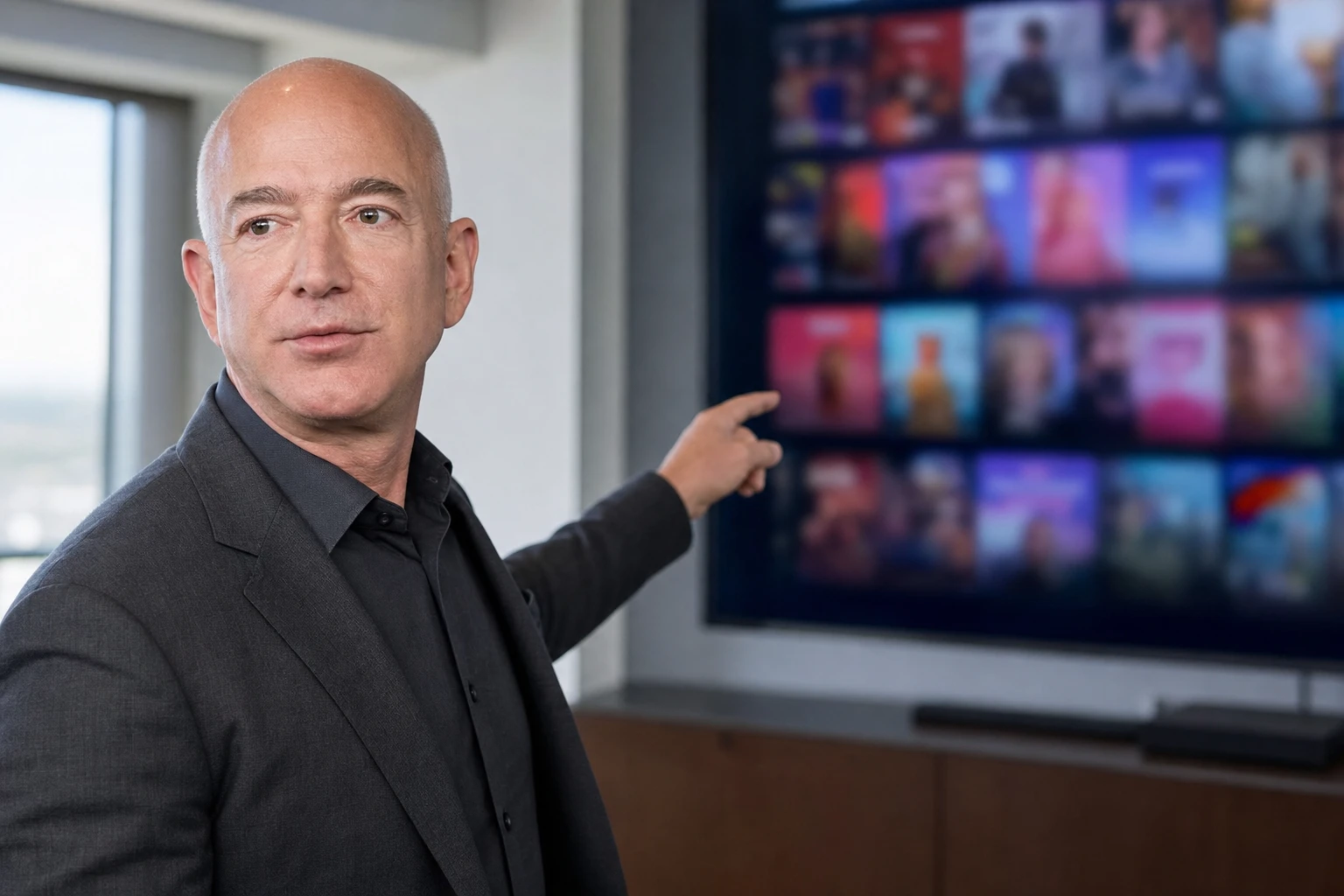
Jeff Bezos scrapped Prime Video’s redesign plans last autumn and told the team to start over with artificial intelligence at the center of the screen. The rebuild, called Lighthouse inside Amazon, is meant to showcase the company’s AI work for the more than 200 million people who use the streaming service, according to four people with direct knowledge of the effort.
The stakes reach past Amazon’s own reputation. Prime Video fills its home screen through a mix of algorithms and paid placement bought by film and TV studios, and a shift toward AI-driven personalization could take away the real estate those studios currently pay for.
Bezos Scraps a Plan and Orders a Rebuild
The project grew out of an internal presentation last autumn that turned tense, the people said. Prime Video chief Mike Hopkins and his team walked Bezos through their update plans, and the Amazon founder and executive chairman came away unhappy. He felt the plans did not show off Prime Video’s AI and personalization work strongly enough, according to the people.
Hopkins’s team scrapped what they had and started building Lighthouse instead. Kam Keshmiri, Amazon’s global head of Prime Video design, sat in on that meeting and now leads the redesign, the people said. Amazon declined to comment on the project.
What Lighthouse Actually Changes On-Screen
Lighthouse touches nearly every part of how Prime Video decides what to show subscribers, using AI to learn individual viewing habits and respond to spoken requests, according to one person with knowledge of the project. Prime Video is also redesigning its main home page as part of the effort, other people said. Nothing about the final look is locked in.
- AI-picked tiles – one option under discussion would populate the home screen with prompts such as “action movies from the 1980s” or “Christmas rom-coms,” three of the people said, though another source said a current build skips text-heavy tiles entirely.
- Traditional search – the existing search bar stays in place rather than getting replaced by AI picks.
- Live and sports highlights – space at the top of the screen would still promote new releases and events like Thursday Night Football, the National Football League’s weekly game that airs exclusively on Amazon.
- Alexa-powered search – Amazon has discussed folding its voice assistant directly into Prime Video’s search function, the people said.
Amazon is already testing early versions with a small group of users, and feedback from that group, plus cost and other concerns, could still reshape the plan. The streamer has iterated before: it rolled out a vertical-scrolling Clips feed with rental and purchase buttons built in, and in July 2024 it overhauled the app to make it easier to tell free titles from ones that cost extra.
Why Is Bezos So Hands-On With One App?
Bezos stepped back from day-to-day operations when he handed the CEO job to Andy Jassy in 2021, and he has spent most of his attention since on Blue Origin, the Washington Post and, most recently, an AI startup called Prometheus. Personally pushing one app’s redesign, down to occasional updates from the team, is unusual for him now, and it points to how much Amazon wants to close the AI perception gap with OpenAI and Anthropic.
Amazon plans to spend roughly $200 billion on capital expenditures this year, most of it aimed at AI infrastructure, and has already put an initial $23 billion into OpenAI and Anthropic combined, with room for another $40 billion. Amazon CEO Andy Jassy told investors on the company’s February earnings call that Amazon expects to invest “about $200 billion in capital expenditures across Amazon.com, Inc.,” predominantly through AWS, Amazon’s cloud computing division, citing very high demand for AI computing.
Amazon’s other AI bets have not gone smoothly. The multiyear overhaul of Alexa, meant to make it more conversational, has had mixed results, and the voice-assistant unit is still losing money, people familiar with the matter have told Reuters. Prime Video, reaching a far bigger and more visible audience than Alexa ever has, gives Bezos another shot at proving the company’s AI can compete.
Bezos has his own money riding on AI outside Amazon, too. Prometheus, the industrial AI startup he co-runs with former Google executive Vik Bajaj, raised $12 billion in June at a $41 billion valuation, up from $6.2 billion when it launched the previous November. That bet lines up with his public wager that AI creates a labor shortage rather than mass unemployment, a case he has made repeatedly on stage.
The Studios With the Most to Lose
Prime Video, like other streamers, relies on paid placement bought by studios, layered on top of its own recommendation software, to decide what appears on the home screen, said Michael Goodman, director of entertainment research at Parks Associates, a market research firm that tracks the streaming industry. Personalization built around individual viewing habits threatens to squeeze that arrangement out entirely.
The real estate on the home screen is very valuable to studios.
Goodman said in comments on the redesign that stripping away any of that space would be a big change for studios that count on front-screen visibility to drive what people watch. Amazon has its own incentive to keep viewers on the service longer no matter whose titles they land on, since more hours watched supports the case that its personalization technology actually works.
Where Prime Video Sits in the Ratings
Prime Video’s push for attention shows up plainly in the numbers. It ranks fourth among streaming platforms in the United States at 4.2% of total TV viewing, according to Nielsen’s April data.
| Platform | Share of U.S. TV Viewing (April 2026) | Notable Driver |
|---|---|---|
| YouTube | 13.4% | Leads Nielsen’s Media Distributor Gauge |
| Netflix | 7.8% | Subscription original slate |
| Disney+ | 5.0% | Owned by Walt Disney |
| Prime Video | 4.2% | NBA playoffs, season finale of “The Boys” |
Sports help explain the swings. Two months earlier, Prime Video’s share climbed to 4.3% of total TV viewing on the strength of four Thursday Night Football broadcasts, including a Christmas Day game that broke Nielsen’s single-day streaming record. Amazon is betting that sharper personalization keeps that audience around once football season ends.
Roku Already Rewrote Its Home Screen Too
Amazon is not alone in rethinking what a home screen is for. Roku announced its largest interface overhaul in more than a decade on May 27, moving the platform from a static app launcher toward personalized content discovery, according to Parks Associates.
The prize keeps growing. Smart TVs now account for 62% of primary streaming devices, up from 39% in 2018, Parks Associates found, and that shift has turned the home screen itself into one of the most valuable pieces of digital real estate in media. Amazon became the first streaming service to win an Academy Award in a major category, and it deepened its Hollywood footprint in 2022 by paying $8.5 billion for MGM, picking up franchises including James Bond. Bezos, who owns a $165 million home in Beverly Hills and turns up regularly at Hollywood events, has personal reasons to want Prime Video taken seriously alongside the streamers that outrank it.
Prime Video’s own redesign remains a work in progress. Amazon is testing early versions with a small number of subscribers, and the people said the final look could still shift based on that feedback, along with cost and other concerns, before it reaches the rest of the service’s audience.
Frequently Asked Questions
What Is Nielsen’s Gauge, and How Does It Rank Streaming Services?
The Gauge is Nielsen’s monthly snapshot of how television usage splits across broadcast, cable and streaming, measured through TV screens rather than phones or laptops. It has tracked the category since May 2021 and is one of the industry’s most widely cited measures of streaming market share.
What Is Prometheus, Jeff Bezos’s Other AI Company?
Prometheus is an industrial AI startup Bezos co-runs with Vik Bajaj, a former Verily co-founder, aiming to build what the pair call an “artificial general engineer” for physical products such as jet engines and drug compounds. It has about 150 employees and, unlike Prime Video’s parent company, has no corporate ties to Amazon or Blue Origin.
Did Roku Make a Similar Change to Its Home Screen?
Yes. Roku’s VP of viewer product, Preston Smalley, said the company heard that “people love streaming, but they were tired of hunting for something to watch,” and built its May refresh around personalized discovery rather than a grid of app icons.
Will Prime Video Cost More Because of the AI Redesign?
Nothing in the reporting points to a new fee tied to Lighthouse. Amazon’s stated goal is to make Prime Video the central hub for subscriptions it already sells, such as Paramount+ and paid rentals, rather than add a separate charge for the redesign itself.


Sony’s 10 Percent Disc Drop Leaves the 2028 Cutoff Intact

Chip Allocation Sidelines the Base iPhone 18 This Fall

Miami-Dade Fights the Vice City Brand It Already Wears

IFA 2026 Awards Put Tecno Ahead of Flagship Phones

USB-C Gadgets Made the Junk Drawer Rechargeable

Pixel 11 Pro Asks $1,099 for a Light Google Locked

The iPhone Ultra Sells Two Retired Minis as One Foldable

Google Opens Gmail to Voice and Gates Docs Live

Lenovo Prices the IdeaPad Vibe Against Apple’s $699 Neo

Xbox Caps Game Pass Cloud Gaming at 15 Hours

Oracle Cuts 21,000 Jobs in a Year, Cites AI in 10-K Filing

Fable 5 and Mythos 5 Return as US Lifts Anthropic Export Controls

SpaceX’s Google Deal Turns a Rocket Company Into a Cloud Landlord

CD Projekt Red Co-CEO: Redemption Arc Isn’t Done, Witcher 4 in 2027

XPL Rallies 30% Ahead of Plasma One Card Tier Launch

Google Search Profiles Build a Follow Graph Inside Discover

DGO App Brings Rs 549 Mobile Pass for FIFA World Cup 2026 in Nepal

Moonshot AI Targets $30 Billion in China’s Fastest AI Funding Sprint

Oppo’s ColorOS 17 Eligibility List Leaves A-Series Buyers Behind

Microsoft Xbox Layoffs Start in July as Sharma Slams 3% Margin
-
 AI2 months ago
Oracle Cuts 21,000 Jobs in a Year, Cites AI in 10-K Filing
-
 AI2 months ago
Fable 5 and Mythos 5 Return as US Lifts Anthropic Export Controls
-
 AI3 months ago
SpaceX’s Google Deal Turns a Rocket Company Into a Cloud Landlord
-
 GAMING3 months ago
CD Projekt Red Co-CEO: Redemption Arc Isn’t Done, Witcher 4 in 2027
-
 CRYPTO3 months ago
XPL Rallies 30% Ahead of Plasma One Card Tier Launch
-
 NEWS3 months ago
Google Search Profiles Build a Follow Graph Inside Discover
-
 APPS3 months ago
DGO App Brings Rs 549 Mobile Pass for FIFA World Cup 2026 in Nepal
-
 AI3 months ago
Moonshot AI Targets $30 Billion in China’s Fastest AI Funding Sprint