
AI
Political Campaigns’ AI Text Bots Are Quietly Mining Voter Data
AI chatbots are texting voters as political candidates and logging every reply, though only a couple of states require campaigns to disclose the bot isn’t human.

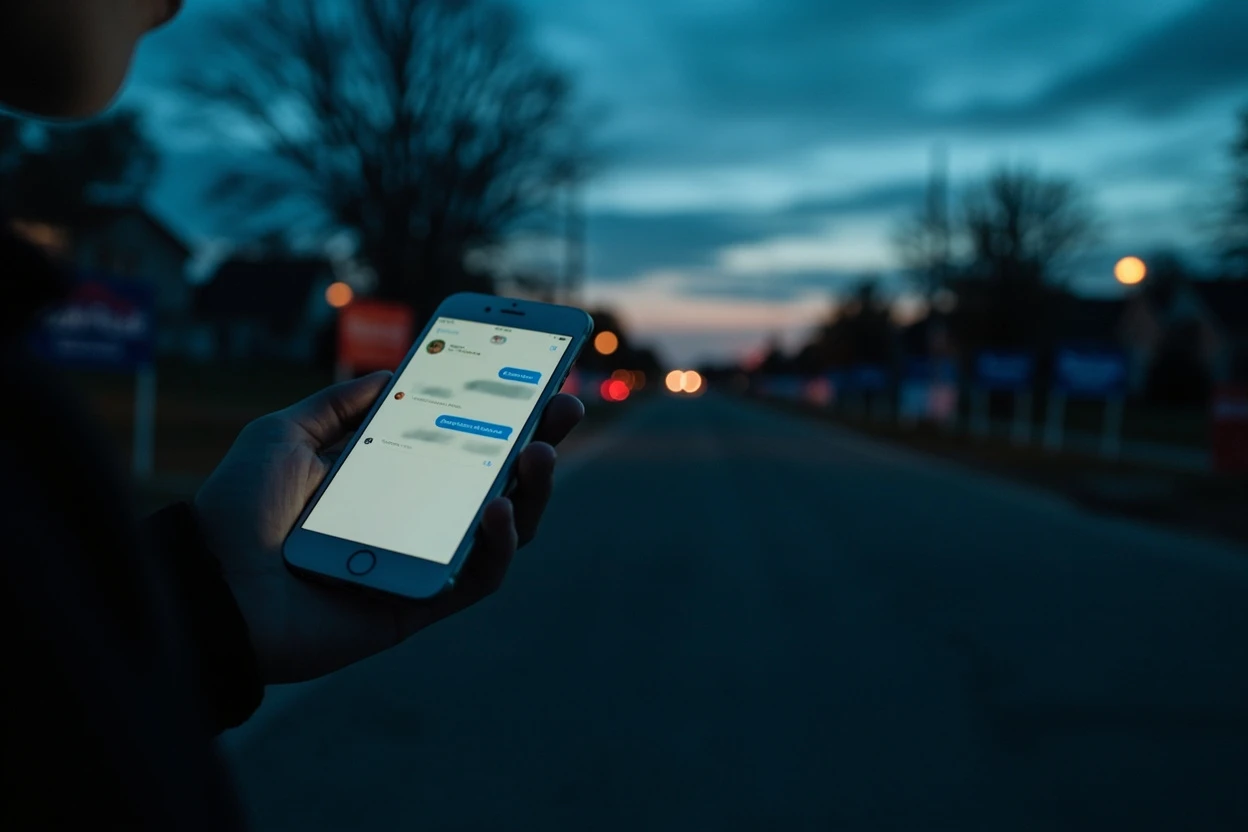
AI chatbots are now texting voters on behalf of political candidates, holding thousands of simultaneous conversations and logging every reply for the campaign afterward. The bots debate police reform, education funding and tax policy in a candidate’s voice, and they never sleep. Campaigns are betting the technology can reach millions of voters before the 2026 midterms.
That efficiency comes with a catch. Most voters who text back have no reliable way to know whether a person or a program is reading their answer, and only a couple of states require a campaign to say so upfront. The data collected along the way typically outlives the conversation itself, feeding the profile a campaign builds of every voter it texts.
Bots Now Speak for the Candidate
The shift is documented in a series of interviews NPR conducted this month with executives, strategists and voters navigating the new tool. Aaron Sheeks is the CEO of Akillion, a platform that lets campaigns build and run their own AI bots. Many of his current clients are running for political office.
“Our goal is to put the microphone back in the hand of the voter,” Sheeks told NPR. “We’re giving agencies and political campaigns the ability to have a trained AI employee that can go back and forth and answer questions on police reform or education or tax changes.”
Tom Carroll runs Convos as chief executive. He said the long political text message is finished. Convos trains bots to open with a single line, introduce themselves, then ask a question to start a real exchange.
“What we’re offering is the greatest volunteer you’ve ever had,” Carroll said. “They’ll respond within 30 seconds, in any language, cutting directly to the question that the person is asking.”
In almost every case, a human still writes and sends the first text a voter receives. The bot only takes over once someone replies.
Why Texting Became the Last Channel That Works
Political texting expanded fast starting in 2020, when candidates struggled to reach voters at the grassroots level any other way, said Josh Justice, the CEO of Peerly. Landline phone banks thinned out as fewer households kept landlines. Door-to-door canvassing grew harder as people grew wary of answering the door for strangers. And on social media, the platform, not the campaign, controls the relationship with the voter.
Justice expects nearly every House and Senate campaign this year to send text messages, since texting remains one of the few ways left to reach a voter directly at scale. A text sits on a phone’s lock screen. It doesn’t have to out-compete an algorithm for attention.
The Hidden Data Harvest
Every reply a voter sends becomes something else too: a data point. Campaigns use the bots to learn what a voter cares about, then feed that back into how the campaign talks to them next.
Marty Santalucia is a partner at Vector Political, a firm built around generative-AI texting. He said bots excel at keeping voters engaged, and “in some cases, we have people talk to our agent for hours.”
Vector Political has sent 2.5 million text messages this year and logged between 20,000 and 30,000 conversations, Santalucia said. Roughly 5% to 10% of voters who receive a text respond at all. Of those who respond, 10% to 20% go on to exchange 10 or more messages with the bot.
“We’re listening at a scale that campaigns have never listened at before,” Santalucia said.
| Platform | Leader | Approach | 2026 Scale or Stance |
|---|---|---|---|
| Akillion | Aaron Sheeks, CEO | Campaigns build and run their own AI bot as a “trained AI employee” | Multiple current clients are running for office |
| Convos | Tom Carroll, CEO | Bots open with one line, then a question, to start a conversation | About 50 campaigns so far after launching in 2025 |
| Vector Political | Marty Santalucia, partner | Generative-AI texting built to gather voter data at scale | 2.5 million texts sent; 20,000 to 30,000 conversations logged |
| Peerly | Josh Justice, CEO | Peer-to-peer texting; opposes unlabeled generative AI with voters | Expects nearly every House and Senate campaign to text this cycle |
| Scale to Win | Nathan Rifkin, co-CEO | Grassroots organizing and fundraising for progressive campaigns | Avoids generative AI, citing misinformation risk |
That range, from data-hungry generative platforms to holdouts that avoid the technology entirely, maps onto a partisan divide, too.
Republicans Are Adopting Faster Than Democrats
It’s hard to pin down exactly how many campaigns are using generative AI to text voters this cycle. But strategists on both sides agree Republicans have moved faster than Democrats.
Eric Wilson is a Republican strategist. He directs the Center for Campaign Innovation. The nonprofit trains conservative campaigns and candidates to adopt new technology.
“My belief is that this is going to make campaigns more interactive, more responsive and more personalized,” Wilson said. Generative AI, he added, “helps campaigns do more with less.”
A Pew Research Center survey found Democrats are less confident than Republicans that government can regulate AI effectively, a gap Santalucia said tracks with what he sees in the industry: Democratic campaigns move more cautiously with new technology, while Republican campaigns experiment more freely.
Wilson has a theory for the gap. The two AI debates that dominate the left, its environmental footprint and its effect on labor and unions, don’t carry the same weight on the right.
“We just don’t have that on the right,” Wilson said. “We’re focused on winning with the tools that we have.”
Is Anyone Required to Tell You It’s a Bot?
In most states, no. Only North Dakota and California currently require a campaign to disclose, in its first message, that a recipient is talking with a virtual assistant rather than a human. New Jersey lawmakers are weighing a similar rule for election-related information. Everywhere else, a campaign can run an entire AI conversation without ever labeling it as automated.
Justice, who has spent his career in traditional peer-to-peer texting, called the practice a problem.
“I don’t think it’s ethical to use generative AI to communicate with voters,” Justice said. “You can put a disclaimer on there, and that’s going to make it a lot better. But that defeats the purpose of what everybody started out doing.”
He’s especially wary of campaigns moving ahead of the rules rather than behind them. The current patchwork includes:
- North Dakota – campaigns must disclose in the first text that a recipient is talking with a virtual assistant.
- California – the same first-message disclosure requirement applies to political campaigns using AI chat tools.
- New Jersey – lawmakers are advancing a rule that would require campaigns to disclose generative AI use when providing election-related information.
None of the three laws requires a campaign to disclose what happens to a voter’s replies after the conversation ends.
Industry Insiders Can’t Agree on the Ethics
Nathan Rifkin, the co-CEO at Scale to Win, thinks the risk of generative AI outweighs the benefit for one reason: bots can be pushed off script.
Or you can lead AI chat bots to say some pretty horrific things. If that’s in the voice of the candidate, that can lead to some bad ends.
Rifkin said it, pointing to chatbots that can hallucinate facts or get baited into saying something a candidate never would.
- Aaron Sheeks (Akillion) and Eric Wilson (Center for Campaign Innovation) say AI texting makes campaigns more responsive and personalized, letting them “do more with less.”
- Josh Justice (Peerly) says talking with voters through generative AI is not ethical, even with a disclaimer attached.
- Nathan Rifkin (Scale to Win) says the misinformation risk outweighs any gain in engagement.
Even the companies selling the technology aren’t eager to talk about it publicly. Santalucia said campaigns don’t want to reveal their “secret sauce,” and he acknowledged it’s “very muddy in terms of where public perception is going to fall on this tool.”
Voters Are Already Tuning Out
Stefanie Party, 44, moved back to Cleveland, Ohio, from Chile last year. The political texts started almost immediately, sometimes five a day, often clickbaity. She said they make her feel “super, super annoyed.”
“You really can’t tell who they’re coming from,” Party said. “Even if I’m talking to AI that claims to be giving me good information or personalized information, I really have no idea who’s on the other side of that.”
Jessica Alter co-founded and chairs Tech for Campaigns. The nonprofit helps Democratic campaigns adopt data and digital marketing tools. She said political texting used to work well, before campaigns overused it.
“I think AI is not best used to, like, rescue channels that people already hate,” Alter said. “It’s best used to find new ways to do things and find new ways to reach people.”
Convos is still expanding into that skepticism. The platform launched in 2025, worked with 10 campaigns, and this year is aiming for more than 100. It’s about halfway to that goal heading toward November.
Frequently Asked Questions
Is it legal for a political campaign to text me using an AI chatbot?
In most of the country, yes. Federal law doesn’t ban the practice, and only North Dakota and California currently require a campaign to disclose in its first message that voters are talking with a virtual assistant. New Jersey is considering a similar rule specifically for election-related information, but elsewhere a campaign can run an AI-driven text conversation without labeling it at all.
How can I tell if I’m texting with a bot instead of a real volunteer?
There’s often no reliable way to know. Convos trains its bots to reply within 30 seconds in any language, a speed few human volunteers can match consistently, but a fast reply alone isn’t proof either way.
What happens to the information I share when I reply to a political text?
Companies say it feeds back into the campaign’s messaging. Sheeks described the goal as learning what each voter wants from their representatives and using that to shape what the campaign says to that voter next, though none of the companies interviewed detail how long the data is kept or whether it’s shared beyond the campaign that collected it.
Why are Republican campaigns using AI text bots more than Democratic ones?
Strategists point to a trust gap. A Pew Research Center survey found Democrats are less confident than Republicans that government can regulate AI effectively, and Republican strategist Eric Wilson said the AI debates that concern the left, environmental impact and labor effects, carry less weight in Republican politics.
Can I stop a campaign’s AI bot from texting me?
Standard opt-out rules still apply to these messages the same as any political text. What’s different, industry executives say, is that any reply sent before opting out, even a short one, can still be logged and used to shape future campaign messaging.


Google Opens Gmail to Voice and Gates Docs Live

Lenovo Prices the IdeaPad Vibe Against Apple’s $699 Neo

Xbox Caps Game Pass Cloud Gaming at 15 Hours

GTA 6 DualSense Controllers Follow Sony’s Usual $84.99 Script

South Korea Retail Investors Face Reckoning After KOSPI AI Rally Collapses

Surrey AI Maps Three Heart Attack Paths and Their Molecular Roots

Germany Locks Neutral Apple ATT Prompts Across Most of Europe

Apple’s 5% EU Fee Quietly Rewrites Alternative App Store Math

Apple’s EU Fee Truce Cuts Complexity but Leaves Rivals Fuming

Pixel 11 Pro Fold Trades Thinness for Durability and Seven-Year Stay

Oracle Cuts 21,000 Jobs in a Year, Cites AI in 10-K Filing

Fable 5 and Mythos 5 Return as US Lifts Anthropic Export Controls

SpaceX’s Google Deal Turns a Rocket Company Into a Cloud Landlord

CD Projekt Red Co-CEO: Redemption Arc Isn’t Done, Witcher 4 in 2027

XPL Rallies 30% Ahead of Plasma One Card Tier Launch

Google Search Profiles Build a Follow Graph Inside Discover

DGO App Brings Rs 549 Mobile Pass for FIFA World Cup 2026 in Nepal

Moonshot AI Targets $30 Billion in China’s Fastest AI Funding Sprint

Oppo’s ColorOS 17 Eligibility List Leaves A-Series Buyers Behind

Microsoft Xbox Layoffs Start in July as Sharma Slams 3% Margin
-
 AI2 months ago
Oracle Cuts 21,000 Jobs in a Year, Cites AI in 10-K Filing
-
 AI2 months ago
Fable 5 and Mythos 5 Return as US Lifts Anthropic Export Controls
-
 AI3 months ago
SpaceX’s Google Deal Turns a Rocket Company Into a Cloud Landlord
-
 GAMING2 months ago
CD Projekt Red Co-CEO: Redemption Arc Isn’t Done, Witcher 4 in 2027
-
 CRYPTO3 months ago
XPL Rallies 30% Ahead of Plasma One Card Tier Launch
-
 NEWS3 months ago
Google Search Profiles Build a Follow Graph Inside Discover
-
 APPS3 months ago
DGO App Brings Rs 549 Mobile Pass for FIFA World Cup 2026 in Nepal
-
 AI3 months ago
Moonshot AI Targets $30 Billion in China’s Fastest AI Funding Sprint