
AI
Essex Turns Old Antibodies Into Tools That Work Inside Cells
Essex released 672 AI-redesigned antibody fragments that stay soluble inside cells, recycling old binders if gene therapy can deliver them.

Essex researchers used AI to rebuild 672 antibodies as fragments that stay dissolved inside human cells, then released the sequences. The fragments, called AI-designed intrabodies, bind proteins tied to Alzheimer’s, Parkinson’s, Huntington’s and motor neurone disease.
Most of those 672 designs exist only as computer sequences, and seven proteins were tested in cells. A future medicine would still have to be written into a gene, because the fragments are made inside the cell rather than shipped across its wall.
The Cytoplasm Still Rejects Most Antibody Fragments
Ordinary antibodies are built for blood. Heavy and light chains fold in the endoplasmic reticulum, pick up sugars in the Golgi, and lock their shape with disulphide bonds before they are secreted. The open-access paper in Nature Communications, published 31 January 2026 by Dr. Caitlin O’Shea, Dr. Gareth Wright and colleagues at the University of Essex, spells out what happens next if those molecules try to work in the cytoplasm: they rarely arrive intact, and the few that get in are usually broken down in lysosomes.
That mismatch has sat under years of antibody trials for brain disease. Amyloid that sits outside neurons can be reached by a conventional shot. Tau, alpha-synuclein, TDP-43, polyglutamine proteins and SOD1 do their damage inside the cell, where a full-size antibody almost never gets a clean look at them. Small-molecule drugs have also been a poor fit for those floppy, shape-shifting targets.
The Essex group’s move was to stop treating the antibody as a drug that has to break in. They cut each binder down to a single-chain variable fragment, an scFv, with the two binding domains joined by a short peptide, and asked the cell to make that fragment itself. The old problem then showed up in a new form: most scFvs clump in the cytoplasm and stop working.
One Number Beat Nine Solubility Calculators
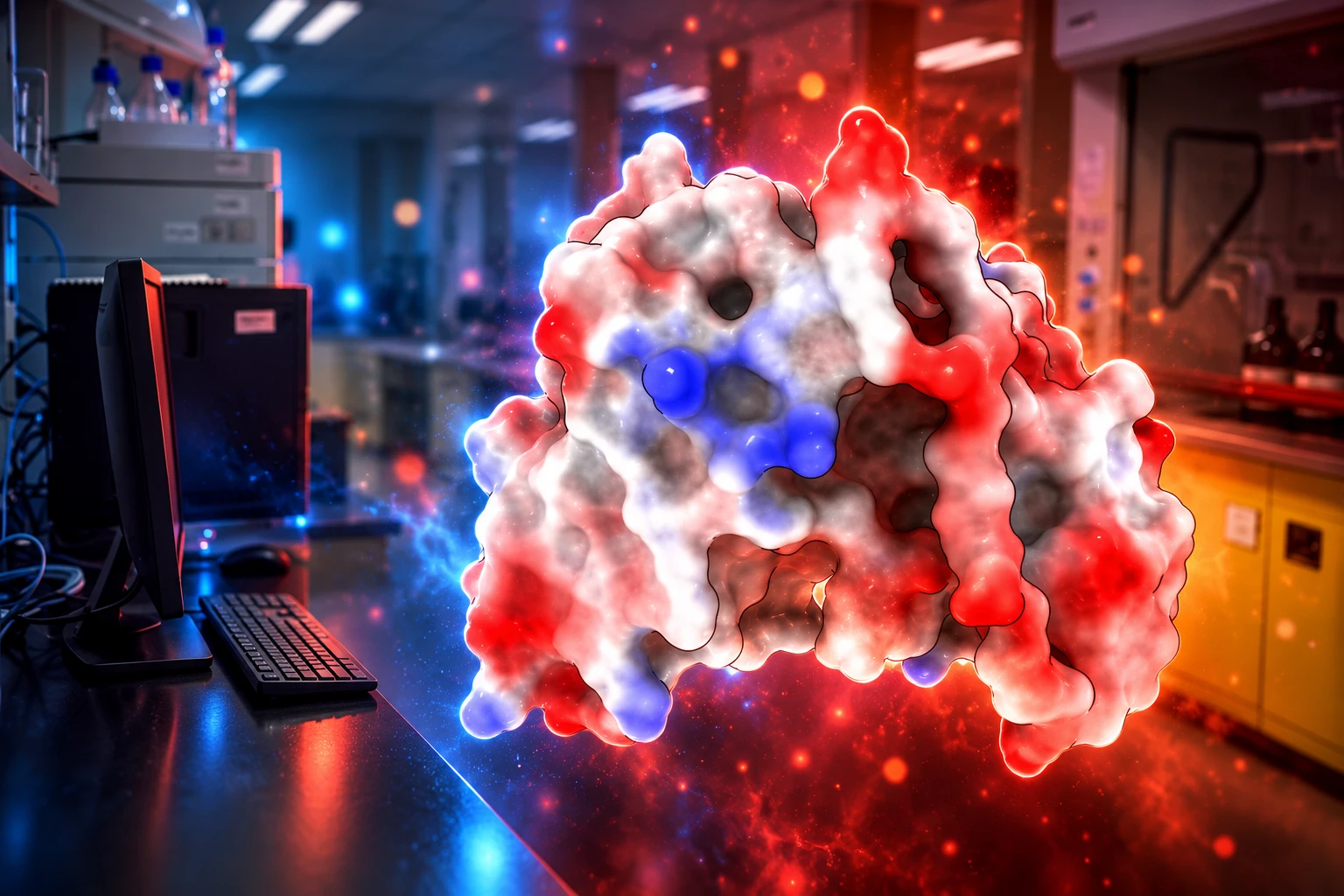
O’Shea’s team measured how much of each fragment stayed in the soluble part of human cells for 45 scFvs with uses in Alzheimer’s, Parkinson’s, Huntington’s and ALS research. They compared those wet-lab numbers with nine published solubility calculators and with 79 chemical features, including AlphaFold3 folding scores. Folding confidence did not track solubility. Whole-molecule net charge at physiological pH did, with an R-squared of 0.75 across the range from +3 to minus 20.
THE CHARGE RULE IN FIGURES
- The library: 85% of the human proteome already has at least one interacting monoclonal antibody, yet those proteins sit behind a membrane the antibody cannot use.
- The mismatch: 70% of antibody variable fragments have an isoelectric point above 7.4, the band typical of extracellular proteins, not cytoplasmic ones.
- The baseline: only 0.02% of unmodified fragments are predicted to reach high solubility, defined as over 70% in the soluble mammalian-cell fraction.
- The threshold: high solubility in their plots required a net charge under minus 15.
They ran the same charge rule across 68,551 fragments. Add the usual glycine-serine linker and an HA tag and the high-solubility share only moves to 0.03%. A 3xFLAG plus HA trick that dumps nine extra negative charges still leaves only 3.9% in the high-solubility band. The cytoplasm is not a folding puzzle they failed to score. It is a charge environment most antibody fragments were never selected for.
The practical fix is blunt. Stick extra aspartate or glutamate into the linker, or strip solvent-exposed lysines and arginines off the framework, and the fragment starts to look more like a cytoplasmic protein. The usual glycine-serine linker adds no negative charge in 97% of published scFvs. Swap in (G4D)4 or (G4E)4 linkers, keep the tags, and their model puts 22% of fragments over 70% soluble and 84% over 50% soluble. A public predictor, scFvright, now does that charge sum on a pasted sequence.
DESIGN MOVES THAT KEPT FRAGMENTS DISSOLVED
- Net charge: push the whole molecule under minus 15 without touching the binding loops if you can help it.
- Charged linkers: (G2E)7 gave the highest soluble abundance among the FUS binders they compared.
- Domain order: putting the light chain first helped when the heavy chain was positively charged, because the heavy chain otherwise translates first and has no partner to chaperone it.
- Leave the salt bridge: breaking the conserved VL Arg/Lys61 to Asp82 contact on a polyglutamine binder hurt solubility, so that site stayed off limits.
O’Shea said the survey was the thing that made the pattern obvious.
We looked at the properties of millions of antibodies and compared them with human proteins found inside the cell. From this we figured out that antibodies usually have the wrong charge to exist inside cells without sticking together. We used software developed by Nobel Prize winner David Baker and his group to redesign our antibody fragments, so they had the right charge and are super stable.
Dr. Caitlin O’Shea, lead author, University of Essex announcement, 19 March 2026
The paper’s own count for that comparison is 1 million paired variable domains from mice, rats and humans, with cytoplasmic proteins sitting far more negative (mean charge minus 8.7) than antibody variable domains (mean +1.8). Her phrasing is broader. The charge gap is the same either way.
Baker Lab Software, Fixed Loops, and a 4,000-Fold Jump
Charge got them a filter. Inverse folding got them sequences that still looked like antibodies. The group used ProteinMPNN-Sol, a soluble-trained variant of Baker’s ProteinMPNN sequence-design network, to write new amino-acid strings onto a fixed backbone. Baker received half of the 2024 Nobel Prize in Chemistry for computational protein design, sharing the prize with Demis Hassabis and John Jumper for structure prediction. Essex used the design half: given a 3D shape, invent a sequence that will adopt it and stay hydrophilic on the surface.
They learned, on a polyglutamine binder derived from antibody 3B5H10, that you cannot let the model rewrite everything. Constructs that only froze the complementarity-determining loops, or that let the linker float, still dissolved, and they still failed to pull down GFP-polyQ74. Binding came back when they also froze the domain-interface beta sheets that set how those loops sit. Even then, only one of the tightly constrained designs strongly immunoprecipitated the target. Solubility is the easy win. Specificity is the part the model can wipe out.
The cleaner specimen is MS785, a misfolding-specific SOD1 antibody. A classic glycine-serine linker plus HA tag was insoluble in their cells. So was a human-designed charge-swap variant. ProteinMPNN-Sol at 0.20 angstrom of backbone noise produced a fragment that was more than 4,000-fold more abundant in the soluble fraction than the best human design, with a melting temperature about 10 degrees higher, and it still pulled down the ALS-linked A4V SOD1 mutant around physiological pH. That is the method working on a real disease protein, in a dish, on one binder.
672 Sequences Go Free, Aimed at 60 Proteins
Apply those rules in software and the library gets large fast. The paper reports 672 antibodies reformatted as scFv intrabodies, non-redundant, aimed at 60 cytoplasmic proteins. The target list includes tau, alpha-synuclein, SOD1, TDP-43, p53, HIF-1α, histones and ubiquitin, plus phosphorylation, citrullination and acetylation marks. Sequences are released under a Creative Commons licence so other labs can order them rather than rediscover the charge rule.
Binding was actually shown, in cells, for seven proteins. The rest of the 672 are designs.
PROTEINS TESTED IN CELLS
| Target | Why it is in the set | What Essex showed |
|---|---|---|
| Alpha-synuclein | Parkinson protein | Interaction validated |
| SOD1 | MND / ALS protein | MS785 pulls down A4V SOD1 |
| Polyglutamine | Huntington protein | 3B5H10 pulls down GFP-polyQ74 |
| FUS/TLS | MND protein | Z-FUS-5 still binds with charged linkers |
| p53 | Intracellular model target | Interaction validated |
| UCHL1 | Cytoplasmic hydrolase | Interaction validated |
| GFP | Reporter control | Interaction validated |
Wright, who directed the work, put the public-health case in the university’s 19 March 2026 note, after the paper had already been out for six weeks. “We’ve made intracellular antibodies that stick to proteins that cause neurodegenerative diseases such as Alzheimer’s, Parkinson’s, Huntington’s and motor neurone disease,” he said. “These diseases can lead to cognitive impairment, forgetfulness, loss of muscle control and death. They affect over one million people in the UK alone, so they are a big public health concern.” He added that there are no cures, and that finding molecules that meet those proteins in their native setting is a hard step in drug discovery.
The molecules were made freely available to other scientists with that announcement. Free sequences are the part of this story other labs can use on Monday. They are also the part that is easiest to over-read as 672 working drugs.
Why Gene Therapy Is the Delivery Path
An scFv that is happy in the cytoplasm still has no way to get there if you inject it in a vein. Full-size antibodies already fail that test. The Essex fragments are designed to be translated on site, which means the therapeutic object is a gene, not a protein drip.
Dr. Brian Dickie, chief scientist at the MND Association, said as much when the university posted the work. “Dr Wright and his colleagues have made a significant advance in overcoming one of the key challenges that has impeded the development of antibodies as treatments for neurodegenerative diseases, such as MND,” he said. “Their research findings provide optimism that a combination of this novel ‘intrabody’ science with emerging gene therapy techniques may lead to new therapeutic strategies that can hit specific molecular targets within neurones.”
The charity is not waiting for a press cycle to test that bet. Its grant page lists a £332,188 award to Wright at Essex, running October 2025 to September 2028, 36 months, project 2472-791. The aim on that page is to create molecules that can be delivered by gene therapy methods as a treatment for MND.
WHAT THE MND GRANT PAYS FOR NEXT
- New binders: fragments aimed at small changes in TDP-43, FUS, SOD1 and C9orf72, the proteins that dominate familial and sporadic MND biology.
- Cell tests: keep those proteins in the right place, stop them clumping, and check whether the cell stays healthier.
- Animal tests: the best hits go into mouse models.
- The delivery assumption: a virus or other gene vehicle, not a weekly antibody infusion.
August posts about the work kept describing a tiny medicine that slips through the cell wall. That is the wrong picture. Lipid-nanoparticle tricks for shipping whole antibodies into cytoplasm are a separate line of research. This paper is about rewriting the fragment so the neuron can manufacture it. If the gene never reaches the motor neuron, the charge rule does not matter.
New treatments for diseases like Alzheimer’s, Parkinson’s, and Motor Neurone Disease (MND) could be a step closer thanks to the development of intrabodies, microscopic medicines developed Essex researchers in @mndassoc funded research.https://t.co/4FzjhN5T9s pic.twitter.com/rakJyld1ld
— University of Essex (@Uni_of_Essex) March 19, 2026
Failed Trial Antibodies Sit in the Same Open Stack
The paper is explicit that the starting antibodies are not all fresh academic reagents. Some were research tools. Some had already been through clinical trials that missed their endpoints. Neurodegenerative immunotherapies, it notes, have been plagued by limited efficacy, and a binder that never reached its intracellular epitope is a plausible reason.
That is the second-order yield. Decades of hybridoma work, phage libraries and failed tau or synuclein shots left a sequenced interactome covering 85% of human proteins. Until the charge filter and the inverse-folding constraints existed, that interactome was stuck outside the cell. Essex did not invent 672 new binding sites. It wrote a recipe that, in software, puts old sites on a backbone that can exist in the cytoplasm, then posted the sequences.
WHAT WE KNOW
- The method: charge, linker chemistry, domain order and ProteinMPNN-Sol, with CDRs and interface sheets held still, can turn an insoluble scFv into a soluble one that still binds.
- The wet lab: 45 fragments have solubility data, and seven proteins have binding data in human cells.
- The licence: sequences are open, and scFvright will score a new construct’s charge before anyone orders DNA.
WHAT IS UNCONFIRMED
- The other 665: in-silico reformats, not demonstrated binders.
- Neurons in a patient: no animal efficacy, no gene-therapy dose, no brain-wide delivery data in this paper.
- Degradation fusions: the discussion flags using these fragments as the targeting arm of protein editors, which this study does not show.
Wright’s own caution is the right one to keep on the page: finding a molecule that meets the disease protein in its native place has been the missing step, and this paper is a way to mint those molecules. It is not evidence they help a person with MND, Parkinson’s or Alzheimer’s.
Frequently Asked Questions
What Is an Intrabody?
It is an antibody fragment encoded as a gene and expressed in the same cell as its target, usually as an scFv with the variable light and heavy domains joined by a peptide linker of about 15 to 20 amino acids. Essex also varies that linker’s charge and, when the heavy chain is positive, often places the light chain first so the heavy chain does not translate alone.
Why Do Ordinary Antibodies Fail Inside Cells?
They are secreted proteins. Disulphide bonds that hold the fold together form in the oxidizing secretory pathway and are unstable in the reducing cytoplasm, and fragments that do enter through endocytosis are usually destroyed in lysosomes. Essex isolated a second, measurable failure mode: most variable domains are too positively charged to stay soluble even after you have solved the folding chemistry.
How Many of the Essex Designs Were Tested in Living Cells?
Solubility was measured for 45 scFvs. Binding was shown for seven proteins (p53, alpha-synuclein, SOD1, polyglutamine, FUS/TLS, UCHL1 and GFP). The 672 figure is the count of non-redundant computer redesigns deposited with the paper, not the count of fragments that have been expressed and shown to bind.
What Is ProteinMPNN-Sol?
It is a soluble-trained version of ProteinMPNN, the 2022 inverse-folding model from Baker’s group that writes an amino-acid sequence onto a given backbone. Essex fed it scFv structures, froze the binding loops and interface sheets, added 0.20 angstrom of coordinate noise, then discarded outputs that failed the charge filter. When they froze too little of the structure, the products dissolved and no longer bound antigen.
How Can Other Labs Get the Sequences?
They are in the paper’s supplementary data under a Creative Commons Attribution 4.0 licence. The group’s predictor at scfvright.essex.ac.uk takes a full-length antibody or an scFv with tags, strips out the variable fragment, and returns the percentage expected in the soluble fraction so a lab can check charge before ordering a gene.
The open stack is now a charge-scored scFv list and a grant that runs to September 2028. Mouse tests of the MND set still sit ahead of any claim that these fragments treat a person.
Disclaimer: This article is news reporting and analysis of a published laboratory study, and it is for information only. It is not medical advice, a treatment recommendation, or an assessment of any gene-therapy or antibody product for Alzheimer’s disease, Parkinson’s disease, Huntington’s disease, motor neurone disease, or any other condition. Readers who are patients, carers, or clinicians should consult a qualified physician or neurologist before making any decision about care, trials, or experimental therapies. Figures, grant dates, and the status of each molecule reflect the paper and the funder pages cited here and may change as follow-up experiments are published.

Instagram Plus Tests a Read-Only Mode That Cuts Stories

Altman Asks the Public to Accept Some AI Harm

Google Freezes OSS VRP Product Reports After AI Flood

AI Agents Make Payment Rails the Scarce Prize

Turkey’s Crypto Boom Now Runs Through Three Banks

Fable 5 Came Back Under a Commerce On-Off Switch

Google’s SpaceX GPU Lease Has a Sept. 30 Deadline

Plasma One’s XPL Locks Face a 1.81 Billion Cliff

DGO’s Rs 549 World Cup Pass Cost Fans Sleep and Data

Moonshot AI’s $30 Billion Ask Became a $35 Billion Close
-
 AI4 months ago
Fable 5 Came Back Under a Commerce On-Off Switch
-
 AI5 months ago
Google’s SpaceX GPU Lease Has a Sept. 30 Deadline
-
 CRYPTO4 months ago
Plasma One’s XPL Locks Face a 1.81 Billion Cliff
-
 APPS4 months ago
DGO’s Rs 549 World Cup Pass Cost Fans Sleep and Data
-
 AI5 months ago
Moonshot AI’s $30 Billion Ask Became a $35 Billion Close
-
 NEWS5 months ago
ColorOS 17 Device List Spans Oppo, OnePlus and Realme
-

 GAMING4 months ago
Xbox Cuts 3,200 Jobs After Five Years of Thin Returns
-

 GAMING4 months ago
The RTX 4050 Under Rs 70,000 Hides a Wattage Gap