
AI
Anthropic Walks Away From Its $6 Billion Decart Bid
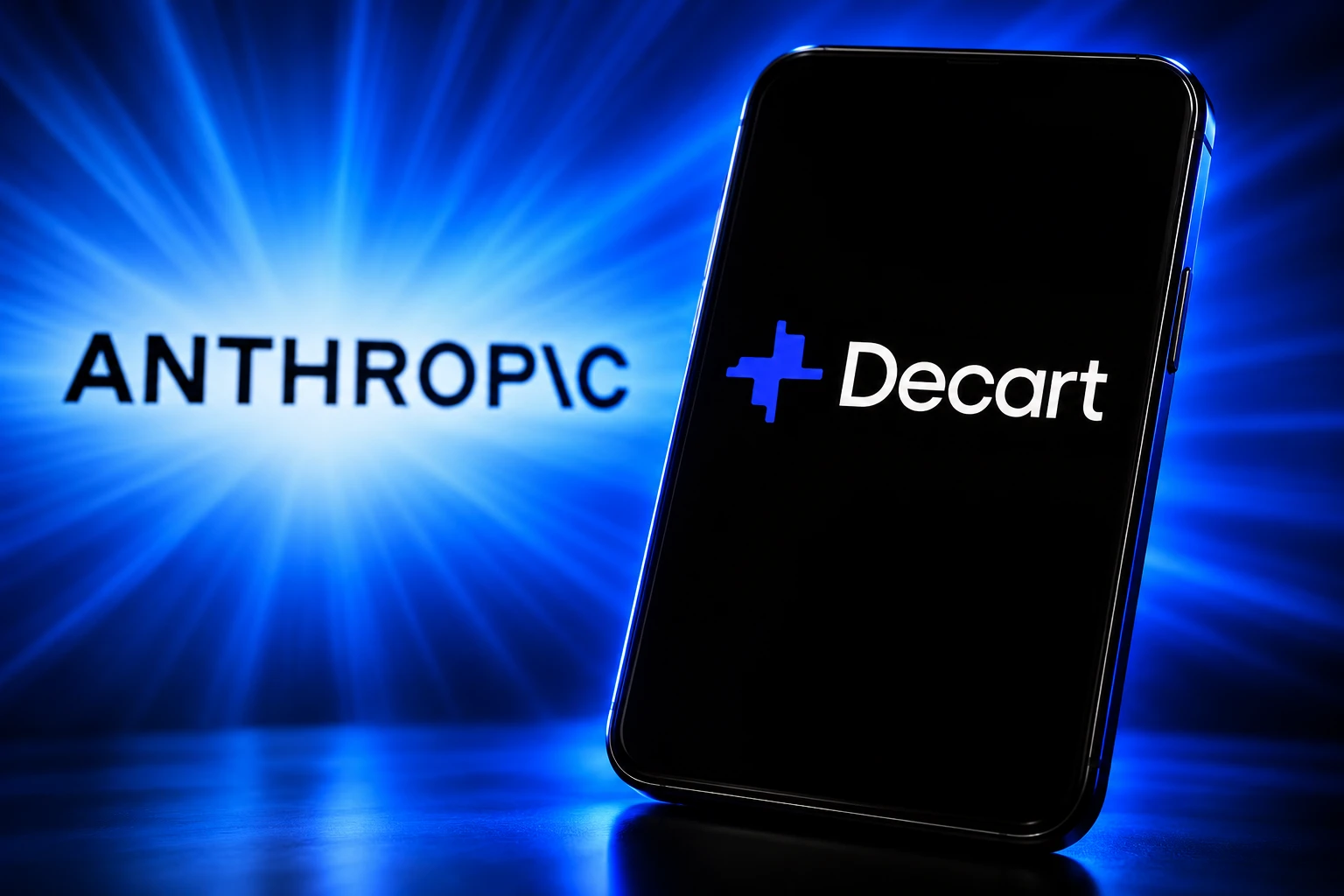
Anthropic walked away from a $6 billion Decart bid after diligence, leaving Nvidia and Amazon still on both the efficiency startup and Claude’s compute bill.

Anthropic has walked away from a $6 billion plan to buy Decart after finishing due diligence on the Israeli chip-efficiency startup. People familiar with the matter said the two companies may still look for another way to work together, and representatives for both declined to comment.
The bid would have been the Claude maker’s largest known purchase, aimed at software that squeezes more work from chips Anthropic already rents, and it died as the company prepares to list.
A Diligence File That Ended in No
Talks were first described in August at about $6 billion, mostly in Anthropic stock, with the usual warning that nothing was signed. Diligence then ran long enough that people close to the process treated the file as nearly complete. Anthropic closed it anyway.
Decart sells two businesses that sit far apart. The one Anthropic wanted is the Decart Optimization Stack, software meant to make training and inference cheaper by helping processors from Nvidia, Amazon, and Google run harder. The one the public knows is a pair of world models, Lucy and Oasis, used for live video edits and physical simulation.
Founded on September 7, 2023 by brothers Dean and Orian Leitersdorf with Moshe Shalev, the lab is based in Tel Aviv and keeps offices in San Francisco and New York. Dean Leitersdorf, the 27-year-old chief executive, met Shalev in Unit 8200. The company now has about 100 people.
WHAT WE KNOW
- The decision: Anthropic completed due diligence and chose not to buy Decart, people familiar with the matter said.
- The price talked: August negotiations sat at about $6 billion, largely in pre-listing Anthropic shares rather than cash.
- The silence: Anthropic and Decart both declined to comment.
- The leftover door: The same people said the two sides may still pursue some other form of work together.
WHAT IS UNCONFIRMED
- Scale: Whether DOS gains flattened once they were tested against Claude-sized training and inference jobs.
- Founders: Whether Anthropic concluded Leitersdorf wanted the shares more than a long stay inside the lab.
- Timing: Whether bankers simply refused to bolt a $6 billion stock deal onto a listing already in motion.
- Politics: Speculation that a Qatari stake in Anthropic complicated the purchase of an Israeli target, which no official has endorsed.
Without a stated reason, later bidders inherit a simple problem. They have to explain why they want a company Anthropic studied at length and then left.
Nvidia Sat on Both Sides of the Table
The missed detail in a straight deal-dies rewrite is who already had a foot in both camps. Nvidia joined Decart’s May round as an investor, sells Anthropic the GPUs that Claude runs on, and had been the most advanced earlier suitor, described as willing to pay more than the stock-heavy Anthropic bid. Amazon is a strategic customer for Decart’s Lucy model on Trainium chips, and it is also Anthropic’s primary cloud partner under a pledge of more than $100 billion of AWS spend over the next ten years.
Andrej Karpathy, the OpenAI co-founder who now sits on Anthropic’s pretraining team, was named as a Decart angel on May 18, 2026, the day the $300 million round was announced. He posted the next day that he had joined Anthropic. Sequoia Capital has been on Decart’s cap table since the seed round and was among the firms that led Anthropic’s $65 billion Series H.
WHO ALREADY HAD A FOOT IN BOTH CAMPS
- Nvidia: Decart investor, Anthropic chip supplier, and the earlier suitor described as ready to pay more cash than Anthropic offered in stock.
- Amazon: Decart Trainium customer through Annapurna Labs, and landlord on Anthropic’s largest disclosed compute contract.
- Andrej Karpathy: Decart angel on May 18, Anthropic pretraining hire on May 19.
- Sequoia Capital: Decart backer from seed through Series B, and a Series H lead on Anthropic.
Elon Musk publicly waved off reports that SpaceX was the buyer, calling that version fake news. Amazon and Nebius had also been named as possible homes before Anthropic moved to the front. The founders still leaned toward Anthropic. They were willing to take a lower headline than Nvidia and to take it mostly in shares.
Those shares were the product. When the bid died, Nvidia kept an independent software vendor that makes its chips look busier, Amazon kept a Trainium showcase, and Anthropic stayed a renter. The walk-away did not empty anyone’s existing contract. It left the efficiency layer with the same firms that already collect the rent on Claude’s computers.
What the Optimization Stack Was Built to Squeeze
Anthropic’s interest was the efficiency layer, not the wardrobe tricks. DOS is sold as a full stack that sits on Nvidia GPUs, Google TPUs, and Amazon Trainium without ripping out the cluster a lab already owns, and the May 18 launch of DOS 2.0 put a hard number on the pitch: over 1,600 tokens per second for agentic inference against an industry average Decart puts at about 200, which is eight times the baseline, plus full-HD video and world-model inference at up to 100 frames per second.
DOS 2.0 ON PAPER
- Agent speed: Over 1,600 tokens per second versus an industry average of about 200, an 8x gap on Decart’s own comparison.
- Video: Up to 100 frames per second of full-HD world-model inference.
- Hardware: One stack across Nvidia GPUs, Google TPUs, and Amazon Trainium, plugged into a customer’s existing machines.
- Trainium proof: Lucy2 on Trainium3, with Amazon citing more than 80% model FLOPS utilization.
Nafea Bshara, vice president at Amazon’s Annapurna Labs, put the Trainium result in cash terms rather than demo terms.
They were among the first in the world to optimize on Trainium3 and have embraced our newest software libraries. The results speak for themselves. Their latest model, Lucy2, exceeds 80% Model FLOPS Utilization, meaning more of the chip’s raw power is doing real, productive work. In an industry where most workloads waste a significant share of the hardware they run on, that’s real money saved and real time back.
Nafea Bshara, vice president, Amazon’s Annapurna Labs, Decart partnership note
That is the specimen Anthropic was buying toward: not a Minecraft clip, a utilization number on someone else’s silicon. Claude’s mid-tier Claude price cuts against cheaper Chinese models make a home-grown efficiency stack look like margin insurance, which is why a failed $6 billion buy lands harder than a routine miss.
Lucy and Oasis Were Never the Point
Lucy is Decart’s live video model, answering in under 30 milliseconds and already used for virtual try-on, in-video ads, and streaming overlays. Oasis is the physical-world twin, first shown on October 31, 2024 as a playable Minecraft-style sim and later pointed at driving and robotics. Both run on DOS. Both are the louder products. People familiar with the Anthropic talks said the rationale was still the stack that would let existing compute absorb more demand.
A buyer that only wanted utilization software would have been asked to digest a second company whose customers are fashion, ads, and car simulators. That mix is a feature if you are Radical Ventures, Nvidia, Adobe, Toyota, or eBay. It is integration work if you are a frontier lab weeks from a prospectus.
Six Billion Would Have Dwarfed Every Prior Buy
Anthropic does buy companies. It does not buy them at this size. Bun, the JavaScript runtime behind a chunk of Claude Code, was the first deal, announced on December 2, 2025, on undisclosed terms. Coefficient Bio, a stealth biotech team of fewer than 10 people, was taken in April 2026 in an all-stock transaction of about $400 million. A $6 billion Decart purchase would have been 15 times that Coefficient figure.
ANTHROPIC’S KNOWN BUYS BESIDE DECART
| Target | Date | Price | What moved |
|---|---|---|---|
| Bun | December 2, 2025 | Undisclosed | JavaScript runtime for Claude Code |
| Coefficient Bio | April 2026 | About $400 million in stock | Biotech team of fewer than 10 |
| Decart (abandoned) | Diligence ended September 2026 | About $6 billion, mostly stock | Chip-efficiency stack, plus world models |
Mike Krieger, Anthropic’s chief product officer, said at the Bun close that the lab would keep a disciplined approach to deals that bolster technical work and match its mission. Six billion dollars for a three-year-old company is a different sentence in a registration statement than a talent buy of under ten scientists.
Decart’s own last round makes the premium plain. Radical Ventures led a $300 million raise on May 18, 2026 that valued the company at about $4 billion, up from $3.1 billion in August 2025. A $6 billion purchase four months later would have been a 50% markup. Total equity in the door sits over $450 million, counting the $21 million seed in October 2024, the $32 million Series A in December 2024 at more than $500 million, the $100 million 2025 round, and the May check.
The IPO Clock Left Little Room to Integrate
On June 1, 2026, Anthropic confidential draft registration statement language went to the SEC under Rule 135, a confidential S-1 that gives the company the option to list after the staff finishes its review. Share count and price were not set. The Claude maker’s IPO buildup is the reason a $6 billion stock grant was always going to fight the listing calendar.
The May 28 Series H had just put $65 billion of new capital on a $965 billion post-money valuation, led by Altimeter Capital, Dragoneer, Greenoaks, and Sequoia. Revenue run rate went from about $9 billion at the end of 2025 to $47 billion by May and $65 billion by the end of July. People who have seen the figures have described a projected $10.9 billion second quarter and a first quarterly operating profit of about $559 million. Some prospective IPO buyers have modeled a public mark near $2 trillion. Anthropic has not set a target.
Against that clock, $6 billion is small next to the compute bill and large next to the cap table. The April Amazon pact commits Anthropic to more than $100 billion of AWS technology over ten years and up to 5 gigawatts of new capacity, on top of more than one million Trainium2 chips already in use. Amazon put in $5 billion on that day, with up to $20 billion more later, building on $8 billion already invested. The Series H note also listed Google and Broadcom for 5 gigawatts of next-generation TPU capacity and SpaceX for GPU access at Colossus 1 and Colossus 2. SpaceX’s public filing has carried a $1.25 billion monthly figure for that access through May 2029, about $15 billion a year, which means the Decart bid was worth less than five months of that one invoice.
Dario Amodei, Anthropic’s chief executive, said at the Amazon expansion that users now treat Claude as essential to how they work and that the company has to build infrastructure to keep up. Renting more capacity is the path already signed. Buying the software that claims to make each rented chip do more work would have been the other path. Anthropic kept the leases.
Decart’s Founders Chose Stock They Never Got
Leitersdorf has said he wants a company on the scale of Google or Meta, not a tidy three-year exit. Taking Anthropic paper instead of a richer Nvidia check only makes sense if those shares were a ticket into a frontier lab heading for a huge listing, and if Anthropic would plant a development center in Israel. That center does not exist. The stock was never issued.
World models are the key to moving AI from the virtual world into the physical world.
Dean Leitersdorf, CEO and co-founder, Decart funding announcement
That is the public pitch. The private sale process ran on a different product.
HOW THE SALE UNRAVELED
- May 18, 2026: Decart raises $300 million at about $4 billion. Nvidia, Adobe Ventures, Toyota Ventures, and eBay Ventures join, with Amazon as a strategic customer and Karpathy among the angels.
- May 19, 2026: Karpathy joins Anthropic’s pretraining team under Nick Joseph.
- August 2026: Decart is in advanced sale talks at about $6 billion to $7 billion. Nvidia is described as the leading earlier suitor. Anthropic then becomes the party in front, with a mostly stock bid the founders prefer.
- Late August 2026: Diligence is underway. Nothing is signed. Musk denies that SpaceX is the buyer.
- September 7, 2026: People familiar with the matter say Anthropic has walked away after finishing due diligence, three years to the day after Decart’s founding. A collaboration remains possible.
Radical Ventures, Sequoia, Benchmark, and Zeev Ventures still own a company that licenses DOS to labs and hyperscalers and ships Lucy and Oasis to commerce and robotics customers. The next process, if there is one, starts from a $4 billion May mark and from a public no by the one buyer that completed a full look. Nvidia can still write a check. So can a cloud firm that wants the Trainium or TPU story. Few will want to be the shop that buys what Anthropic sent back.
People close to the process said a collaboration is still possible. Nvidia remains the suitor that was willing to pay more. Decart still has to sell DOS to a market that watched Anthropic leave.
Disclaimer: This article is news reporting and analysis of a reported acquisition decision, private valuations, and related company finances. It is informational only and is not investment advice, an offer to sell securities, or a recommendation to buy or sell any stock or private-company interest. Readers should consult a licensed financial adviser or securities attorney before acting on any IPO plan, valuation, or deal rumor. Figures and statuses reflect the company statements, filings, and people familiar with the matter cited on the dates named above and may change as Anthropic, Decart, or regulators disclose more.

Instagram Plus Tests a Read-Only Mode That Cuts Stories

Altman Asks the Public to Accept Some AI Harm

Google Freezes OSS VRP Product Reports After AI Flood

AI Agents Make Payment Rails the Scarce Prize

Turkey’s Crypto Boom Now Runs Through Three Banks

Fable 5 Came Back Under a Commerce On-Off Switch

Google’s SpaceX GPU Lease Has a Sept. 30 Deadline

Plasma One’s XPL Locks Face a 1.81 Billion Cliff

DGO’s Rs 549 World Cup Pass Cost Fans Sleep and Data

Moonshot AI’s $30 Billion Ask Became a $35 Billion Close
-
 AI4 months ago
Fable 5 Came Back Under a Commerce On-Off Switch
-
 AI5 months ago
Google’s SpaceX GPU Lease Has a Sept. 30 Deadline
-
 CRYPTO4 months ago
Plasma One’s XPL Locks Face a 1.81 Billion Cliff
-
 APPS4 months ago
DGO’s Rs 549 World Cup Pass Cost Fans Sleep and Data
-
 AI5 months ago
Moonshot AI’s $30 Billion Ask Became a $35 Billion Close
-

 NEWS5 months ago
ColorOS 17 Device List Spans Oppo, OnePlus and Realme
-
 GAMING4 months ago
Xbox Cuts 3,200 Jobs After Five Years of Thin Returns
-
 GAMING4 months ago
The RTX 4050 Under Rs 70,000 Hides a Wattage Gap