
AI
Apple’s Siri AI Reaches the Public, Two Years and $250 Million Later
Apple’s rebuilt Siri AI leaves developer beta for the iOS 27 public beta, arriving two years late with seven new features and no access yet in the EU.

Apple flipped the switch on its rebuilt Siri on July 13, opening the iOS 27 public beta to anyone willing to install it, not just registered developers. The release puts Apple’s biggest Siri overhaul yet in front of a slice of its roughly 2.5 billion active devices worldwide, the widest test yet of an assistant Apple has spent two years trying to ship.
It arrives two years after Apple first promised it, following a $250 million lawsuit settlement, a Google licensing deal reportedly worth close to a billion dollars a year, and a rollout that still shuts the entire European Union out.
Seven Fixes Land in One Beta
Apple didn’t tweak Siri around the edges. It rebuilt the assistant from the inside out, and testers can now poke at all seven changes without a developer account.
| Feature | What Changed | Where You’ll Notice It |
|---|---|---|
| Personal context | Siri can pull from Mail, Messages, Photos and Calendar to answer questions about your own life | Any request that references something already on your phone |
| On-screen awareness | Siri reads what’s currently on your display and can act on it or answer follow-ups about it | Whatever app is open when you ask |
| General knowledge answers | Siri now handles broad, open-ended questions like a chatbot instead of fixed commands | Siri and the new Search or Ask panel |
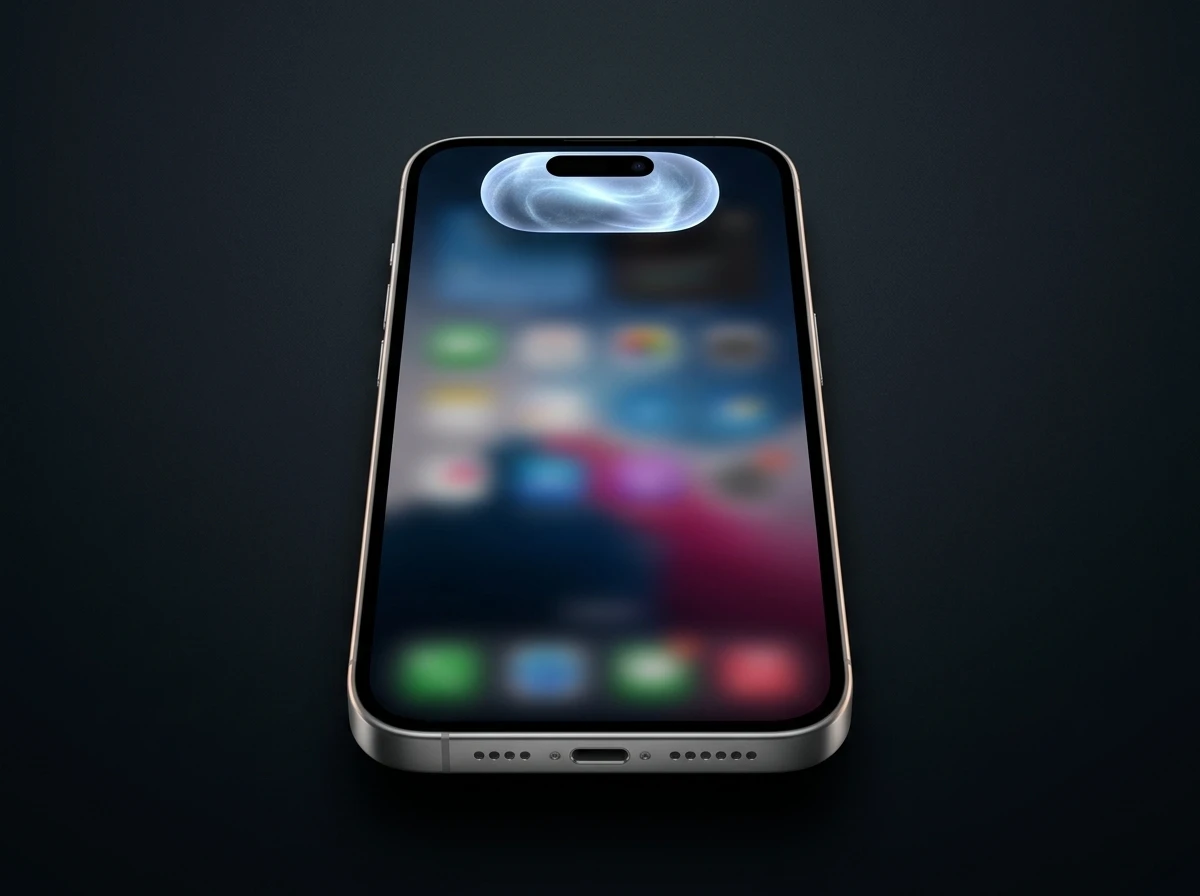
| Dynamic Island and Spotlight | Siri launches straight from the Dynamic Island, and Spotlight search picked up the same AI smarts | Lock screen and Home Screen |
| Standalone Siri app | A dedicated app stores and syncs full conversation history through iCloud | A new app icon, Apple’s first built just for Siri |
| Cross-device reach | The same assistant now runs on iPad, Mac, Apple Watch, CarPlay, AirPods, Apple TV and Vision Pro | Every Apple Intelligence-ready device you own |
| Apple Intelligence backend | Foundation Models handle requests on-device first, with Private Cloud Compute stepping in for heavier ones | Invisible, running behind every request |
None of that touches the phone’s other headline changes. Apple says the same update makes apps launch up to 30% faster, AirDrop transfers up to 80% faster, and newly shot photos appear in the Photos app up to 70% sooner, gains it says reach back as far as the iPhone 11, according to Apple’s own release notes on the update.
Testers Put the New Siri Through Its Paces
Bloomberg’s Mark Gurman, who has tracked Apple’s product roadmap for years, spent several days running the assistant across iPhone, iPad and Mac. In that stretch, he got Siri to:
- Move a calendar appointment by naming the person he was meeting, rename the event, and swap a dial-in number for a physical address
- Surface a TV show recommendation a family member had mentioned weeks earlier
- Pull restaurant suggestions out of a search spanning both messages and email
- Read an email visible on screen inside a third-party app and turn it straight into a calendar event
He placed the result at roughly where ChatGPT, Claude and Gemini stood about six months earlier, catching Siri up without putting it in the lead.
Other testers found smaller, stranger wins. One reviewer said the assistant was good at digging up specific images, right down to old passport headshots buried in a camera roll. Another found the personal-context trick only worked reliably inside Apple’s own Mail app, not Gmail, the inbox a lot of iPhone owners actually use every day.
The Two-Year Wait That Cost Apple $250 Million
Apple first showed off a smarter, more personal Siri at its 2024 Worldwide Developers Conference, promising it alongside the iPhone 16 launch that fall. The underlying architecture wasn’t ready, and Apple pushed the features back a year.
By February 2026, internal testing still wasn’t going well. Bloomberg reported that Siri sometimes failed to process queries properly or took too long to respond, pushing more of the rebuild toward iOS 26.5 and, eventually, iOS 27.
The delay had already cost Apple in court. The company agreed to pay $250 million to settle a class action lawsuit over the personalized Siri features it advertised when the iPhone 16 launched, with eligible buyers able to claim up to $95 each.
Apple finally unveiled the redesigned assistant it now calls Siri AI at WWDC on June 8, 2026, opening a developer beta gated behind a waitlist. The public beta followed five weeks later, on July 13.
Google Is Quietly Underneath Apple’s Biggest Bet
The foundation under the friendly interface isn’t entirely Apple’s own. The Apple Foundation Models powering Siri AI are the result of a collaboration with Google, built using the technology behind Gemini to train the next generation of Apple’s own models. Apple reportedly pays Google around $1 billion a year for the arrangement.
What that actually means for users depends on who you ask.
- AppleInsider argues no user data reaches Google at all: Gemini’s technology helped train Apple’s models, but Apple’s own Foundation Models are what actually run on device and inside Private Cloud Compute.
- Gal Nakash, chief product officer at security firm Reco, said the arrangement’s privacy promise “is only as private as the weakest link,” raising questions about who controls Gemini’s behavior once it sits inside Siri.
- Saoud Khalifah, chief executive of security firm Ciphero, raised a different worry: Apple doesn’t control the biases baked into a model it didn’t build, which could eventually produce results that clash with Apple’s own values.
Just how far Gemini’s technology reaches into Siri’s foundation remains a live question for researchers picking apart the beta, tracing back to the Gemini partnership underneath Siri AI. Apple has consistently described the deal as a way to close the AI gap without handing over its privacy architecture, an argument laid out when the deal first surfaced.
Which iPhones Actually Get the New Siri?
Every iPhone back to the iPhone 11 can install iOS 27, but Siri AI needs an iPhone 15 Pro or newer to run. The most capable on-device version, with a customizable voice and sharper dictation, is limited to the iPhone 17 Pro, iPhone 17 Pro Max and iPhone Air, the only models with the 12GB of memory Apple’s biggest model requires.
The redesign reaches every compatible iPhone. Siri AI’s full toolkit does not.
| Device Group | Gets iOS 27 | Gets Apple Intelligence / Siri AI |
|---|---|---|
| iPhone 11 through iPhone 14, iPhone SE (2nd gen) | Yes | No, hardware doesn’t support it |
| iPhone 15 Pro, 15 Pro Max, iPhone 16 lineup | Yes | Yes, full Siri AI feature set |
| iPhone 17 Pro, 17 Pro Max, iPhone Air | Yes | Yes, plus the top-tier on-device model and custom voice |
| Mac (M1 or later), eligible iPad models | Platform equivalent | Yes, where regionally supported |
| European Union (iPhone, iPad, Watch) | Yes | No, no timeline given |
| China | Yes | No, regulatory review ongoing |
Apple has been unusually blunt about the EU gap.
We’re deeply disappointed that our EU users won’t have Siri AI on iPhone or iPad
Craig Federighi, Apple’s senior vice president of Software Engineering, said in Apple’s statement on the EU delay, adding that the company still hopes to bring the assistant to the bloc’s 27 member states eventually. Apple’s proposed workaround, an intermediary it calls Trusted System Agent, would have let rival assistants tap the same capabilities as Siri AI under an 18-month rollout. EU regulators rejected the proposals outright.
China’s exclusion runs on a separate track. Apple has said Siri AI and the rest of the new Apple Intelligence features won’t reach the country while it works through local regulatory requirements, with no public timeline attached. Back home, the hardware cutoff Apple drew at iPhone 15 Pro means an iPhone 15 or older buyer gets none of it, full stop.
The Rough Edges Testers Found First
Even glowing reviews come with an asterisk. Early testers have already run into the same rough edges:
- Advanced, multi-step actions mostly stay confined to Apple’s own apps, limiting how much Siri AI can actually do across a phone’s other software
- Third-party developers still need to build the hooks that let Siri AI see inside their apps, so a lot of outside software simply doesn’t respond yet
- Personal context takes time to kick in, since the assistant needs several days to finish indexing a phone’s photos, messages and files before its answers sharpen up
- Access itself has been uneven, with some testers clearing Apple’s waitlist within half an hour of updating while others waited days with no queue number or published estimate
That uneven access mirrors the rolling access gate that shaped the earlier developer beta, and Apple has given no sign it plans to publish a firmer timeline for public beta testers either.
Apple’s own engineers acknowledge there’s more coming. Siri’s engineering chief, Mike Rockwell, described the new system as “a completely modern architecture” with room to grow. Federighi has called its more autonomous, agentic features still experimental, without ruling them out down the road.
Still Beta, Even at the September Launch
Apple’s public schedule points to a release candidate in early September and a general rollout around September 14, alongside new iPhones. Siri AI ships inside that update, not before it.
Apple’s own iOS 27 product page still lists Siri AI as arriving in English later this year, language that hasn’t changed since the assistant was first promised on a keynote stage two years ago. Even the version that finally ships in September will still carry a beta label.
Frequently Asked Questions
Does Siri AI Work Outside the United States?
Siri AI launches in English first, while Apple Intelligence overall supports Danish, Dutch, French, German, Italian, Norwegian, Portuguese, Spanish, Swedish, Turkish, Vietnamese, simplified and traditional Chinese, Japanese and Korean across other features. Siri AI itself is excluded from iPhone and iPad in all 27 European Union countries at launch, and it isn’t available in China while Apple works through local regulatory approval.
How Long Is the Public Beta’s Siri AI Waitlist?
Apple hasn’t published an official wait time. Access moves in rolling waves tied to server capacity rather than a fixed queue, and most testers clear it within a day or two, though some have reported waiting longer with no indexing progress or device setting reliably predicting when access lands.
Will Siri AI Still Be Called Beta After the September Launch?
Yes. Apple has said the version of Siri AI shipping with the general iOS 27 release, expected around September 14 following a release candidate in early September, will still be labeled beta even as it reaches every eligible customer.
Can You Turn Off Siri AI and Keep the Classic Assistant?
Siri and Apple Intelligence can both be switched off entirely in Settings, the same as before this overhaul. Apple has given no indication that toggle is going away, so anyone who doesn’t want the new features, or the data access they require, can opt out completely.
Does the New Siri Need an Internet Connection to Work?
Not always. Apple Intelligence handles what it can with on-device Foundation Models first, and only routes heavier requests to Apple’s Private Cloud Compute servers when a query needs more processing power than the phone alone can provide.


Google Opens Gmail to Voice and Gates Docs Live

Lenovo Prices the IdeaPad Vibe Against Apple’s $699 Neo

Xbox Caps Game Pass Cloud Gaming at 15 Hours

GTA 6 DualSense Controllers Follow Sony’s Usual $84.99 Script

South Korea Retail Investors Face Reckoning After KOSPI AI Rally Collapses

Surrey AI Maps Three Heart Attack Paths and Their Molecular Roots

Germany Locks Neutral Apple ATT Prompts Across Most of Europe

Apple’s 5% EU Fee Quietly Rewrites Alternative App Store Math

Apple’s EU Fee Truce Cuts Complexity but Leaves Rivals Fuming

Pixel 11 Pro Fold Trades Thinness for Durability and Seven-Year Stay

Oracle Cuts 21,000 Jobs in a Year, Cites AI in 10-K Filing

Fable 5 and Mythos 5 Return as US Lifts Anthropic Export Controls

SpaceX’s Google Deal Turns a Rocket Company Into a Cloud Landlord

CD Projekt Red Co-CEO: Redemption Arc Isn’t Done, Witcher 4 in 2027

XPL Rallies 30% Ahead of Plasma One Card Tier Launch

Google Search Profiles Build a Follow Graph Inside Discover

DGO App Brings Rs 549 Mobile Pass for FIFA World Cup 2026 in Nepal

Moonshot AI Targets $30 Billion in China’s Fastest AI Funding Sprint

Oppo’s ColorOS 17 Eligibility List Leaves A-Series Buyers Behind

Microsoft Xbox Layoffs Start in July as Sharma Slams 3% Margin
-
 AI2 months ago
Oracle Cuts 21,000 Jobs in a Year, Cites AI in 10-K Filing
-
 AI2 months ago
Fable 5 and Mythos 5 Return as US Lifts Anthropic Export Controls
-
 AI3 months ago
SpaceX’s Google Deal Turns a Rocket Company Into a Cloud Landlord
-
 GAMING2 months ago
CD Projekt Red Co-CEO: Redemption Arc Isn’t Done, Witcher 4 in 2027
-
 CRYPTO3 months ago
XPL Rallies 30% Ahead of Plasma One Card Tier Launch
-
 NEWS3 months ago
Google Search Profiles Build a Follow Graph Inside Discover
-
 APPS3 months ago
DGO App Brings Rs 549 Mobile Pass for FIFA World Cup 2026 in Nepal
-
 AI3 months ago
Moonshot AI Targets $30 Billion in China’s Fastest AI Funding Sprint