
AI
Apple’s WWDC 2026 AI Overhaul Runs on a $1 Billion Google Deal
Apple’s WWDC 2026 reveals iOS 27’s rebuilt Siri, a $1B Google Gemini deal, and the Extensions framework that could reshape how apps compete for AI users.

Apple’s WWDC 2026 developer conference, starting today at 10 a.m. PT at Apple Park in Cupertino, is set to unveil iOS 27 and a rebuilt Siri powered by a custom Google Gemini model costing roughly $1 billion a year. The same AI assistant overhaul Apple demonstrated at WWDC 2024, promoted in iPhone 16 advertising for months, and then settled a $250 million false-advertising lawsuit over is now two years late arriving.
The Siri chatbot will take the headlines. Sitting beneath it is the Extensions framework: a mechanism that opens iOS’s search layer to competing AI services, and that has some of the platform’s largest developers waiting on pricing clarity before committing.
The $250 Million Overhang
At WWDC 2024, Apple showed a Siri capable of seeing what’s on screen, accessing personal data from Mail and Messages, and executing multi-step tasks across apps without user input. Those capabilities were promoted in ads featuring actress Bella Ramsey, timed to the iPhone 16 launch in September 2024. Apple ran the ads for months before quietly withdrawing them.
None of the advertised features had shipped. Apple acknowledged the delay publicly in March 2025. A class-action lawsuit filed in the Northern District of California accused the company of false advertising and unfair competition, arguing Apple had built consumer expectations through sustained advertising for capabilities that weren’t ready.
In May 2026, Apple settled for $250 million, agreeing to pay an estimated $25 per eligible device, rising to as much as $95 if claim volume is low. Eligible buyers included all iPhone 16 models and the iPhone 15 Pro and iPhone 15 Pro Max, purchased between June 10, 2024, and March 29, 2025. Apple denied any wrongdoing, stating it resolved the matter to stay focused on its products and services.
A separate suit, led by South Korea’s National Pension Service, argues the delays caused significant stock-market losses. Apple called the damages theory “massive and unsupported” in a February 2026 motion to dismiss.
Apple arrives at today’s keynote with the same capabilities on the same slide, two years later.
The Engine Apple Bought
The shift in AI architecture under the new Siri traces to January 12, 2026, when Apple and Google jointly announced a multi-year licensing deal. Google Cloud chief Thomas Kurian confirmed the arrangement publicly at Google Cloud Next 2026 in April, saying the Gemini-powered Siri was on track for later in the year. Bloomberg’s Mark Gurman reported the annual cost at roughly $1 billion.
- 1.2 trillion parameters in the custom Gemini model Apple licensed from Google
- ~$1 billion/year, the approximate annual license cost per Bloomberg reporting
- 8x larger than Apple’s own 150-billion-parameter cloud model
Its architecture uses a mixture-of-experts design that activates only a relevant subset of parameters per query, letting the model maintain the reasoning depth of a trillion-parameter system while keeping response latency competitive. Apple’s own approximately three-billion-parameter local model handles simple requests like timers and smart-home controls on the device itself.
Apple processes Siri queries through its Private Cloud Compute (PCC) framework, hardware-isolated server enclaves where data is never stored and queries are used only to fulfill the immediate request. Apple’s contract with Google explicitly prevents Google from using Siri interactions to train future Gemini models. Reporting from The Information in June placed the Gemini inference infrastructure on Nvidia B200 Blackwell chips inside Apple’s PCC nodes, keeping the model weights on Apple’s hardware rather than Google’s servers. Apple has also published the full PCC software image in a transparency log and offers security-researcher bounty payouts for verified vulnerabilities, and an independent analysis presented at an ACM conference in June 2026 confirmed Apple’s three core PCC privacy claims.
Gene Munster of Deepwater Asset Management has estimated the multi-year deal’s total value at up to $5 billion. A week before WWDC, Apple registered the subdomain genai.apple.com, one visible signal that the infrastructure is ready for public announcement.
The Gemini licensing fee inverts a familiar financial relationship. Google already pays Apple an estimated $20 billion a year to remain the default search engine in Safari. A Department of Justice antitrust challenge filed in February 2026 contests the ruling that left that Safari arrangement intact, and an AI licensing deal running the other direction adds another layer to an already contested relationship.
The App Store Logic Behind Extensions
App Intents and the New Siri Contract
Apple has been building toward this integration architecture since iOS 16, when it introduced App Intents, an API that lets developers formally declare the actions their apps can perform, so Siri can execute those actions without opening the app. Someone asks Siri to book a ride; Siri triggers the booking sequence directly inside the app, never handing off to the UI. Starting with iOS 18, Apple began routing Siri requests through App Intents wherever integrations existed. With iOS 27, App Intents becomes the primary interface between Siri and all third-party software on the platform, and an app that doesn’t expose its core actions through this API will be invisible to the new assistant.
They have to make Siri not suck, but Apple also has to put the framework together of how their developers can take advantage of AI themselves. AI is all about data, because data is what creates context and what creates better results.
Patrick Moorhead, founder of Moor Insights & Strategy.
A Future Fee No One Has Confirmed
iOS 27 also introduces the Extensions framework, a system that lets any AI chatbot installed from the App Store plug directly into Siri and other Apple Intelligence surfaces, including Writing Tools and Image Playground. Fine print in a pre-release iOS 27 build, reported by Gurman, reads: “Extensions allow agents from installed apps to work with Siri, the Siri app and other features on your devices.”
ChatGPT has early access. Gemini and Claude are confirmed as the next additions. Any AI app shipping through the App Store gains eligibility once Apple formally opens the framework today. Bloomberg noted the structure gives Apple additional surface area to collect App Store subscription revenue from third-party AI services, reaching up to 30% commission on in-app purchases.
Some of the platform’s largest developers are hesitating. The Information reported in May 2026 that Apple has told prominent app companies it won’t charge a commission on Siri integration in the early stages, but has also told them it hasn’t ruled out introducing one later. The technical barrier is low: developer Blake Crosley added full Siri support to a hydration-tracking app using a single 80-line Swift file. Apple has not clarified its commercial position, and some developers are waiting.
In China, the dynamic is sharper. Apple has been pressing local developers to integrate with the new Siri, but some are hesitating because of the fee ambiguity layered on top of local AI data regulations, per reporting from The Information.
What the Redesigned Siri Delivers
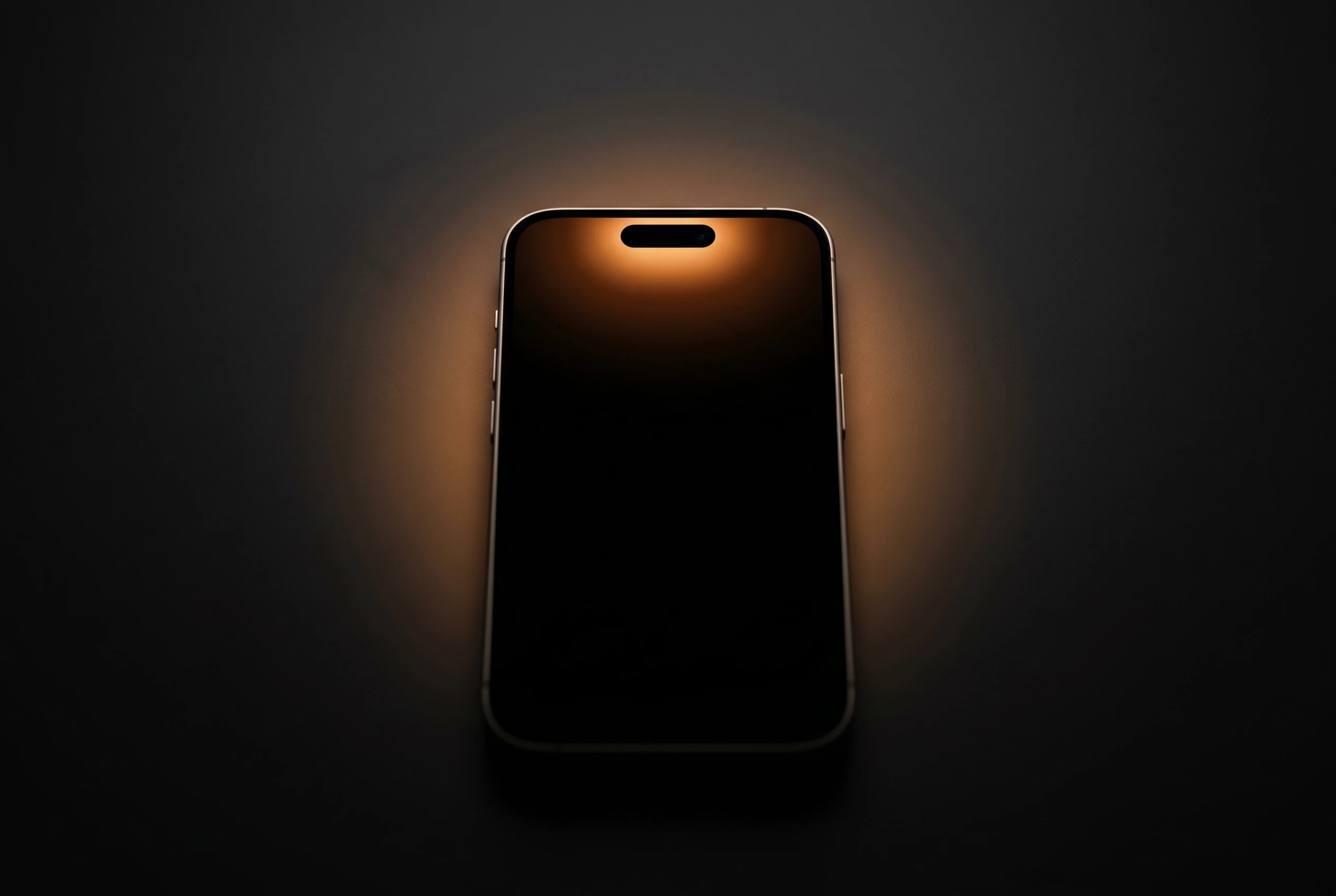
The visible changes in iOS 27 begin with where Siri lives. Activating the assistant produces a glowing animation in the Dynamic Island, the pill-shaped cutout at the top of the iPhone screen, which expands into a translucent results card that can be swiped into a full conversation view. A new system-wide “Search or Ask” panel, triggered by swiping down from the top center of any screen, replaces Spotlight as the primary search entry point. A standalone Siri app with persistent conversation history, file and image uploads, and text-and-voice modes completes the redesign, with a layout Bloomberg’s Gurman described as matching iMessage in structure.
The capabilities those surfaces carry include all three features Apple originally promised at WWDC 2024 and never shipped:
- Personal context access: Siri can pull from emails, messages, photos, notes, and calendar data to complete tasks
- On-screen awareness: Siri can see what’s displayed and act on visible content
- Cross-app task execution through App Intents, including multi-step sequences without opening individual apps
- Swappable AI backends through Extensions: users can route queries to ChatGPT, Claude, or Gemini
- Conversation history, web search, and file analysis in the standalone Siri app
Apple Intelligence also expands into the Camera app in iOS 27. A new Visual Intelligence mode, powered by Google Image Search, sits alongside Photo, Video, and Portrait in the camera carousel and can identify objects captured by the lens. The Photos app is expected to gain AI editing tools including scene extension, object removal, and natural-language edits.
Bloomberg’s Gurman has described the iOS 27 release as a “Snow Leopard” update, referencing Apple’s 2009 macOS version that prioritized codebase cleanup and performance over headline features. The OS drops support for iPhone 11-series models, requiring an A14 Bionic chip at minimum. Advanced Siri features, including personal context and cross-app actions, are expected to need an iPhone 15 Pro or newer. Developer betas drop today; public betas follow in July; the full consumer release ships in September alongside the iPhone 18 lineup.
Cook Departs, Ternus Inherits
Today’s keynote is Tim Cook’s last as chief executive. In April 2026, Apple confirmed that Cook would become executive chairman and John Ternus, currently senior vice president of Hardware Engineering, would take over as chief executive officer, both effective September 1. The board approved the succession unanimously. It is the first CEO change at Apple since Steve Jobs handed Cook the role in August 2011, when the company was worth roughly $349 billion; today it sits near $4 trillion.
Ternus, a mechanical engineer who has spent most of his career in Apple’s hardware division, took over the Hardware Engineering organization in 2021 and oversaw the M1 and M2 chip transitions. His selection over Craig Federighi, Apple’s software engineering chief, reflects a board calculation that the company’s next phase turns primarily on silicon architecture, not app ecosystem management.
Siri was first announced at Cook’s inaugural product event as CEO, the iPhone 4S launch in October 2011. Today, at his last WWDC, it headlines again. IDC senior director Nabila Popal put the competitive stakes plainly: “Getting Siri up to par with the competitor AI models will be crucial for Apple to remain competitive in an AI-first world.” The rebuilt Siri ships to consumers in September; that version, running on 2.5 billion active devices, is the one that gets measured.
His inheritance includes a Gemini deal with Google, a developer ecosystem holding on the Extensions fee question, and a $20 billion search-default arrangement with Google already under antitrust challenge. Developer betas drop today; the full consumer release ships in September.


Sony’s 10 Percent Disc Drop Leaves the 2028 Cutoff Intact

Chip Allocation Sidelines the Base iPhone 18 This Fall

Miami-Dade Fights the Vice City Brand It Already Wears

IFA 2026 Awards Put Tecno Ahead of Flagship Phones

USB-C Gadgets Made the Junk Drawer Rechargeable

Pixel 11 Pro Asks $1,099 for a Light Google Locked

The iPhone Ultra Sells Two Retired Minis as One Foldable

Google Opens Gmail to Voice and Gates Docs Live

Lenovo Prices the IdeaPad Vibe Against Apple’s $699 Neo

Xbox Caps Game Pass Cloud Gaming at 15 Hours

Oracle Cuts 21,000 Jobs in a Year, Cites AI in 10-K Filing

Fable 5 and Mythos 5 Return as US Lifts Anthropic Export Controls

SpaceX’s Google Deal Turns a Rocket Company Into a Cloud Landlord

CD Projekt Red Co-CEO: Redemption Arc Isn’t Done, Witcher 4 in 2027

XPL Rallies 30% Ahead of Plasma One Card Tier Launch

Google Search Profiles Build a Follow Graph Inside Discover

DGO App Brings Rs 549 Mobile Pass for FIFA World Cup 2026 in Nepal

Moonshot AI Targets $30 Billion in China’s Fastest AI Funding Sprint

Oppo’s ColorOS 17 Eligibility List Leaves A-Series Buyers Behind

Microsoft Xbox Layoffs Start in July as Sharma Slams 3% Margin
-
 AI2 months ago
Oracle Cuts 21,000 Jobs in a Year, Cites AI in 10-K Filing
-
 AI2 months ago
Fable 5 and Mythos 5 Return as US Lifts Anthropic Export Controls
-
 AI3 months ago
SpaceX’s Google Deal Turns a Rocket Company Into a Cloud Landlord
-
 GAMING3 months ago
CD Projekt Red Co-CEO: Redemption Arc Isn’t Done, Witcher 4 in 2027
-
 CRYPTO3 months ago
XPL Rallies 30% Ahead of Plasma One Card Tier Launch
-
 NEWS3 months ago
Google Search Profiles Build a Follow Graph Inside Discover
-
 APPS3 months ago
DGO App Brings Rs 549 Mobile Pass for FIFA World Cup 2026 in Nepal
-
 AI3 months ago
Moonshot AI Targets $30 Billion in China’s Fastest AI Funding Sprint