
GAMING
Epic Games Store’s Mobile Freebies Mask a Bigger App Store War
Epic Games Store’s mobile app gives Android and EU iPhone users a free weekly game, part of Epic’s fight against Apple and Google’s app store rules.

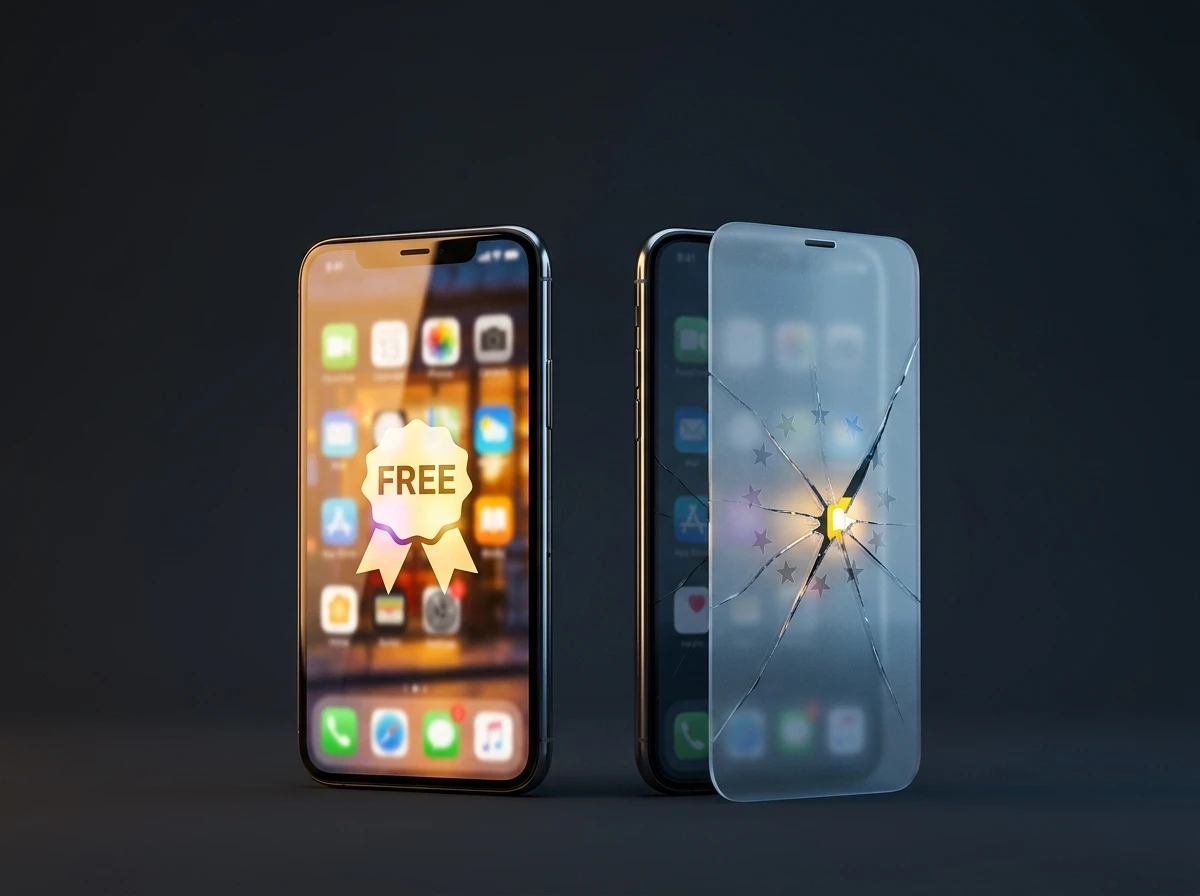
Epic Games Store now hands mobile players a free game every week, the same hook that has pulled PC gamers into its library since 2019. Android owners worldwide can claim the current lineup, including Super Space Club and Loop Hero, while iPhone access stays limited to the European Union.
The catalog looks generous. It also works as the recruiting arm of a five-year legal fight Epic has waged against Apple and Google over how software reaches phones, and the giveaway’s patchy reach shows how much of that fight remains unsettled.
A Weekly Free Game Lands Inside Epic’s Mobile App
Epic Games Store’s mobile app now runs its own version of the giveaway that has fueled a run of high-budget PC freebies this year, kicking off with a curated library of titles plus a new weekly freebie, GameSpot reported. The app also bundles mobile versions of Fortnite, Fall Guys, and Rocket League Sideswipe for players who want Epic’s bigger titles without leaving the giveaway screen.
Claiming a game takes a free Epic account and the mobile app itself. Log in, and new titles unlock every Thursday, mirroring the PC program’s long-running schedule.
Right now, six games are free on both Android and iPhone:
- Super Space Club
- Loop Hero
- Chuchel
- Mr Racer: Premium
- The Forest Quartet
- The WereCleaner
Android owners get nine more on top of that list: Bowling Clash, Chicken Police: Paint It Red, Endling: Extinction Is Forever, One Hand Clapping, Neighbours Back From Hell, both This Is the Police games, This Is the President, and Through the Darkest of Times. Two lean hard into their premise. Chicken Police follows a noir detective story cast entirely with anthropomorphic animals. Endling follows a mother creature shepherding her family through humanity’s final days.
A Lopsided Catalog, By Design
The gap between platforms traces back to how each store got built. Epic added third-party mobile game support in January 2025 and rolled out the free games program on mobile alongside it, starting with Dungeon of the Endless: Apogee and Bloons TD 6.
Android has always had the wider door. Google’s Play Store lets rival marketplaces install, if awkwardly. Apple’s iOS only opened to outside stores because of European law, and only inside the EU. Google has separately begun letting rival app stores plug into its Play Store catalog while keeping its own cut, a parallel crack in the other half of the mobile duopoly.
| Metric | Android | iOS |
|---|---|---|
| Regional availability | Worldwide | European Union only |
| Install flow after fixes | 12 steps, per Epic | 6 steps, down from 15 |
| Reported install drop-off | Sabotaged over 50% of attempts, Epic says | Fell from 65% to 25% after Apple’s update |
| Compatible hardware | Phones, tablets, emulation handhelds like Retroid Pocket | iPhone only |
| Current free mobile catalog | 15 titles: 6 shared plus 9 exclusive | 6 titles, the shared list only |
Every gap in that table traces to a courtroom or a regulator’s office, not to product choice.
Five Years of Suing Apple and Google Got Epic Here
The regulation behind that split has a name: the Digital Markets Act (DMA, an EU law forcing large gatekeeper platforms to let rival app stores operate on their devices). Apple’s early compliance was, by Epic’s own account, barely usable.
Epic reported a clear payoff once Apple adjusted its iOS installation flow in July: “we’ve seen a stunning 60 percent decrease in player drop-off during attempts to install the Epic Games Store,” the company said in a statement. Before the fix, more than 65 percent of people trying to install the app gave up partway through. Afterward, that fell to roughly 25 percent.
Google hasn’t made the same fix. “Google continues to blatantly violate the Digital Markets Act with a 12-step install flow, a misleading scare screen,” Epic said, adding that the process “sabotages Epic Games Store install attempts on Android more than 50 percent of the time.”
The fight predates the DMA by years. Apple pulled Fortnite from the App Store in August 2020 after Epic tried to route around its 30 percent commission, starting a court battle that dragged on for half a decade. A US judge held Apple in contempt of an earlier antitrust order in the spring of 2025, and Fortnite returned to the American App Store within days. Months later, Epic and Google reached a settlement the companies say caps Android store fees between 9 percent and 20 percent, down from 30 percent, applied worldwide. Epic also offers developers a 12 percent store fee with 0 percent on third-party payments, undercutting both rivals directly.
29 Million Users, a Long Way From Epic’s Goal
Epic wanted 100 million mobile users by the end of 2024. It got 29 million, according to one industry estimate tracking the store’s early rollout.
The wider storefront, still mostly PC, fared better. Epic’s official year in review counted 317 million registered users and $1.16 billion in player spending for 2025, up 6 percent from the year before, the company’s annual report showed. Players claimed more than 662 million free games across 100 titles that year alone.
Epic Games Store general manager Steve Allison put a finer point on the mobile-versus-PC gap in a recent interview. The storefront averaged 67 million monthly users across 2025, a little under half of Steam’s count, while generating roughly a tenth of what Steam takes in from player spending. Allison put the free-to-paid conversion rate at 16 percent, meaning about one in six players who grab a free game eventually spend money in the store.
- 29 million: mobile users Epic counted by the end of 2024, against a 100 million target it set for itself.
- 88/12: the revenue split Epic offers mobile developers on processed payments, against a 70/30 industry standard.
- 16%: the average share of free-game claimers who go on to spend money in the store, per Allison.
- August 2026: when Epic plans to open mobile self-publishing to every developer, not just invited partners.
Those numbers sit side by side because they measure the same bet from two angles: a platform still small on mobile, propped up by a much larger PC business.
Self-Publishing, Then a Shared Library
Epic said in 2025 that it wanted iOS access in the UK and Japan by year’s end. The most recent reporting on the storefront still describes its iOS footprint as EU-only, so that timeline has clearly slipped.
What hasn’t slipped is the next round of infrastructure. Epic Games Store will open mobile self-publishing to all developers in August 2026, moving from an invite-only beta to a broader marketplace, with fee cuts tied to the shift. A cross-platform library linking PC and mobile collections under one account is due that autumn, letting players manage everything they own from a single screen.
It’s going to be a really critical part of our growth. We are planning to launch in the UK and Japan later this year. If you recall, there’s new laws that have been passed there.
Allison said that in a 2025 press briefing, laying out the expansion Epic was banking on before self-publishing and the shared library became the nearer-term targets.
How Do You Claim Epic’s Free Mobile Games?
Claiming a free Epic mobile game takes four steps: create a free Epic Games account, install the Epic Games Store app on Android, or on iPhone inside the EU, log in, then tap claim on the current title before its week runs out. New games unlock every Thursday, matching the PC storefront’s long-running schedule.
One wrinkle for Android owners: the app isn’t limited to phones and tablets. It also runs on Android-based emulation handhelds like the Retroid Pocket, so claiming and playing these games doesn’t require a conventional smartphone at all.
Epic’s PC storefront has leaned on mystery reveals to build anticipation before. Recent mystery game teasers tested players’ guesswork with cryptic clues. The mobile rotation skips that suspense, naming next week’s free title in advance every cycle.
Frequently Asked Questions
Why Is the Epic Games Store App Still Missing From iPhones in the US?
Apple has not been forced to open iOS to rival app stores outside the European Union, since the DMA only binds Apple inside that bloc. Fortnite itself returned to the US App Store in 2025 after a federal judge held Apple in contempt over a separate antitrust order, but that ruling didn’t force Apple to admit a rival storefront, so American iPhone owners still can’t install the Epic Games Store app itself.
Do Android Emulation Handhelds Support the Whole Free Games Catalog?
They support the Android side only. The wider 15-game Android catalog, including all nine Android-exclusive titles, works on emulation handhelds like the Retroid Pocket, but the six-game iOS list stays locked to iPhones inside the EU, since Apple’s platform doesn’t run on that hardware at all.
What Happens to a Free Game After Its Week Runs Out?
The window closes and a new title takes its place, but anyone who claimed a game during its free week keeps it permanently in their library. That’s the same rule the PC giveaway program has followed since 2019, and it carries over unchanged to mobile.
Does Epic Cover the Fees Developers Would Otherwise Owe Apple?
Yes. Epic absorbs Apple’s Core Technology Fee, a per-install charge Apple applies once a title passes one million iOS downloads, so developers publishing through the Epic Games Store don’t pay it directly. That sits on top of an 88/12 revenue split that already beats the standard 70/30 industry cut.
Will the Free Games Program Expand Beyond the EU on iOS?
Epic said in 2025 it wanted iOS access in the UK and Japan by the end of that year, with Brazil, Australia, South Korea, and the United States to follow as regulation allowed. None of those markets have materialized yet, and the most recent reporting still places Epic’s iOS footprint inside the EU alone.


Google Opens Gmail to Voice and Gates Docs Live

Lenovo Prices the IdeaPad Vibe Against Apple’s $699 Neo

Xbox Caps Game Pass Cloud Gaming at 15 Hours

GTA 6 DualSense Controllers Follow Sony’s Usual $84.99 Script

South Korea Retail Investors Face Reckoning After KOSPI AI Rally Collapses

Surrey AI Maps Three Heart Attack Paths and Their Molecular Roots

Germany Locks Neutral Apple ATT Prompts Across Most of Europe

Apple’s 5% EU Fee Quietly Rewrites Alternative App Store Math

Apple’s EU Fee Truce Cuts Complexity but Leaves Rivals Fuming

Pixel 11 Pro Fold Trades Thinness for Durability and Seven-Year Stay

Oracle Cuts 21,000 Jobs in a Year, Cites AI in 10-K Filing

Fable 5 and Mythos 5 Return as US Lifts Anthropic Export Controls

SpaceX’s Google Deal Turns a Rocket Company Into a Cloud Landlord

CD Projekt Red Co-CEO: Redemption Arc Isn’t Done, Witcher 4 in 2027

XPL Rallies 30% Ahead of Plasma One Card Tier Launch

Google Search Profiles Build a Follow Graph Inside Discover

DGO App Brings Rs 549 Mobile Pass for FIFA World Cup 2026 in Nepal

Moonshot AI Targets $30 Billion in China’s Fastest AI Funding Sprint

Oppo’s ColorOS 17 Eligibility List Leaves A-Series Buyers Behind

Microsoft Xbox Layoffs Start in July as Sharma Slams 3% Margin
-
 AI2 months ago
Oracle Cuts 21,000 Jobs in a Year, Cites AI in 10-K Filing
-
 AI2 months ago
Fable 5 and Mythos 5 Return as US Lifts Anthropic Export Controls
-
 AI3 months ago
SpaceX’s Google Deal Turns a Rocket Company Into a Cloud Landlord
-
 GAMING2 months ago
CD Projekt Red Co-CEO: Redemption Arc Isn’t Done, Witcher 4 in 2027
-
 CRYPTO3 months ago
XPL Rallies 30% Ahead of Plasma One Card Tier Launch
-
 NEWS3 months ago
Google Search Profiles Build a Follow Graph Inside Discover
-
 APPS3 months ago
DGO App Brings Rs 549 Mobile Pass for FIFA World Cup 2026 in Nepal
-
 AI3 months ago
Moonshot AI Targets $30 Billion in China’s Fastest AI Funding Sprint