
APPS
IKEA’s New App Pronunciation Button Taps a 1943 Naming Tradition
IKEA’s new in-app pronunciation button for Swedish product names, born from a 2026 hackathon idea, builds on Kamprad’s dyslexia-era naming tradition.

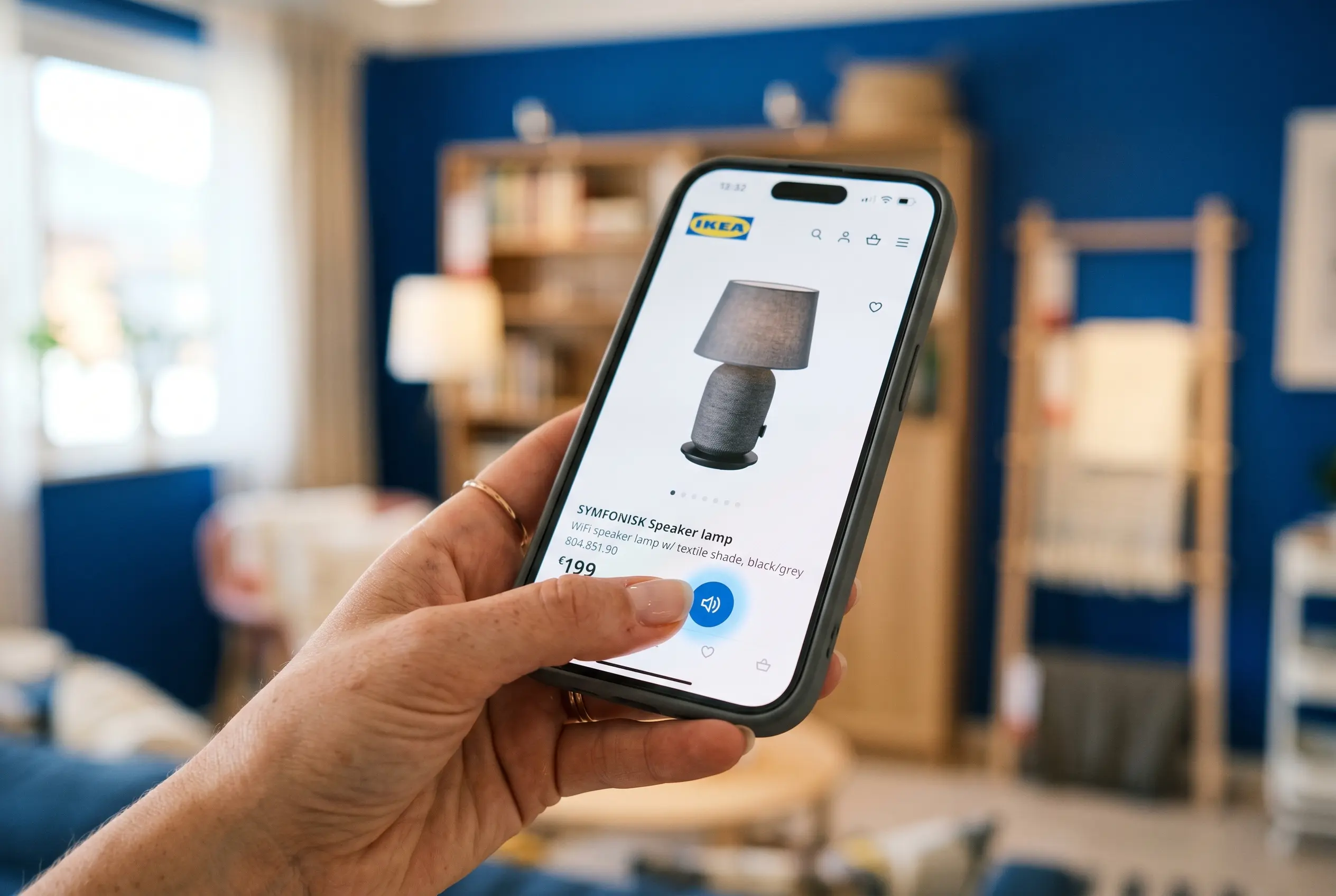
The IKEA mobile app now lets shoppers hear how to say the retailer’s famously Swedish product names, a small but pointed addition to a tradition the company traces back to founder Ingvar Kamprad’s struggle with dyslexia. A new in-app pronunciation button, live across all markets and languages since February 2026, plays back the name of any product on demand with a single tap.
The tool is being used by 8,000 people globally every day, per Ingka Group, the largest IKEA retailer and the operator behind the IKEA app. The feature is unavailable in Swedish, a deliberate cut since Swedish speakers are not the audience the audio is built for.
From NYTILLVERKAD to a Hackathon Win
The idea for the IKEA app’s pronunciation feature started the same way many IKEA products do, with a problem no one had officially owned. Co-workers at the company were struggling to pronounce the name of a specific collection. They turned that daily friction into an app hackathon project. The team that won got to ship it.
The collection in question was NYTILLVERKAD, a limited series whose name Swedish speakers can rattle off and almost no one else can. The team turned the moment into a hackathon entry, and Software Engineer Filip Larsson captured the trigger in one line.
This started when we were working on the collection NYTILLVERKAD, and several people on our team had a really hard time pronouncing it.
Larsson, who co-built the feature with fellow Software Engineer Valery Sokalau, carried the idea from the hackathon floor into the IKEA app. The feature they shipped is a small speaker icon on each product page that plays back a recording of the name. It is built for the global catalogue, the audience the audio was designed to serve. The Larsson quote is from a post on the Ingka Group newsroom.
The Ingka Group post on the pronunciation feature is the first time IKEA broke out a daily usage figure for the new tool. The announcement said the feature has been live since February 2026. It also confirmed the feature is available in all languages in the app, except for Swedish.
How Kamprad’s Dyslexia Built the Naming System
The pronunciation button is, on its face, a usability fix. It also reads as a direct line to a tradition that began with IKEA’s founder and a reading disorder he never tried to hide. Ingvar Kamprad, who founded IKEA in 1943 at the age of 17, had dyslexia and struggled to remember the order of numbers in the product codes the company used at the time, a problem rooted in Kamprad’s dyslexia and the founding of IKEA. The names he introduced were a workaround for his own memory, a private accommodation that became the brand’s signature.
Product names replaced numerical product codes, and IKEA built a structured vocabulary around them. Different product categories followed different naming patterns and, eventually, themes. The categories are part of the cultural export that has made the names themselves a kind of brand. Today, the IKEA Museum calls the approach “a method to the madness.” The naming tradition has outlasted every redesign of the catalogue, every market expansion, and every new product category the company has added since 1943.
The Categories That Keep the Names Coming
IKEA adds thousands of new products and updates each year. A team of dedicated naming specialists follows the conventions the founder set. The category, not the individual product, decides what kind of name a product gets.
The system is structured by product type, and the structure has been documented for years, including in a breakdown of how IKEA names its products. Bathrooms are lakes, beds are Norwegian place names, bookcases are professions or Scandinavian boys’ names, dining tables are Swedish towns, rugs are Danish, garden furniture is named after Scandinavian islands. The list goes on, and the categories are the rule rather than the exception. The IKEA Museum has noted that some product names can seem almost impossible to pronounce outside Sweden, and sometimes even to Swedes themselves. The categories are stable enough that a buyer can guess what kind of product a name belongs to without ever seeing the item.
That gap between the name and the buyer is what the new in-app audio is built to close. The speaker icon sits on every product page and plays the name on demand. The feature is for non-Swedish speakers, who have consistently struggled with the words.
| Product category | Naming source |
|---|---|
| Bathroom articles | Swedish lakes and bodies of water |
| Bookcases | Professions, Scandinavian boy’s names |
| Beds, wardrobes, hall furniture | Norwegian place names |
| Sofas, armchairs, chairs and dining tables | Swedish place names |
| Rugs | Danish place names |
| Garden furniture | Scandinavian islands |
| Fabrics, curtains | Scandinavian girl’s names |
| Lighting | Units of measurement, seasons, months, days |
Names Worth Pronouncing Correctly
Some of the names IKEA has assigned have become cultural touchstones in Sweden and well beyond. BILLY, one of IKEA’s most iconic products, is believed to have been named after Billy Liljedahl, an advertising manager who repeatedly pointed out that the range was missing a “proper” bookshelf. OMTÄNKSAM, the inclusive collection developed with ergonomists, physiotherapists, and healthcare researchers, takes its name from the Swedish word for being thoughtful or considerate.
STOLLE, a Dala horse-inspired ornament celebrating Swedish folk culture, takes its name from a Swedish word for someone a little silly or delightfully goofy. BLÅHAJ, the beloved blue shark, has a fanbase that stretches well beyond Sweden. IKEA’s own newsroom post on the feature points to BLÅHAJ as the kind of product the audio button was built for, a plush toy whose name is rarely said the Swedish way outside Sweden.
- BILLY: Named after Billy Liljedahl, an advertising manager who repeatedly pointed out that the range was missing a “proper” bookshelf.
- OMTÄNKSAM: Swedish for “thoughtful” or “considerate,” the name of an inclusive collection developed with ergonomists, physiotherapists, and healthcare researchers.
- STOLLE: Swedish for someone “silly” or “goofy,” the name of a Dala horse-inspired ornament celebrating Swedish folk culture.
- BLÅHAJ: The beloved blue shark soft toy whose fanbase stretches well beyond Sweden, even when its name is rarely said the Swedish way.
The Names That Travel
The Swedish vocabulary has outlasted IKEA’s catalogue for a reason. It travels. A blue plush shark named BLÅHAJ has become a fan favorite in markets as far from Sweden as Mexico, Japan, and the United States, carried home by shoppers who rarely say the name the Swedish way.
The same is true for products like KALLAX, MALM, and BILLY, names that have become shorthand for entire furniture categories in countries that have no other reason to know Swedish. The audio button is built for those shoppers, the ones reading a Swedish word aloud for the first time and wanting to know they are saying it right. That, the Ingka Group post suggests, is the kind of small accommodation IKEA has been building around its naming tradition for decades. The new in-app feature is the latest in a long line of workarounds around the founder’s original accommodation. The new in-app feature is the founder’s workaround in software form.
KALLAX is named after a town in northern Sweden, MALM after a Swedish place name, BILLY after an advertising manager. Each name carries a piece of Swedish geography, history, or workplace lore the buyer usually never sees. The pronunciation button is a small accommodation that plays the name back the way a Swedish speaker would say it.
8,000 Daily Users, One Exclusion
The pronunciation feature is being used by 8,000 people globally every day, per the Ingka Group post. The feature is available in all languages in the IKEA app, except for Swedish. The exclusion is built into the feature’s design and was there from the start.
Ingka Group runs IKEA retail in 32 markets and accounts for 87% of IKEA retail sales worldwide, the company says. The pronunciation button is built for the global shopper reading a Swedish word for the first time, and the Swedish market is the obvious exception. The 8,000-a-day figure is a small slice of IKEA’s overall app audience, which includes millions of shoppers using the app to plan kitchens and check stock. The feature has been live since February 2026, and IKEA has not commented on whether a Swedish version is planned.
- 8,000 daily global users of the IKEA app pronunciation feature
- February 2026 month the feature went live
- 32 markets where Ingka Group operates IKEA retail
- 87% share of IKEA retail sales Ingka Group represents
- 1943 year IKEA was founded by Ingvar Kamprad
Frequently Asked Questions
What does the IKEA app pronunciation feature do?
The feature plays back a recording of an IKEA product name when a shopper taps a speaker icon on a product page in the IKEA app. It is built for non-Swedish speakers, the audience that has consistently struggled with the names. The tool is available in every language the app supports, with the noted exception of Swedish.
When did IKEA add the pronunciation button?
The feature rolled out across the IKEA app in February 2026, per Ingka Group. The retailer first published the daily usage figure and the feature description in a post on the Ingka Group newsroom. IKEA has not announced any plan to extend the tool to Swedish-language shoppers.
Why is the feature not available in Swedish?
The Ingka Group post says the function is “available in all languages in the app, except for Swedish (for obvious reasons).” Swedish speakers are the home audience for the IKEA naming system and do not need the audio help the tool is built to provide. The exclusion is built into the feature’s design from the start.
How many people use IKEA’s pronunciation feature?
Per Ingka Group, the feature logs 8,000 daily users worldwide. That is a daily active count, not a cumulative total. IKEA has not released a monthly or annual figure alongside the daily number.
Why does IKEA name its products in Swedish?
IKEA founder Ingvar Kamprad had dyslexia and struggled to remember the numerical product codes the company used in its early years. He replaced the numbers with names because nouns were easier for him to remember and visualize. The system evolved into the structured, category-based naming tradition IKEA still uses today.
The pronunciation button joins a long line of IKEA features built around a founder’s workaround. Kamprad’s naming system began as a private accommodation for his own memory, became a brand trademark, and is now a piece of in-app infrastructure for shoppers who have never set foot in Sweden. The audio is small, and it sits on top of a tradition that has been running since 1943.


Sony’s 10 Percent Disc Drop Leaves the 2028 Cutoff Intact

Chip Allocation Sidelines the Base iPhone 18 This Fall

Miami-Dade Fights the Vice City Brand It Already Wears

IFA 2026 Awards Put Tecno Ahead of Flagship Phones

USB-C Gadgets Made the Junk Drawer Rechargeable

Pixel 11 Pro Asks $1,099 for a Light Google Locked

The iPhone Ultra Sells Two Retired Minis as One Foldable

Google Opens Gmail to Voice and Gates Docs Live

Lenovo Prices the IdeaPad Vibe Against Apple’s $699 Neo

Xbox Caps Game Pass Cloud Gaming at 15 Hours

Oracle Cuts 21,000 Jobs in a Year, Cites AI in 10-K Filing

Fable 5 and Mythos 5 Return as US Lifts Anthropic Export Controls

SpaceX’s Google Deal Turns a Rocket Company Into a Cloud Landlord

CD Projekt Red Co-CEO: Redemption Arc Isn’t Done, Witcher 4 in 2027

XPL Rallies 30% Ahead of Plasma One Card Tier Launch

Google Search Profiles Build a Follow Graph Inside Discover

DGO App Brings Rs 549 Mobile Pass for FIFA World Cup 2026 in Nepal

Moonshot AI Targets $30 Billion in China’s Fastest AI Funding Sprint

Oppo’s ColorOS 17 Eligibility List Leaves A-Series Buyers Behind

Microsoft Xbox Layoffs Start in July as Sharma Slams 3% Margin
-
 AI2 months ago
Oracle Cuts 21,000 Jobs in a Year, Cites AI in 10-K Filing
-
 AI2 months ago
Fable 5 and Mythos 5 Return as US Lifts Anthropic Export Controls
-
 AI3 months ago
SpaceX’s Google Deal Turns a Rocket Company Into a Cloud Landlord
-
 GAMING3 months ago
CD Projekt Red Co-CEO: Redemption Arc Isn’t Done, Witcher 4 in 2027
-
 CRYPTO3 months ago
XPL Rallies 30% Ahead of Plasma One Card Tier Launch
-
 NEWS3 months ago
Google Search Profiles Build a Follow Graph Inside Discover
-
 APPS3 months ago
DGO App Brings Rs 549 Mobile Pass for FIFA World Cup 2026 in Nepal
-
 AI3 months ago
Moonshot AI Targets $30 Billion in China’s Fastest AI Funding Sprint