
CRYPTO
Musk’s Net Worth Tops Bitcoin’s Market Cap as SpaceX Tops $200
Musk’s net worth climbed to $1.32T, past Bitcoin’s $1.29T market cap, as SpaceX’s six-day rally and levered ETFs drew speculative capital away from crypto.

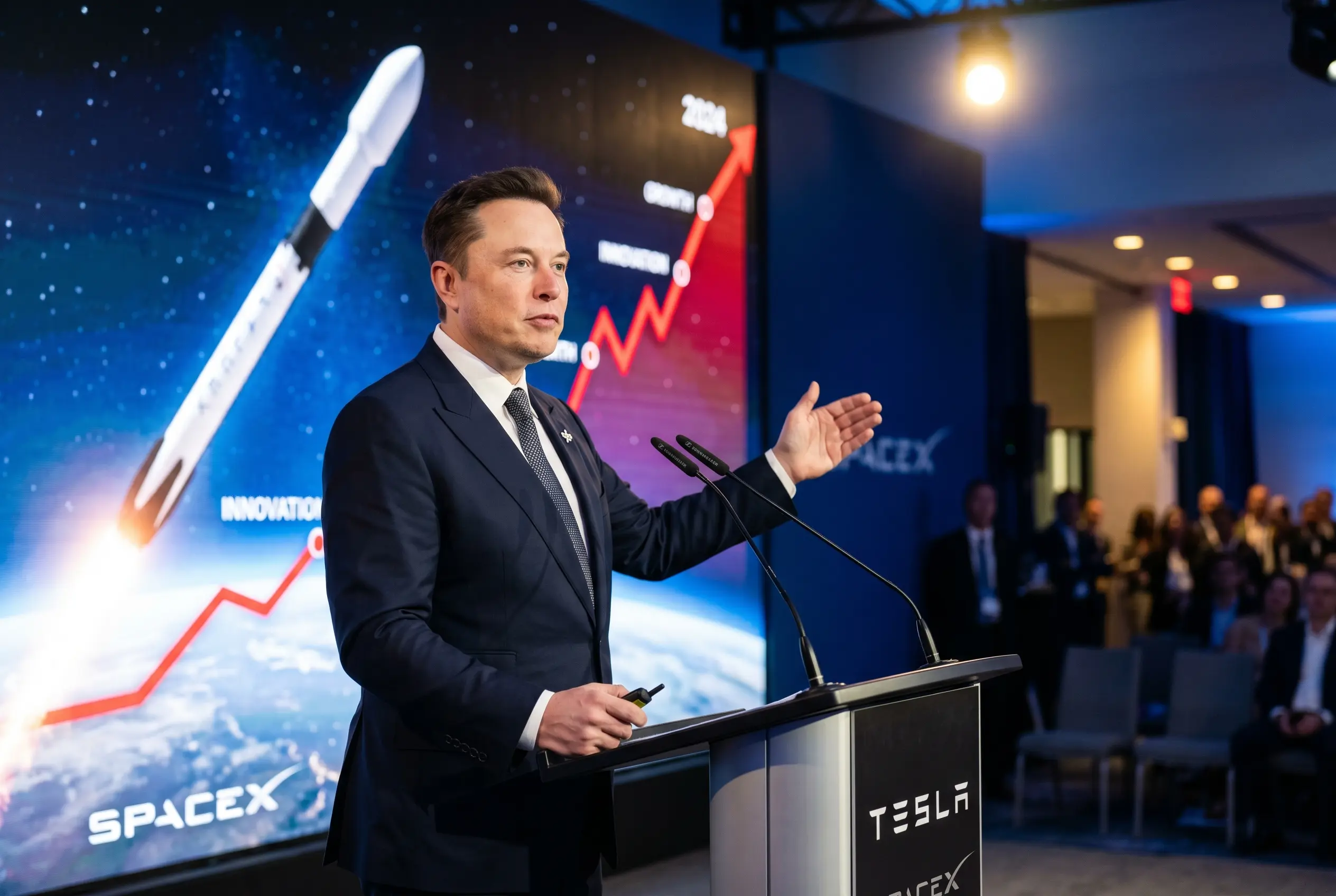
Elon Musk’s personal fortune climbed to $1.32 trillion on Tuesday, June 16, 2026, putting his net worth above Bitcoin’s roughly $1.29 trillion market cap, according to the Bloomberg Billionaires Index. The crossover happened as SpaceX shares pushed above $200, capping a six-session rally since the company’s Nasdaq debut on June 12.
Bitcoin still sits at the top of the digital-asset market, yet total crypto market capitalization slid from a peak near $4.21 trillion to about $2.23 trillion over the past year. SpaceX’s market value climbed to roughly $2.7 trillion in the same stretch. Musk’s wealth now sits above the combined value of every digital asset outside Bitcoin.
SpaceX Passes Bitcoin in Six Trading Days
Musk’s fortune rose to $1.32 trillion on Tuesday, per the Bloomberg Billionaires Index. The figure passed Bitcoin’s roughly $1.29 trillion market cap on the same day, based on CryptoSlate’s pricing. The crossover happened with SpaceX stock above $200 per share.
SpaceX priced its IPO at $135 a share on June 11, raising about $75 billion across 555.6 million shares. The stock opened trading on Nasdaq under the ticker SPCX on June 12 at $150 and closed Day One at $161.11, up 19% from the IPO price. By Monday’s close, the stock had climbed above $192, lifting the company’s market value to roughly $2.6 trillion. Tuesday’s push past $200 lifted that figure to about $2.7 trillion.
On the day of the listing, Forbes estimated Musk’s fortune at $1.11 trillion, calling him the world’s first trillionaire. Six sessions later, the Bloomberg Billionaires Index put the figure at $1.32 trillion. The path ran through a single stock: SpaceX is now among the world’s most valuable public companies, ahead of Amazon and closing in on Microsoft’s market capitalization. The comparison is imprecise by design, as CryptoSlate’s report notes, but it captures how fast the scale has shifted.
| Market value / Net worth | |
|---|---|
| Elon Musk net worth (June 16, 2026) | $1.32 trillion |
| Bitcoin market cap (CryptoSlate pricing) | $1.29 trillion |
| Total crypto market cap | $2.23 trillion |
Bitcoin’s Slide Cleared the Path
Bitcoin remains the largest digital asset by market value, but its lead has narrowed. The total cryptocurrency market cap dropped from a peak of about $4.21 trillion a year ago to roughly $2.23 trillion, per CryptoSlate’s data. Bitcoin itself fell more than 50% from its late-2025 record high near $126,000. The slide came after months of selling pressure and weaker risk appetite.
The reversal followed a rally that began during Donald Trump’s 2024 presidential campaign and extended through his return to the White House. Bitcoin first crossed $100,000 as investors responded to industry-friendly appointments, regulatory proposals, and a softer posture toward digital assets in Washington. Those gains have since faded as exchange volumes declined, leveraged positions were flushed out, and capital moved back toward large technology stocks and newly listed growth companies. Capital is rotating from crypto into SpaceX, with a record 13-day Bitcoin ETF outflow streak reported through mid-May.
A Crowded Trade Built on a 4% Float
SpaceX priced its IPO at $135 a share on June 11, raising about $75 billion across 555.6 million shares. Reuters and Bloomberg reported investor demand topped $250 billion, an oversubscription rate nearly four times the planned offering. The stock opened at $150 on June 12 and rallied through the week. BlackRock placed an order to purchase at least $5 billion in SpaceX shares, per the Wall Street Journal. By Tuesday, the stock had pushed past $200, lifting the market cap to roughly $2.7 trillion and placing SpaceX among the most valuable public companies in the world.
Retail traders drove much of the move. South Korean individual investors bought about $795.9 million of SpaceX shares on June 12, the first trading day, according to market-flow data cited by Global Market Investor. That single-session figure made SPCX the most purchased US stock among South Korea’s 14 million retail traders. By comparison, South Korean retail net buying totaled $748.3 million in Micron Technology, $696.2 million in the Nasdaq-100 ETF, and $694.5 million in Marvell Technology over the prior three months.
SpaceX cleared all three totals in a single session. Cathie Wood’s Ark family of funds bought roughly 3.3 million shares across four funds on Friday, with the ARK Space & Defense Innovation ETF taking the largest share. Investors who missed the IPO allocation have been buying the stock in the open market or turning to crypto-linked derivatives for the same exposure.
| Trade | Amount |
|---|---|
| South Korean retail, SpaceX, June 12 (single session) | $795.9 million |
| South Korean retail, Micron Technology, 3 months | $748.3 million |
| South Korean retail, Nasdaq-100 ETF, 3 months | $696.2 million |
| South Korean retail, Marvell Technology, 3 months | $694.5 million |
How Eleven ETFs Drove the Day-Two Volume Record
The bid for SpaceX didn’t stop at the stock itself. By Monday, 11 leveraged ETFs benchmarked to SpaceX had attracted more than $1 billion in combined volume. Even the lowest-performing of those funds tracked by Bloomberg Intelligence logged $26 million in volume, an amount Eric Balchunas called “bonkers.” MarketWatch’s leveraged SpaceX ETF coverage documents the wave of launches.
The next session was bigger. Total volume across 2x SpaceX ETFs topped $3 billion, up from about $1 billion the previous day. SPCH, a 2x long product, logged about $1.3 billion in day-two volume. Balchunas said that was the highest second-day trading volume ever recorded by an ETF, above the roughly $500 million logged by BlackRock’s spot Bitcoin ETF IBIT on its second trading day. Balchunas’s day-two ETF volume update shows the leaderboard he posted on X.
Many of these products track the same underlying stock with similar leverage. That points to short-term directional bets rather than long-term exposure to the company. Tuttle Capital launched its own product, the T-REX 2X Long SpaceX Daily Target ETF (SPAX), with CEO Matt Tuttle saying in a statement the fund is designed to let traders “press a daily long view on SPCX with conviction.”
Pre-IPO space proxies gave some of their gains back. The Roundhill Space & Technology ETF (MARS) fell 8% on Friday. Virgin Galactic dropped more than 30%. Rocket Lab was off more than 10%. Investopedia’s SpaceX second-day trading recap describes the rotation as a “bought the rumor, selling the news” trade.
$SPCH at $1.3b is the most volume ever recorded by ETF on a Day Two ($IBIT ‘only’ did $500m). Total feeding frenzy.
The Fundamentals Lag the Stock
The rally has widened the gap between what SpaceX is today and what investors are paying for it to become. The company’s S-1 disclosed a net loss of $4.94 billion in 2025 on revenue of $18.67 billion. It booked another $4.27 billion loss in the first quarter of 2026. Capital spending on Starlink, launch capacity, computing infrastructure, and AI initiatives pushed losses wider. Morningstar analysts, in a note earlier in the week, projected a fair value of $63 per share, roughly half the intended $135 IPO price.
Michael Burry wrote earlier this month there was “nothing” in the S-1 to suggest the company is worth $1 trillion, “let alone $2 trillion.” Musk has framed the bull case differently, saying SpaceX could reach $1 trillion in annual revenue by 2030. That single target has helped investors price SpaceX as more than rockets and satellites.
The market is also assigning value to Starlink, AI, launch infrastructure, and Musk’s broader technology portfolio. Per the S-1, Starlink generated $11.387 billion in 2025 revenue and $4.423 billion in operating profit, with an adjusted EBITDA margin of 63% and 10.3 million subscribers across 164 countries. xAI, by contrast, posted a $6.355 billion operating loss and absorbed 76% of group capex in Q1 2026. CryptoSlate’s report frames the comparison as the open market rewarding Musk’s forward-looking story more aggressively than it rewards Bitcoin’s scarcity and network effect.
Index Buys Are Queued Behind a Thin Float
The float stays thin. Only about 4% of SpaceX’s equity is trading publicly, with the rest locked up under a 180-day insider restriction that runs through December 2026. That leaves roughly $70 to $80 billion of post-pop shares available, against an estimated $15 to $20 trillion in passive assets under management that may need to buy.
MSCI’s early-inclusion methodology kicked in on June 13, the day after the listing, making SpaceX one of the 10 largest constituents in the MSCI World Index and MSCI ACWI. All mutual funds and ETFs tracking those benchmarks now need to buy SPCX to match the new weights. That creates structural, price-insensitive demand against a thin float. Nasdaq has also approved rules that could let SpaceX join the Nasdaq 100 as soon as early July.
Cathie Wood’s Ark family of funds bought roughly 3.3 million SpaceX shares across four funds on Friday, with the ARK Space & Defense Innovation ETF (ARKX) taking the largest percentage share. GraniteShares CEO Will Rhind told MarketWatch last week that the lockup leaves “a huge amount of value sitting in the company that can’t sell.” SpaceX options launched on Tuesday, and Reuters reported more than half a million contracts changed hands in the first hour of trading, citing Trade Alert data. CNBC’s live coverage put the stock up about 3.5% at $166.76 after the first close, with another $80 billion added to the market cap into the next session.
CryptoSlate’s report describes the biggest speculative trade in markets right now as a rocket company. The comparison can flip if SpaceX shares retreat, Bitcoin rebounds, or both move sharply in opposite directions, the same source notes. The SpaceX debut is testing the Magnificent Seven label for what counts as a top-tier public company today.
- MSCI early inclusion: June 13, 2026
- Nasdaq-100 inclusion: as soon as early July 2026
- 180-day insider lockup expiry: December 2026
Disclaimer: This article is for informational purposes only and does not constitute financial or investment advice. Cryptocurrency and equity investments carry substantial risk, including the loss of principal. Figures and market values cited reflect data available as of publication; prices, market capitalizations, and rankings can change rapidly. Consult a qualified financial professional before making any investment decision.


Sony’s 10 Percent Disc Drop Leaves the 2028 Cutoff Intact

Chip Allocation Sidelines the Base iPhone 18 This Fall

Miami-Dade Fights the Vice City Brand It Already Wears

IFA 2026 Awards Put Tecno Ahead of Flagship Phones

USB-C Gadgets Made the Junk Drawer Rechargeable

Pixel 11 Pro Asks $1,099 for a Light Google Locked

The iPhone Ultra Sells Two Retired Minis as One Foldable

Google Opens Gmail to Voice and Gates Docs Live

Lenovo Prices the IdeaPad Vibe Against Apple’s $699 Neo

Xbox Caps Game Pass Cloud Gaming at 15 Hours

Oracle Cuts 21,000 Jobs in a Year, Cites AI in 10-K Filing

Fable 5 and Mythos 5 Return as US Lifts Anthropic Export Controls

SpaceX’s Google Deal Turns a Rocket Company Into a Cloud Landlord

CD Projekt Red Co-CEO: Redemption Arc Isn’t Done, Witcher 4 in 2027

XPL Rallies 30% Ahead of Plasma One Card Tier Launch

Google Search Profiles Build a Follow Graph Inside Discover

DGO App Brings Rs 549 Mobile Pass for FIFA World Cup 2026 in Nepal

Moonshot AI Targets $30 Billion in China’s Fastest AI Funding Sprint

Oppo’s ColorOS 17 Eligibility List Leaves A-Series Buyers Behind

Microsoft Xbox Layoffs Start in July as Sharma Slams 3% Margin
-
 AI3 months ago
Oracle Cuts 21,000 Jobs in a Year, Cites AI in 10-K Filing
-
 AI2 months ago
Fable 5 and Mythos 5 Return as US Lifts Anthropic Export Controls
-
 AI3 months ago
SpaceX’s Google Deal Turns a Rocket Company Into a Cloud Landlord
-
 GAMING3 months ago
CD Projekt Red Co-CEO: Redemption Arc Isn’t Done, Witcher 4 in 2027
-
 CRYPTO3 months ago
XPL Rallies 30% Ahead of Plasma One Card Tier Launch
-
 NEWS3 months ago
Google Search Profiles Build a Follow Graph Inside Discover
-
 APPS3 months ago
DGO App Brings Rs 549 Mobile Pass for FIFA World Cup 2026 in Nepal
-
 AI3 months ago
Moonshot AI Targets $30 Billion in China’s Fastest AI Funding Sprint