
AI
Nvidia Keeps the World’s Top Valuation as Its Stock Trails the Chip Boom
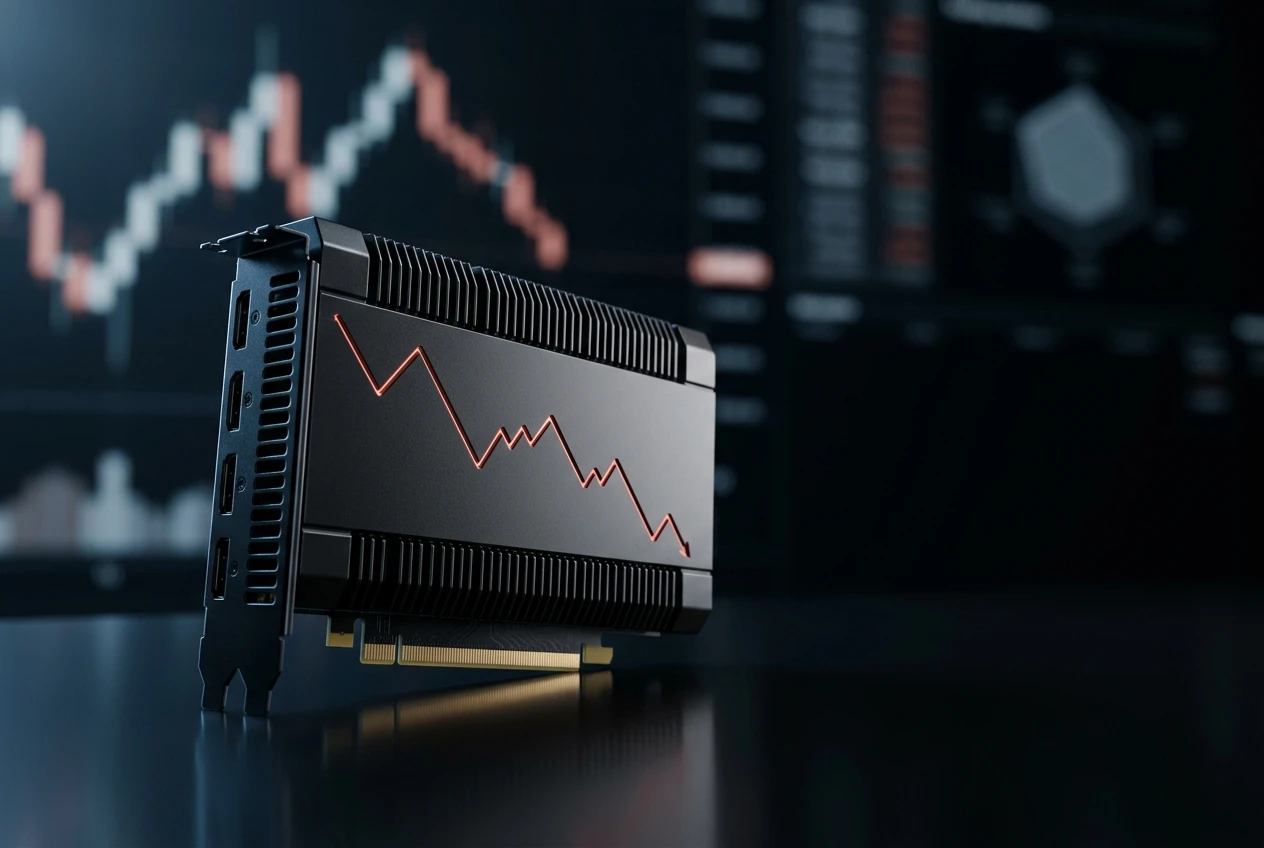
Nvidia remains the world’s most valuable company at nearly $4.7 trillion, yet its stock is 2026’s worst-performing major chip name, down 18% since June.

Nvidia is still worth nearly $4.7 trillion, more than any other public company on the planet, and its stock is still the worst performer among major chip names in 2026. Shares have fallen 18% from their June high, including a 10.7% drop in June alone, and still haven’t reclaimed the $200 level they lost on June 23. Rivals AMD and Micron have both more than doubled this year, while a broad semiconductor sector ETF is up nearly 59%.
The company that turned artificial intelligence into the decade’s defining trade is, for now, the trade’s biggest laggard. Investors are asking whether the AI infrastructure boom Nvidia built can keep paying off at the pace Wall Street priced in, a question sharpened by reports that OpenAI may delay its own IPO to protect a $1 trillion valuation.
SK Hynix Jumps 13% While Nvidia Sits Out the Chip Rally
Nasdaq got a new chip stock this month, and it did not trade like Nvidia. South Korean memory maker SK Hynix rose 13% in its Nasdaq debut, with its chairman telling CNBC that demand for its products “is enormous.” Micron shares climbed 5% in a single session after the company announced billions more in U.S. investment.
Nvidia had no such week. The stock still called the bellwether of the AI trade has spent 2026 trading roughly flat, even as the rest of the sector took off.
| Stock or Fund | 2026 Move | Key Detail |
|---|---|---|
| Nvidia (NVDA) | Roughly flat on the year | Down 18% from its June high, including a 10.7% drop in June alone |
| AMD | Up more than 100% | Outpacing Nvidia despite competing directly in AI accelerators |
| Micron | Up more than 100% | Shares rose 5% in one session on new U.S. investment news |
| Semiconductor sector ETF | Up nearly 59% | Broad chip benchmark far outpacing Nvidia alone |
| SK Hynix | Up 13% on Nasdaq debut | Chairman told CNBC demand is enormous |
Every name on that list except one is having a banner year. The exception is the company that made the AI trade a household phrase.
Why Did Nvidia Stock Fall in June 2026?
Nvidia lost the closely watched $200 share price level on June 23 and hasn’t recovered it since. The slide reflects doubts about AI infrastructure spending, a reported delay to OpenAI’s IPO, and a chip-sector warning from Wall Street research firm BTIG, all landing as the broader AI trade cools.
- A delayed OpenAI IPO: Reuters reported in late June that OpenAI may push its listing to 2027 to protect a $1 trillion valuation, unsettling investors who treat Nvidia as the AI trade’s benchmark stock.
- A chip-index warning: BTIG told CNBC a key chip stock index is flashing “ominous signals.”
- A stalled technical level: Nvidia has not closed back above $200 since losing it on June 23.
- Thin institutional conviction: Chaikin Money Flow, a gauge of whether big money is buying or selling, has climbed off its lows but still sits near zero.
None of those four things alone would sink a stock this large. Together, they’ve kept buyers on the sidelines through the first half of July.
Nvidia’s $1 Trillion Slide
Bloomberg summed up the contradiction in a single July 8 headline: Nvidia was, at once, the world’s most valuable company and “cheaper than Hershey.” A separate Bloomberg headline the same day described the pullback as a $1 trillion slide that sent Nvidia’s valuation back toward levels last seen before the AI boom.
The technical picture is binary. A close back above $200 would open room toward $207 to $213 inside Nvidia’s falling price channel. A close below $189, the channel floor, would expose a deeper slide. Nvidia’s own quarterly results do not land until late August, so July’s direction depends on outside catalysts, cloud spending updates from Microsoft, Google, Meta and Amazon, rather than the company’s own numbers.
The Financing Trick Behind the Growth Story
Nvidia is not just selling chips anymore. In late June, the company unveiled a program that lets AI cloud providers access GPUs through revenue-sharing and credit-support arrangements instead of paying the full cost upfront, a shift Bloomberg confirmed on June 28. The goal is to get more Nvidia-powered computing capacity into the hands of AI startups that cannot easily finance massive chip purchases on their own.
It turns compute access into part of Nvidia’s own growth engine rather than waiting for customers to raise the cash themselves. It also raises a question Wall Street keeps circling back to this year: how much AI chip demand is paid for in cash today, and how much is financed by the chipmaker that benefits when the order gets placed.
That demand keeps arriving regardless. OpenAI broadly released its GPT-5.6 model family on July 9, and chief executive Sam Altman said the flagship version is 54% more token efficient on agentic coding work. Days earlier, the company also launched ChatGPT Work, an agent built to execute tasks across apps and files, entering a race against Anthropic’s Claude Cowork for enterprise customers. Every new agent needs more inference capacity, and Nvidia’s chips are still where most of that capacity gets built.
China Opens a Door, Singapore Shuts Another
Two Bloomberg headlines from the same week show the whiplash. On July 8, Bloomberg reported that China would let domestic AI firms resume buying Nvidia’s H200 chips, citing The Information, reopening a market Washington had restricted on national security grounds. Three days earlier, Bloomberg reported that Singapore prosecutors had filed new charges in a fraud case tied to Nvidia chips illegally rerouted around export controls.
Nvidia’s next platform keeps moving forward regardless of the policy tug-of-war. Samsung is scaling up storage production for Nvidia’s Vera Rubin platform, Bloomberg reported July 6, and Nvidia’s own newsroom said Vera Rubin is already being built into new supercomputers unveiled at the ISC High Performance conference in Hamburg.
- The bull case leans on China’s reported reopening to H200 sales and a revenue-sharing financing model designed to widen Nvidia’s customer base beyond the handful of hyperscalers that already dominate its order book.
- The bear case points to BTIG’s chip-index warning, a Chaikin Money Flow reading still near zero, and a delayed OpenAI IPO meant to protect a valuation rather than test what public markets will actually pay.
- Nvidia’s own bet is that its upgrade cycle, from Blackwell to the advancing Vera Rubin platform, keeps hyperscalers locked into spending regardless of where the stock trades this month.
What Nvidia Needs Before Its August Earnings
Nvidia’s own quarterly results will not arrive until late August, leaving the stock to trade on everyone else’s news for the next several weeks. Nvidia’s July company overview presentation lays out the data-center growth story management is selling to shareholders while the stock sits well off its highs.
Cloud spending updates from Microsoft, Google, Meta and Amazon over the coming weeks will show whether hyperscaler budgets are still growing at the pace that built Nvidia’s valuation in the first place. Until those numbers land, the world’s most valuable company keeps trading like the sector’s most doubted one.
Disclaimer: This article is for informational purposes only and does not constitute investment advice. Stock prices, valuations and market data cited here are drawn from public reporting and are accurate as of publication; markets move quickly, and readers should consult a licensed financial professional before making investment decisions.


Microsoft’s Copilot Can Read Your PC’s Health, RAM Cost and All

Nobel Laureates and Over 200 Economists Warn AI Is Moving Too Fast

Consumers Are Skipping Google and Asking AI What to Buy

Anthropic’s Claude Pricing Lands in Rupees, Costs More Than US

Apple Stock Hits $323.45 as Wall Street Flees the AI Trade

iOS 27 Public Beta Debuts Siri AI Built on Google’s Gemini

iPhone Shortcuts Fix Busy Mornings Before Apple’s AI Rebuild Lands

World Bank’s IFC Places Its First AI Chip Bet on Quadric

China’s AI Trade Surges to $723 Billion in First Half of 2026

AI’s Power Demand Is Rewriting RECOM’s Five-Decade Playbook

Microsoft Xbox Layoffs Start in July as Sharma Slams 3% Margin

Google Search Profiles Build a Follow Graph Inside Discover

Oracle Cuts 21,000 Jobs in a Year, Cites AI in 10-K Filing

Oppo’s ColorOS 17 Eligibility List Leaves A-Series Buyers Behind

Google DeepMind and A24 Sign $75 Million AI Partnership Deal

OCC Issues AML Consent Order Against Wise and Crypto.com Sponsor Bank

DGO App Brings Rs 549 Mobile Pass for FIFA World Cup 2026 in Nepal

Meta’s Iris AI Chip Enters Production in September, Tests Clean

Anthropic Tells Senators Alibaba Ran the Largest Claude Distillation Attack

Apple Strikes Preliminary Deal For Intel To Make iPhone And Mac Chips
-
 GAMING1 month ago
Microsoft Xbox Layoffs Start in July as Sharma Slams 3% Margin
-
 NEWS1 month ago
Google Search Profiles Build a Follow Graph Inside Discover
-
 AI3 weeks ago
Oracle Cuts 21,000 Jobs in a Year, Cites AI in 10-K Filing
-
 NEWS1 month ago
Oppo’s ColorOS 17 Eligibility List Leaves A-Series Buyers Behind
-
 AI3 weeks ago
Google DeepMind and A24 Sign $75 Million AI Partnership Deal
-
 CRYPTO2 months ago
OCC Issues AML Consent Order Against Wise and Crypto.com Sponsor Bank
-
 APPS1 month ago
DGO App Brings Rs 549 Mobile Pass for FIFA World Cup 2026 in Nepal
-
 AI4 days ago
Meta’s Iris AI Chip Enters Production in September, Tests Clean