
APPS
Kuwait Turns Residency Proof Into a Sahel App File
Kuwait’s Sahel app now issues a Residence Permit Proof Certificate that Interior named the official clock for absence permits after 1 September 2026.

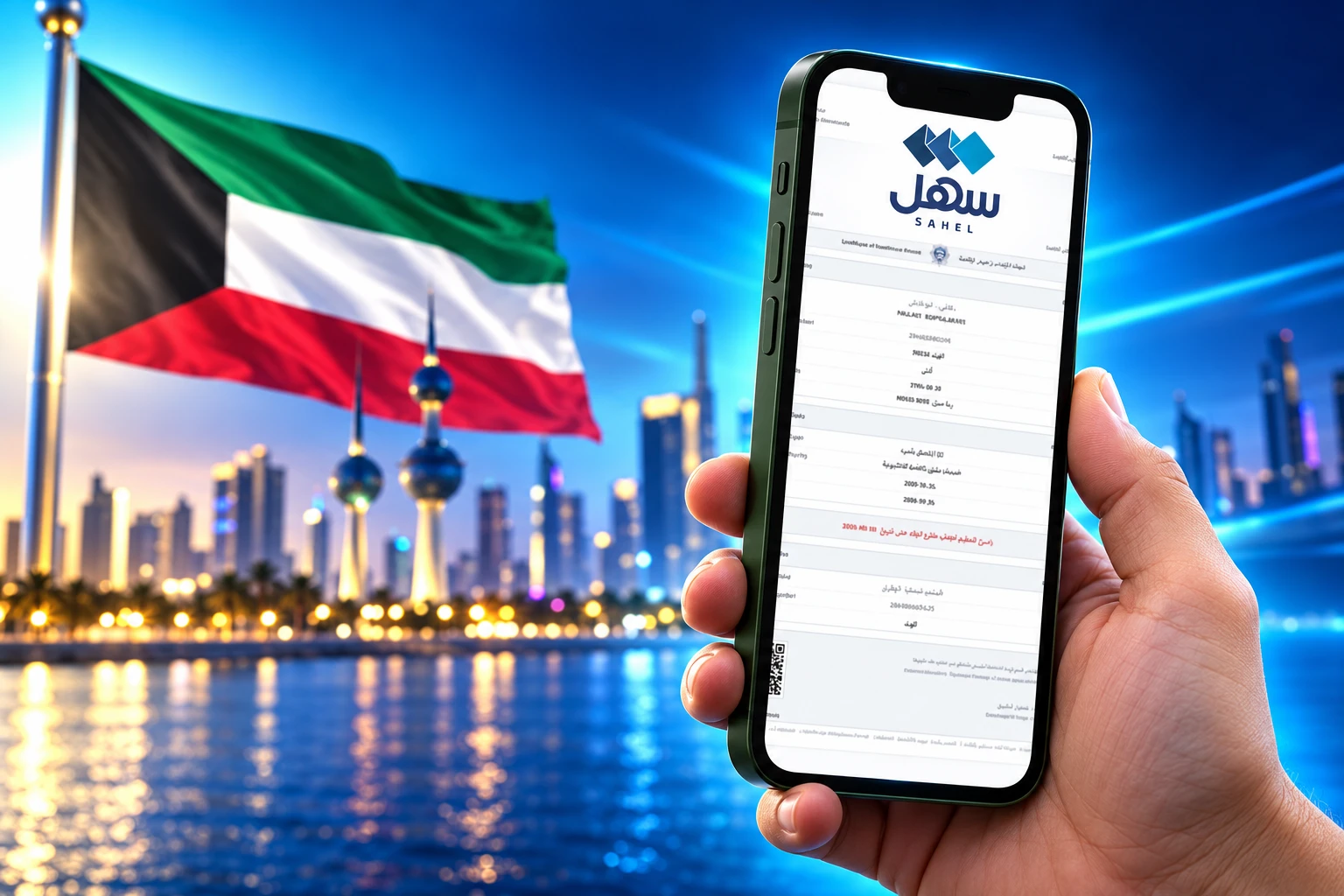
Kuwait residents can now pull a Residence Permit Proof Certificate from the Sahel app, the file Interior later named the official absence-permit clock. The Ministry of Interior put the download live on July 9, 2026. Six weeks later it told people abroad to treat that same PDF as the date that matters.
Automatic extra time on visit visas and leave permits ended on September 1, 2026. The certificate is how a resident reads whether a return flight is still legal.
A QR File for 3.74 Million Residents
The official Sahel account posted the new service under its Arabic name, شهادة إثبات ترخيص الإقامة. The post said residents can issue the certificate in the app and use it when they need proof. Interior framed the launch as another step in moving government work onto the unified Sahel platform.
#وزارة_الداخلية تُطلق خدمة إلكترونية جديدة عبر #تطبيق_سهل
(شهادة إثبات ترخيص الإقامة)
تتيح هذه الخدمة للمقيمين إصدار شهادة إثبات ترخيص الإقامة إلكترونيًا عبر التطبيق، لسهولة الوصول إليها واستخدامها عند الحاجة@Moi_kuw#الكويت pic.twitter.com/tiVDz7nQ1x
— Sahel | سهل (@sahelkw) July 9, 2026
That is a large labour market to serve with one PDF. The Public Authority for Civil Information (PACI), which publishes Sahel, put Kuwait’s population at 5.31 million at the end of June 2026. Citizens numbered about 1.56 million, or 30 percent. Expatriates numbered 3.74 million, or 70 percent.
PACI COUNTS AT THE END OF JUNE 2026
- Total residents: About 5.31 million people were counted in the civil-information register.
- Expat majority: 3.74 million non-citizens made up 70 percent of the country.
- Largest community: Indians numbered 1.06 million, about 20 percent of everyone living in Kuwait.
- Workforce: The labour force was 3.264 million, including about 2.8 million foreign workers and 883,300 domestic workers.
A paper trip to a residency counter does not scale across that many files. Interior’s pitch on July 9 was speed: open the app, issue the certificate, and produce proof of a valid permit without standing in a hall. In the earlier Sahel residence certificate rollout, that was the whole story. The next six weeks attached a harder job to the same menu item.
The Same PDF Became the Official Absence Clock
On July 14, 2026, Interior opened a path inside that certificate for residents who were still outside Kuwait. Users go to Services, then Ministry of Interior, then Residency Services, then Residency Permit Proof Certificate, and pick a beneficiary. The system returns an electronic document with a QR code that shows the last permitted date to enter Kuwait.
The ministry had already stretched visit visas and granted extra absence time after regional fighting disrupted travel in early 2026. Guardians can run the same steps for a son, a daughter, or a spouse. The QR sheet is meant to stop someone booking a flight on a date the file will not honour.
On August 20, 2026, Interior closed the extra window. From September 1, 2026, visit visas and absence permits returned to ordinary legal periods. Residents who left on or before August 31, 2026, keep the extra time they were granted. Everyone else is back on the standard clock. The ministry named one document as the way to read that clock.
The residency permit certificate issued through the Sahel app is the official and approved reference used to determine when a resident’s absence permit expires. Residents must adhere to the specified period upon their return to the country.
Kuwait Ministry of Interior, August 20, 2026 statement
FROM DOWNLOAD TO LEGAL CLOCK
- July 9, 2026: Sahel adds the Residence Permit Proof Certificate so residents can issue proof of a valid permit on a phone.
- July 14, 2026: The same menu issues a QR file that shows the last permitted entry date for a resident who is still abroad, including a child or spouse.
- August 20, 2026: Interior says this certificate is the official approved reference for when an absence permit expires.
- September 1, 2026: Automatic extra time on visit visas and leave permits ends, except for people who left on or before August 31, 2026.
An absence permit is the authorisation to stay outside Kuwait beyond the ordinary limit without killing the residency. For most residents that limit has been six months. Domestic workers have been held to a shorter four-month cap. The PDF does not change those rules. It prints the date Interior will use when the extra wartime grace is gone.
How Do You Download the Certificate on Sahel?
The July 14 residency path is the working method, because that is the route Interior described when it tied the file to people stuck abroad. You need a live Sahel login before any of it runs. PACI’s Kuwait Mobile ID is the identity layer most residents now use to open the app.
STEPS INSIDE SAHEL
- Open Sahel: Sign in with Civil ID and complete Mobile ID verification if the app asks for it.
- Go to Services: Open the services tab rather than the personal-data screen that only shows status.
- Pick Interior: Choose Ministry of Interior, then Residency Services.
- Issue the file: Select Residency Permit Proof Certificate and choose yourself, a son, a daughter, or a spouse.
- Save the QR sheet: Download the electronic document and keep the code readable for anyone who will scan it.
The July 9 launch note did not list a fee for this certificate. Other Interior papers sold through Sahel, such as a good-conduct certificate, do carry a published charge, so it is worth watching the payment step rather than assuming the download is free. If the login fails, the government contact centre Wasel answers on 101, the number printed on Sahel’s own account.
People trying this from another country already hit a second problem. Sahel can be opened outside Kuwait, but the session still depends on Mobile ID, a Kuwaiti number for codes, and enough bandwidth for the handshake. A certificate that is the official clock is only useful if the app actually opens on the day you need the date.
Banks, Sponsors and the Demand Side
Interior’s line about “when needed” is doing real work. Proof of valid residency is not a souvenir. Banks, landlords, schools, and HR desks already ask for it, and they used to send people to a counter for a stamped sheet. A downloadable MOI file lets those desks demand a fresh copy the same afternoon.
Sponsors feel that shift first. Private-sector workers still live under a kafeel who files the permit. Households that employ domestic staff run the same stack for those files. The certificate sits in that workflow: the person who can log into Sahel, often the sponsor, is the person who can produce the proof.
WHICH DOCUMENT ANSWERS WHICH DESK
| Document | Who issues it | What it shows | Who usually asks |
|---|---|---|---|
| Civil ID | PACI | Identity and registered address | Banks, SIM shops, daily counters |
| Residence Permit Proof Certificate | Interior, via Sahel | Valid residency and the absence or return date | Interior, travel, some employers |
| Passport residency stamp | Interior | The permit itself in the travel document | Border posts and some paper files |
Kuwaiti banks already confirm identity through Civil ID and PACI, then open accounts in an app with a selfie and a KNET payment. They still want active residency on the file. A QR certificate does not replace the Civil ID. It gives a desk a ministry-issued sheet when the plastic card is not enough, or when the question is the return date rather than the name.
PACI had already moved a related paper onto Sahel on June 10, 2026, with a certificate of previous addresses. Some compliance teams ask for that address history when they open an investment account or run an anti-money-laundering check. Interior’s new file sits beside that PACI sheet: one app, two authorities, two proofs.
Inside the Unified App That PACI Built
Sahel is not an Interior product that PACI merely hosts. The Sahel listing on Google Play names the Public Authority for Civil Information as the developer. The store page calls it a unified government application for e-services, with modules for data, services, notifications, appointments through the META booking platform, and announcements. Android downloads are listed at more than 1 million, with a 3.6 rating. The listing was last updated on February 18, 2026.
PACI also runs the PACI official Sahel download page, which points at Play and at the Sahel page on the App Store. The Play data-safety section says personal info, app performance, and device IDs may be collected, that data is encrypted in transit, that nothing is shared with third parties, and that data cannot be deleted. A residency PDF that Interior treats as an official clock now lives inside an app whose own store page says you cannot wipe that store of data.
The rest of an expat file has been sliding into the same place. Residents already check iqama status and expiry under MOI data, pay residence fees, request exit permits that a private-sector sponsor must still approve, update a non-Kuwaiti address, and pull PACI certificates. Interior has also used Sahel to push people through other residency chores, including telling thousands of Palestinian travel-document holders to move their permits onto Palestinian passports. The certificate is one more object in a stack that already decides whether a person can leave, stay, or come back.
English arrived in pieces. An English exit-permit flow was added for Article 18 workers, but large parts of the interface still assume Arabic. For a workforce whose largest groups are Indian, Egyptian, Bangladeshi, and Filipino, that is not a cosmetic gap. A QR date you cannot find in the menu is not an official reference you can actually use.
The Passport Stamp Is Still the Permit
The download does not retire the iqama stamp in the passport, and it does not replace the Civil ID in a shop. Border posts and some paper processes still want the travel document. PACI still issues the plastic card that banks and telecoms scan. Sahel’s new file is proof of what Interior’s database already holds, packaged so a stranger can read it without calling a clerk.
That is the second job hiding under the convenience line. Once proof is a file anyone with the right login can issue in minutes, every institution can ask for a copy dated today. The resident gains a queue-killer. The state gains a single place where the return date is published. The sponsor who controls the login still sits between the worker and the PDF.
For anyone outside Kuwait, the useful move is mechanical. Open Sahel, issue the Residence Permit Proof Certificate, and read the date before buying a ticket home.
Frequently Asked Questions
Do You Need Kuwait Mobile ID to Open the Certificate?
Yes, in practical use. Sahel’s authenticated services, including Interior residency files, run on PACI’s Kuwait Mobile ID rather than a leftover moi.gov.kw account, so a resident who never finished Mobile ID enrolment will not reach the download even if the Civil ID number is correct.
Is There a Published Fee for This Certificate?
Interior’s July 9, 2026 launch note did not name a charge for the Residence Permit Proof Certificate, unlike the KD 5 good-conduct certificate that already sells through Sahel, so users should watch the payment screen rather than treat the file as free by default.
Where Do You Get Help If Sahel Will Not Open?
The official Sahel account points support to the government contact centre Wasel on 101, which is the number to use when Mobile ID stalls, a beneficiary name is missing, or the QR sheet will not generate from abroad.
Can You Delete Data After You Download the File?
PACI’s Google Play data-safety form says Sahel data cannot be deleted, even though it also says no data is shared with third parties and that data is encrypted in transit, so issuing the certificate writes into a store the listing itself says you cannot wipe.
Disclaimer: This article is news reporting on a Kuwait government digital service and is for information only. It is not legal, immigration, or residency advice and does not decide any person’s permit, absence period, or right to enter. Confirm dates and status in the Sahel app, and consult a qualified immigration lawyer or your sponsor before you travel or file papers. Figures and steps reflect the official statements and listings named in this piece and may change.

Instagram Plus Tests a Read-Only Mode That Cuts Stories

Altman Asks the Public to Accept Some AI Harm

Google Freezes OSS VRP Product Reports After AI Flood

AI Agents Make Payment Rails the Scarce Prize

Turkey’s Crypto Boom Now Runs Through Three Banks

Fable 5 Came Back Under a Commerce On-Off Switch

Google’s SpaceX GPU Lease Has a Sept. 30 Deadline

Plasma One’s XPL Locks Face a 1.81 Billion Cliff

DGO’s Rs 549 World Cup Pass Cost Fans Sleep and Data

Moonshot AI’s $30 Billion Ask Became a $35 Billion Close
-
 AI4 months ago
Fable 5 Came Back Under a Commerce On-Off Switch
-
 AI5 months ago
Google’s SpaceX GPU Lease Has a Sept. 30 Deadline
-
 CRYPTO4 months ago
Plasma One’s XPL Locks Face a 1.81 Billion Cliff
-
 APPS5 months ago
DGO’s Rs 549 World Cup Pass Cost Fans Sleep and Data
-
 AI5 months ago
Moonshot AI’s $30 Billion Ask Became a $35 Billion Close
-

 NEWS5 months ago
ColorOS 17 Device List Spans Oppo, OnePlus and Realme
-

 GAMING4 months ago
The RTX 4050 Under Rs 70,000 Hides a Wattage Gap
-

 AI4 months ago
Boris Cherny’s Loops Still Demand a Higher Production Bar