
NEWS
PNP Chief Tells Parents to Use 911 for Online Child Threats
PNP chief Nartatez tells parents to call 911 if children show online radicalization signs, as 24 minors have been rescued from a transnational network.

Gen. Jose Melencio Nartatez Jr., chief of the Philippine National Police, told Filipino parents on July 3 to dial 911 the moment they notice unusual changes in their children’s behavior tied to online activity. The appeal came days after a Senate investigation tied the June 22 Tacloban school shooting to the transnational extremist network 764, and it places the family living room on the front line of a fight the police have so far been losing. Nartatez said the directive was issued in coordination with the instruction of President Ferdinand Marcos Jr., transmitted through Interior Secretary Jonvic Remulla.
The warning carries a specific target. PNP’s Anti-Cybercrime Group has rescued 24 Filipino minors from the 764 network and related online subcultures since October 2025, a year after the FBI began sharing nihilistic violent extremism (NVE) intelligence with Manila. The U.S. agency has called 764 a national security threat, and Canada has classified the group as a terrorist organization. The PNP-ACG has run 17 rescue operations in that period, with 14 of them in coordination with the FBI-led Anti-Terrorism Fusion Group.
PNP Chief Puts 911 in the Family Safety Toolkit
Nartatez framed the 911 line as a new kind of help line. He urged parents who see sudden behavioral changes to call the emergency hotline or visit the nearest police station, arguing that early intervention can prevent minors from being recruited into extremist activity. His appeal adds an online-safety function to a number long associated with street crime, fires, and medical emergencies.
The PNP is not building the response from scratch: the agency’s Women and Children Protection Desk operates inside every police station, and Nartatez said the desks are available to help families and children affected by overexposure to online violence. The PNP is also coordinating with the Department of Education’s guidance counseling program, and Marcos has directed the agency to strengthen cooperation with foreign law enforcement as the investigation expands. The PNP’s reaffirmation of child protection work, a standing communication from the agency, tracks convictions under Republic Act No. 11930, the 2025 online child exploitation statute. PNP-ACG also runs the digital side of the response, with operations that have pulled 24 minors from the 764 network and related subcultures since October 2025.
We call on parents to closely monitor the online activities of their children. Our 911 is also a help line for the necessary intervention as a result of overexposure to online violence and other online activities.
Gen. Nartatez, PNP chief, made the appeal in Pasig on July 3, and the agency put out a parallel release the same day. The PNP’s 911 line is part of the wider Marcos directive, transmitted through Interior Secretary Jonvic Remulla, to strengthen online child protection.
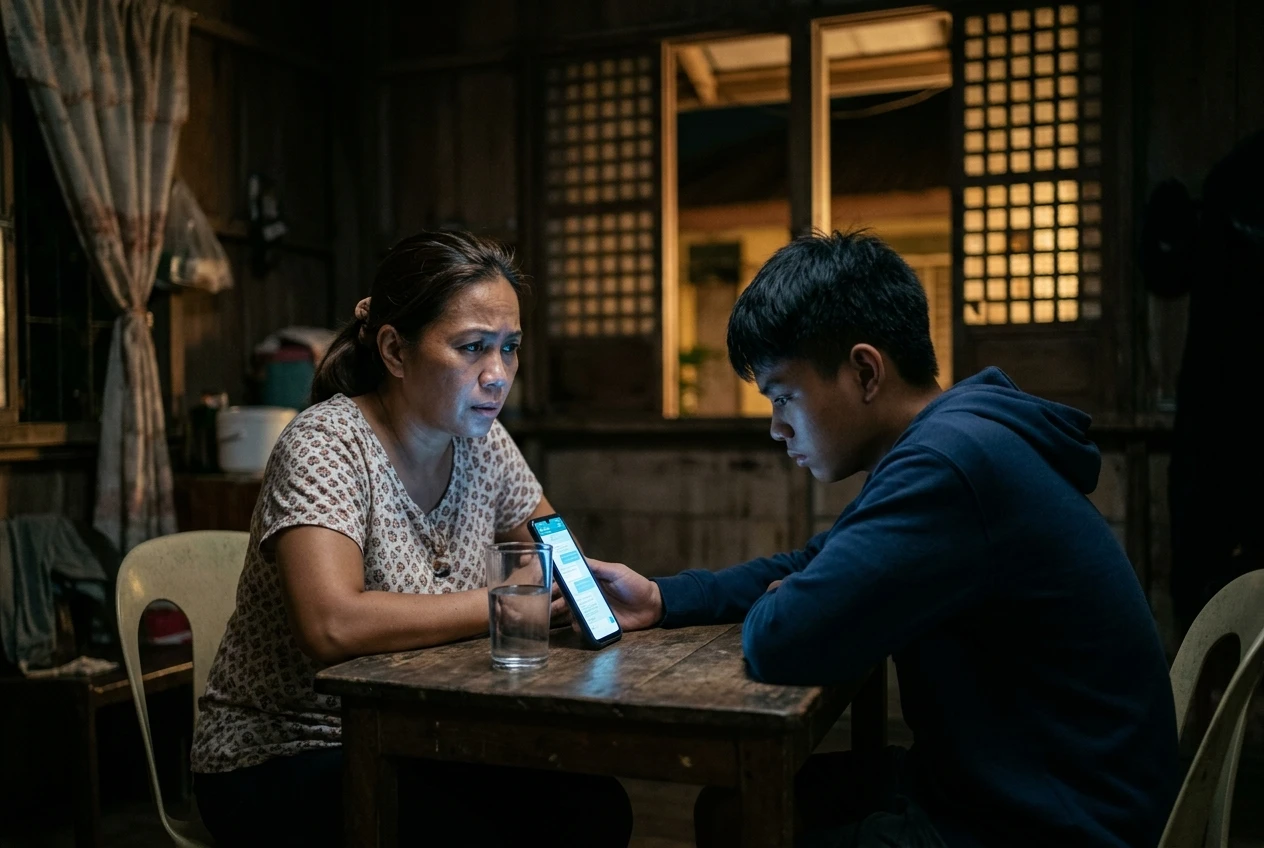
What 764 Is and How It Grooms Children
At the July 1 Senate hearing of the committee on women, children, family relations, and gender equality, Senator Risa Hontiveros named 764 as a group that grooms at-risk children into committing violent crimes or being pulled into sextortion schemes. The committee heard testimony from psychologists, law enforcement officials, cybersecurity experts, and open-source intelligence researchers, marking the first time a Philippine government body had publicly tied a specific network to nihilistic violent extremism. The U.S. Federal Bureau of Investigation has designated 764 a national security threat, and Canada has listed it as a terrorist group.
PNP’s Anti-Cybercrime Group told the same hearing that the True Crime Community, or TCC, sits at the top of an interconnected online subculture, with 764, “No Lives Matter,” and “The Com” listed as sub-networks, all sharing patterns of coercion, self-harm, exploitation of minors, and glorification of violence. Cybersecurity expert Angel Redoble, who testified at the hearing, broke the grooming process into three layers: first contact through online games or social media, recruitment into private communities, and psychological manipulation that escalates into coercion, blackmail, and violence. Open-source intelligence researcher Bret Morales, who described infiltrating the 764 network, said recruiters approach targets in Roblox and Minecraft by offering cheats, in-game items, or friendship, and then move the conversation to Discord or Telegram. Police Colonel Richmond Tadina of the ACG added that algorithms let groomers flag children who spend long stretches on their mobile phones, and that all 24 rescued minors had been exposed to the violence-themed game Gorebox. For readers who want the longer history, a research backgrounder on the 764 network traces how the group blends violent extremism with the exploitation of minors.
What the Tacloban Shooting Revealed About 764
The June 22 shooting at San Jose National High School in Tacloban killed three students and injured twenty others. Two of the dead were female and one male, and the arrested suspects were aged 14 and 15, with the older suspect, “Rod,” facing three counts of murder, three counts of frustrated murder, and multiple counts of serious physical injuries. The younger suspect, “Nash,” is 14, and both have been placed under intervention by the Department of Social Welfare and Development.
A Senate investigation later confirmed the shooting’s connection to 764, an assessment corroborated by intelligence agencies in the Philippines and abroad. Cybersecurity experts who testified at the July 1 hearing characterized the Tacloban attack as 764’s first “completed attack” anywhere in the world, a framing that puts the Philippines as the network’s testing ground. Hontiveros used the hearing to renew her call for a “Terror Grooming and Radicalization Prevention Act” to disrupt what she described as the predatory pipeline. The bill is the first Philippine legislative proposal to name 764 directly.
The PNP-ACG has run 17 rescue operations against nihilistic violent extremism since October 2025, pulling 24 minors in total. The FBI disclosed on June 10 that 14 of its own operations in the Philippines, run through the Bureau’s Anti-Terrorism Fusion Group, had rescued 21 minors.
- 3 students killed and 20 injured in Tacloban on June 22
- 24 Filipino minors rescued from online extremist networks
- 17 PNP-ACG rescue operations since October 2025
- 14 FBI-led operations in the Philippines as of June 10
- 2 suspects, ages 14 and 15, in the Tacloban case
What the FBI Has Brought to the Case
The U.S. Federal Bureau of Investigation publicly disclosed its role on June 10, saying Philippine agencies and the FBI had rescued 21 minors through intelligence sharing, with FBI co-deputy director Andrew Bailey calling nihilistic violent extremism an emerging global threat. The FBI describes NVE as violent behavior driven by a belief that life has little or no value, a category that distinguishes it from political, religious, or ideological extremism.
The Bureau’s Anti-Terrorism Fusion Group, a multi-agency intelligence hub, runs the operations side of the work. A federal advisory on NVE predators targeting kids gives the U.S. agency’s definition of the threat and its grooming methods. The U.S. case against the network is moving through the federal courts, where a federal filing on a 764 group leader’s plea, on RICO and child exploitation charges, is now public.
Manila’s role in the FBI pipeline is not accidental. Colonel Romeo Desiderio of the PNP-ACG told a previous Senate hearing that foreign extremists use Roblox and social media to groom young Filipinos into NVE, and the FBI has separately flagged scam compounds run by Chinese criminal groups across Southeast Asia as a parallel regional threat. The combination of porous online recruitment, family-member firearm access (the Glock used in Tacloban belonged to a suspect’s aunt, a police officer), and a juvenile justice regime the attackers researched in advance has put the Philippines at the center of a problem that crosses borders.
On the policy side, the FBI’s role has shifted from quiet intelligence sharing to public statements on nihilistic violent extremism as a defined threat category. Manila has framed the problem as a child-protection issue rather than a counter-terrorism one, which puts the response in the hands of the PNP’s Women and Children Protection Desk and the Anti-Cybercrime Group rather than the military. That framing is also what underpins Hontiveros’ call for a new law to target the grooming pipeline specifically.
The Signs Parents Are Told to Watch For
Nartatez’s directive names “unusual changes” in a child’s behavior as the trigger for a 911 call. Psychologists and police who testified at the July 1 hearing gave those changes a more specific shape: long hours on a phone, sudden withdrawal from family, secretive use of multiple messaging apps, and an unusual interest in weapons, gore, or nihilistic ideologies.
The list below is what the ACG and the psychologists told the Senate are the most common early signals.
- Long, isolated stretches on a smartphone, especially at night
- Sudden withdrawal from family meals, school, or friend groups
- A jump to encrypted apps like Discord, Telegram, or Signal with no clear reason
- Exposure to violent or “true crime” content, often shared by new online contacts
- Statements that echo nihilistic ideology, including references to “no lives matter” or self-harm
- An interest in weapons, school security, or the specific routines of a target
- Group chats with unknown or overseas users asking for personal or family information
Groomers typically pick out children who are quiet, lonely, or have family problems, then approach them in the games the child already plays, often under a friendly username. The contact moves from open chat to private messaging, the violent content arrives after trust is built, and the child’s behavior changes well before any explicit threat surfaces. The shift in the child is what Nartatez is asking parents to act on, and the PNP’s framing treats 911 as the right number to dial at that point, not after.
The recourse for parents who see those signs runs through the PNP Women and Children Protection Desk at any police station, through the PNP Anti-Cybercrime Group for digital evidence, and through 911 when the danger is immediate. Nartatez asked parents and communities to “bantayan ang inyong mga anak and report anything suspicious” and to treat online monitoring as part of routine child-rearing. The agency has not said whether 911 dispatchers have been trained specifically to triage online radicalization calls, and the directive lands in the same week the PNP is asking the public to use a number originally designed for street-level emergencies.
The PNP Response and the Senate Bills Ahead
The operational response is split between two centers. The PNP-ACG runs the digital investigation and the rescue operations, while the PNP’s Women and Children Protection Desk handles the in-person reports and the casework that follows, and Nartatez has directed both units to coordinate with foreign agencies.
On the legislative side, Hontiveros used the July 1 hearing to argue for a “Terror Grooming and Radicalization Prevention Act” that would target the grooming pipeline itself, rather than the violent content that flows through it. The Cybercrime Investigation and Coordinating Center has already moved in that direction with the Philippine cybercrime agency’s temporary block of GoreBox, a decision the agency defended at the hearing as a precaution against other members of the same network, not as a finding that violent games cause violence. Senators at the hearing also floated stronger age-rating rules for games, mandatory parental controls, and platform accountability measures, none of which have been written into a single bill yet. Hontiveros’ office is preparing a draft of the new law to file in the next session, and the PNP has not said when 911 dispatch training will be updated to triage online child-threat calls specifically.
Frequently Asked Questions
What is the 764 network?
764 is a transnational online extremist organization the FBI has designated a national security threat and Canada has listed as a terrorist group. PNP-ACG has tied it to nihilistic violent extremism (NVE), and the group grooms children into committing acts of violence or being pulled into sextortion schemes.
How do I report an online child threat in the Philippines?
The PNP’s directive on July 3 added online child threats to the list of reasons to call 911. Reports can also be filed with the PNP Anti-Cybercrime Group for digital evidence, and in person at the Women and Children Protection Desk inside any police station.
What are the warning signs that a child is being radicalized online?
ACG and the psychologists who testified at the July 1 Senate hearing named long isolated hours on a phone, a sudden move to encrypted messaging apps, secretive behavior, exposure to violent or true-crime content, and language that echoes nihilistic ideology. The PNP’s appeal to parents to call 911 when they see unusual changes is built around those signals.
Has the Tacloban school shooting been confirmed as a 764 attack?
A Philippine Senate investigation confirmed the link, and the assessment was corroborated by intelligence agencies in the Philippines and abroad. PNP-ACG’s broader investigation has identified 764 as one of three sub-networks in the True Crime Community umbrella, alongside “No Lives Matter” and “The Com,” and the older Tacloban suspect has been charged with three counts of murder.
What is the government doing about online child radicalization?
PNP-ACG has run 17 rescue operations against NVE-linked subcultures since October 2025, with the FBI disclosing on June 10 that 14 of its own operations in the Philippines through the Anti-Terrorism Fusion Group had rescued 21 minors. Senator Risa Hontiveros has called for a Terror Grooming and Radicalization Prevention Act, and the CICC has temporarily blocked the game Gorebox while the Senate weighs stronger age-rating rules and platform accountability measures.


Sony’s 10 Percent Disc Drop Leaves the 2028 Cutoff Intact

Chip Allocation Sidelines the Base iPhone 18 This Fall

Miami-Dade Fights the Vice City Brand It Already Wears

IFA 2026 Awards Put Tecno Ahead of Flagship Phones

USB-C Gadgets Made the Junk Drawer Rechargeable

Pixel 11 Pro Asks $1,099 for a Light Google Locked

The iPhone Ultra Sells Two Retired Minis as One Foldable

Google Opens Gmail to Voice and Gates Docs Live

Lenovo Prices the IdeaPad Vibe Against Apple’s $699 Neo

Xbox Caps Game Pass Cloud Gaming at 15 Hours

Oracle Cuts 21,000 Jobs in a Year, Cites AI in 10-K Filing

Fable 5 and Mythos 5 Return as US Lifts Anthropic Export Controls

SpaceX’s Google Deal Turns a Rocket Company Into a Cloud Landlord

CD Projekt Red Co-CEO: Redemption Arc Isn’t Done, Witcher 4 in 2027

XPL Rallies 30% Ahead of Plasma One Card Tier Launch

Google Search Profiles Build a Follow Graph Inside Discover

DGO App Brings Rs 549 Mobile Pass for FIFA World Cup 2026 in Nepal

Moonshot AI Targets $30 Billion in China’s Fastest AI Funding Sprint

Oppo’s ColorOS 17 Eligibility List Leaves A-Series Buyers Behind

Microsoft Xbox Layoffs Start in July as Sharma Slams 3% Margin
-
 AI2 months ago
Oracle Cuts 21,000 Jobs in a Year, Cites AI in 10-K Filing
-
 AI2 months ago
Fable 5 and Mythos 5 Return as US Lifts Anthropic Export Controls
-
 AI3 months ago
SpaceX’s Google Deal Turns a Rocket Company Into a Cloud Landlord
-
 GAMING3 months ago
CD Projekt Red Co-CEO: Redemption Arc Isn’t Done, Witcher 4 in 2027
-
 CRYPTO3 months ago
XPL Rallies 30% Ahead of Plasma One Card Tier Launch
-
 NEWS3 months ago
Google Search Profiles Build a Follow Graph Inside Discover
-
 APPS3 months ago
DGO App Brings Rs 549 Mobile Pass for FIFA World Cup 2026 in Nepal
-
 AI3 months ago
Moonshot AI Targets $30 Billion in China’s Fastest AI Funding Sprint