
CRYPTO
Securitize Debuts as SECZ With Tokenized Stock From Day One
Securitize lists on NYSE as SECZ, the first public equity to bring its own stock onchain through tokenized shares on Avalanche and Solana from day one.

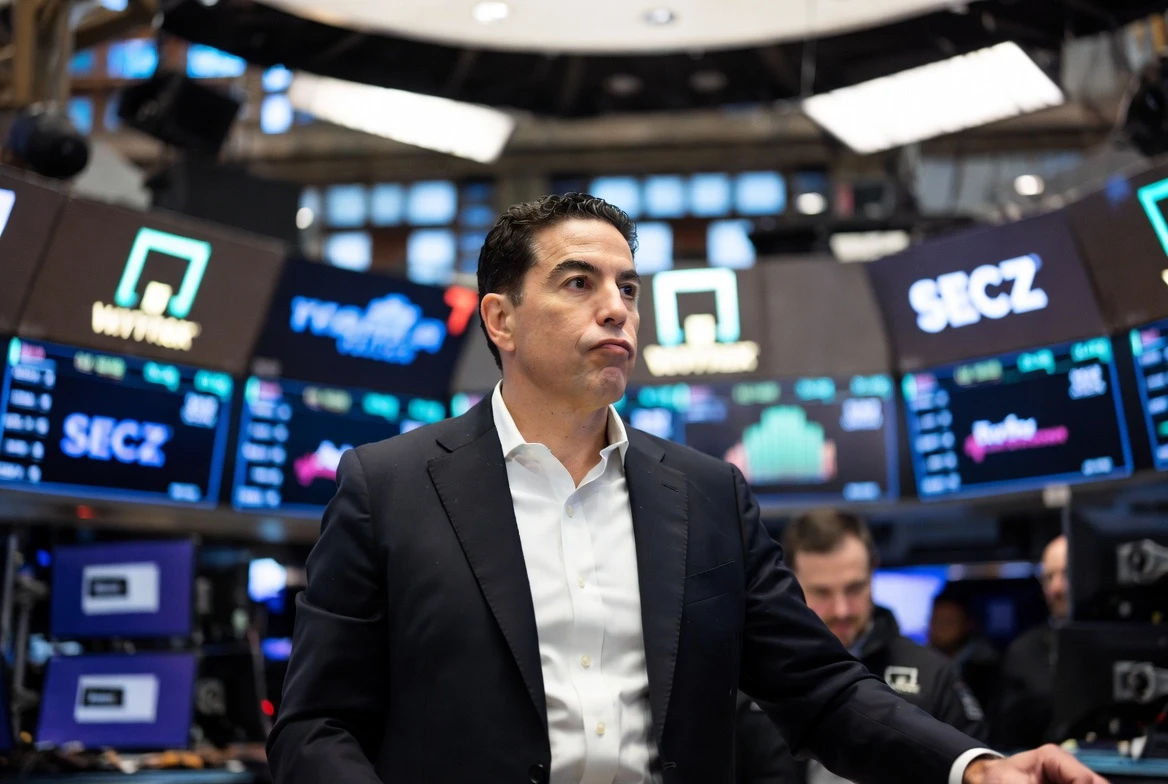
Securitize Corp. began trading on the New York Stock Exchange on Thursday under the ticker SECZ, an industry first in which a newly public company brought its own equity onchain at the start of its life as a listed entity. The BlackRock-backed tokenization platform closed a SPAC merger with Cantor Equity Partners II, generated approximately $400 million in gross proceeds, and on the same day issued $266 million of tokenized SECZ across the Avalanche and Solana networks, per Securitize’s merger completion release.
Shares climbed more than 8% in early trading to $12.75 on the debut. The dual listing puts the same common stock on a traditional exchange and on public blockchains at the same moment, and it is the first test of whether issuer-sponsored tokenization can scale at the level of a NYSE-listed equity.
Securitize Lands on the NYSE With Tokenized Shares on Day One
Eight years after Securitize was founded, the company stepped onto the NYSE under a deal structure that valued it at $1.25 billion pre-money. The merger with Cantor Equity Partners II, a SPAC sponsored by an affiliate of Cantor Fitzgerald, was first announced in October 2025 and cleared its final shareholder vote in late June.
Trading opened Thursday. Securitize executives will ring the NYSE Closing Bell on Monday, July 6, per the company’s release. On the same day as the listing, the firm made tokenized versions of the same common stock available to eligible US investors through its own regulated platform. Access requires standard KYC and AML checks and jurisdictional eligibility, the company said, and the tokenized shares represent the identical underlying equity, not a separate share class.
- $12.75 debut price for SECZ, up more than 8% on the first trading session
- $266 million of tokenized SECZ issued across Avalanche and Solana on day one
- $1.25 billion pre-money equity value set by the SPAC merger
- $4 billion+ in tokenized assets under management as of June 2026
A Patchy Year for Crypto-Adjacent IPOs
Securitize’s debut closes a quieter year for crypto-adjacent listings than the 2025 IPO parade suggested. Stablecoin issuer Circle and crypto exchange Gemini both went public in 2025 before the late-year crypto drawdown, per Fortune’s reporting on the BitGo IPO. BitGo, the custody firm, listed on the NYSE on January 22, 2026 at $18 a share, raising over $212 million at a valuation slightly over $2 billion.
Then the pipeline thinned. Kraken paused its planned multibillion-dollar IPO in March 2026, shelving a deal originally targeted for the first quarter, after confidentially filing with the SEC in November 2025. CoinDesk reported the delay at the time, citing difficult market conditions. Bitcoin has spent most of 2026 below its late-2025 highs. Circle, Gemini, and other 2025 crypto IPOs traded down after the late-2025 crypto reversal, per Fortune.
Into that backdrop, Securitize’s structure as a pure-play tokenization infrastructure provider is what makes the SECZ listing unusual. The business is not a crypto exchange, a stablecoin issuer, or a custody platform. It sells the regulated plumbing other institutions use to issue, transfer, and administer tokenized securities. Its $4 billion-plus AUM comes from tokenized funds rather than trading volume or token issuance fees. The wider tokenization space has its own parallel SPAC stories, including Abra’s parallel Nasdaq tokenization bet, but Securitize is the first to bring the issuer’s own equity through the rails on day one.
Why Tokenizing the Issuer’s Own Stock Matters
The simultaneous NYSE and onchain debut is the part that makes the SECZ listing unusual. Securitize brought its common stock onchain at the start of its life as a listed entity, and it framed the move as a deliberate statement about how the structure should work. The same regulated stack that services Apollo, BlackRock, and KKR’s tokenized funds now services Securitize’s own equity.
SECZ is not a synthetic token or offshore wrapper. It is issuer-sponsored tokenization of the same common stock trading on the NYSE, made available through regulated infrastructure.
The quote, from co-founder and CEO Carlos Domingo, points at the structural distinction Securitize is drawing. The company made three concrete claims about the new product alongside the listing:
- The tokenized SECZ represents the same common stock listed on the NYSE, not a derivative or a separately issued share class
- Securitize operates the tokenization itself through its SEC-registered broker-dealer, transfer agent, and Alternative Trading System affiliates
- Access runs through the company’s own regulated platform, which performs standard KYC, AML, and jurisdictional checks before any tokenized shares are minted to an investor wallet
That stack, broker-dealer, transfer agent, ATS, and an EU-authorized Investment Firm under the bloc’s DLT Pilot Regime, is what Securitize argues separates issuer-sponsored tokenization from the synthetic tokenized stocks that already trade on offshore venues and decentralized exchanges. Domingo called the SECZ listing a blueprint for public companies that want to use tokenization to create “more efficient, transparent, and useful ownership experiences for their shareholders.”
The same regulated stack now underwrites the SECZ tokenization Securitize runs in-house. That is the structural difference Securitize is pointing issuers toward. The pitch: keep the legal wrapper of an existing equity, and open a tokenized distribution channel under the same transfer-agent umbrella. Tokenized SECZ is the first time that pitch runs in both directions at once. Investors who buy the dual-listed common stock now hold the same SECZ on both rails.
The Avalanche and Solana Rails Behind Tokenized SECZ
The tokenized SECZ launched on Avalanche and Solana, two layer-1 networks that have absorbed much of the institutional tokenization flow over the past year. BlackRock’s BUIDL tokenized money market fund, issued on Securitize’s infrastructure, runs across both chains. The SECZ rollout uses the same multi-chain plumbing. Access is gated to investors who complete standard KYC and AML checks and pass jurisdictional eligibility, the company said.
For the SECZ listing, the choice of Avalanche and Solana points to where Securitize sees the deepest institutional liquidity for tokenized equities right now. BUIDL’s multi-chain distribution is the template the tokenized SECZ rollout is built on, per the BlackRock BUIDL fund’s product page.
Day-one access is gated. Only investors who complete KYC and AML checks and pass jurisdictional eligibility can mint or redeem tokenized SECZ through Securitize’s platform. The wallet that holds a tokenized SECZ is, in the company’s framing, a record of beneficial ownership tied back to the same master securityholder file that records the traditional share. That integration is what the firm says makes tokenized SECZ function as the same common stock rather than a parallel instrument.
The NYSE Partnership and the 24/7 Question
Securitize’s role as the issuer of tokenized SECZ sits on top of a deeper structural relationship with the exchange itself. In March 2026, the NYSE named Securitize as the first digital transfer agent eligible to mint blockchain-native securities on the exchange’s upcoming Digital Trading Platform. The two parties signed a memorandum of understanding on March 24.
Under that arrangement, Securitize is expected to help set the regulatory, operational, and technical standards for digital transfer agents on the platform. Securitize Markets is expected to be one of the broker-dealer participants when the Digital Trading Platform opens. Lynn Martin, the president of NYSE Group, framed the collaboration in terms of preserving investor protections inside a new market structure.
The NYSE continues to lead the industry in responsible innovation. As we explore how tokenization can enhance capital markets, it is critical that new infrastructure is developed in a way that preserves the trust, transparency, and protections investors expect.
That partnership is the bridge between tokenized SECZ as it launches today and a larger structural change the two parties have signaled. Securitize executives have pointed to a 24/7 trading platform for tokenized equities as part of the broader collaboration, a departure from the weekday hours of US equity markets. Whether SECZ itself eventually migrates onto that 24/7 venue is not settled, but the partnership gives Securitize a privileged seat at the design table.
The two parties have also agreed to work on the standards institutional tokenization will have to meet. The focus, per the March 24 NYSE collaboration release, is the regulatory, operational, and technology requirements for institutional-grade tokenized securities infrastructure. Securitize’s experience as a leading tokenization platform and SEC-registered transfer agent is what the exchange is leaning on for that work. Brett Redfearn, the company’s president and a former SEC Division of Trading and Markets director, told Decrypt this week that the businesses that wrap around a stock are “totally disruptible” and that tokenization creates “a lot of opportunities when you start to disintermediate traditional businesses.”
What Tokenized SECZ Still Has to Prove
The closing bell on July 6 will be the ceremonial punctuation. The harder questions sit in the months that follow. Corporate actions, the routine plumbing of dividends, stock splits, and record-date transfers, have never been stress-tested at scale on a dual NYSE-onchain equity, and the way tokenized SECZ behaves through the first of those will set the template for whether other public issuers follow.
Securitize’s argument is that the same master securityholder file ties the two together, so a dividend declared on the NYSE should reach tokenized holders through the platform’s own servicing layer. That integration is the technical bet the company is making. The practical question is whether the onchain and NYSE books stay synchronized in real time. Securitize’s existing transfer-agent infrastructure already services tokenized fund flows for major asset managers, but a listed equity is a different scale of test.
Whether tokenized SECZ survives a real corporate action on day one is one open question. Secondary market liquidity on Avalanche and Solana tracking the NYSE book closely enough to keep prices aligned is another.
Disclaimer: This article is for informational purposes only and does not constitute financial or investment advice. Figures reflect information available as of publication; consult a qualified financial professional before making investment decisions.


Google Opens Gmail to Voice and Gates Docs Live

Lenovo Prices the IdeaPad Vibe Against Apple’s $699 Neo

Xbox Caps Game Pass Cloud Gaming at 15 Hours

GTA 6 DualSense Controllers Follow Sony’s Usual $84.99 Script

South Korea Retail Investors Face Reckoning After KOSPI AI Rally Collapses

Surrey AI Maps Three Heart Attack Paths and Their Molecular Roots

Germany Locks Neutral Apple ATT Prompts Across Most of Europe

Apple’s 5% EU Fee Quietly Rewrites Alternative App Store Math

Apple’s EU Fee Truce Cuts Complexity but Leaves Rivals Fuming

Pixel 11 Pro Fold Trades Thinness for Durability and Seven-Year Stay

Oracle Cuts 21,000 Jobs in a Year, Cites AI in 10-K Filing

Fable 5 and Mythos 5 Return as US Lifts Anthropic Export Controls

SpaceX’s Google Deal Turns a Rocket Company Into a Cloud Landlord

CD Projekt Red Co-CEO: Redemption Arc Isn’t Done, Witcher 4 in 2027

XPL Rallies 30% Ahead of Plasma One Card Tier Launch

Google Search Profiles Build a Follow Graph Inside Discover

DGO App Brings Rs 549 Mobile Pass for FIFA World Cup 2026 in Nepal

Moonshot AI Targets $30 Billion in China’s Fastest AI Funding Sprint

Oppo’s ColorOS 17 Eligibility List Leaves A-Series Buyers Behind

Microsoft Xbox Layoffs Start in July as Sharma Slams 3% Margin
-
 AI2 months ago
Oracle Cuts 21,000 Jobs in a Year, Cites AI in 10-K Filing
-
 AI2 months ago
Fable 5 and Mythos 5 Return as US Lifts Anthropic Export Controls
-
 AI3 months ago
SpaceX’s Google Deal Turns a Rocket Company Into a Cloud Landlord
-
 GAMING3 months ago
CD Projekt Red Co-CEO: Redemption Arc Isn’t Done, Witcher 4 in 2027
-
 CRYPTO3 months ago
XPL Rallies 30% Ahead of Plasma One Card Tier Launch
-
 NEWS3 months ago
Google Search Profiles Build a Follow Graph Inside Discover
-
 APPS3 months ago
DGO App Brings Rs 549 Mobile Pass for FIFA World Cup 2026 in Nepal
-
 AI3 months ago
Moonshot AI Targets $30 Billion in China’s Fastest AI Funding Sprint