
NEWS
Musk Calls SpaceX AI Device Report ‘Utterly False’ as Stock Drops
WSJ reported SpaceX showed investors a slim AI device. Musk called the WSJ report ‘utterly false.’ Starlink mobile plans keep moving, and SPCX fell 7.3%.

Elon Musk has dismissed a Wall Street Journal report that SpaceX showed investors a prototype of a handset-like AI device, calling the story “utterly false” in a two-word post on X. The Journal’s July 1 report said the prototype was slimmer than an iPhone, would run on a Qualcomm Snapdragon chip, and use an AI-enabled operating system powered by xAI. The denial lands as SpaceX presses ahead with a separate, much more concrete consumer mobile push built around its Starlink satellite network.
Last week the Financial Times reported that SpaceX chief operating officer Gwynne Shotwell told investors on the company’s IPO roadshow that SpaceX was exploring a Starlink-branded mobile service for US consumers. Some analysts now publicly speculate SpaceX could acquire T-Mobile to make that plan work, The Verge reports. Musk has not disputed any of that. The contrast is doing the work today: a flat “utterly false” on one front, a quiet multi-billion-dollar build-out on the other.
What The WSJ Reported About the Prototype
The original report on the SpaceX AI device said on Wednesday that SpaceX developed a handset-like prototype and showed it to some investors before the company’s blockbuster initial public offering in June. Citing people familiar with the matter, the paper said the prototype was slimmer than an iPhone, would run on a Qualcomm Snapdragon chip, and use a proprietary operating system with features powered by SpaceX-owned xAI. The WSJ piece also said SpaceX had told some investors the project remained in its early stages, with the design still evolving and no certainty the device would ultimately be built.
No name for the device has been reported. Forbes, citing the WSJ, notes it is unclear whether the device would ever be released to the public, and that it remains in prototype phase. Musk rejected the report outright, responding to commentary on X by calling it “utterly false,” without elaborating, according to a Reuters write-up carried by Yahoo Finance. SpaceX and Qualcomm did not immediately respond to requests for comment from Reuters. Qualcomm’s shares still rose about three percent on the report, according to The Next Web, a reminder that supplier exposure to a SpaceX consumer device was the part of the story the chip market believed.
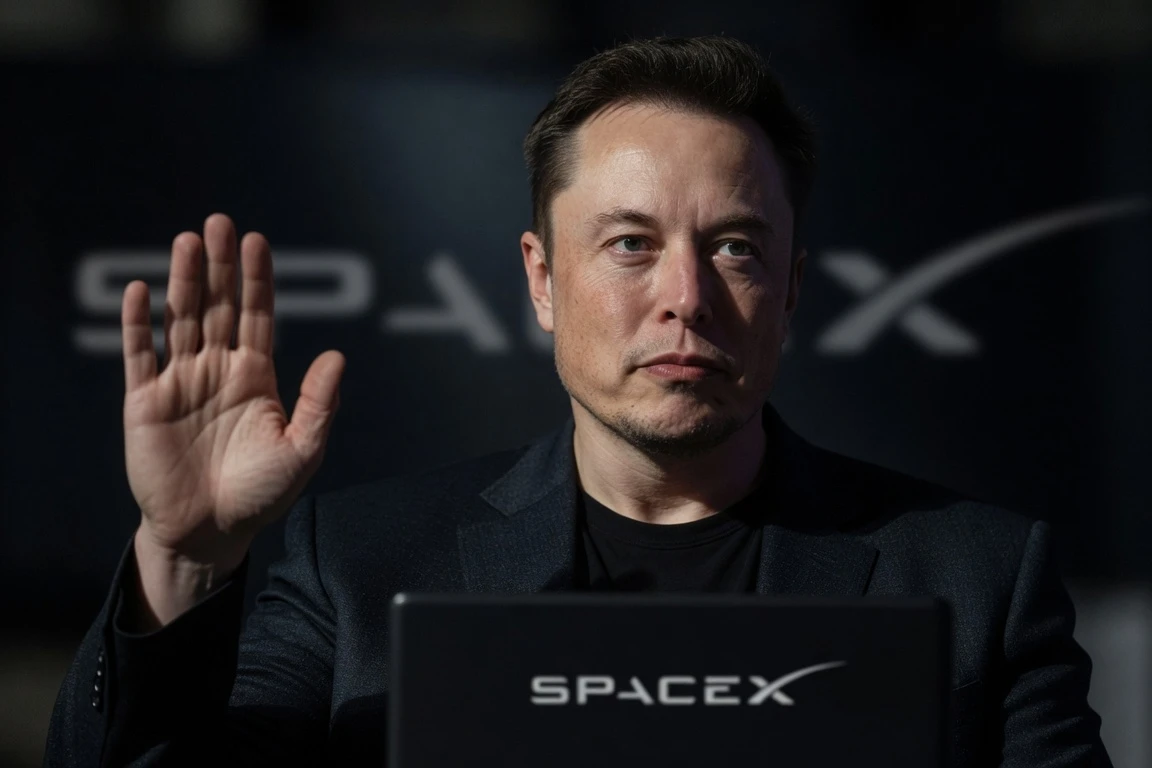
Musk’s Reply and a Familiar Pattern
The “utterly false” post is Musk’s second phone denial this year and his most blunt. In February, after Reuters reported that SpaceX was working on a phone connected to its Starlink constellation, Musk posted on X: “We are not developing a phone.”
That denial survived a January softening, when Musk told reporters a Starlink phone was “not out of the question at some point,” and that any such device “would be very different from current phones.” The pattern is consistent: hedge, then deny, then move on. Investors should also weigh the source, since the Journal’s reporting depends on people familiar with what investors were shown during SpaceX’s pre-IPO meetings. Such briefings are by definition partial: an early prototype shown to one group may not reflect what another group saw, or what SpaceX plans to ship.
Musk has made his feelings about consumer hardware clearer on stage. At an event in Pennsylvania last year, Musk said “the idea of making a phone makes me want to die,” then added the qualifier that has come to define the policy: “if we have to make a phone, we will, but we will aspire not to make a phone.” The Verge and other outlets have cited that line at every new phone rumor since, and Wednesday’s denial is the latest installment rather than a change of mind.
The structure of each denial leaves room to change course later. The “if we have to make a phone, we will” line from Pennsylvania and the “not out of the question at some point” comment from January sit alongside Wednesday’s “utterly false” without contradicting it. Each one is a conditional, framed as a fallback rather than a roadmap. He has used similar constructions on other Musk-led projects. The WSJ story also lands inside SpaceX’s first quarter as a public company, when retail investors are still sorting the prospectus projections from the operational reality. The two-word denial cost SpaceX roughly seven percent of its share price on Wednesday, which is its own kind of signal about which version of the story the market believed.
The Mobile Service SpaceX Isn’t Denying
While Musk kills the AI device story, SpaceX’s other consumer mobile push keeps moving. The FT report on SpaceX’s Starlink mobile plans, published June 26, said SpaceX president and chief operating officer Gwynne Shotwell told investors during the IPO roadshow that the company plans to launch a Starlink mobile service for US consumers. The plans include a direct-to-consumer wireless offering and the possibility of building a terrestrial mobile network in the US. Musk has not disputed any of it.
A standalone mobile service would put SpaceX in more direct competition with established wireless carriers including Verizon, AT&T and T-Mobile. SpaceX already partners with T-Mobile for direct-to-cell satellite phone service using its Starlink satellites, a relationship Forbes flagged on Wednesday as already in place.
The same day the WSJ story broke, Bloomberg reported that SpaceX was in talks with Charter Communications about a partnership that would use the internet provider’s ground infrastructure for its phone traffic. Proactive Investors, citing the FT, says the standalone service would let SpaceX capture a larger share of customer revenue by combining satellite coverage with terrestrial wireless infrastructure. TD Cowen analyst Gregory Williams published a note arguing that SpaceX may need to acquire a US wireless carrier to execute its Starlink Mobile plans, per a Threads summary. Some analysts are publicly speculating SpaceX could acquire T-Mobile, The Verge reports, though T-Mobile’s parent Deutsche Telekom has shown no sign of selling. The strategic shape of all the moves is the same: SpaceX wants to be a full-stack carrier rather than a satellite adjunct to someone else’s network.
- EchoStar spectrum purchase, September 2025: about $17 billion
- EchoStar spectrum follow-on, November 2025: $2.6 billion
- Direct-to-cell partnership with T-Mobile: already active
- Charter Communications ground-infrastructure talks: reported by Bloomberg on July 1
Where the Hardware Skeptics Stand
Two high-profile AI hardware failures already bookend the market SpaceX would enter. A Wednesday note from analysts at Vital Knowledge, reported by Forbes, weighed SpaceX’s hardware chances against that history. The note landed the same day Musk denied the WSJ report, and the two together set up the week’s central debate. The graveyard of failed AI gadgets gives the skeptics concrete material to work with.
SpaceX has a long way to go before successfully manufacturing a consumer device at scale and competing against the leading platforms. Musk-led companies are given a massive benefit of the doubt when it comes to product promises (which translates into enormous valuation premiums at SPCX and TSLA based on products that are more ideas than reality), but it’s hard to imagine SpaceX becoming a force in consumer electronics.
That was the Wednesday note from analysts at Vital Knowledge, reported by Forbes. Their argument ran in the same news cycle as Musk’s denial, and the two together framed the week.
- Humane AI Pin: permanently bricked in February 2025 after fewer than 10,000 units sold; HP acquired Humane for $116 million
- Rabbit R1: 100,000 pre-orders converted to roughly 5,000 active users after five months
- OpenAI smartphone: in development with Qualcomm and MediaTek, targeting mass production in 2028
The OpenAI device adds a third well-funded entrant to the AI hardware race. OpenAI has hired Paul Meade, the Apple vice president who ran Vision Pro hardware engineering, to a team that already includes Jony Ive, Apple’s former design chief, per The Next Web. The company has described its target device as “more peaceful” than an iPhone, in comments attributed to Sam Altman. If SpaceX does ship a phone, it would enter a category where the well-funded frontrunner already has Apple’s former hardware chief.
What the Stock and Suppliers Did on the News
Investors priced the WSJ story as plausible before Musk replied. SpaceX’s stock fell 7.3 percent on Wednesday by about 3:30 p.m. EDT, according to Forbes, and the slump erased more than $50 billion from Musk’s net worth, ending his brief run as a trillionaire. Qualcomm shares still closed about three percent higher on the day, per The Next Web’s summary, on the supplier angle of the report.
Musk’s “utterly false” post came after the cash damage was done. The two words hit the timeline after Forbes’s stock-market wrap, which made the stock reaction a record of how the market had weighed the report, not the denial. For Musk, that is the cost of letting a WSJ scoop sit unanswered for several trading hours on the day after the report. The split between the equity reaction (down) and the supplier reaction (Qualcomm up) also tells its own story: traders treated the hardware roadmap as real even as they waited to see if Musk would kill it. SpaceX’s $2 trillion Nasdaq debut last month is now the reference point every new story has to clear, and SPCX at $153 on Friday puts the stock well above its $135 IPO price.
Frequently Asked Questions
Is SpaceX making a phone?
No, Elon Musk has said. The SpaceX CEO called a Wall Street Journal report about a handset-like AI device “utterly false” in a July 1, 2026 post on X. Forbes notes the device was in prototype phase with no name and no certainty it would ever be released.
What did the Wall Street Journal report?
The Wall Street Journal reported on July 1, 2026 that SpaceX had developed a handset-like prototype slimmer than an iPhone and shown it to some investors before the company’s June IPO. The device would run on a Qualcomm Snapdragon chip and use a proprietary operating system with features powered by SpaceX-owned xAI, the paper said, citing people familiar with the matter.
What did Elon Musk say about it?
Musk replied on X with two words: “Utterly false.” The post came after similar denials this year, including a February reply to a Reuters report that SpaceX was working on a Starlink phone, when Musk wrote “We are not developing a phone.” SpaceX and Qualcomm did not immediately respond to requests for comment from Reuters.
What is the Starlink mobile service?
The Financial Times reported on June 26, 2026 that SpaceX president Gwynne Shotwell told investors during the company’s IPO roadshow that SpaceX plans to launch a Starlink mobile service for US consumers. The plan would put SpaceX in more direct competition with Verizon, AT&T and T-Mobile. SpaceX already partners with T-Mobile for direct-to-cell satellite phone service.
When could the SpaceX AI device launch?
It might not. The Wall Street Journal reported that SpaceX told investors the project was in its early stages, with the design still evolving and no certainty the device would ever be built. Qualcomm shares rose about three percent on the report regardless, per The Next Web’s summary.


OpenAI Ultrafast Puts GPT-5.6 Sol on Live Workloads

Apple’s 15% External Fee Bid Admits Its Own Zero Floor

JBL Beats Bose and Sony on Value for 2026 Soundbars

iPhone Users Pull 40 Percent More From Microdrama Apps

Nebius Q2 Turns AI Cloud Demand Into Prepaid Growth Machine

One UI 9.5 App Lock Ends Years of Samsung Delays

Shiprocket IPO Premium Hides ESOP Costs and Flat Merchant Base

Google Halves Gemini 3.7 Flash Price to Fuel Agent Swarms

Dawnwalker Time Clock Cracks Open-World RPG Habits

Gemini 3.7 Flash Cuts Agent Costs While Pro Stays Delayed

Fable 5 and Mythos 5 Return as US Lifts Anthropic Export Controls

Oracle Cuts 21,000 Jobs in a Year, Cites AI in 10-K Filing

SpaceX’s Google Deal Turns a Rocket Company Into a Cloud Landlord

CD Projekt Red Co-CEO: Redemption Arc Isn’t Done, Witcher 4 in 2027

XPL Rallies 30% Ahead of Plasma One Card Tier Launch

Google Search Profiles Build a Follow Graph Inside Discover

DGO App Brings Rs 549 Mobile Pass for FIFA World Cup 2026 in Nepal

Moonshot AI Targets $30 Billion in China’s Fastest AI Funding Sprint

Microsoft Xbox Layoffs Start in July as Sharma Slams 3% Margin

Oppo’s ColorOS 17 Eligibility List Leaves A-Series Buyers Behind
-
 AI1 month ago
Fable 5 and Mythos 5 Return as US Lifts Anthropic Export Controls
-
 AI2 months ago
Oracle Cuts 21,000 Jobs in a Year, Cites AI in 10-K Filing
-
 AI2 months ago
SpaceX’s Google Deal Turns a Rocket Company Into a Cloud Landlord
-
 GAMING2 months ago
CD Projekt Red Co-CEO: Redemption Arc Isn’t Done, Witcher 4 in 2027
-
 CRYPTO2 months ago
XPL Rallies 30% Ahead of Plasma One Card Tier Launch
-
 NEWS2 months ago
Google Search Profiles Build a Follow Graph Inside Discover
-
 APPS2 months ago
DGO App Brings Rs 549 Mobile Pass for FIFA World Cup 2026 in Nepal
-
 AI2 months ago
Moonshot AI Targets $30 Billion in China’s Fastest AI Funding Sprint