
GAMING
PwC Says U.S. Games Market Will Slow in 2027, Even With GTA VI
PwC says the U.S. games market will slow in 2027, even with GTA VI launching late 2026. Tariffs, memory chip costs, and the console cycle are the headwinds.

The U.S. games and esports market is heading into a cyclical slowdown in 2027, even with Take-Two Interactive’s Grand Theft Auto VI arriving on November 19, 2026 to lift the calendar year before it. That is the central forecast in PwC’s Global Entertainment & Media Outlook 2026 to 2030, a five-year view of the U.S. and global entertainment markets released this month. PwC partner CJ Bangah, in an interview about the report, said the firm does not model individual titles, so GTA VI’s lift for 2026 is built into the methodology rather than counted as a separate forecast.
PwC Sees a 2027 Downturn Even With GTA VI
PwC projects the U.S. games and esports market will grow at a compound annual growth rate of 3.8% over the next five years, modestly ahead of a global five-year CAGR of 3.6%. Inside that average are years of negative growth and years of strong growth, with 2027 sitting on the negative side of the ledger. The dip comes even as GTA VI runs through its launch year and into its first full year on the market. The forecast treats the U.S. as a mature market whose expansion runs slower than growth in emerging regions.
In 2025 the U.S. share of the global games and esports market was 27.2%, making the country the second largest behind the Chinese mainland. PwC expects that share to hold steady over the forecast period, a stability that reflects the mature nature of the market. Monetization per gamer in the U.S. is significantly higher than in other markets, which is what keeps the headline number up even as unit growth softens.
Why 2027 Is a Console Transition Year
The biggest single factor in PwC’s 2027 call is the console cycle. The year before a hardware refresh is typically one of softer sales.
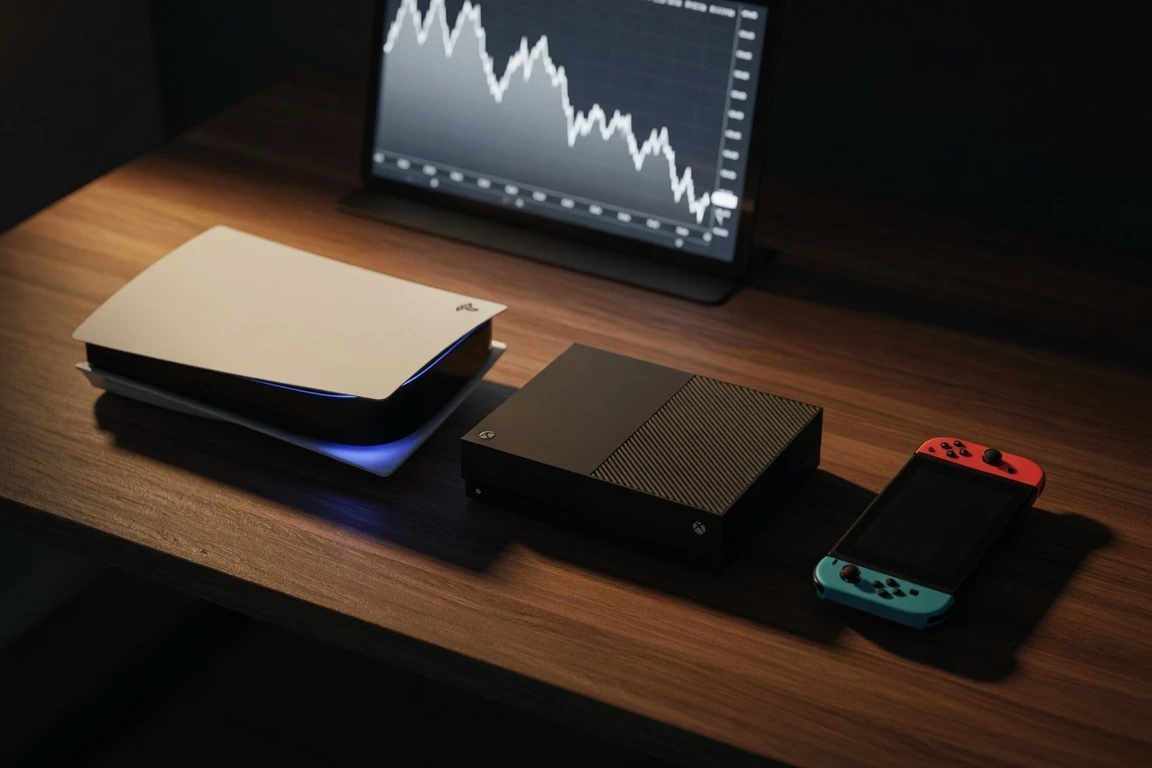
The PlayStation 5 and Xbox Series consoles are now in the late stages of their lifecycles. Sony and Microsoft are expected to begin rolling out the next generation of devices from 2027 onwards, with PwC citing that window as the catalyst for the soft year. The Nintendo Switch 2 is selling well, but not at the level of the original Switch, so Nintendo cannot fully offset the Sony-Microsoft transition.
Bangah said the cycle pattern is built into the firm’s methodology. “Our forecast has years with negative growth rates, and our forecast has years with very positive growth rates tied to the release of new platforms or consoles,” she said in the interview. The report expects the next console generation to anchor a fresh growth phase from 2028 into 2030. Console and PC gaming combined are not high-growth opportunities in the U.S. over the five-year forecast, with PwC projecting a 1.7% CAGR for that combined segment.
Macro Pressures Pile on Top
The transition year does not stand alone. Tariffs set by the U.S. government are pushing up prices on consoles and PCs assembled outside the country.
PwC called the tariffs “most likely to be impactful on the console and PC gaming markets,” with the price pressure expected to fall hardest on markets where adoption of imported hardware is key to the overall scale. Continued sticky inflation above pre-pandemic levels is squeezing middle-income buyers across hardware, software, in-game items, and subscription services. The result is a consumer base more cautious about upgrading hardware at the same time the hardware cycle is already pushing the upgrade decision out.
Memory chip prices are rising sharply because AI demand is soaking up supply, a squeeze PwC flagged as a near-term headwind for the next one to two years. “There is also likely to be increased RAM costs for console hardware and PCs” over that window, the report said. Higher component costs feed directly into the launch prices for the next generation of consoles.
Political and economic uncertainty linked to the war with Iran has been named by PwC as another contributing factor, alongside broader tariff effects. None of these pressures alone explains a 2027 dip, but together they run alongside the console cycle. PwC expects the slowdown to look like a tightening in some categories. Consumer entertainment demand, the report argues, persists through downturns even when discretionary purchases get delayed.
What the Numbers Actually Say
The U.S. games market splits into two large halves in PwC’s view. The first is traditional gaming, which combines console and PC gaming but excludes multi-game subscriptions; it had a 29.4% share of the U.S. market in 2025 and was worth $20.6 billion. The second is social and casual gaming, which combines mobile gaming, mobile in-game app advertising, and browser gaming; it had a 59.6% share in 2025 and was worth $41.8 billion.
Both halves are expected to grow in absolute dollars, but their shares shift in opposite directions over the forecast period. Traditional gaming’s share of the U.S. market is expected to shrink to 26.6% by 2030, with the segment reaching $22.4 billion. Social and casual gaming’s share is expected to grow to 62.9% by 2030, with the segment reaching $53.0 billion. Multi-game and cloud gaming subscription services are projected to grow at a 3.4% CAGR and reach $6.7 billion by 2030, with U.S. subscribers rising from 50.2 million in 2025 to 53.6 million in 2030. Subscriptions are expected to see a reduction in subscriber numbers in 2026 and 2027 as Sony and Microsoft console platforms hit their pre-transition period.
| Segment | 2025 share | 2025 value | 2030 share | 2030 value |
|---|---|---|---|---|
| Traditional (console + PC, excl. subs) | 29.4% | $20.6 billion | 26.6% | $22.4 billion |
| Social and casual (mobile + in-game ads + browser) | 59.6% | $41.8 billion | 62.9% | $53.0 billion |
GTA VI Will Lift 2026, Not 2027
PwC sees GTA VI’s arrival as a major cultural event for the U.S. sector. Console software sales volume in 2026 is expected to rise, and console hardware sales for both PlayStation 5 and Xbox Series will get support from the title even as those devices reach the later stages of their lifecycles. The title alone will help mitigate some of the expected decline of the console games market in the U.S. when it arrives at the end of the year, the report said. The U.S. represented 43.0% of global consumer spending on console games content outside subscriptions, PwC noted, which makes the territory’s console weakness a global story.
Take-Two Interactive has confirmed that Grand Theft Auto VI launches on November 19, 2026 on PlayStation 5 and Xbox Series X|S. CEO Strauss Zelnick has reaffirmed the date across multiple earnings calls, putting to bed delay speculation that has followed the title since its 2023 reveal trailer. The game was delayed from 2025 into 2026. Take-Two has also confirmed that GTA Online, the live service that has anchored Rockstar’s post-launch revenue for GTA V, will stay running after Grand Theft Auto VI arrives. The PC version is expected to follow in 2028, after the next console generation has begun its rollout.
For the most part, we’ve tried to model that into our methodology of expecting some of these big title releases and expecting that that could be a nice groundswell for growth, but unfortunately, we don’t do for title modeling or attribution.
That was CJ Bangah, partner at PwC, in an interview about the report. PwC’s methodology is calibrated to the hardware cycle, not the individual game. The firm expects big releases to lift the year they arrive, but it does not try to count them as separate forecast inputs.
That lift does not extend into 2027 in PwC’s view. GTA VI will be a year-old title by the time the transition year arrives, and PwC’s forecast shows the new-generation consoles from Microsoft and Sony launching from 2027 onwards. The hardware cycle, not the software catalog, drives the calendar. One PwC number worth flagging: the firm expects GTA VI to carry a $100 price tag, above the $60 or $80 levels seen for prior Rockstar releases.
Mobile, PC, and Esports Diverge
The three non-console segments travel different paths in PwC’s outlook. Mobile is the largest by revenue, anchored by Apple’s iPhone share in the U.S. and a small number of breakout titles that carry engagement for years. Monopoly Go!, the Scopely title, has crossed $6 billion in lifetime revenue, the fastest any mobile game has reached that mark in history. The market is heavily penetrated, so growth depends on new hits and the rollout of more in-game app advertising. Consumer spending on mobile gaming is predicted to grow slowly over the forecast period, reflecting the mature nature of the market and existing strong monetization with less upside potential.
Direct-to-consumer webstores are the biggest margin lever for publishers, but they won’t reshape the growth dynamic. Mobile games publishers with major U.S. exposure are pursuing these off-app-store channels more aggressively to drive increased margins. The shift will make the U.S. mobile games market more commercially viable without significantly changing its scale.
The PC market is driven by premium digital storefronts such as Valve’s Steam and Epic’s Games Store, which has now paid developer and publisher partners over $2.1 billion since launch. Live-service titles like Fortnite, Battlefield 6, Call of Duty, Counter-Strike 2, and GTA Online anchor the segment, with continued interest in long-standing live-service games cited as a key driver. User-generated content platforms Roblox and Fortnite extend the reach into younger audiences. The premium PC games market is also being driven by increased access to franchises traditionally exclusive to the console platforms, with Sony PlayStation and Microsoft Xbox-based titles expanding to PC. This convergence is fueling overlap between the console and PC gaming markets.
PC gaming handhelds like the Steam Deck and the upcoming Steam Machines are expected to stay niche because of their high pricing, PwC said. Streamed and cloud-based gaming distribution remains a nascent pursuit for the vast majority of gamers, with usage increasing but not at a tipping point. Netflix and Amazon’s use of cloud delivery for family and party gaming through connected TVs will expand usage without majorly changing the commercial dynamic. Multi-game subscription services have reached high penetration across key console platforms, so growth is expected to be low.
Esports, by contrast, is flat. The U.S. esports market reached $363.3 million in 2025, and PwC expects growth in the region to be flat over the 2026 to 2030 forecast period. The return of leagues like NBA 2K offers some upside as the market moves toward a sustainable business model and tournament format.
- Multi-game and cloud subscriptions: 3.4% CAGR over five years, reaching $6.7 billion by 2030
- Traditional gaming (console + PC, excl. subs): 1.7% five-year CAGR
- Esports: flat over the 2026 to 2030 forecast period
- Total U.S. games and esports: 3.8% CAGR
Why Gaming Holds Up Better Than Other Media
The 2027 dip is relative, not catastrophic. PwC’s broader entertainment and media outlook shows several other categories with net negative growth in future years, including traditional form factors that have lost enough share that they are decelerating. Gaming is one of the more optimistic categories by relative growth rate, Bangah said, because entertainment demand is among the most durable consumer behaviors in a downturn. “A growth rate that is a single-digit growth rate feels like not growing in some ways, because new entrants continue to enter as a space,” Bangah said.
The pattern has held across prior cycles. PwC has produced the report for 27 years, and a downturn has not collapsed the gaming industry in any prior cycle. The firm expects the slowdown to look like a tightening in some categories.
The other pressure on gaming is competition for attention, with a widening set of wallet competitors. Futures markets, gambling, sports betting, and short-form video are all pulling at the same hour of the day. “We see video gaming increasingly competing for share of attention, which translates to competition for share of wallet,” Bangah said. Gaming’s higher growth rate than most other entertainment categories keeps it attractive to brand dollars even when the headline number slips. The bigger risk for gaming, Bangah said, is regulation if publishers push too hard toward loot boxes and other monetization tactics that veer into addiction.
Frequently Asked Questions
When does GTA VI come out?
Take-Two Interactive confirmed across multiple earnings calls that Grand Theft Auto VI will launch on November 19, 2026, on PlayStation 5 and Xbox Series X|S. The release was first announced in late 2024 and has been reaffirmed by CEO Strauss Zelnick in subsequent quarters.
Will GTA VI prevent the 2027 U.S. games market slowdown?
No. PwC forecasts the U.S. market will dip in 2027 because of the console transition year, even with GTA VI in market for nearly a full year. PwC does not model individual titles, but it expects big releases to provide general lift, not offset a hardware cycle.
How big is the U.S. games and esports market?
PwC puts the U.S. share of the global games and esports market at 27.2% in 2025, making it the second largest market behind the Chinese mainland. The country is also the world’s largest console gaming market and the second largest in mobile and PC gaming.
What is driving the 2027 console transition?
The PlayStation 5 and Xbox Series consoles are in the late stages of their lifecycles, and PwC expects the next generation from Sony and Microsoft to begin rolling out from 2027 onwards. The Switch 2 is selling well but not at the level of the original Switch.
Which gaming segment is growing fastest?
Social and casual gaming, which includes mobile, in-game app advertising, and browser games. The segment is forecast to grow from $41.8 billion in 2025 to $53.0 billion by 2030, while traditional console and PC gaming grows at a 1.7% five-year CAGR.


Google Opens Gmail to Voice and Gates Docs Live

Lenovo Prices the IdeaPad Vibe Against Apple’s $699 Neo

Xbox Caps Game Pass Cloud Gaming at 15 Hours

GTA 6 DualSense Controllers Follow Sony’s Usual $84.99 Script

South Korea Retail Investors Face Reckoning After KOSPI AI Rally Collapses

Surrey AI Maps Three Heart Attack Paths and Their Molecular Roots

Germany Locks Neutral Apple ATT Prompts Across Most of Europe

Apple’s 5% EU Fee Quietly Rewrites Alternative App Store Math

Apple’s EU Fee Truce Cuts Complexity but Leaves Rivals Fuming

Pixel 11 Pro Fold Trades Thinness for Durability and Seven-Year Stay

Oracle Cuts 21,000 Jobs in a Year, Cites AI in 10-K Filing

Fable 5 and Mythos 5 Return as US Lifts Anthropic Export Controls

SpaceX’s Google Deal Turns a Rocket Company Into a Cloud Landlord

CD Projekt Red Co-CEO: Redemption Arc Isn’t Done, Witcher 4 in 2027

XPL Rallies 30% Ahead of Plasma One Card Tier Launch

Google Search Profiles Build a Follow Graph Inside Discover

DGO App Brings Rs 549 Mobile Pass for FIFA World Cup 2026 in Nepal

Moonshot AI Targets $30 Billion in China’s Fastest AI Funding Sprint

Oppo’s ColorOS 17 Eligibility List Leaves A-Series Buyers Behind

Microsoft Xbox Layoffs Start in July as Sharma Slams 3% Margin
-
 AI2 months ago
Oracle Cuts 21,000 Jobs in a Year, Cites AI in 10-K Filing
-
 AI2 months ago
Fable 5 and Mythos 5 Return as US Lifts Anthropic Export Controls
-
 AI3 months ago
SpaceX’s Google Deal Turns a Rocket Company Into a Cloud Landlord
-
 GAMING2 months ago
CD Projekt Red Co-CEO: Redemption Arc Isn’t Done, Witcher 4 in 2027
-
 CRYPTO3 months ago
XPL Rallies 30% Ahead of Plasma One Card Tier Launch
-
 NEWS3 months ago
Google Search Profiles Build a Follow Graph Inside Discover
-
 APPS3 months ago
DGO App Brings Rs 549 Mobile Pass for FIFA World Cup 2026 in Nepal
-
 AI3 months ago
Moonshot AI Targets $30 Billion in China’s Fastest AI Funding Sprint