
AI
OpenAI Hires Shazeer and Ball as a Confidential S-1 Lands
OpenAI filed a confidential S-1 the same week it hired Noam Shazeer from Google and Dean Ball from the White House. Both moves run through the IPO.

OpenAI confirmed on June 8 that it had submitted a confidential S-1 to the SEC, the first formal step toward going public. A week later, the company hired Noam Shazeer away from Google and pulled Dean Ball out of the White House. Both moves landed inside the window the S-1 opened. One hire is for the model; the other is for Washington.
The Week OpenAI Made Two Different Kinds of Hires
Shazeer’s announcement on X and Ball’s interview with Axios landed a day apart. Shazeer posted on June 17. Ball confirmed the move on June 18. The pair’s start dates differ but the timing does not: both are inside the same week.
A third hire, less noticed, completed the picture. OpenAI brought in Ha Thai, the former VP of Communications for Meta’s Reality Labs, to lead communications for its devices division. Thai spent nearly two decades at Meta shaping the public narrative around Quest headsets and the Orion AR glasses prototype. The three hires, layered together, read as a company building out for an IPO: research firepower, policy voice, and consumer hardware chops.
| Hire | Previous role | OpenAI role |
|---|---|---|
| Noam Shazeer | Google VP of Engineering, co-lead of Gemini | Joining OpenAI (specific role not disclosed in public reporting) |
| Dean Ball | White House OSTP senior policy adviser on AI | Head of Strategic Futures, reporting to CSO Jason Kwon, starts July 6 |
| Ha Thai | Meta VP of Communications for Reality Labs | Head of communications, devices division |
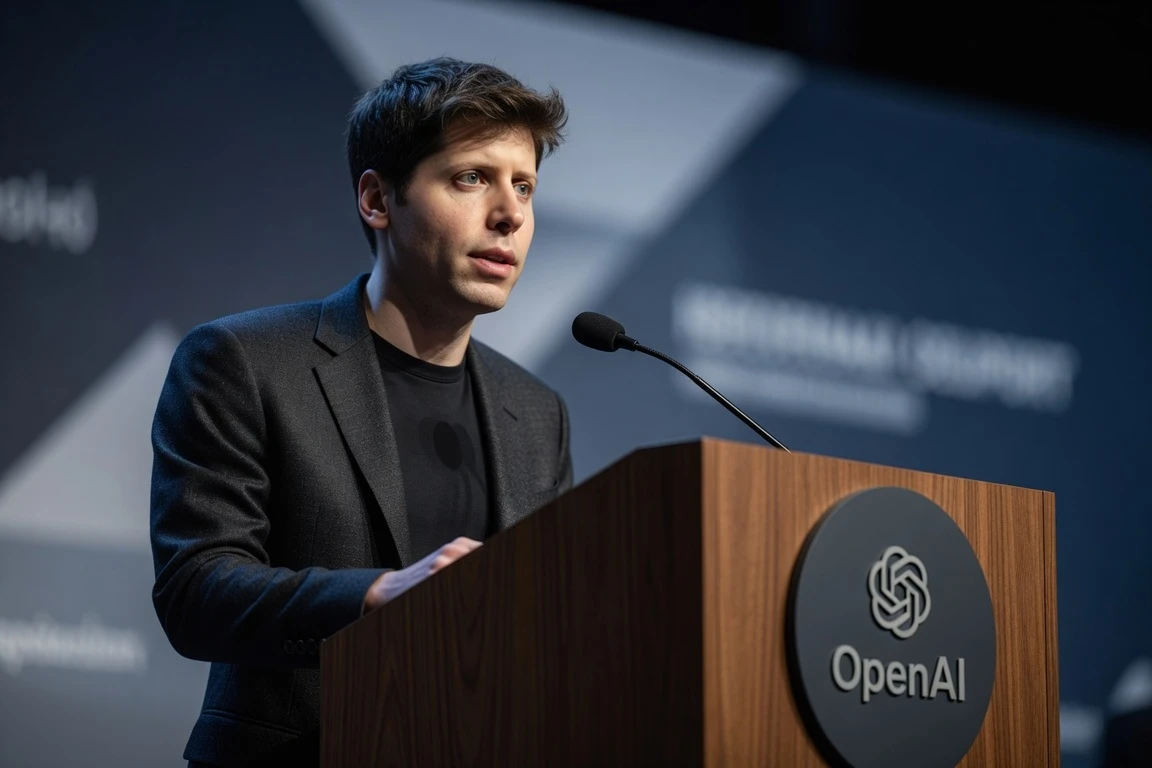
The Engineer Who Cost Google $2.7 Billion
Google paid a reported $2.7 billion in August 2024 to bring Noam Shazeer back, a deal structured largely around reacquiring the co-founder of Character.AI. Less than two years later, Shazeer has left again, this time for OpenAI. Google acknowledged the departure in a one-line statement, thanking him for his “meaningful contributions.” Shazeer posted on X that the move was “a difficult decision” and that he was “incredibly proud” of the team he was leaving. The timing of his departure was not immediately clear.
Shazeer is one of eight co-authors of the 2017 paper that introduced the Transformer, the Transformer architecture that sits underneath ChatGPT, Gemini, Claude, and most of what is now called generative AI. He is, by any honest measure, one of the people who built the engine room of the current boom. His career inside Google started in 2000.
His path through Google explains the price tag. He joined the company in 2000 and stayed for more than two decades, then left in 2021 to co-found Character.AI, a chatbot startup that let users talk to AI versions of celebrities and fictional characters. Google brought him back in a deal that licensed Character’s technology and brought its researchers inside. After the return, he became co-lead of the Gemini AI model effort and a Google vice president of engineering. Now he is OpenAI’s problem to keep.
Character.AI is still attached to the move. The startup has settled lawsuits over the safety of minors, and OpenAI itself is fighting wrongful-death and safety suits over ChatGPT. Shazeer’s new employer, in other words, comes with the same kinds of baggage as his old one.
The Hire Most Coverage Is Skipping
The louder hire is Shazeer. The more consequential one may be Dean Ball. Ball will join OpenAI on July 6 to lead a new team called Strategic Futures, reporting to chief strategy officer Jason Kwon. His remit is frontier AI policy and internal governance, not model building.
Ball arrives with a résumé OpenAI did not have on staff. He was a senior policy adviser for AI and emerging technology at the White House Office of Science and Technology Policy, and a main author of the Trump administration’s “AI Action Plan.” He has also been one of the most consistent public critics of the AI industry, including some of the companies now paying him.
That last point is the part OpenAI is leaning into. Kwon’s statement on the hire praised Ball as someone who would “pressure-test” the company’s thinking, a phrase that signals Ball will be paid to disagree in public. Kwon also said Ball had spent time on “risk, governance, frontier policy issues, and what comes next,” which is the policy vocabulary an IPO-bound company needs to speak. Ball framed the move as a chance to shape a new kind of institution. That framing doubles as a working description of the lab he is about to join.
The frontier lab is a new kind of institution under the sun. This is an opportunity to shape that still-nascent institution, and I am thrilled to get to work.
Ball said that in his first interview about the role, with Axios. He will report to Kwon, OpenAI’s chief strategy officer, and will keep a position at the Foundation for American Innovation, a think tank. His brief covers “catastrophic risk, recursive self-improvement, labor market impact, and the relationship between the frontier labs, governments (particularly the U.S. Federal Government), and society.” That is the kind of list a Senate subcommittee would write.
The politics matter because the company is about to ask public investors to back it. OpenAI has navigated Washington more smoothly than rivals have, and the timing is hard to miss: the week before Ball’s move, the Trump administration forced Anthropic to pull its newest models over export rules. That is the same week OpenAI hired the person who helped write the federal AI plan.
The Regulators Are Already Inside the Filing Window
A week after OpenAI’s S-1, a coalition of 42 state attorneys general served the company a subpoena. The subpoena came from the New York attorney general and asked for documents on advertising, user engagement and retention, model sycophancy, consumer data, health data, and treatment of minors and seniors. OpenAI said it would “engage constructively” with the offices. The company did not specify which states are part of the coalition.
Florida moved earlier in the month. Attorney General James Uthmeier of Florida sued OpenAI and CEO Sam Altman, alleging the company “ignored internal and external safety warnings, put children at great risk, and allowed a dangerous product to reach millions of Floridians.” The lawsuit is one of several ChatGPT-related safety cases now working through the courts.
The regulators are not the only pressure on the S-1. The confidential filing kicks off a private review with the SEC, and the public document, when it lands, will have to address all of it: revenue, losses, infrastructure commitments, partnerships, governance. Investors will want the underlying numbers behind ChatGPT’s 900 million weekly active users. State attorneys general will want the documents on minors and seniors. Ball’s Strategic Futures team sits between those audiences, and Kwon’s framing of Ball as a “pressure-test” hire is the first signal of how the company plans to talk to both.
The political weather around AI is moving fast. The Anthropic export fight is the most recent example, and the public version of OpenAI’s S-1 will arrive into a Washington that has already moved against at least one frontier lab. The 42-state subpoena landed faster than a normal regulatory cycle would have predicted. OpenAI’s moves this month have a shape, and the shape is preparation for public scrutiny on multiple fronts at once.
Where the Money Stands in OpenAI’s Filing
The S-1 is confidential, so the public still does not have the financials. What is on the record is the price tag and the scale of the business. OpenAI was valued at $852 billion post-money in late March, and the company has told staff it plans to facilitate another tender offer to ease near-term liquidity pressure. OpenAI’s own announcement on the filing notes that timing has not been decided. OpenAI has raised more than $180 billion in funding, and ChatGPT supports more than 900 million weekly active users, with both numbers landing in the same document when the filing goes public.
The cost side is heavier than the revenue side. The Next Web reports OpenAI spent $34 billion last year alone, a year of heavy infrastructure build-out for compute and model training. A public S-1 will have to show whether that burn rate is shrinking, holding, or widening, and OpenAI’s own token price moves and the Anthropic race will be part of that conversation. The S-1 will also have to show what is locked in: data center leases, training clusters, and the long-tail contracts that decide whether a private cost story becomes a public one.
Key figures the public S-1 will have to defend:
- $852 billion – OpenAI’s post-money valuation in late March 2026, per CNBC
- $180 billion+ – total funding OpenAI has raised
- $34 billion – OpenAI’s spending last year, per The Next Web
- 900 million+ – ChatGPT’s weekly active users, per CNBC
- 42 – state attorneys general now investigating the company, per TechCrunch
The accounting tells a specific story. OpenAI’s first real test as a public company will be whether it can turn the spend into a margin story. The same week produced the policy hire and the technical hire, and the timing says the company sees both as load-bearing for the IPO.
The Shape of the Business OpenAI Is Selling
The S-1 will cover more than ChatGPT. OpenAI’s footprint in 2026 looks different from its footprint in 2022, when ChatGPT launched and turned the company into a household name. The consumer chatbot still leads on awareness, but the business has spread into enterprise software, coding tools, and an AI hardware effort. OpenAI is targeting the second half of 2026 for the debut of a portable, always-on AI companion with cameras and microphones and no display, the device that Ha Thai is now communications lead for. Public investors will see all of those businesses explained in the same document.
The new hires map onto that map. Shazeer strengthens the model research side, Ball builds out the policy function, and Thai handles the hardware story. The chatbot is the front door, not the whole house.
The product stack OpenAI is bringing to public markets:
- Consumer chatbot: ChatGPT, with more than 900 million weekly active users
- Coding assistant: Codex, positioned against Anthropic’s popular Claude Code
- AI hardware: A portable, always-on AI companion with cameras and microphones, no display, targeted for the second half of 2026
- Policy and governance: A new Strategic Futures team led by Dean Ball, reporting to CSO Jason Kwon
Frequently Asked Questions
Has OpenAI confirmed it is going public?
Yes, on June 8, 2026, the company confirmed it had filed a confidential S-1 with the SEC. The filing is the first formal step, but OpenAI also said in the same statement that it had not decided on timing and that “it may be a while” before any listing happens, because some things the company wants to do are easier as a private business.
Who is Noam Shazeer?
Shazeer is one of eight co-authors of the 2017 paper “Attention Is All You Need,” which introduced the Transformer architecture that sits underneath most modern generative AI, including ChatGPT, Gemini, and Claude. He spent more than two decades at Google, left in 2021 to co-found Character.AI, returned to Google in a reported $2.7 billion deal in 2024, and announced on June 17, 2026, that he is leaving for OpenAI.
What is the Strategic Futures team?
It is a new team at OpenAI led by Dean Ball, who will join on July 6 and report to chief strategy officer Jason Kwon. Ball was previously a senior policy adviser for AI and emerging technology at the White House Office of Science and Technology Policy, and a main author of the Trump administration’s “AI Action Plan.” The team’s brief covers catastrophic risk, recursive self-improvement, labor market impact, and the relationship between the frontier labs, governments, and society.
What is OpenAI worth right now?
OpenAI was valued at $852 billion post-money in late March 2026, according to CNBC. The public S-1, when it goes public, will have to defend the gap between that valuation and the company’s revenue and cost story.
What other regulatory pressure is OpenAI facing?
A coalition of 42 state attorneys general served OpenAI a subpoena in mid-June 2026, asking for documents on advertising, user engagement, model behavior, consumer data, and the treatment of minors and seniors. Florida Attorney General James Uthmeier also filed suit against OpenAI and CEO Sam Altman earlier in the month, alleging the company “ignored internal and external safety warnings” and put children at risk.


Redmi Note 17 Battery Wins by Leaving Power Behind

WeChat Moments AI Tools Hide a Bigger Skills Redesign

iOS 27 Beta 5 Locks Six iPhones and a Split Launch

Edge AI Forces Hybrid Data Centers Into a Split Reality

Qi2 25W Magnets Quietly Rewrite Desk and Car Charging

Spotify AI Persona Badges Wall Off Synthetic Discovery

GCCs Build AI Bullet Trains on Incomplete Data Tracks

Coreum Bridge Multisig Signed Off on Its Own 200k XRP Drain

AI Shrinks Solar Inspection Crews While Paying Hybrid Skills Far More

Intel Graphics Driver Fixes Still Fight Windows and OEMs

Fable 5 and Mythos 5 Return as US Lifts Anthropic Export Controls

Oracle Cuts 21,000 Jobs in a Year, Cites AI in 10-K Filing

SpaceX’s Google Deal Turns a Rocket Company Into a Cloud Landlord

CD Projekt Red Co-CEO: Redemption Arc Isn’t Done, Witcher 4 in 2027

XPL Rallies 30% Ahead of Plasma One Card Tier Launch

Google Search Profiles Build a Follow Graph Inside Discover

DGO App Brings Rs 549 Mobile Pass for FIFA World Cup 2026 in Nepal

Moonshot AI Targets $30 Billion in China’s Fastest AI Funding Sprint

Microsoft Xbox Layoffs Start in July as Sharma Slams 3% Margin

Oppo’s ColorOS 17 Eligibility List Leaves A-Series Buyers Behind
-
 AI1 month ago
Fable 5 and Mythos 5 Return as US Lifts Anthropic Export Controls
-
 AI2 months ago
Oracle Cuts 21,000 Jobs in a Year, Cites AI in 10-K Filing
-
 AI2 months ago
SpaceX’s Google Deal Turns a Rocket Company Into a Cloud Landlord
-
 GAMING2 months ago
CD Projekt Red Co-CEO: Redemption Arc Isn’t Done, Witcher 4 in 2027
-
 CRYPTO2 months ago
XPL Rallies 30% Ahead of Plasma One Card Tier Launch
-
 NEWS2 months ago
Google Search Profiles Build a Follow Graph Inside Discover
-
 APPS2 months ago
DGO App Brings Rs 549 Mobile Pass for FIFA World Cup 2026 in Nepal
-
 AI2 months ago
Moonshot AI Targets $30 Billion in China’s Fastest AI Funding Sprint