
GAMING
Philips Evnia M4 Monitors Add a Triple-Mode Preset Between QHD and HD
Philips Evnia launches the M4 gaming monitor with Triple-Mode technology, switching between QHD 275Hz, FHD 360Hz, and HD 540Hz on a single Fast IPS panel.

Philips Evnia has launched its new M4 gaming monitor lineup, putting what the company calls Triple-Mode technology on a single 27-inch Fast IPS panel. The press release, distributed through the Philips Evnia M4 launch press release on July 2, 2026, introduces two SKUs, the 27M4N3500PT and the 27M4N5500PT, both built around the same panel and the same three-preset switching system. Philips Evnia claims the design is the world’s first Triple-Mode Fast IPS gaming monitor, layering three switchable resolution-and-refresh-rate presets on one display. The launch is positioned for the APAC region, where both monitors will go on sale.
The middle preset is the new piece of the puzzle. Philips Evnia’s M4 lineup adds a third option between the top and bottom extremes that dual-mode monitors have offered for years. The top preset, QHD at 2560×1440 with an overclocked 275Hz and HDR enabled, targets immersive AAA gaming where detail matters as much as speed. The middle preset, Full HD at 1920×1080 at 360Hz, sits as a balanced option for everyday play. The bottom preset, HD at 1280×720 with an overclocked 540Hz, is reserved for esports competitors who want ultra-low latency, and toggling between any of the three is a menu action.
A New M4 Lineup Built Around Triple-Mode
Philips Evnia is the gaming-focused monitor line under the Philips brand, and the M4 series is its first family built entirely around a three-preset switching system. The press release frames the launch as a step that gives players three switchable resolution-and-refresh-rate presets tuned for different gaming scenarios. The two SKUs, the 27M4N3500PT and the 27M4N5500PT, share a single 27-inch Fast IPS panel that supports HDR gaming across the three selectable display modes. The release positions triple-mode as a deliberate answer to the limits of dual-mode displays, which for years have forced buyers to commit to either resolution or refresh rate.
“Triple-Mode” here means three preset profiles the user can swap between in the on-screen menu, not three HDR profiles or three color spaces. The headline change is the addition of a middle preset between the top and bottom extremes that dual-mode monitors have offered.
Unlike traditional dual-mode screens, this third preset fills the gap between top-tier graphics and peak esports performance.
That line is from Philips Evnia’s M4 launch announcement, distributed through PR Newswire. The middle preset is the new piece of the M4 puzzle, and it is what the release says sets the M4 apart from earlier dual-mode Fast IPS monitors in Philips Evnia’s own catalog. Both monitors share the panel, the same triple-preset system, and HDR support across the three modes. Where they differ is on stand, ergonomic adjustment, and a rear lighting feature that only the 5500PT carries.
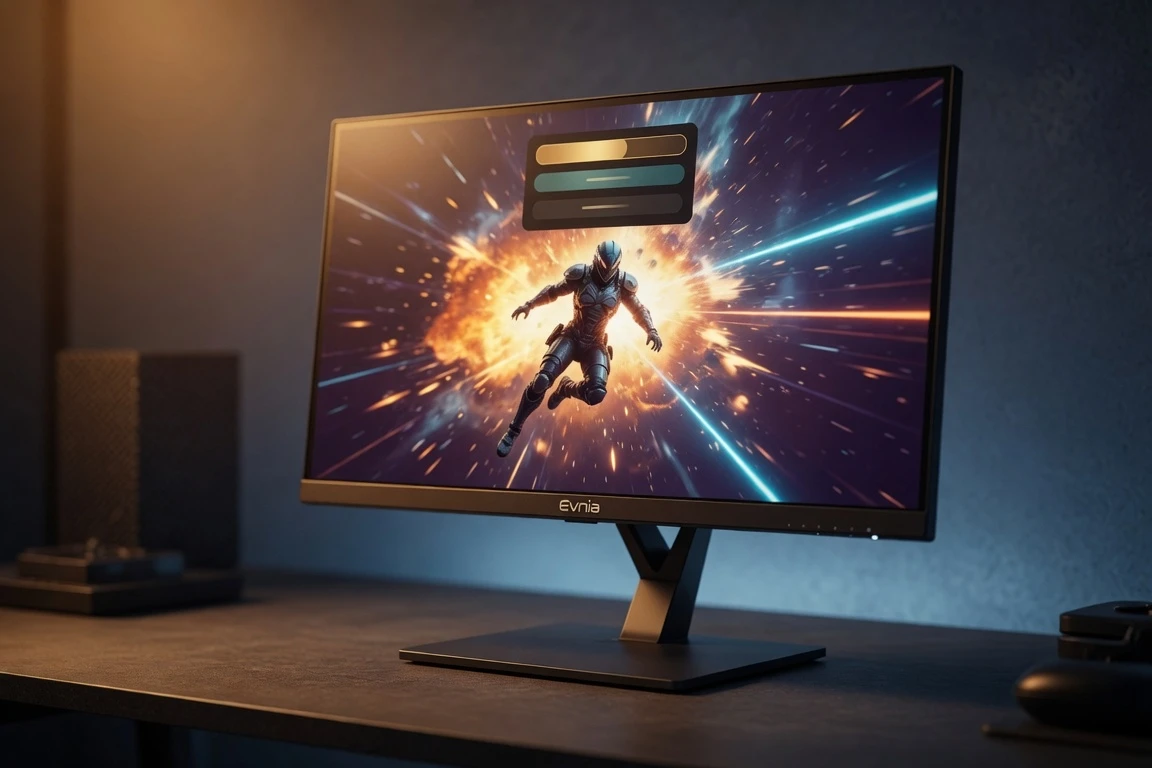
How the Three Presets Compare
Each of the three presets is built for a different play style, and Philips Evnia spells those out in the announcement. The top preset, QHD at 2560×1440 with HDR enabled, targets immersive AAA gaming where detail matters as much as speed. The middle preset, Full HD at 1920×1080, is what Philips Evnia calls the balanced option between picture fidelity and competitive speed. The bottom preset, HD at 1280×720, is reserved for esports competitors who want ultra-low latency and instant in-game response.
| Preset | Resolution | Refresh rate | Position in the lineup |
|---|---|---|---|
| QHD with HDR | 2560×1440 | 275Hz (overclocked) | Top preset for immersive AAA gaming |
| Full HD | 1920×1080 | 360Hz | Middle preset for balanced everyday play |
| HD | 1280×720 | 540Hz (overclocked) | Bottom preset for esports and ranked sessions |
The progression of refresh rates is the point. Going from QHD to FHD to HD does not lose resolution in equal steps, but the refresh rates roughly double from one tier to the next. That makes the middle FHD preset a notable option for players who feel the QHD ceiling is too slow for ranked play but HD resolution looks too soft for everyday use. Both QHD and HD presets are described as overclocked, while the FHD preset is presented as the panel’s stock performance for that resolution.
The toggle is built into the on-screen menu, with no manual settings to adjust between modes. Philips Evnia explicitly frames this as the practical difference between Triple-Mode and earlier dual-mode designs, which require users to commit to either high resolution or peak refresh rate. Both 3500PT and 5500PT users get the same triple-preset behavior, the same HDR support, and the same panel. The Fast IPS panel cuts blue light output at the source, with Low Blue Light and Flicker-Free technology added on top. Anti-glare is rated at Haze 25%.
A Third Preset Built for the Middle
The pitch for a third preset is about what that middle option lets a buyer skip. Players who currently buy a dual-mode monitor for esports typically accept that the second preset is going to be either too sharp for the sake of speed or too soft for the sake of clarity. A balanced FHD preset lands between those two compromises, and it is the kind of preset a buyer could leave the monitor on for months without flipping.
The trade-offs are still real. The top preset with HDR is the only mode that delivers HDR gaming on these monitors, and HDR is not listed for the other two presets in the release. The bottom esports mode also runs at 720p, which is a meaningful resolution drop for anyone who plays story-driven or open-world games outside of competitive titles. The FHD middle preset has neither HDR nor the hyperspeed ceiling of the esports mode, so the question of which preset is “best” depends entirely on which game is on screen.
Philips Evnia frames the design as a middle ground for users who want one panel for AAA games, one panel for everyday competitive play, and one panel for serious ranked sessions, without buying three monitors. For shoppers who already own a dual-mode display, the M4 is effectively asking whether a third preset is worth an upgrade.
The release does not say which preset the monitors default to on first power-up, or whether the chosen preset persists between reboots. It also does not specify a VESA DisplayHDR tier for the top QHD mode, and both omissions matter to buyers who compare spec sheets across brands.
Comfort and Ergonomics for Long Sessions
Marathon gaming is the framing Philips Evnia uses for the comfort features on the new M4 monitors. The Fast IPS panel is described as cutting blue light output at the source, and the monitors add Low Blue Light and Flicker-Free technology on top of that. The combined effect, per the release, is reduced eye fatigue over long sessions without a meaningful compromise in picture quality. For buyers who game for hours at a stretch, that is the bundle of features Philips Evnia is leaning on.
The 27M4N5500PT carries a SmartErgoBase stand, which supports height, tilt, and swivel adjustment, plus a 90-degree vertical pivot. That pivot is the part that makes the 5500PT usable in portrait mode for multi-screen workstation setups alongside a gaming display. The 27M4N3500PT does not list the SmartErgoBase in the release, so buyers who want full ergonomic adjustment are steered toward the higher-tier SKU. Both monitors still ship with VESA mounting support, which the release does not specify by pattern.
The 27M4N5500PT also adds what Philips Evnia calls an EVNIA AI gaming iconglow light, a rear-facing lighting feature unique to that model. The base of the 5500PT adopts a minimalist geometric cut design, framed in the release as part of the monitor’s futuristic visual flair. None of these design touches affect the panel or the triple-preset system, and they are not duplicated on the 3500PT, so they are the visible differentiators between the two SKUs at a glance. For shoppers who care only about the panel, both monitors are functionally identical on the spec sheet as printed.
The Specs Beyond the Three Modes
Outside the triple-preset system, the M4 monitors carry a familiar set of gaming monitor features. Peak brightness is rated at 350 nits, which is modest by today’s HDR monitor standards. The panel uses an Anti-Glare treatment rated at Haze 25%, and both monitors offer HDMI 2.1 and DisplayPort 1.4 connectivity. Response time is not specified in the release, and neither is G-Sync or FreeSync support by name. Philips Evnia leans instead on its own AI-enhanced gaming feature set, listed under four named tools.
- Stark shadow boost
- Smart crosshair
- Smart sniper
- Smart MBR sync
Of the four AI tools, stark shadow boost and smart sniper affect on-screen visibility in combat, while smart crosshair overlays a targeting reticle. Smart MBR sync is the motion-blur-reduction tool, the Evnia equivalent of backlight strobing, with sync logic tied to the current refresh rate. The release does not state whether the smart crosshair feature is detectable by anti-cheat software, an open question in any game that bans overlay aids. The naming convention for the AI tools is consistent across the Evnia lineup.
Triple-Mode Lands in a Crowded 2026 Field
Triple-mode is not the only way to add flexibility to a high-refresh monitor in 2026. MSI used COMPUTEX 2026 in Taipei to unveil the MPG OLED 322URDX36, as detailed in MSI’s COMPUTEX 2026 monitor reveal, which it calls the world’s first Triple Mode QD-OLED gaming monitor. MSI’s take is built around a 31.5-inch 5th-Gen QD-OLED panel and switches between 4K at 360Hz, 1440p at 520Hz, and FHD at 680Hz. The two “first” claims sit on different panel technologies, Fast IPS for Philips Evnia and QD-OLED for MSI, so the categories do not collide directly.
The presets do not match one-to-one. MSI’s top end is 4K at 360Hz with an HDR peak brightness of 1500 nits, well above the Philips Evnia’s ceiling. MSI’s middle preset is 1440p at 520Hz, faster than the Philips Evnia middle preset but at a higher native resolution. MSI’s bottom preset is FHD at 680Hz, again a higher ceiling than the Philips Evnia bottom preset. For buyers choosing between the two, the deciding factor is whether QD-OLED contrast and brightness justify the price gap that Philips Evnia’s Fast IPS panels typically carry.
Triple-mode is also a step beyond Philips Evnia’s own earlier dual-mode flagship. The 27M2N5500XD, covered in Philips Evnia’s earlier 1000Hz dual-mode monitor announcement, was a dual-mode Fast IPS monitor that switched between 1440p at 540Hz and 720p at 1000Hz. The M4 keeps the dual-mode idea but trades the 720p 1000Hz ceiling for an HD esports preset and adds a balanced 360Hz FHD option. That trade is what Philips Evnia is selling as the third-preset upgrade.
The category is not standing still. HKC’s AntGamer ANT275PQ Max hits 540Hz at 1440p and 1080Hz at HD on a Fast TN panel, and AOC’s Agon Pro AGP277QKD is a 1000Hz dual-mode display using a panel believed to be shared with the Philips Evnia 27M2N5500XD. Triple-mode is the newest wrinkle in a 2026 monitor market that has spent the year stacking refresh rates.
What Philips Hasn’t Disclosed Yet
The M4 launch leaves several spec-sheet details unstated. There is no panel response time, no VESA DisplayHDR tier, no G-Sync or FreeSync certification by name, and no contrast ratio figure in the release. The VESA mount pattern is not specified, and the release does not address the smart crosshair’s compatibility with anti-cheat systems.
Pricing is also not in the press release. For a feature set that includes three resolution presets, HDR on the top tier, and an AI tool suite, the price point will decide whether the M4 sits as a premium flagship or a mid-range flex. Availability is described as the APAC region, with no global rollout schedule in the release. Whether the 27M4N5500PT’s SmartErgoBase and iconglow light carry a price premium over the 27M4N3500PT is also not stated, so for now, Philips Evnia is selling the concept, not the receipt.
Frequently Asked Questions
What is Philips Evnia’s new Triple-Mode gaming monitor?
The Philips Evnia M4 lineup, announced July 2, 2026, is a pair of 27-inch Fast IPS gaming monitors, the 27M4N3500PT and the 27M4N5500PT, that switch between three resolution-and-refresh-rate presets through the on-screen menu. Philips Evnia frames the design as the world’s first Triple-Mode Fast IPS gaming monitor.
What are the three presets and their refresh rates?
The three presets cover a 275Hz QHD option with HDR for AAA games, a 360Hz FHD option for balanced everyday play, and a 540Hz HD option for esports. The exact resolution for each tier matches the announcement, and both the QHD and HD presets are described as overclocked, with FHD 360Hz as the panel’s stock performance for that resolution.
How does Triple-Mode differ from Dual-Mode?
Dual-mode monitors offer two presets, typically one for resolution and one for peak refresh. Triple-Mode adds a third preset, in this case a 360Hz Full HD option, that sits between the top and bottom extremes. The M4 is the first in Philips Evnia’s catalog to use a three-preset system, following earlier dual-mode designs like the 27M2N5500XD that switched between only two states.
When and where will the Philips Evnia M4 monitors be available?
The press release confirms an APAC-region launch for the M4 lineup but does not list individual country release dates, retailer availability, or pricing. No global rollout schedule is in the announcement.
How does the Philips Evnia M4 compare to MSI’s triple-mode monitor?
MSI’s MPG OLED 322URDX36, unveiled at COMPUTEX 2026, is a 31.5-inch QD-OLED monitor that switches between 4K at 360Hz, 1440p at 520Hz, and FHD at 680Hz, with a 1500-nit HDR peak brightness. The two products are built on different panel technologies, Fast IPS for Philips Evnia and QD-OLED for MSI, so the choice between them is largely a panel-technology decision.


Anthropic Flips the AI Revenue Race Ahead of Dual IPOs

Bitcoin Holds $63k as WLD and WLFI Quietly Capture Gains

Z.ai GLM-5.3 Edges Mythos 5 on Bug Finding as Open Weights Loom

Alibaba Closes Its Gaming Chapter With $1.5 Billion Lingxi Sale

Robinhood XRP Market Bets 96 Cents on Holding the Dollar Line

ACE Robotics Turns Workers Into Data Engines for Embodied AI

SignPort Fringe Pilot Puts BSL Requests in Deaf Users Hands

Alibaba Sells Lingxi Games for Over $1.5 Billion in AI Pivot

POCO M8x 5G Tip Creates Clear Winners Under Rs 20,000

How One Kind Phone Call Shaped Gordon Lightfoot’s Songs

Fable 5 and Mythos 5 Return as US Lifts Anthropic Export Controls

Oracle Cuts 21,000 Jobs in a Year, Cites AI in 10-K Filing

SpaceX’s Google Deal Turns a Rocket Company Into a Cloud Landlord

CD Projekt Red Co-CEO: Redemption Arc Isn’t Done, Witcher 4 in 2027

XPL Rallies 30% Ahead of Plasma One Card Tier Launch

Google Search Profiles Build a Follow Graph Inside Discover

DGO App Brings Rs 549 Mobile Pass for FIFA World Cup 2026 in Nepal

Moonshot AI Targets $30 Billion in China’s Fastest AI Funding Sprint

Microsoft Xbox Layoffs Start in July as Sharma Slams 3% Margin

Oppo’s ColorOS 17 Eligibility List Leaves A-Series Buyers Behind
-
 AI2 months ago
Fable 5 and Mythos 5 Return as US Lifts Anthropic Export Controls
-
 AI2 months ago
Oracle Cuts 21,000 Jobs in a Year, Cites AI in 10-K Filing
-
 AI2 months ago
SpaceX’s Google Deal Turns a Rocket Company Into a Cloud Landlord
-
 GAMING2 months ago
CD Projekt Red Co-CEO: Redemption Arc Isn’t Done, Witcher 4 in 2027
-
 CRYPTO2 months ago
XPL Rallies 30% Ahead of Plasma One Card Tier Launch
-
 NEWS2 months ago
Google Search Profiles Build a Follow Graph Inside Discover
-
 APPS2 months ago
DGO App Brings Rs 549 Mobile Pass for FIFA World Cup 2026 in Nepal
-
 AI2 months ago
Moonshot AI Targets $30 Billion in China’s Fastest AI Funding Sprint