
AI
University of Tennessee Foundation Sues Anthropic Over AI Patents
A University of Tennessee patent arm that once sued Amazon, IBM and Microsoft now accuses Anthropic’s Claude Code of the same kind of infringement.

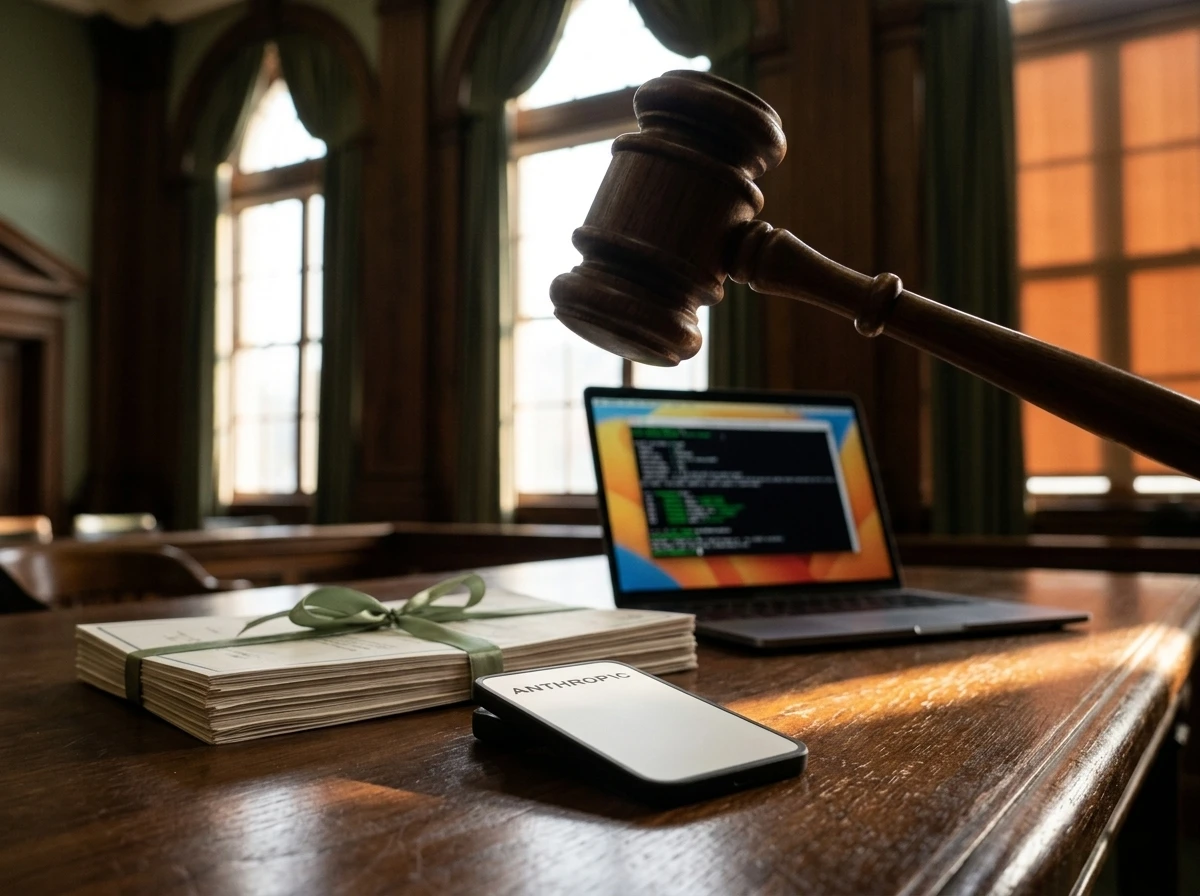
A nonprofit that manages the University of Tennessee’s patent portfolio sued Anthropic in Delaware federal court this week, arguing that Claude Code runs on neural network techniques the school never licensed. The case is the first patent infringement lawsuit Anthropic has faced, and it landed one day after a California judge approved the company’s $1.5 billion settlement with a group of authors.
This is not new territory for the plaintiff. Nine years ago, the same foundation filed a coordinated campaign against nine of enterprise software’s biggest names, and that older fight explains more about what Anthropic is walking into than the complaint filed this week does on its own.
Inside the Patent Claims Against Claude Code
The complaint accuses Anthropic of infringing US Patent Nos. 10,019,470 and 10,095,718, both covering improvements to artificial intelligence systems developed by University of Tennessee researchers. The University of Tennessee Research Foundation, known as UTRF, filed the case Monday in the US District Court for the District of Delaware, and it became public Tuesday.
The filing does not go after Claude broadly. It names Claude Code specifically, along with its underlying agentic software architecture. UTRF says the product implements patented methods for building neuromorphic networks, including a background execution scheduling system and a memory consolidation engine tied to the ‘470 patent.
That description lines up with a feature Anthropic calls AutoDream, which has run inside Claude Code since March. A preprint posted to arXiv on brain-inspired AI memory architectures points to AutoDream’s four-phase cycle, merging, deduplicating, pruning stale entries and rebuilding its index, as a working example of the sleep-consolidation idea researchers have chased for years. Anthropic has kept expanding Claude Code all year, most recently adding its own in-app browser, even as the new complaint takes aim at the agentic architecture underneath the whole product line.
A Legal Bill That Just Crossed $1.5 Billion
Both events landed the same Monday, in courts three hours apart. A federal judge in California approved Anthropic’s $1.5 billion settlement of a class action brought by a group of authors over its use of their work to train AI models. The Tennessee foundation filed its patent complaint in Delaware that same day.
UTRF’s complaint draws a direct line between the two cases.
Anthropic’s cavalier approach to others’ intellectual property rights in the development of its products extends beyond the use of copyrighted material.
UTRF wrote that line into its filing. Anthropic pushed back through a spokesperson: “We disagree with the allegations and intend to defend this case vigorously.” Neither side offered more when reporters sought comment Tuesday.
Knoxville Has Run This Playbook Before
This is not the first time UTRF has picked a fight with a room full of giant companies at once. In 2017, the foundation teamed with Saint Matthew Research, a California-based firm holding an exclusive license to a separate patent family, and filed suits across Tennessee’s federal courts against nine companies in a single coordinated push.
Those complaints asserted five patents from a family of seven, all developed by University of Tennessee professors and graduate students, covering database storage and parallel processing. Amazon, Oracle, SAP and Teradata each faced all five patents. Citrix, Cloudera, Hewlett Packard Enterprise, IBM and Microsoft each faced a smaller subset.
- Amazon: accused over its cloud data warehousing platform
- Oracle and SAP: named alongside Amazon in the broadest set of claims
- Teradata: also hit with all five asserted patents
- Citrix, Cloudera, HPE, IBM and Microsoft: each named on a narrower subset of the patent family
The origin story behind those patents traces back to forensic science, not enterprise software. University of Tennessee professor J. Douglas Birdwell and his colleagues spent the late 1990s building faster ways to search massive DNA profile databases. The 2017 complaints argued those same distributed-query techniques scaled straight into the cloud warehousing and database platforms Amazon, Oracle and the rest were selling two decades later.
Court dockets don’t show how those nine cases ended. Bulk patent campaigns like that one rarely reach a jury; most get resolved through confidential licenses long before trial. A Stanford Law School database tracking litigation tied to university patents lists three of those 2017 filings, against SAP, IBM and Cloudera, flagged under the same university-heritage category the Anthropic case would now join.
Two Campaigns, Nine Years Apart
| Detail | 2017 Campaign | 2026 Anthropic Suit |
|---|---|---|
| Patents at issue | Five patents from a family of seven | Two patents, 10,019,470 and 10,095,718 |
| Technology | Database storage and parallel processing | Neuromorphic and neuroscience-inspired computing |
| Named defendants | Amazon, Oracle, SAP, Teradata, Citrix, Cloudera, HPE, IBM, Microsoft | Anthropic |
| Court | Eastern and Middle Districts of Tennessee | District of Delaware |
| Filing partner | Saint Matthew Research, exclusive licensee | None named in public filings |
The scale looks different this time. Where the 2017 campaign spread across nine defendants and multiple courts, the Anthropic case concentrates everything on one company in one court, the kind of narrow filing patent holders often use to test a claim before deciding whether a wider campaign is worth the legal spend.
The Nonprofit That Collects When Professors Invent
The University of Tennessee Research Foundation is not, technically, the university. Reuters corrected its initial report on the lawsuit to clarify that the plaintiff is a separate nonprofit that licenses the school’s intellectual property, rather than the University of Tennessee itself.
UTRF was chartered in 1934, originally under the name University of Tennessee Research Corporation, to help faculty and staff obtain patents and copyrights and license them to outside companies. It operates as an independent 501(c)(3), and its own intellectual property policy commits to splitting a share of licensing income back to the inventors themselves.
That nonprofit structure sets it apart from firms that exist purely to buy up patents and collect settlements. UTRF’s income funds research back on campus, and professors named as inventors receive a share whenever the foundation licenses a patent or wins a judgment.
What Anthropic Faces in Delaware Now
UTRF’s demands are the standard ask in patent cases: unspecified monetary damages and a court order blocking Anthropic from further use of the patented methods. If a judge grants the injunction, Anthropic could be forced to rebuild parts of Claude Code’s scheduling and memory systems rather than simply pay for past use.
Anthropic has not filed a public response to the complaint yet. The spokesperson’s comment, that the company disagrees with the allegations and will defend the case, is so far the only word from either side beyond the filing itself.
The case adds a new front to a year that already cost Anthropic $1.5 billion in copyright liability. Patent claims and copyright claims are legally distinct, so Monday’s settlement has no bearing on whether the Delaware suit succeeds. UTRF has run this fight before, against a different set of giants, over a different kind of patent, nine years ago.
Frequently Asked Questions
What is Claude Code, and why does the lawsuit focus on it?
Claude Code is Anthropic’s AI coding assistant, released for general use in 2025 and built for developers and enterprise customers who want an AI tool that can explore a codebase and make changes directly in a terminal. The lawsuit names Claude Code specifically because UTRF says its agentic architecture implements the patented scheduling and memory methods, not Claude’s chat products broadly.
Why was the case filed in Delaware instead of Tennessee?
Anthropic PBC is incorporated in Delaware, which gives plaintiffs the option to sue there regardless of where the underlying research or the defendant’s day-to-day operations are based. UTRF’s 2017 campaign, by contrast, was filed in Tennessee’s own federal courts because that is where the university and the foundation are located.
Is neuromorphic computing the same technology behind most AI chatbots?
Not exactly. Neuromorphic computing generally describes hardware and software designed to mimic the brain’s own architecture, things like spiking neurons and synaptic weighting, rather than the transformer-based models that power most large language models today. The patents in this case describe scheduling and memory-consolidation methods inspired by that research, applied to how Claude Code manages background tasks, which is narrower than a claim over transformer architecture itself.
Does Anthropic’s $1.5 billion author settlement affect the patent case?
No. Copyright and patent law protect different things, and one case resolving does not settle or influence the other. The author settlement closed out claims over training data; the patent case is a separate proceeding over engineering methods, and it runs on its own timeline regardless of the copyright outcome.


Redmi Note 17 Battery Wins by Leaving Power Behind

WeChat Moments AI Tools Hide a Bigger Skills Redesign

iOS 27 Beta 5 Locks Six iPhones and a Split Launch

Edge AI Forces Hybrid Data Centers Into a Split Reality

Qi2 25W Magnets Quietly Rewrite Desk and Car Charging

Spotify AI Persona Badges Wall Off Synthetic Discovery

GCCs Build AI Bullet Trains on Incomplete Data Tracks

Coreum Bridge Multisig Signed Off on Its Own 200k XRP Drain

AI Shrinks Solar Inspection Crews While Paying Hybrid Skills Far More

Intel Graphics Driver Fixes Still Fight Windows and OEMs

Fable 5 and Mythos 5 Return as US Lifts Anthropic Export Controls

Oracle Cuts 21,000 Jobs in a Year, Cites AI in 10-K Filing

SpaceX’s Google Deal Turns a Rocket Company Into a Cloud Landlord

CD Projekt Red Co-CEO: Redemption Arc Isn’t Done, Witcher 4 in 2027

XPL Rallies 30% Ahead of Plasma One Card Tier Launch

Google Search Profiles Build a Follow Graph Inside Discover

DGO App Brings Rs 549 Mobile Pass for FIFA World Cup 2026 in Nepal

Moonshot AI Targets $30 Billion in China’s Fastest AI Funding Sprint

Microsoft Xbox Layoffs Start in July as Sharma Slams 3% Margin

Oppo’s ColorOS 17 Eligibility List Leaves A-Series Buyers Behind
-
 AI1 month ago
Fable 5 and Mythos 5 Return as US Lifts Anthropic Export Controls
-
 AI2 months ago
Oracle Cuts 21,000 Jobs in a Year, Cites AI in 10-K Filing
-
 AI2 months ago
SpaceX’s Google Deal Turns a Rocket Company Into a Cloud Landlord
-
 GAMING2 months ago
CD Projekt Red Co-CEO: Redemption Arc Isn’t Done, Witcher 4 in 2027
-
 CRYPTO2 months ago
XPL Rallies 30% Ahead of Plasma One Card Tier Launch
-
 NEWS2 months ago
Google Search Profiles Build a Follow Graph Inside Discover
-
 APPS2 months ago
DGO App Brings Rs 549 Mobile Pass for FIFA World Cup 2026 in Nepal
-
 AI2 months ago
Moonshot AI Targets $30 Billion in China’s Fastest AI Funding Sprint