
NEWS
Nothing Phone 4a Price Hike Hits Buyers as Memory Costs Climb
Tipster flags Nothing Phone 4a variants up ₹3,000 from August 1 in India, the latest in serial hikes driven by AI memory shortages squeezing midrange value.

Tipster Yogesh Brar says the Nothing Phone (4a) will cost ₹3,000 more across every Indian variant from August 1, lifting the 8GB + 128GB model to ₹42,999. That move would mark the latest in a string of increases since the phone’s March launch at ₹31,999.
Nothing has not confirmed the change. Current retail sits at ₹39,999, ₹43,999 and ₹46,999. Buyers who still want the Glyph Bar and clean software have one day left at today’s tags.
The New Tags on Every Variant
Brar’s Yogesh Brar’s July 30 price alert lists the same ₹3,000 step for all three configurations. Sportskeeda and Gadgets 360 carried matching figures the same day.
| Variant | Current Price | Tipped Aug 1 Price | Increase |
|---|---|---|---|
| 8GB + 128GB | ₹39,999 | ₹42,999 | ₹3,000 |
| 8GB + 256GB | ₹43,999 | ₹46,999 | ₹3,000 |
| 12GB + 256GB | ₹46,999 | ₹49,999 | ₹3,000 |
The handset ships in Black, White, Blue and Pink. No new hardware or software arrives with the higher tags.
Uniform steps across memory tiers keep the gaps between variants intact. The 8GB + 128GB model remains the entry point. The 12GB + 256GB stays the ceiling. Shoppers comparing configurations face the same relative spread they saw before the tip, only shifted upward by the full ₹3,000.
Because the change is reported as a flat rupee amount rather than a percentage, every buyer absorbs an identical cash hit. That matters most for the base model, where ₹3,000 is a larger share of the total outlay.
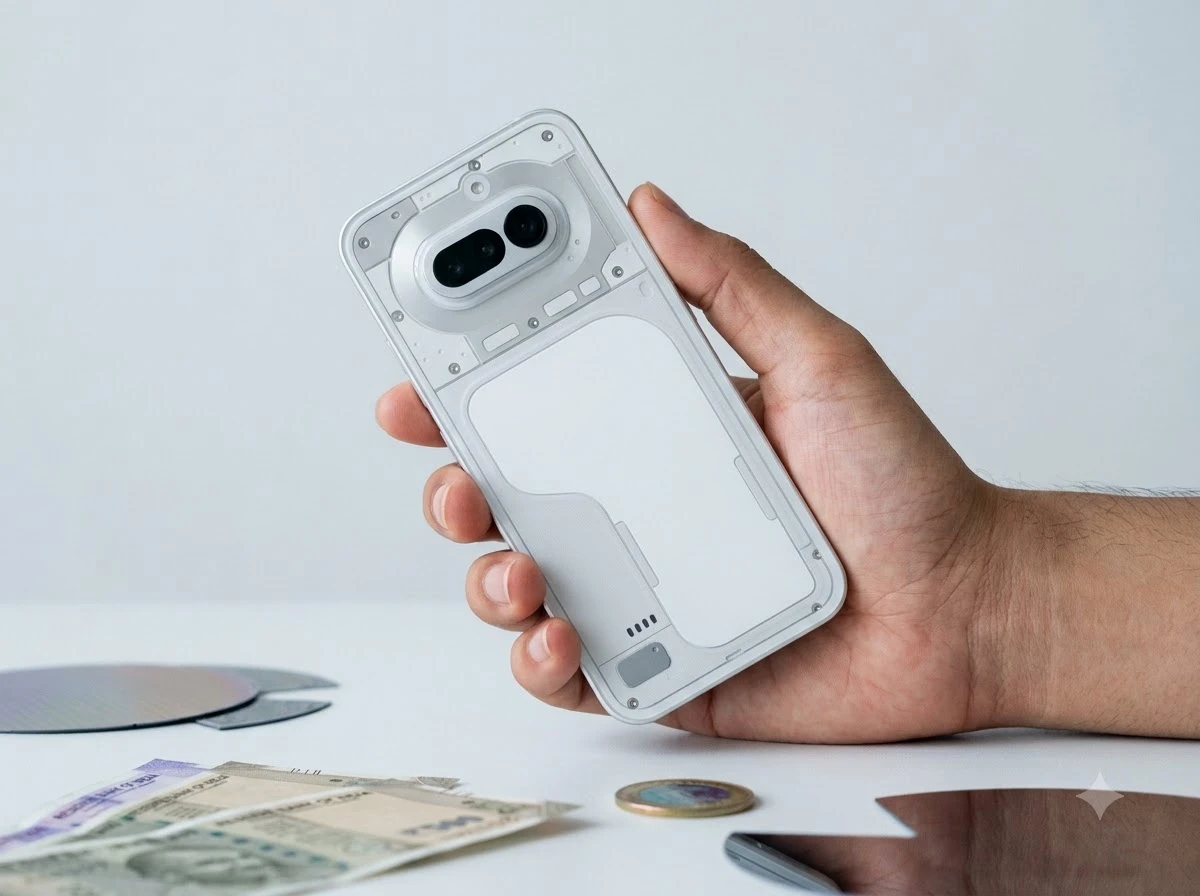
How Far Prices Have Already Climbed
Launch pricing in March put the base model at ₹31,999, the 8GB + 256GB at ₹34,999 and the 12GB + 256GB at ₹37,999. By early June the base had already reached ₹37,999 after two earlier revisions of roughly ₹3,000 each.
- March launch: base ₹31,999
- May-June steps: successive ₹3,000 lifts that took the base past ₹37,999
- Current shelf: ₹39,999 base
- Tipped August: ₹42,999 base, a roughly 34 percent rise from launch
91mobiles reported the June round as the second hike in two months, confirmed to offline retailers. The pattern matches moves at Xiaomi, POCO and Motorola the same period.
Put the full arc side by side and the climb is easier to read at a glance.
| Variant | March Launch | Current Shelf | Tipped Aug 1 |
|---|---|---|---|
| 8GB + 128GB | ₹31,999 | ₹39,999 | ₹42,999 |
| 8GB + 256GB | ₹34,999 | ₹43,999 | ₹46,999 |
| 12GB + 256GB | ₹37,999 | ₹46,999 | ₹49,999 |
Each successive ₹3,000 revision has followed a similar rhythm. The phone left the sub-₹35,000 comfort zone months ago. The tipped August tags would push the entire range into a band that once sat well above the launch ceiling for the top model.
Offline confirmation of the June round suggested the earlier steps were not limited to online flash pricing. Retailers on the ground were already working from the higher cards. That history gives Brar’s latest alert extra weight even without an official statement from Nothing.
Memory Shortages Are the Quiet Driver
The repeated steps track a global squeeze on DRAM and NAND. AI data-center demand for high-bandwidth memory has pulled production capacity at Samsung, SK Hynix and Micron away from the standard chips phones use.
TechCrunch detailed how the AI-driven memory crunch hitting India hardest cut smartphone shipments 10 percent year-over-year in the April-June quarter, the steepest June-quarter drop in six years. The sub-₹15,000 segment fell 45 percent. IDC’s Kiranjeet Kaur told the outlet shortages and elevated prices look set to last until at least the end of 2027.
Counterpoint data showed SoC shipments down 15 percent in the first half of 2026 as rising memory costs forced manufacturers to cut builds. Qualcomm has already warned customers of double-digit chip price increases on products shipping after September 1. Midrange phones that rely on volume margins absorb those costs first.
Several pressure points now stack on the same devices:
- DRAM and NAND diverted toward high-bandwidth memory for AI servers
- Smartphone shipments already down 10 percent in the April-June quarter
- SoC shipments down 15 percent across the first half of 2026
- Qualcomm double-digit chip increases slated for products after September 1
- IDC guidance that elevated prices run at least through the end of 2027
When memory suppliers prioritize data-center contracts, phone makers face longer lead times and higher quotes on the very chips that define storage tiers and RAM configurations. A brand that refreshes pricing in ₹3,000 steps is simply passing through a cost curve it cannot smooth out alone.
The September 1 Qualcomm warning adds a second wave on top of the memory problem. Phones that ship after that date carry both elevated memory bills and higher silicon quotes. The Phone (4a) price tip lands just ahead of that calendar mark, which helps explain why the adjustment is arriving now rather than later in the year.
What Still Sets the Phone 4a Apart
The hardware itself has not changed. A 6.78-inch LTPS flexible AMOLED runs at up to 120Hz with 4,500 nits peak brightness and Gorilla Glass 7i. Inside sits the Snapdragon 7s Gen 4, up to 12GB LPDDR4x RAM and 256GB UFS 3.1 storage. Nothing OS 4.1 based on Android 16 brings three years of OS upgrades and six years of security patches.
The camera stack remains a standout for the segment:
- 50MP Samsung GN9 main with OIS
- 50MP Samsung JN5 periscope telephoto with OIS and up to 70x Ultra Zoom
- 8MP ultrawide
- 32MP front camera
Battery is 5,400mAh with 50W wired charging. The Glyph Bar lighting system and transparent design continue to mark it out from plain black slabs.
Nothing’s own product page lays out the official Phone (4a) camera and Glyph details without listing India rupee prices; shoppers are pointed to Flipkart and other retailers.
That combination still reads as distinctive inside its band. The periscope telephoto with OIS is uncommon at these prices. The six-year security promise outlasts many rivals that stop earlier. The Glyph Bar and transparent rear remain the visual signature no spec sheet from a volume brand fully copies.
None of those traits gain new capability when the tags rise. The same screen, chipset, cameras and software support simply cost more on August 1 if the tip holds. Buyers weighing the phone are therefore comparing an unchanged feature set against a moving price floor.
Value Equation Shifts in a Crowded Band
At the new ₹42,999-₹49,999 window the Phone 4a sits closer to stronger performers. Sportskeeda noted that spending a couple of thousand more can reach phones with newer chipsets and faster storage. OnePlus Nord and similar midrangers now look more competitive on pure specs-per-rupee.
Nothing’s design and software still pull buyers who want something distinct. Community threads from earlier hikes already showed middle-class buyers rethinking once the phone left the sub-₹35,000 comfort zone. The same voices reappear after every revision.
What a far cry from March when everyone was busy praising the launch prices & claiming that Chinese brands are looting us in the name of price hikes. And now Nothing has some of the most significant hikes in the industry LOL.
That reply to Brar’s post, from reviewer Aryan Gupta, captured the mood. Gupta has also pointed out that Nothing remains a small-share player in India and therefore feels memory cost pressure sooner than volume Chinese brands. Replies elsewhere simply asked who is still buying at the new levels when older Nothing models linger near ₹40,000.
The sub-₹35,000 exit was the first psychological break. The tipped move past ₹42,999 for the base model is the second. Each step narrows the gap to phones that already offered newer silicon or faster storage for only a small premium. Specs-per-rupee comparisons that once favored the Phone (4a) at launch now run closer to even, or tilt the other way.
Design-led buyers still have a clear reason to stay. Shoppers who treat the phone as a pure hardware transaction have more alternatives inside the same cash band than they did in March.
Smaller Brands Feel the Squeeze First
Volume leaders can sometimes absorb or stage increases more gently. Smaller or design-led brands like Nothing have less room. The Phone (4a) series already saw its Pro sibling climb even faster in earlier rounds, with some variants jumping ₹5,000 at a time. Parallel pressure appears in the Nothing Phone 4b versus 4a pricing gap, where the more affordable sibling tries to hold a lower rung while costs keep rising.
The same memory shortage has already forced adjustments higher up the market. Apple’s India pricing has faced its own set of pressures from the identical component squeeze, as covered in earlier reporting on iPhone price pressures from the same memory shortage. Premium buyers can often finance their way through; midrange shoppers delay or drop down.
A ₹5,000 jump on a Pro variant lands harder in absolute terms, yet the ₹3,000 steps on the standard 4a still compound. Three or four such revisions erase the launch advantage that first drew attention in March. The 4b’s attempt to hold a lower rung shows the brand is trying to keep an on-ramp open, even as the 4a itself drifts upward.
Smaller share means less leverage with component suppliers and less ability to average costs across huge monthly volumes. Gupta’s observation on that point tracks the pricing pattern: Nothing moves sooner and, in the Pro’s case, sometimes steeper than the volume Chinese names that can stage or soften the same underlying bill.
How The Software Promise Holds Up
Nothing OS 4.1 based on Android 16 still carries three years of OS upgrades and six years of security patches. That schedule now overlaps the same window IDC flagged for elevated memory prices, which runs at least through the end of 2027.
A buyer who pays the tipped August price is therefore locking in long support during a period when replacement handsets may themselves stay expensive. The six-year security runway reaches well past the shortage horizon Kaur described. For someone who keeps a phone longer to avoid another purchase under high component costs, that commitment gains practical weight.
The three-year OS track is shorter, yet it still covers the stretch when DRAM and NAND pricing is expected to stay elevated. Clean software was already part of the Phone (4a) pitch at ₹31,999. At ₹42,999 and above, the same promise has to carry more of the value case because the hardware lead on pure specs has narrowed.
Older Nothing models lingering near ₹40,000 complicate the picture. Those devices may offer shorter remaining support, but they undercut the fresh 4a on cash outlay. Shoppers who care most about years left on the update clock still have a reason to prefer the newer handset. Shoppers who care most about the sticker lean toward whatever still sits near the older price cards.
What The Broader Market Shift Means
The 10 percent shipment drop in the April-June quarter and the 45 percent fall in the sub-₹15,000 segment show demand buckling first at the bottom. Midrange devices such as the Phone (4a) sit one tier above that collapse, yet they are not insulated. When entry-level buyers drop out or delay, the whole pricing ladder feels the strain.
Qualcomm’s double-digit increases on chips shipping after September 1 will hit the next production wave. Brands that raise prices in July and August are clearing room before that second cost layer arrives. The Phone (4a) tip fits that sequence even if Nothing has not said so publicly.
Xiaomi, POCO and Motorola moved in the same period, which signals a sector-wide pass-through rather than a single-brand decision. Apple’s parallel pressures at the premium end confirm the component squeeze does not respect segment boundaries. The difference is how buyers respond: finance options cushion premium purchases, while midrange shoppers more often wait or step down a tier.
Against that backdrop, a design-led midranger with a flat ₹3,000 step on every variant is following the only path left when memory and silicon both trend higher. The Glyph Bar and transparent design still differentiate the product. They do not shield it from the cost curve that has already rewritten its March value story.
One Clear Window Remains Open
Nothing has stayed silent on the latest tip. Retail listings still show the pre-August figures as of July 31. Anyone locked on the Glyph Bar, the periscope zoom or the long software promise can still lock today’s price with a same-day order.
After August 1 the phone enters a tougher ₹43,000-plus neighborhood where performance rivals multiply. The design language and clean OS keep their fans. The broader cost wave, however, shows no sign of easing before late 2027. Serial ₹3,000 steps have already rewritten the value story that greeted the Phone (4a) in March. The next bill may land sooner than the last.


Scale AI Names Google Cloud Veteran deSouza CEO for Enterprise Push

Epic Store Hits Brazilian iPhones Amid Apple’s Familiar Friction Play

LORDNINE Helena Server Races Players Toward Real USDT Rewards

Perplexity Numbat Makes Coding Agents Auditable Endpoints

Gemini Setup Assistant Turns Android Onboarding Into a Live Funnel

Huawei’s Active Cooling Plan Could Quietly Reset Mid-Range Phones

Pixel 11 Pro Fold Thins Out While Rivals Go Wider and Lighter

Hanwha Life Turns IOI Gold into Its AI Talent Pipeline

Zuckerberg Rails at AI Centralization While Meta Sells Closed Models

Nothing Phone 4a Price Hike Hits Buyers as Memory Costs Climb

Fable 5 and Mythos 5 Return as US Lifts Anthropic Export Controls

SpaceX’s Google Deal Turns a Rocket Company Into a Cloud Landlord

Oracle Cuts 21,000 Jobs in a Year, Cites AI in 10-K Filing

CD Projekt Red Co-CEO: Redemption Arc Isn’t Done, Witcher 4 in 2027

XPL Rallies 30% Ahead of Plasma One Card Tier Launch

DGO App Brings Rs 549 Mobile Pass for FIFA World Cup 2026 in Nepal

Google Search Profiles Build a Follow Graph Inside Discover

Moonshot AI Targets $30 Billion in China’s Fastest AI Funding Sprint

Microsoft Xbox Layoffs Start in July as Sharma Slams 3% Margin

Oppo’s ColorOS 17 Eligibility List Leaves A-Series Buyers Behind
-
 AI1 month ago
Fable 5 and Mythos 5 Return as US Lifts Anthropic Export Controls
-
 AI2 months ago
SpaceX’s Google Deal Turns a Rocket Company Into a Cloud Landlord
-
 AI1 month ago
Oracle Cuts 21,000 Jobs in a Year, Cites AI in 10-K Filing
-
 GAMING1 month ago
CD Projekt Red Co-CEO: Redemption Arc Isn’t Done, Witcher 4 in 2027
-
 CRYPTO2 months ago
XPL Rallies 30% Ahead of Plasma One Card Tier Launch
-
 APPS2 months ago
DGO App Brings Rs 549 Mobile Pass for FIFA World Cup 2026 in Nepal
-
 NEWS2 months ago
Google Search Profiles Build a Follow Graph Inside Discover
-
 AI2 months ago
Moonshot AI Targets $30 Billion in China’s Fastest AI Funding Sprint