
AI
Workday’s AI Screening Case Survives a Federal Retreat
A California judge kept Workday’s AI screening case alive in June 2026, even as the White House moved to kill disparate-impact enforcement.

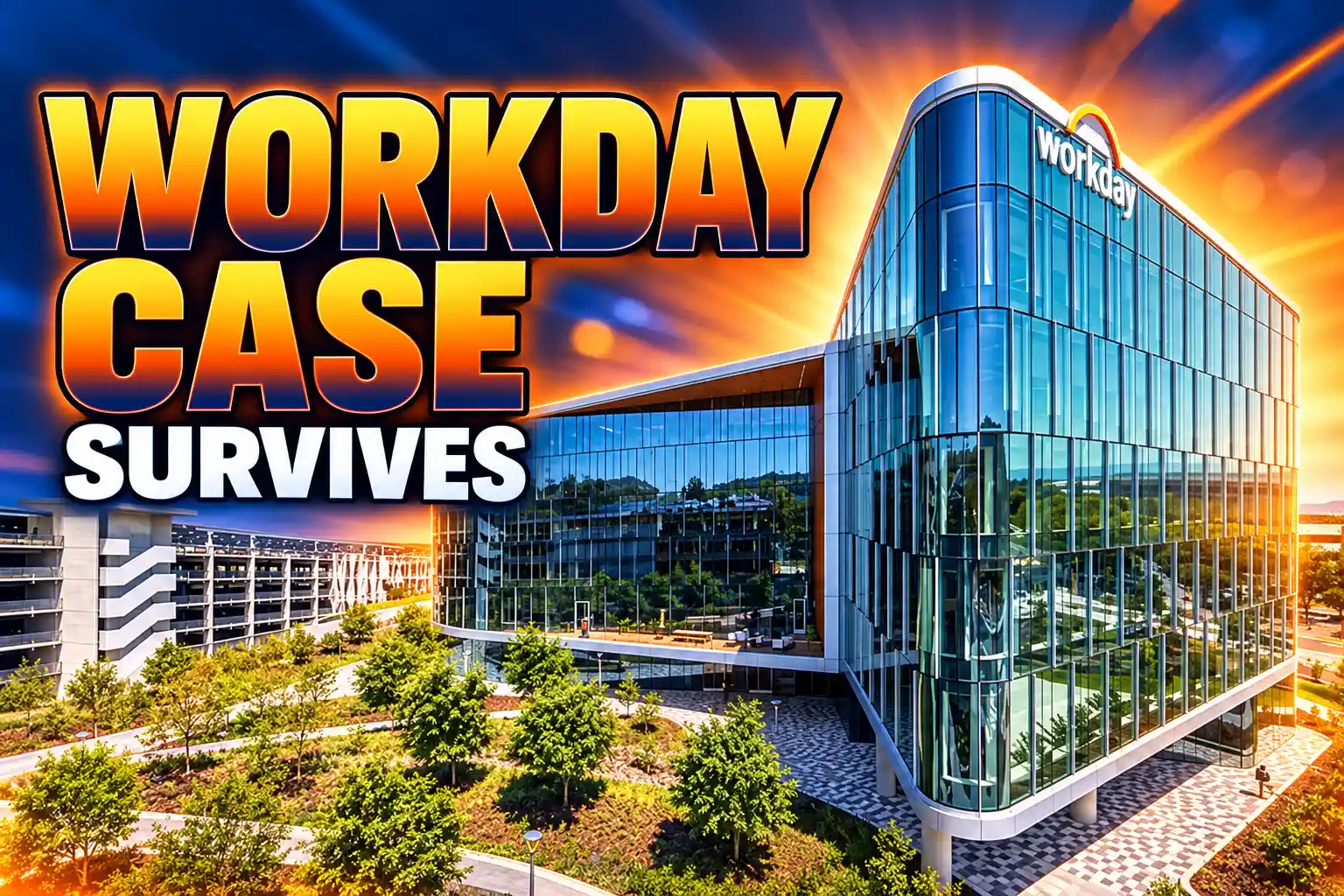
A San Francisco federal judge on June 22, 2026 kept alive most of a class case that treats Workday as more than a software vendor. Derek Mobley and three other applicants say the company’s AI screening tools shut them out of jobs over age, race, disability, and sex.
Workday says the claims are false and that its customers hire people, not its models. The same month, federal agencies were already walking away from the legal theory this case still uses.
A California Judge Kept the Workday Case Alive
Mobley v. Workday, case 3:23-cv-00770 in the Northern District of California, began in 2023. Lead plaintiff Derek Mobley is Black, 40 and over, and has anxiety and depression. He says he applied for more than 100 jobs through Workday’s platform and was rejected before a person reviewed him.
Judge Rita F. Lin has now ruled on several amended complaints. The third amended complaint, filed March 27, 2026, added Jill Hughes, Sheilah Johnson-Rocha, and FaithLinh Rowe and tried to widen the case under California’s Fair Employment and Housing Act. On June 22, 2026, Lin denied in part Workday’s motion to dismiss that complaint. A follow-up order on July 1, 2026, locked in which lines stayed in the pleading.
The surviving theories still have to be proved. Lin did not find that the software discriminates. She found that enough is pled for the case to go on, including a California-law claim that reaches applicants outside the state because Workday designs and runs the tools from its Pleasanton headquarters at 6110 Stoneridge Mall Road.
CLAIMS THAT SURVIVED THE JUNE ORDER
| Claim | June 22, 2026 result | Why it mattered |
|---|---|---|
| California FEHA bias claims | Proceed | Lin found a nexus to California because the tools are built and run there |
| ADA disability (proxy screens) | Proceed | Plaintiffs say gaps tied to medical leave can stand in for disability |
| ADEA age, 40 and over | Proceed | A collective of applicants 40 and over dates from September 24, 2020 |
| Rowe’s added race disparate-impact claim | Dismissed | The court said it was not properly added |
| Workday as employer in its own hiring | Dismissed | Lin rejected that direct-employer theory |
The age track is the widest door. Lin had already let a collective proceed for people 40 and over who used Workday’s job platform from September 24, 2020, and were denied an employment recommendation after AI scoring, sorting, ranking, or screening. The opt-in window closed March 7, 2026. No trial date has been set.
The 2.2 Million Requisitions Workday Admitted
Workday is not a niche plugin. In its August 2, 2024 answer, the company admitted its software processed 2.2 million job requisition transactions in May 2023, nearly 22% of all U.S. job openings that month. That volume is why a vendor case can touch so many applicants at once.
WORKDAY’S OWN NUMBERS IN THE FILE
- May 2023 volume: 2.2 million job requisition transactions on Workday software.
- Share of openings: Nearly 22% of U.S. job openings that month, per the company’s answer.
- Headquarters: 6110 Stoneridge Mall Road, Pleasanton, California, which Lin used as the hook for state law.
- Named plaintiffs: Four, led by Derek Mobley, with claims that still include age and disability.
Plaintiffs also say HiredScore, an AI recruiting product, became an internal Workday unit on April 29, 2024, and that Mobley later applied through customers that used it. Workday has argued HiredScore sat on a separate platform. Lin has already said the collective includes applicants scored with HiredScore features.
The third amended complaint goes further. It says Workday commissioned bias audits covering 724,352 applicants at ten of its largest customers through September 2024, and that those results showed a statistically significant disparate impact on African American applicants. That figure is an allegation in the pleading, not a finding by the court, and Workday denies that its products discriminate.
Washington Dropped the Enforcement Theory
Disparate impact is the idea that a neutral rule can still break the law if it screens out a protected group and is not job-related. For years, that was how agencies talked about hiring software. Then the federal posture flipped.
In January and February 2025, the Equal Employment Opportunity Commission pulled its technical pages on AI under Title VII and the Americans with Disabilities Act. On April 23, 2025, Executive Order 14281 told agencies to deprioritize statutes that rest on disparate impact, including Title VII. The order states a clear policy: eliminate disparate-impact liability in all contexts to the maximum degree possible.
It is the policy of the United States to eliminate the use of disparate-impact liability in all contexts to the maximum degree possible to avoid violating the Constitution, Federal civil rights laws, and basic American ideals.
Executive Order 14281, White House, April 23, 2025
On June 9, 2026, the Justice Department’s Office of Legal Counsel issued a memo, requested by EEOC Chair Andrea Lucas, finding the commission’s Title VII disparate-impact guidelines unconstitutional. The memo does not rewrite the ADEA, and it does not erase private lawsuits. It does tell federal agencies to stop treating unequal outcomes as enough.
That split is the live tension. Lin is letting a vendor-liability case proceed on impact-style claims, including age and California law, while the White House and the EEOC have stepped off the same theory. Private plaintiffs and state statutes now carry work that the federal civil-rights agencies have put down.
What the GPT-4 Hiring Drill Showed
The Workday file is about production screening software. A separate 2025 study shows how general-purpose models behave when asked to act like recruiters. Muneera Bano of CSIRO’s Data61, with Hashini Gunatilake and Rashina Hoda at Monash University, tested OpenAI’s GPT-4 (since retired) and Microsoft Copilot in a mock software-engineering search. The paper ran in the Software Engineering in Society track at ICSE 2025.
HOW THE RECRUITMENT DRILL WAS BUILT
- The pool: Each model produced 150 synthetic profiles (100 gender-based and 50 gender-neutral), for 300 profiles in total.
- The jobs: Four roles, from junior software engineer through lead software engineer.
- The ask: Each model picked a top five, then a single best candidate, and generated images of the top five.
- The pattern: Both models preferred male and Caucasian profiles, especially for senior roles, and drew younger, slimmer, lighter-skinned engineers.
Those outputs did not come from a Workday production model. They came from systems already sitting in writing tools, copilots, and help-desk flows that staff now use to summarize résumés. If a recruiter pastes a shortlist into a chatbot, the same associations can reenter a process the vendor swore was human-supervised.
Civil rights lawyer Ben Crump, writing after the June 22, 2026 order, put the legal point in one line: “An algorithm does not erase accountability.” The research point is narrower. A model that never sees a race or age field can still learn who “looks like” a lead engineer from text and pictures, then repeat it at scale.
Incident Files Point Back to Design Choices
Bano is also a co-author, with Rifat Ara Shams and Didar Zowghi at CSIRO’s Data61, of a Journal of Artificial Intelligence Research paper published June 25, 2025. The team hand-sorted incidents from two public stores of harm reports, including the AI Incident Database of reported harms and the AIAAIC repository. They built a decision tree to flag diversity and inclusion issues and published a public set of those cases.
The paper found that almost half of analyzed incidents related to diversity and inclusion, with racial, gender, and age discrimination the most common. The authors traced harms to non-diverse training data and to design, build, and rollout choices that skipped inclusion rules. That is a record of reported incidents, not a census of every model, and reporting itself is uneven. Even so, age sits beside race and gender in the pile, which matches the ADEA track Lin has kept open.
Technical patches still matter. Rebalancing a dataset or blocking a proxy field can cut one failure mode. They do not decide who sits in the room when a vendor ships a ranking feature, who can see a bias test, or how a customer is told to override a score. Those are procurement and governance choices, and they are the choices now sitting in discovery.
Privilege Now Shields the Bias Tests
On May 29, 2026, Magistrate Judge Laurel Beeler resolved three discovery fights that will shape what a jury can see. Plaintiffs wanted Workday’s bias-testing data and its customers’ applicant files. They got neither in the form they asked for.
WHAT THE MAY DISCOVERY ORDER DID
- Bias tests: Beeler denied a motion to compel Workday’s bias-testing data, finding lawyers had curated it and used it for legal advice, so attorney-client privilege applied.
- Customer files: She denied a demand for customers’ applicant data after plaintiffs failed to show Workday “controlled” those files under Rule 34.
- What did come out: Workday must produce EEO-1 and Office of Federal Contract Compliance Programs documents, which go to whether the company knew about demographic gaps when it used the tools.
That ruling is easy to miss next to the June 22, 2026 headline, and it may matter more for proof. If the only large audit in the complaint is 724,352 applicants at ten customers, and the underlying test files stay with counsel, plaintiffs have to build impact from other records. Workday, for its part, can keep arguing that it never trained on race, age, or disability and that customers keep the last click.
Connor Spielmaker, a Workday spokesperson, said in January 2026 that the claims in the lawsuit were false. “Our products, both AI-enabled and not, are built to help our customers manage an ever-increasing volume of applicants with a focus on human decision-making. Workday’s AI recruiting tools are not trained to use, or even identify, protected characteristics like race, age, or disability,” he said. After the June 22, 2026 order, a company spokesperson repeated that the claims are false, that the tools do not make hiring decisions, and that customers keep full control with human oversight at the core.
Lin has already treated that “we only sell software” line as incomplete. In earlier rounds she allowed an agent theory: if a vendor’s ranking is what the employer sees, the vendor can sit inside federal discrimination law even when it never signs the offer letter. That is still an allegation to try, not a verdict.
Who Pays When a Screening Model Fails
The people who feel a bad rank first are applicants who never hear that a model touched their file. HR operators who build ranking products now treat audits, logged overrides, and plain-language reasons for a rejection as litigation gear, not extras, because a court has said the vendor can wear the statute too. Employers who bought the stack sit in the middle: they still make the hire, and they still own Title VII, the ADEA, and the ADA for their own decisions, even when Washington is not bringing those cases.
California law is doing work the EEOC has set down. FEHA, as Lin applied it, can follow a Pleasanton-built screen to a Texas applicant for a Texas job. Age claims under the ADEA remain on a different statutory track from the Title VII guidance the Justice Department attacked. Disability claims about proxy fields, such as employment gaps, do not need a race-balancing story to survive a motion to dismiss.
The file is still in discovery. Bias-test data is privileged. Customer applicant files are mostly out of reach. Workday denies every discrimination claim. The June 22, 2026 order did not decide whether anyone was screened out because of age, race, or disability. It decided that a vendor of hiring AI can be made to answer those questions in court, in a year when federal agencies have been told not to ask them in the old way.
Disclaimer: This article is news reporting and analysis of a live civil case and related public research. It is informational only and is not legal advice, is not a prediction of how Mobley v. Workday will end, and is not a finding that any product unlawfully discriminates. Readers who are applicants, employers, or vendors should consult a qualified employment lawyer in the relevant jurisdiction before changing hiring tools, filing a claim, or relying on any statute discussed here. Figures, docket events, and agency policies reflect the public sources cited and can change as the court issues further orders.

Twelve South’s $40 Cube Fills the Wired CarPlay Gap

The Yemen Cell Kept Claude’s Flight Code After the Ban

Unofficial AI Pages Beat Marshall County’s Sheriff to Every Scare

The SEC Crypto Rule Leaves Exchanges Still Exposed

Brian Bengs Bets His Senate Race on an AI Stop

Fable 5 Came Back Under a Commerce On-Off Switch

Google’s SpaceX GPU Lease Has a Sept. 30 Deadline

Plasma One’s XPL Locks Face a 1.81 Billion Cliff

DGO’s Rs 549 World Cup Pass Cost Fans Sleep and Data

Moonshot AI’s $30 Billion Ask Became a $35 Billion Close
-
 AI3 months ago
Fable 5 Came Back Under a Commerce On-Off Switch
-
 AI4 months ago
Google’s SpaceX GPU Lease Has a Sept. 30 Deadline
-
 CRYPTO4 months ago
Plasma One’s XPL Locks Face a 1.81 Billion Cliff
-
 APPS4 months ago
DGO’s Rs 549 World Cup Pass Cost Fans Sleep and Data
-
 AI4 months ago
Moonshot AI’s $30 Billion Ask Became a $35 Billion Close
-

 NEWS4 months ago
ColorOS 17 Device List Spans Oppo, OnePlus and Realme
-

 GAMING4 months ago
Xbox Cuts 3,200 Jobs After Five Years of Thin Returns
-

 GAMING3 months ago
The RTX 4050 Under Rs 70,000 Hides a Wattage Gap