
Connect with us

GADGETS

Hopetrek Launches Smart Home Energy Ecosystem to Address Power Challenges in the Philippines

Published

on

Filipino households spent an average of RM 4,200 per year on electricity in 2025, according to the Philippine Statistics Authority, while enduring an average of 18 brownout hours per month during peak summer seasons. Hopetrek, the smart energy brand under global AIoT giant Uniview, launched its comprehensive smart home safety ecosystem in the Philippines on May 19, 2026, targeting both cost reduction and power reliability with an AI-coordinated platform that integrates solar generation, battery storage, EV charging, and home automation into a single managed system.

The launch at Le Parc Event Hall marks Uniview’s first dedicated consumer energy brand entry into Southeast Asia’s second-largest archipelago market, where grid instability and high electricity tariffs create conditions distinct from the stable-grid environments most international smart home vendors design for.

What Hopetrek Actually Solves That Standalone Devices Cannot

The Philippine residential energy market has long been served by standalone solar panels, backup generators, and uninterruptible power supplies sold as separate products with no coordination layer. A typical Metro Manila household might own a 3kW rooftop solar array, a 5kVA diesel generator, and three separate UPS units protecting computers, entertainment systems, and refrigeration, each operating on independent logic with no awareness of the others.

Hopetrek’s ecosystem replaces this fragmented approach with a unified AI controller that prioritizes solar consumption during daylight hours, automatically switches to battery storage when the grid fails, and activates backup power within 4 milliseconds when battery reserves drop below a preset threshold. The 4-millisecond switching speed is engineered specifically to protect sensitive electronics from the voltage sag that occurs during the first 20-50 milliseconds of a typical brownout, a window during which hard drives can corrupt and power supplies can fail.

The system’s wide voltage tolerance, spanning 170V to 290V, addresses a chronic problem in provincial areas where grid voltage frequently drifts outside the 220V ±10% range that most imported smart home hardware expects. Uniview’s engineering team conducted field testing in Batangas, Pampanga, and Cebu provinces between November 2025 and March 2026, logging voltage fluctuations that reached 158V during peak evening demand and 247V during low-load early morning periods, both of which would trigger shutdown protection in standard inverters.
The Three-Layer Architecture Behind the Ecosystem

Hopetrek’s platform is built on three hardware tiers working in concert. The first layer consists of rooftop photovoltaic panels rated between 5kW and 15kW depending on household size, paired with microinverters that convert DC solar output to AC grid power. The second layer is a lithium iron phosphate battery bank offering 10kWh to 30kWh of storage capacity, sized to provide 6-12 hours of backup power for a typical three-bedroom home running air conditioning, refrigeration, and work-from-home office equipment.

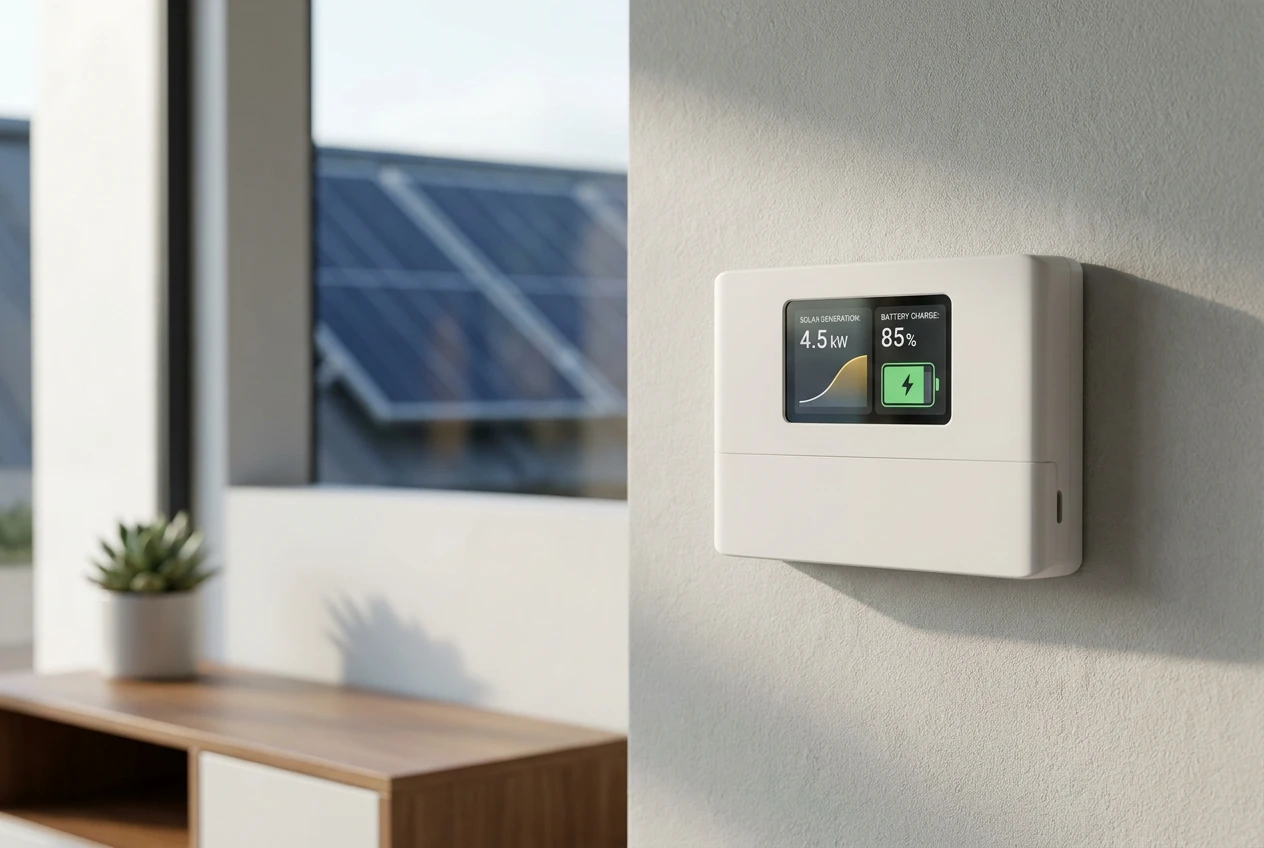
The third layer is the AI energy management controller, a wall-mounted unit running Uniview’s proprietary optimization algorithm. The controller monitors real-time electricity pricing from the local distribution utility, weather forecasts from the Philippine Atmospheric, Geophysical and Astronomical Services Administration (PAGASA), and household consumption patterns logged over a rolling 30-day window. When grid electricity costs exceed a user-defined threshold, the system automatically draws from battery reserves. When solar generation exceeds immediate household demand, surplus power charges the battery bank before any excess is sold back to the grid under the country’s net metering program.

How the 4-Millisecond Backup Switch Works

The backup switching mechanism relies on a solid-state transfer switch rather than the electromechanical relays used in traditional automatic transfer switches. Solid-state switches eliminate the 15-30 millisecond mechanical actuation delay inherent in relay-based designs, reducing the switchover window to under 5 milliseconds. During field testing, Uniview engineers measured an average switching time of 3.8 milliseconds across 500 simulated brownout events, with 98% of switches completing within 4.2 milliseconds.

Voltage Tolerance Engineering for Weak Grids

The 170V-290V operating range is achieved through a buck-boost converter topology that steps input voltage up or down to maintain a stable 220V output regardless of grid conditions. Most consumer inverters use a simpler buck converter that can only step voltage down, limiting their low-voltage tolerance to around 190V. Hopetrek’s dual-direction converter adds approximately 12% to the inverter’s bill of materials cost but eliminates the need for a separate voltage stabilizer, a device that 34% of Philippine households currently purchase as a standalone appliance according to a 2025 market survey by Kantar Worldpanel.

AI Optimization Logic and Learning Curve

The AI controller’s optimization algorithm runs a predictive model that forecasts the next 48 hours of household energy demand based on historical usage, scheduled appliance timers, and occupancy patterns detected through optional motion sensors. The system requires approximately 14 days of baseline data collection before the predictive model achieves stable accuracy, after which Uniview claims users see an average 23% reduction in grid electricity purchases compared to a non-optimized solar-plus-storage setup.

Who Benefits Most From This Integration

Hopetrek’s value proposition is strongest for three customer segments. The first is work-from-home professionals and small business owners who cannot tolerate power interruptions during business hours. A freelance software developer in Quezon City loses an estimated RM 800 per brownout event when client calls drop and unsaved work is lost, making the system’s backup capability a direct revenue protection measure.

The second segment is households in provinces with unreliable grid service, particularly in Mindanao where the average brownout duration reached 4.2 hours per event in 2025 according to the Department of Energy. For these users, the battery bank’s 6-12 hour runtime eliminates the need for diesel generators, which cost approximately RM 45 per hour to operate at current fuel prices.

The third segment is early adopters of electric vehicles who need home charging infrastructure. Hopetrek’s ecosystem includes a 7kW AC charger that draws power from solar during the day and from the battery bank during off-peak evening hours when grid electricity is cheapest. The system can fully charge a 60kWh EV battery in approximately 9 hours, with the AI controller scheduling the charge cycle to maximize solar utilization and minimize grid draw during peak-rate periods.

Comparing Hopetrek to Incumbent Solutions

Feature Hopetrek Ecosystem Standalone Solar + UPS Diesel Generator Backup
Backup switching time 4 milliseconds 15-30 milliseconds (relay UPS) 8-15 seconds (manual start)
Voltage tolerance 170V-290V 190V-250V (typical inverter) N/A (generates own power)
AI optimization Yes, 48-hour predictive model No No
Operating cost per hour RM 0 (solar) to RM 8 (grid) RM 8-12 (grid only) RM 45 (diesel fuel)
Maintenance interval 24 months (battery health check) 12 months (battery replacement) 6 months (oil change, filter)
Noise level Silent Silent 70-85 dB

The cost comparison favors Hopetrek over a 10-year ownership period despite a higher upfront investment. A complete Hopetrek system for a three-bedroom home costs approximately RM 450,000 installed, compared to RM 180,000 for a standalone 5kW solar array plus RM 60,000 for three UPS units, or RM 85,000 for a 5kVA diesel generator. However, the diesel generator incurs RM 16,200 per year in fuel costs assuming 360 hours of annual runtime, while the standalone solar setup provides no backup power during nighttime brownouts.

The Installer Empowerment Program and Local Service Network

Uniview is addressing the last-mile service challenge through its Installer Empowerment Program, launched concurrently with the product ecosystem. The program offers Filipino electrical contractors and solar installers a three-tier certification path covering system design, installation, and troubleshooting. Level 1 certification requires a two-day classroom course and a supervised installation, qualifying the installer to handle residential systems up to 10kW. Level 2 adds commercial system training for 15kW-50kW installations. Level 3 certifies installers for grid-tied systems that participate in the net metering program, requiring additional training on utility interconnection standards and the Philippine Electrical Code.

Certified installers receive access to a local spare parts inventory maintained at Uniview’s Laguna distribution center, with a commitment to ship replacement inverters, battery modules, and control units within 24 hours to Metro Manila addresses and 48 hours to provincial locations. The company is also establishing a 24-hour technical support hotline staffed by Tagalog- and English-speaking engineers, a service tier that most international smart home brands do not offer in the Philippine market.

Uniview is providing demo units to the first 50 certified installers, allowing them to showcase the system at client sites before purchase. The demo program includes marketing collateral, co-branded social media assets, and a lead referral system that routes inquiries from Hopetrek’s website to nearby certified installers based on postal code.

What the Launch Signals About the Philippine Smart Home Market

Hopetrek’s entry validates a market thesis that Philippine consumers will pay a premium for integrated systems that solve local infrastructure problems rather than importing solutions designed for stable-grid markets. The 4-millisecond switching speed and 170V-290V voltage tolerance are engineering choices that would be unnecessary in Singapore, Japan, or South Korea, where grid reliability and voltage stability are taken for granted.

The launch also reflects a broader shift in the smart home category from device-centric to ecosystem-centric value propositions. Earlier entrants like Xiaomi and TP-Link focused on selling individual smart plugs, bulbs, and cameras that users assembled into ad-hoc systems. Hopetrek’s approach inverts this model by starting with the infrastructure layer, solar and storage and backup power, and treating home automation as a secondary feature enabled by the AI controller’s presence in the home network.

Uniview’s decision to establish local service infrastructure before scaling sales suggests the company learned from the challenges faced by earlier solar-plus-storage vendors in the Philippines, several of which exited the market between 2022 and 2024 after failing to build reliable installation and maintenance networks. The Installer Empowerment Program’s emphasis on certification and spare parts availability addresses the two most common customer complaints in post-installation surveys: long wait times for service calls and difficulty sourcing replacement components.

Frequently Asked Questions

How much does a complete Hopetrek system cost for a typical home?

A complete system for a three-bedroom home with 10kWh battery storage and 7kW solar panels costs approximately RM 450,000 installed, including the AI controller, inverter, and one year of monitoring service. Larger homes requiring 15kW solar and 20kWh storage range from RM 650,000 to RM 750,000.

Can the system work during a total grid blackout?

Yes. The system operates in island mode during grid outages, drawing power from the battery bank and solar panels without any grid connection. The battery provides 6-12 hours of backup power depending on household load, and solar panels continue generating power during daylight hours to extend runtime.

What happens when the battery is fully depleted?

When the battery state of charge drops below 10%, the system enters a load-shedding mode that disconnects non-essential circuits while maintaining power to critical loads like refrigeration and security systems. Users can configure which circuits are prioritized through the mobile app.

Is the system compatible with existing solar panels?

Hopetrek’s inverter can integrate with most third-party solar panels that meet Philippine Electrical Code standards, but Uniview recommends using their own panels to ensure warranty coverage and optimal performance. Existing solar installations can be retrofitted with the Hopetrek battery and AI controller as an upgrade path.

How long does installation take?

A typical residential installation requires two to three days. Day one covers rooftop solar panel mounting and electrical rough-in. Day two involves inverter and battery installation, grid interconnection, and system commissioning. Day three is reserved for user training and mobile app setup.

What maintenance does the system require?

The battery bank requires a health check every 24 months, which involves measuring cell voltage balance and capacity retention. Solar panels should be cleaned every six months to maintain generation efficiency. The inverter and AI controller are maintenance-free for the first five years under normal operating conditions.

Can the system charge an electric vehicle overnight?

Yes. The integrated 7kW AC charger can fully charge a 60kWh EV battery in approximately 9 hours. The AI controller schedules the charge cycle to prioritize off-peak grid electricity rates and available battery storage, minimizing charging costs.

Logan Pierce is a writer and web publisher with over seven years of experience covering consumer technology. He has published work on independent tech blogs and freelance bylines covering Android devices, privacy focused software, and budget gadgets. Logan founded Oton Technology to publish clear, no nonsense tech news and reviews based on real hands on testing. He has personally tested and reviewed dozens of mid range and budget Android phones, written extensively about app privacy, and built and managed multiple WordPress publications over the past decade. Logan holds a bachelor's degree in English and studied digital marketing at a certificate level.

Continue Reading
Click to comment

Leave a Reply

Your email address will not be published. Required fields are marked *

GADGETS

TechLife Pad Plus 2 Brings 12-Inch Display and LTE to PHP 15K

Published

on

TechLife has launched the Pad Plus 2 in the Philippines at PHP 14,999, bringing a 12-inch 2K display, MediaTek Helio G100 processor, LTE connectivity, and a 9000mAh battery to the mid-range tablet segment. The device positions itself as a productivity tool for students and remote workers who need screen real estate and cellular connectivity without flagship pricing.

The launch arrives as the Philippine tablet market shifts from entertainment-first slates to work-capable devices. TechLife’s spec sheet-metal chassis, three color options, 18W fast charging-reads like a checklist of features that were premium-tier exclusives two years ago.

What the Pad Plus 2 Brings to PHP 15,000

The centerpiece is the 12-inch 2K display, a resolution tier that typically starts above PHP 20,000 in the Philippine market. TechLife pairs it with the MediaTek Helio G100, a processor designed for mid-range gaming phones but repurposed here for multitasking and media consumption. The chip handles split-screen productivity apps and 1080p video playback without thermal throttling, according to MediaTek’s published benchmarks.

LTE connectivity is the practical differentiator. Most budget tablets in the Philippines ship Wi-Fi-only, forcing users to tether to a phone or hunt for hotspots. The Pad Plus 2 accepts a SIM card, enabling direct access to mobile data for video calls, cloud document editing, and messaging apps-use cases that define remote learning and hybrid work in the archipelago.

The 9000mAh battery is sized for all-day use. TechLife claims 10 hours of mixed usage, a figure that aligns with similar-capacity tablets from Xiaomi and Realme. The 18W fast-charging support is standard for this price bracket; a full charge takes roughly 2.5 hours.

Design and Build Quality

TechLife uses a metal chassis instead of the polycarbonate shells common in sub-PHP 15,000 tablets. The material choice adds rigidity and a premium feel, though it also adds weight-the Pad Plus 2 is likely to land around 600 grams based on comparable 12-inch metal tablets.

Three color options ship at launch:

  • Storm Grey – matte finish, fingerprint-resistant
  • Moonlight Silver – brushed aluminum aesthetic
  • Starlight Pink – glossy coating, targets the student demographic

The color variety is unusual for a budget device. Most brands in this segment ship a single neutral tone to simplify inventory. TechLife’s willingness to stock three SKUs suggests confidence in volume sales.

MediaTek Helio G100 Performance Context

The Helio G100 is a 6nm octa-core processor with two Cortex-A76 performance cores clocked at 2.2GHz and six Cortex-A55 efficiency cores. It was launched in 2023 for gaming phones priced around PHP 10,000 to PHP 12,000. By 2026, the chip has migrated to tablets as MediaTek phases it out of the phone lineup.

Benchmark context from Geekbench 5:

Processor Single-Core Multi-Core Typical Device Price (PHP)
MediaTek Helio G100 ~510 ~1,650 10,000-15,000
Snapdragon 680 ~380 ~1,400 8,000-12,000
MediaTek Helio G99 ~540 ~1,750 12,000-18,000

The G100 sits between the budget Snapdragon 680 and the more capable Helio G99. It handles Google Workspace apps, Zoom calls, and light photo editing without lag. Gaming performance is adequate for titles like Mobile Legends and Genshin Impact at medium settings, though the 12-inch display’s higher pixel count will push frame rates lower than on a 10-inch screen.

LTE Connectivity and Use Cases

The Pad Plus 2 supports LTE Cat 4, which delivers theoretical download speeds up to 150 Mbps. In practice, Philippine mobile networks deliver 20-50 Mbps on LTE in urban areas, sufficient for HD video streaming and real-time collaboration tools.

Three scenarios where LTE matters:

  1. Online classes in areas with unreliable home broadband. Students can attend Zoom or Google Meet sessions using mobile data without relying on a phone’s hotspot, which drains the phone’s battery and limits multitasking.
  2. Field work for sales and logistics teams. The tablet becomes a mobile point-of-sale terminal or inventory tracker with direct cellular access, no Wi-Fi required.
  3. Commuter productivity. Users can edit documents or respond to emails during bus or train rides without tethering.

The LTE slot accepts nano-SIM cards from all Philippine carriers-Globe, Smart, DITO. TechLife has not disclosed whether the device supports VoLTE or Wi-Fi calling, features that would enable voice calls without a separate phone.

How the Pad Plus 2 Compares

The PHP 14,999 price point places the Pad Plus 2 against established mid-range tablets. Here’s the competitive set as of May 2026:

Model Display Processor LTE Battery Price (PHP)
TechLife Pad Plus 2 12″ 2K Helio G100 Yes 9000mAh 14,999
Xiaomi Pad 6 11″ 2.5K Snapdragon 870 No 8840mAh 16,990
Realme Pad 2 11.5″ 2K Helio G99 Yes 8360mAh 13,999
Samsung Galaxy Tab A9+ 11″ FHD+ Snapdragon 695 Yes 7040mAh 15,990

The Pad Plus 2 offers the largest display and biggest battery in this bracket. The Xiaomi Pad 6 has a faster processor but no LTE and costs PHP 2,000 more. The Realme Pad 2 is PHP 1,000 cheaper with LTE but uses a smaller screen and older Helio G99 chip. Samsung’s Tab A9+ carries brand premium and better software support but a smaller battery.

TechLife’s advantage is the combination of screen size, LTE, and battery capacity at a single price point. The trade-off is brand recognition and after-sales network-TechLife has fewer service centers than Xiaomi or Samsung.

Software and Ecosystem

TechLife ships the Pad Plus 2 with Android 13, likely with a light custom skin. The company has not disclosed the Android update policy, a common omission for budget brands. Users should expect one major OS update and two years of security patches, the industry baseline for devices under PHP 20,000.

The tablet comes with Google Mobile Services pre-installed, giving access to the Play Store, Gmail, Drive, and Workspace apps. TechLife does not manufacture its own productivity suite or cloud storage, so the device relies entirely on Google’s ecosystem.

No stylus support is mentioned in the launch materials. The 12-inch display would benefit from pen input for note-taking and digital art, but adding stylus hardware would push the price above PHP 15,000. Users who need pen input will need to look at Samsung’s S Pen-equipped tablets or Xiaomi’s Pad 6 Pro, both priced above PHP 20,000.

Market Timing and Local Context

The Pad Plus 2 launches as the Philippine Department of Education continues its digital learning push. Public schools are integrating tablets into classrooms, and the government’s subsidy programs favor devices priced under PHP 15,000. TechLife’s timing positions the Pad Plus 2 as a candidate for bulk procurement contracts.

The broader tablet market in the Philippines grew 18% year-over-year in 2025, driven by hybrid work adoption and online education. Budget tablets-devices under PHP 20,000-accounted for 62% of unit sales, according to IDC’s Southeast Asia tracker. Local brands like TechLife, Cherry Mobile, and Starmobile are capturing share from Chinese imports by offering LTE connectivity and localized warranty support.

TechLife’s distribution advantage is its partnership with major retail chains-SM Appliance Center, Abenson, and Lazada. The Pad Plus 2 will be available in physical stores at launch, a rarity for budget tablets that typically launch online-only.

What’s Missing

The Pad Plus 2 omits features common in premium tablets:

  • High refresh rate display. The 12-inch panel is locked at 60Hz. Competitors like the Xiaomi Pad 6 offer 120Hz, which improves scrolling smoothness and stylus responsiveness.
  • Stereo speakers. TechLife has not disclosed the speaker configuration. Most 12-inch tablets use quad speakers for spatial audio; budget models often use dual speakers that lack depth.
  • Expandable storage details. The launch announcement does not mention microSD card support or internal storage tiers. Buyers will need to confirm whether the device ships with 64GB, 128GB, or 256GB of storage.
  • Keyboard accessory. No official keyboard case is listed. Third-party Bluetooth keyboards will work, but a first-party option with a trackpad would strengthen the productivity positioning.

These omissions are expected at PHP 14,999. The question is whether the large display and LTE connectivity outweigh the missing features for the target buyer.

Frequently Asked Questions

Does the TechLife Pad Plus 2 support 5G connectivity?

No, the Pad Plus 2 supports LTE Cat 4 only. 5G tablets in the Philippines start above PHP 25,000 as of May 2026.

Can the Pad Plus 2 make voice calls using the SIM card?

TechLife has not confirmed VoLTE or voice-calling support. The LTE slot is designed for mobile data; users will need a separate phone or VoIP app for calls.

What is the internal storage capacity?

The launch announcement does not specify storage tiers. Buyers should confirm with retailers whether the PHP 14,999 model includes 64GB, 128GB, or 256GB of internal storage.

Does the tablet come with a stylus or keyboard?

No, the Pad Plus 2 does not include a stylus or keyboard in the box. TechLife has not announced official accessories. Third-party Bluetooth keyboards and capacitive styluses will work.

How long does the 9000mAh battery last on a single charge?

TechLife claims 10 hours of mixed usage, which includes web browsing, video streaming, and productivity apps. Battery life will vary based on screen brightness, LTE usage, and app load.

Is the Pad Plus 2 available in physical stores or online only?

The tablet is available in SM Appliance Center, Abenson, and Lazada at launch. Physical store availability is confirmed for Metro Manila; provincial availability may vary.

What Android version does the Pad Plus 2 run, and will it receive updates?

The device ships with Android 13. TechLife has not disclosed the update policy, but budget tablets typically receive one major OS update and two years of security patches.

Continue Reading

GADGETS

Silver’s 140% Rally Built the Case for Its Own Collapse

Published

on

Silver traded at $72.13 an ounce on Thursday, down 3.7% and sitting 40% below the January peak that preceded one of the sharpest single-day crashes in precious metals history. The metal’s 140% surge through 2025 delivered exactly what analysts now say will keep it from recovering: prices high enough to make buyers walk away.

UBS flagged demand erosion in a May 22 note, writing that elevated price levels are weighing on industrial and investment appetite. The bank sees silver as an “unappealing” position for investors, citing volatility that outpaces the metal’s strategic value. HSBC went further on Thursday, calling silver “fundamentally overvalued” and warning that the gold-to-silver ratio is likely to widen even if gold rallies.

Why Silver Lacks Gold’s Anchor

Gold benefits from a structural demand floor that silver does not have. Central banks added 244 tonnes of gold to reserves in the first quarter, according to World Gold Council data published in May. Poland led with 31 tonnes, Uzbekistan added 25 tonnes, and China increased holdings by 7 tonnes. That buying continued despite heightened geopolitical volatility tied to the Iran conflict.

Silver holds no equivalent position in official sector reserves. When prices spike, industrial buyers in electronics, solar panel manufacturing, and automotive sectors face a binary choice: pay up or substitute. Many are choosing the latter. UBS noted that demand erosion is likely to persist as long as prices remain at current levels, and unlike gold, silver has no central bank bid to stabilize the floor.

The metal’s dual role as both industrial input and investment vehicle makes it more sensitive to economic cycles than gold. When industrial demand weakens and private investment appetite fades simultaneously, silver has fewer shock absorbers.

The January Crash That Reset Expectations

Silver punched through $120 an ounce on January 28 before collapsing nearly 30% in a single session. The crash erased weeks of gains and sent the metal to a low of $67.60 on March 20. Prices have since recovered to the mid-$70s but remain well below pre-crash levels.

The January peak was driven by a combination of geopolitical risk premium tied to escalating tensions with Iran and speculative positioning that assumed the 2025 rally had further to run. When the risk premium evaporated and leveraged positions unwound, the selloff was swift and brutal.

Spot silver last traded around $72.13 on Thursday, while front-month U.S. silver futures settled at $72.16, both down 3.7% on the session. The metal has spent the past two weeks consolidating in a $75-78 range before breaking lower again.

Three Banks See Limited Upside

UBS, HSBC, and Macquarie have all published bearish outlooks for silver in recent weeks, each citing different but overlapping concerns.

Bank Core Thesis Key Risk
UBS Demand erosion at current price levels Lacks central bank buying anchor
HSBC Fundamentally overvalued vs. gold Gold-silver ratio likely to widen
Macquarie Fed rate hikes in H1 2027 will pressure metals Macro deterioration adds downside risk

HSBC’s Thursday note argued that silver will likely diverge from gold’s trajectory, with the ratio between the two metals widening. That would allow silver to ease even if gold rallies, a scenario that breaks the historical correlation many investors rely on.

Macquarie expects the Federal Reserve to hike interest rates in the first half of 2027, which would lift downward pressure on precious metals broadly. The bank sees average silver prices remaining around current levels for the rest of the year, with meaningful downside risk if the macro situation deteriorates further. Volatility will remain elevated until the Middle East situation resolves, Macquarie wrote in a May 21 note.

Industrial Demand Destruction in Real Time

Silver’s industrial applications span electronics, solar photovoltaics, automotive components, and medical devices. The metal is an essential input in mobile phones, computers, and electric vehicle battery systems. Solar panel manufacturers alone accounted for a significant share of industrial silver demand in recent years, driven by the energy transition.

But elevated prices are forcing substitution. Solar manufacturers are exploring copper and aluminum alternatives for certain applications. Electronics producers are reducing silver content per unit or switching to cheaper conductive materials where performance tolerances allow. Automotive suppliers are re-engineering components to minimize silver use.

This is not speculative future risk. UBS stated explicitly that demand erosion is already happening and will persist as long as prices remain elevated. The bank’s May 22 note described the current investment case as insufficient to reward investors for the associated volatility.

What Differentiates This Selloff

Silver has experienced sharp corrections before, but the current environment combines three factors that make recovery more difficult:

  • No official sector backstop. Central banks do not hold silver in reserves, removing the structural bid that supports gold during selloffs.
  • Demand destruction at the industrial level. High prices are not just deterring speculators; they are forcing manufacturers to redesign products and supply chains.
  • Macro headwinds building. If the Federal Reserve hikes rates in 2027 as Macquarie expects, precious metals face a less favorable interest rate environment.

The combination leaves silver vulnerable to further downside even if geopolitical risk premiums return. Gold can rally on safe-haven flows and central bank buying. Silver needs both investment demand and industrial demand to recover, and right now it has neither in sufficient strength.

The Middle East Variable

Volatility will remain elevated until the Iran conflict resolves, according to Macquarie. The war drove gold and silver to record highs earlier in the year, but the safe-haven bid has faded as markets adjusted to the new geopolitical baseline. Silver’s January crash occurred even as tensions remained high, suggesting that speculative positioning rather than fundamental demand was driving the peak.

If the conflict escalates further, silver could see another short-term spike. But analysts warn that any rally would likely be temporary, with prices vulnerable to another sharp reversal once the risk premium dissipates. The metal’s lack of strategic reserve status means it does not benefit from the same sustained official sector demand that supports gold during prolonged uncertainty.

Where Prices Go From Here

HSBC sees limited room to the upside and expects the gold-silver ratio to widen, allowing silver to ease even if gold rallies. Macquarie expects average prices to remain around current levels for the rest of the year, with volatility persisting and meaningful downside risk if the macro situation deteriorates. UBS views the current investment case as unappealing given the volatility and lack of strategic demand anchor.

The metal’s 140% rally in 2025 was driven by a combination of geopolitical risk, speculative positioning, and industrial demand tied to the energy transition. But the rally itself created the conditions for reversal. Prices rose high enough to trigger substitution across industrial applications, and the metal’s lack of central bank buying left it without a structural floor when private investment demand faded.

Silver last traded around $72 an ounce on Thursday, down from $120 in January and $87 in mid-May. The next test is whether prices can hold above the March low of $67.60. If that level breaks, the next support zone sits in the low $60s, a level not seen since before the 2025 rally began.

Disclaimer: This article is for informational purposes only and does not constitute investment advice. Silver and other precious metals are volatile assets subject to significant price fluctuations. Readers should consult a qualified financial advisor before making investment decisions. Figures cited are accurate as of publication on May 28, 2026.

Continue Reading

GADGETS

Vivid Sydney Drone Show Grounded After 89 Units Sink Into Darling Harbour

Published

on

The show was called Star-Bound. On Monday evening, 89 drones fell out of formation above Cockle Bay during Vivid Sydney’s 7:30 p.m. performance and plunged into Darling Harbour, ending both performances of the night and triggering the cancellation of the next two evenings of shows. It was the second night of the drone program at Australia’s largest winter festival, and the first clear night the 1,000-drone fleet had flown without a rain interruption.

SkyMagic, the UK-based company operating the swarm, blamed an unforeseen shift in the radio frequency environment that arrived only after take-off, invisible to the pre-flight checks, site visits, and rehearsals the company had already completed. As of Tuesday, a decision on whether the show resumes rests with operators and the New South Wales government.

89 Drones Into Cockle Bay

The failure began shortly after the first formations assembled above the harbour. An anonymous witness working in the Darling Harbour precinct described the sequence to ABC News as swift and cascading:

Continue Reading

Trending





