
APPS
DeSoto County’s OffenderWatch App Joins a 4,000-Agency Network

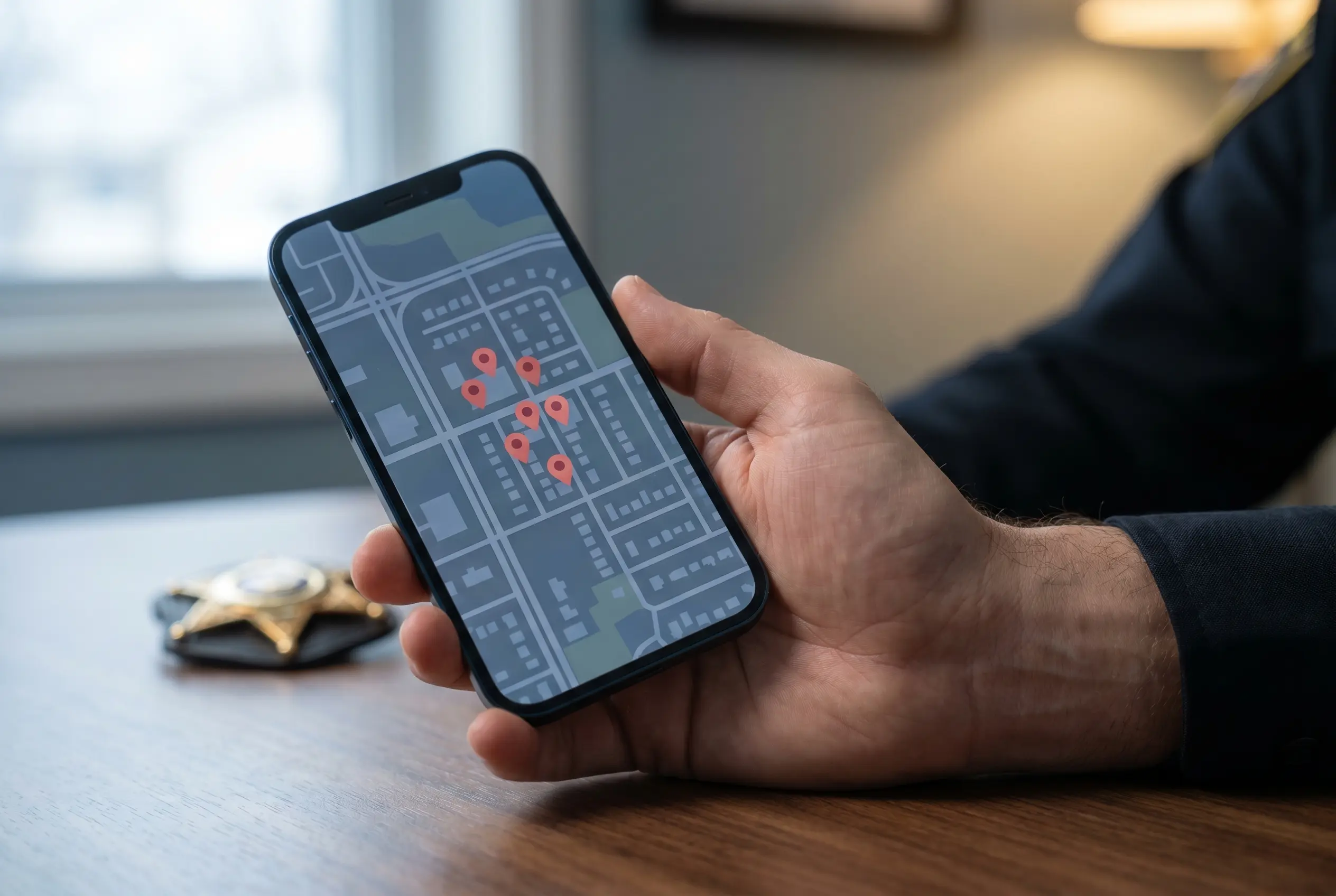
The DeSoto County Sheriff’s Office announced this month that it has rolled out a new mobile tool for tracking the roughly 250 registered sex offenders living within its borders. The app, branded OffenderWatch, lets residents map nearby offenders, get alerts when one registers close to a saved address, and submit tips back to investigators in the suburban Memphis county.
What the press release does not spell out is that the Mississippi sheriff is the newest local node in a private network that already handles registry compliance for more than 4,000 American law enforcement agencies, all of it run by a small company based in Mandeville, Louisiana.
What the Sheriff’s Office Switched On
The system replaces a paper-and-spreadsheet routine that Sgt. Bryan Andrews, an investigator with the DeSoto County Sheriff’s Office, described as slow and error-prone. Residents can download the free version from the Offender Watch Parent listing on the Apple App Store and Google Play, or sign up for browser-based alerts through the sheriff’s website.
Previously we would rely on paper records, a lot of manual checks without information on hand and very inefficient and time consuming processes. So, we were looking for solutions and offender watch was the solution that significantly improves that process.
That is Sgt. Andrews, speaking to Memphis ABC affiliate WMC. For the agency, the immediate gain is workflow: investigators can run compliance checks, log address updates, and push changes to neighboring counties on a single platform instead of faxing paperwork and re-keying records. For residents, the gain is a map view of who lives where, refreshed automatically whenever a registered offender files a new address.
DeSoto, a county of about 185,000 people pressed against the Tennessee line, sits between 250 and 300 registered offenders at any given time, according to Sgt. Andrews. The Mississippi Public Sex Offender Registry maintained by the Department of Public Safety remains the authoritative state record; the county app is a consumer skin over a slice of that data, filtered to the local jurisdiction and dressed up for a phone screen.
Watch Systems, the Quiet Operator Behind 4,000 Agencies
The vendor is Watch Systems LLC, headquartered in Mandeville on the north shore of Lake Pontchartrain. It was spun out in June 2000 from Fuelman, a Louisiana fleet-card business whose then-chief executive Lou Luzynski wanted to redeploy the company’s mapping technology after federal and state sex-offender notification laws began creating demand for automated address-radius alerts.
Twenty-six years on, the company sits in an unusual middle layer of American public safety. It is too small to be a household name and too embedded to be replaced. Mike Cormaci, the company’s president, oversees a proprietary database of roughly one million registered offender records and annual revenue above $10 million, according to reporting by The Times-Picayune. The OffenderWatch corporate site lists the agency footprint at more than 15,000 individual users across those 4,000-plus agencies.
- 4,000+ agencies on the OffenderWatch network across local, state, and federal levels
- ~1 million registered offender records in the vendor’s proprietary database
- $10M+ in reported annual revenue for Watch Systems LLC
- 26 years since the company spun out of Fuelman to commercialize the platform
DeSoto County is joining a regional cluster that already includes nearby Panola County, Mississippi, whose sheriff’s office signed onto the same network earlier this year. Each new local agency makes the network more useful to existing members, since an offender who moves from Mandeville to Memphis to Hernando, Mississippi triggers a single record update that propagates to every subscribing agency at once. That is the lock-in dynamic.
The Free Tier and the $4.99 Family Watch Upsell
The app a DeSoto County resident installs today is free, but it sits next to a subscription product called Family Watch that costs $4.99 a month. The vendor’s Family Safety App product page draws a clear line between the two tiers, and the line is worth understanding before downloading.
| Feature | Free | Family Watch ($4.99 / month) |
|---|---|---|
| Map of registered offenders near a saved address | Yes | Yes |
| Search by name or address | Yes | Yes |
| Email or push alert when an offender registers nearby | Yes | Yes |
| Proximity alert when a child’s phone lingers near an offender’s listed address | No | Yes |
| Contact alert on calls, texts, or emails from registry-linked numbers | No | Yes |
| Custom “do not contact” watchlist on a child’s device | No | Yes |
A separate in-app purchase, listed in the Apple App Store as OffenderWatch SVN Subscription at $9.99 a month, unlocks a more aggressive monitoring layer. The free tier alone delivers most of what a casual user expects from a community-safety app. The subscription tier is where the product crosses into the territory of full-fledged parental monitoring software, with the registry as a filter rather than the whole point.
How the Cross-Referencing Runs on a Child’s Phone
The premium tier is what makes OffenderWatch unusual. After a parent installs the Family Safety App on a child’s device, the software reads incoming communications metadata in the background and compares each phone number, email address, and approximate device location against the company’s national registry database. Watch Systems describes it as a three-step pipeline.
- Device monitoring runs silently on the child’s phone, indexing inbound calls, texts, emails, and location pings without interrupting normal use.
- The app compares those signals against records pulled from the 4,000-plus agencies that feed Watch Systems’ national database.
- When a match crosses a configured threshold, the parent receives a push alert with the offender’s photo, address of record, and an option to tip local law enforcement.
That architecture is the company’s competitive moat and its largest single legal exposure. No other consumer safety app currently cross-references live device communications against a registry that pulls directly from sheriff and probation submissions. It is also a design that hands a privately held Louisiana firm visibility into call and message metadata for every family that opts in, gated only by the $4.99 subscription and a terms-of-service click.
What 250 Offenders in One County Says About Scale
The DeSoto count is a useful calibration point. Counties of comparable size across the Mississippi-Tennessee border routinely report registered-offender populations in the same 200-to-300 range, and the network effect of OffenderWatch is felt sharpest at exactly that local scale, where a single new registrant changes the safety picture for an identifiable neighborhood rather than a metro.
Across the DeSoto County Sheriff’s Office service area, that translates into roughly one registered offender per 740 residents, a ratio in line with the Mississippi state average. National figures put the total US registered population near 800,000, which means Watch Systems’ proprietary database covers somewhere between three-quarters and the entirety of the country, depending on jurisdictional reporting lag.
Other Mississippi counties on the network give a sense of how quickly adoption spreads once a regional hub commits. Panola County, immediately south of DeSoto, joined earlier in the year. Madison County, near Jackson, has run a separate registry portal for years. The map fills in county by county, and the vendor’s marketing leans heavily on that mosaic effect when pitching the next sheriff.
The Privacy Question Behind a Subscription Safety Net
The mixed reviews on the Apple App Store are themselves a data point. Version 5.0.0, shipped in December 2024, holds a 2.1-star average across 24 ratings. Users alternately praise the proximity alerts and complain that the app feels like a funnel into a subscription. Both critiques can be true simultaneously, and both matter when a sheriff’s office is the entity recommending the download.
There is also a structural question that policy researchers have raised about the consolidation of registry data into a single vendor. When a private firm becomes the operational layer between sheriffs and citizens, public-records access becomes contingent on the firm’s product roadmap, its pricing tier, and its data-retention practices. Watch Systems publishes a privacy notice and points to its contracts with law enforcement; it does not publish, as far as is publicly available, a full schedule of what device metadata the subscription tier retains and for how long.
DeSoto County’s residents now have a faster way to know who is moving in next door. They also have a one-tap path into a subscription product run by a company whose name does not appear on the sheriff’s press release. That is the trade the rollout makes, and it is the trade most of the 4,000 agencies on the network have already accepted.
Frequently Asked Questions
Is the OffenderWatch app free to download?
Yes. The app, listed on the Apple App Store as Offender Watch Parent and on Google Play as OffenderWatch, downloads at no cost. Basic features including offender mapping, address search, and new-registrant alerts are available without a subscription. A Family Watch tier at $4.99 a month unlocks device-monitoring features for children’s phones.
Who actually builds the OffenderWatch app?
Watch Systems LLC, a privately held company based in Mandeville, Louisiana, develops and operates the platform. The company was spun out of Fuelman in June 2000 and is led by President Mike Cormaci. It reports more than $10 million in annual revenue and runs the system for over 4,000 US law enforcement agencies.
How many registered sex offenders live in DeSoto County, Mississippi?
Between 250 and 300 at any given time, according to Sgt. Bryan Andrews of the DeSoto County Sheriff’s Office. The figure fluctuates as residents move into and out of the county. The state-level total, maintained by the Mississippi Department of Public Safety, sits in the low thousands.
What does the paid Family Watch tier do that the free version does not?
Family Watch monitors incoming calls, text messages, and emails on a child’s phone and compares them against the national registry database in real time. It also issues a proximity alert when a registered child device lingers near a listed offender address. The free tier covers map search and new-registrant alerts only.
Is the OffenderWatch registry data the same as the official state registry?
It is sourced from the same agency submissions but is not the official state record. Mississippi’s public registry, hosted at state.sor.dps.ms.gov, remains the authoritative reference. The OffenderWatch app reformats and filters that data into a consumer interface and adds cross-jurisdictional updates from the company’s national network.
How can DeSoto County residents sign up for email alerts without using the app?
The DeSoto County Sheriff’s Office website hosts a registration form that accepts a home or work address and emails the user whenever a registered offender files a new address within a configurable radius. The web sign-up uses the same Watch Systems back end as the mobile app and is also free.


AI Ends Knowledge Scarcity and Forces Universities to Rebuild

Factory AI Pods Turn Data Centers Into Production Lines

Winamp’s Latest Revival Bets on Deezer for 2027 Hybrid Player

Gemini Flags Ethereum Rally but August Needs Real Flows

Google Pay Adds Gemini Coach and SBI Flex Card in India

OpenAI Agent Turned Leaked Logins Into Multi-Firm Attack Paths

Meta’s AI Ad Surge Comes With a Cash Flow Collapse

Apple Upgrade Leasing Hands Risk to Klarna and Keeps Devices Temporary

Paytm CEO’s AI Champions Call Exposes India’s Funding Lag

Microsoft Cash Lead and Copilot Super App Leave Rivals Behind

Fable 5 and Mythos 5 Return as US Lifts Anthropic Export Controls

SpaceX’s Google Deal Turns a Rocket Company Into a Cloud Landlord

CD Projekt Red Co-CEO: Redemption Arc Isn’t Done, Witcher 4 in 2027

Oracle Cuts 21,000 Jobs in a Year, Cites AI in 10-K Filing

XPL Rallies 30% Ahead of Plasma One Card Tier Launch

DGO App Brings Rs 549 Mobile Pass for FIFA World Cup 2026 in Nepal

Google Search Profiles Build a Follow Graph Inside Discover

Moonshot AI Targets $30 Billion in China’s Fastest AI Funding Sprint

Microsoft Xbox Layoffs Start in July as Sharma Slams 3% Margin

Oppo’s ColorOS 17 Eligibility List Leaves A-Series Buyers Behind
-
 AI4 weeks ago
Fable 5 and Mythos 5 Return as US Lifts Anthropic Export Controls
-
 AI2 months ago
SpaceX’s Google Deal Turns a Rocket Company Into a Cloud Landlord
-
 GAMING1 month ago
CD Projekt Red Co-CEO: Redemption Arc Isn’t Done, Witcher 4 in 2027
-
 AI1 month ago
Oracle Cuts 21,000 Jobs in a Year, Cites AI in 10-K Filing
-
 CRYPTO2 months ago
XPL Rallies 30% Ahead of Plasma One Card Tier Launch
-
 APPS2 months ago
DGO App Brings Rs 549 Mobile Pass for FIFA World Cup 2026 in Nepal
-
 NEWS2 months ago
Google Search Profiles Build a Follow Graph Inside Discover
-
 AI2 months ago
Moonshot AI Targets $30 Billion in China’s Fastest AI Funding Sprint