
AI
Cohere Parks Its Next Model Compute in Saudi Arabia
Cohere reserved 50 megawatts of Saudi compute for its next models while Ottawa’s AI strategy still locates sovereign racks in Canada.

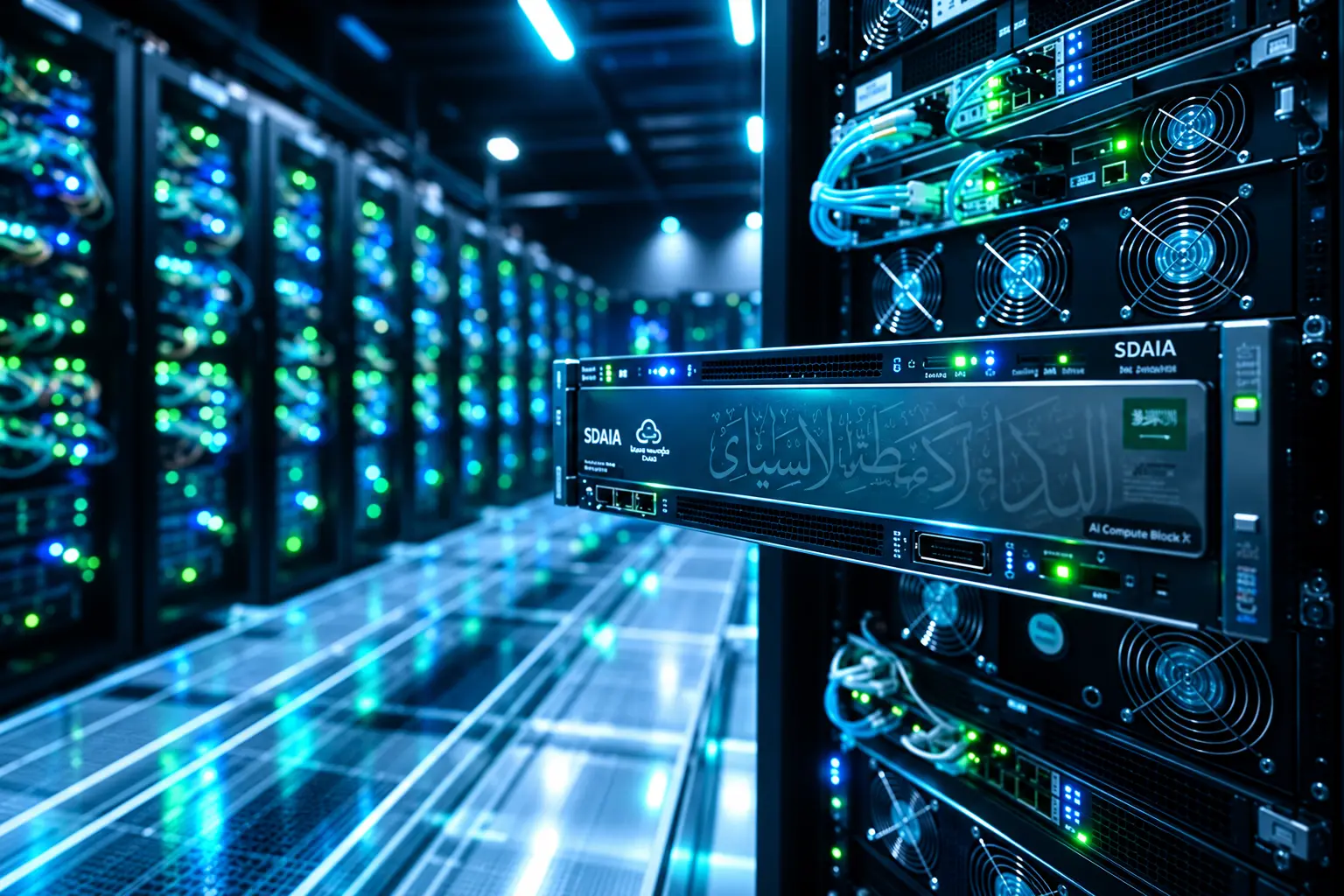
Cohere reserved at least 50 megawatts of Saudi AI compute for its next foundation models, with the plant due in late 2027. The Toronto lab and HUMAIN, the Public Investment Fund company, said the block is dedicated capacity for model research and development.
They announced it on July 9, 2026, during Prime Minister Mark Carney’s first Canadian visit to the kingdom in 26 years. A month earlier, Ottawa’s national AI plan still put sovereign compute on Canadian soil under Canadian law.
Cohere’s Next Models Draw Power in Riyadh
HUMAIN will set aside at least 50 megawatts of AI-dedicated capacity for Cohere’s next-generation foundation models, the companies said in a joint statement. The expansion is expected to be live by the fourth quarter of 2027, with room to grow over the following five years. Financial terms were not disclosed.
HUMAIN chief executive Tareq Amin cast the booking as a plaque on the kingdom’s stack. He said Cohere had picked HUMAIN for the first major compute rollout outside North America, and that the choice showed the strength of the infrastructure Saudi Arabia is building. The companies also said they would work on enterprise tools and on sovereign models, including Arabic-language and domain-adapted foundation models.
Three weeks earlier, on June 18, 2026, Cohere had joined Bell, Hypertec, and Buzz HPC at Bell’s data centre in Merritt, B.C. Bell chief executive Mirko Bibic said too much of Canada’s AI computing was being served from other places, particularly the United States, and called the Merritt hall an illustration of how the work can be done at home. That hall is a shared domestic site. The Saudi block is reserved training capacity, and it is larger than anything Cohere has announced as a dedicated overseas plant.
Ottawa Lists 850 MW of Home Compute by 2030
Innovation, Science and Economic Development Canada released AI for All in early June 2026. The paper names Cohere as Canada’s foundation-model firm and then draws a hard line on location. Sovereign AI, it says, starts with domestic data centres and cloud, operated under Canadian control and Canadian law, not on platforms a foreign government can restrict or withdraw.
The same chapter says partnerships being finalized have proposed 850 MW of compute capacity by 2030, with room to scale to 2.3 gigawatts. Those halls are meant to be at least 100 megawatts each and to serve a broad set of Canadian clients. Analysis cited in the strategy puts commercial AI compute need in Canada at 5.5 gigawatts by 2030, much of it from foreign hyperscalers. The 50 megawatt Riyadh reservation is a private overseas booking. It does not sit inside that 850 megawatt home target.
WHERE THE WATTS ARE BOOKED
| Booking | Capacity | Timing | Control |
|---|---|---|---|
| Cohere at HUMAIN | At least 50 MW, dedicated | Q4 2027, optional five-year scale | PIF-backed HUMAIN in Saudi Arabia |
| Bell hall, Merritt, B.C. | Shared domestic data centre | Announced June 18, 2026 | Bell, Buzz HPC, Hypertec, Cohere |
| Canada home target | 850 MW proposed, scale to 2.3 GW | 2030 | Partnerships under Canadian law |
| AMD, Cisco, and HUMAIN add-on | Up to 250 MW more, 1 GW by 2030 | Additional capacity beginning 2027 | Saudi joint venture |
| Meta, Sturgeon County, Alberta | 1 GW | Two to three years from July 2026 | Meta, about $9 billion |
The federal compute plan sits beside that paper. Budget 2024 put money into public and private AI compute at home, including a public supercomputer program whose applications closed on June 1, 2026, at 13:00 EST. Program rules define sovereign infrastructure as Canadian-located and Canadian-governed, with data residency and operational control remaining in Canada. Cohere’s next training block, as announced, is none of those things.
What the Humain Reservation Covers
The July 9 statement is a capacity reservation plus a model-work promise, not a finished plant. Nothing in the public text names a chip vendor, a campus, a dollar figure, or an interim wattage before the fourth quarter of 2027. The live date is more than a year out from the handshake, and either side can still fail to ship on that calendar.
WHAT THE JULY 9 PACT CONTAINS
- Dedicated watts: HUMAIN will designate at least 50 megawatts of AI compute to Cohere’s next-generation foundation models.
- Job of the hall: The companies described large-scale accelerated infrastructure built for model research and development.
- Joint models: The parties said they will develop sovereign AI models, including Arabic-language and domain-adapted foundation models, plus sector tools.
- Scale clause: The allocation can grow over five years if demand appears.
- Missing paper: No contract value, no binding instrument, and no published milestone between announcement and go-live.
That shape matches how HUMAIN has used Western labs elsewhere. The Riyadh firm, launched in May 2025, buys chips, land, and tenants. It then prints a sovereignty story around someone else’s weights. Cohere already sells private deployments and has built language-specific systems with Fujitsu in Japan and LG CNS in South Korea. Saudi telecom group STC is already a client. The new piece is the 50 megawatt training reservation, and the claim that this is the lab’s first serious compute footprint outside North America.
AMD Says the Saudi Racks Are Already On
The 50 megawatt Cohere block is still a 2027 item. Other HUMAIN metal has started to turn. In early September 2026, AMD said production AI infrastructure is live in Saudi Arabia with HUMAIN and Cisco, running AMD Instinct MI355X GPUs, EPYC CPUs, and Cisco networking, and already serving customers. The same companies plan up to 250 megawatts of additional AI infrastructure beginning in 2027, with a joint venture still aimed at 1 gigawatt by 2030.
The fact that Cohere has selected Humain for the first significant international AI compute deployment outside North America underscores the strength of the AI infrastructure we are building and our ability to support the next generation of model research and development.
Tareq Amin, chief executive of HUMAIN, joint statement, July 9, 2026
Amin’s line was about legitimacy. A Canadian model lab on the booking sheet is useful to a PIF company that has spent a year announcing gigawatts. Saudi officials now talk about more than 14 gigawatts of computing capacity as they court labs and infrastructure partners. The Cohere reservation is a small tile in that pitch. It is also, for now, larger than any dedicated overseas Cohere plant the company has put on paper.
Carney was in Riyadh to widen trade after a rough stretch with Washington. The UAE has discussed investment of up to $50 billion in Canadian energy, AI, logistics, and mining. Saudi Arabia has said it wants $20 billion of data and AI investment over 10 years. Those capital talks are real. They do not turn a 2027 compute reservation into a live Canadian training cluster.
Inside Their Own Walls
On Sept. 13, 2026, Cohere co-founder and chief executive Aidan Gomez published a long essay arguing that governments and critical industries should not rent national capability from a closed foreign interface. He said hospitals, payment networks, and defence ministries cannot pipe their most sensitive data to somebody else’s servers and trust a vendor contract to hold.
They want highly capable systems running inside their own walls, operating on infrastructure they control, from providers who answer to them and can be replaced.
Aidan Gomez, co-founder and CEO of Cohere, company essay, Sept. 13, 2026
That is the product Cohere sells to banks and ministries: systems running inside their own walls. The July 9 pact does something different with the lab’s own next models. It parks the training load on HUMAIN’s side of the grid, in a jurisdiction Ottawa’s strategy does not treat as Canadian-controlled infrastructure. The Arabic-language work can still be an export win under the strategy’s champion-scaling chapter. The training location is the part that sits awkwardly beside the location rule in the same document.
Gomez is not required to train every Cohere weight in Ontario. Labs rent whatever power they can get. The tension is specific. Ottawa spent the summer telling firms that sovereign compute means Canadian halls, then stood beside a national champion whose first named overseas training block is in Riyadh.
The Alberta Gigawatt Runs on a Separate Clock
The day before the HUMAIN announcement, Meta said it would build its first Canadian data centre, a 1 gigawatt campus in Sturgeon County, Alberta, costing about $9 billion and taking two to three years. Once finished, it will be Meta’s 33rd data centre. That plant is twenty times the Cohere reservation. It is also a U.S. hyperscaler landing on Canadian power, which is the opposite flow from Toronto weights landing on Saudi watts.
THE 2026 COMPUTE CALENDAR
- June 1, 2026: Applications close for the AI Sovereign Compute Infrastructure Program, the public supercomputer call.
- June 4, 2026: Ottawa releases AI for All, including the 850 MW home-compute target for 2030.
- June 18, 2026: Bell, Cohere, Hypertec, and Buzz HPC announce the Merritt, B.C. compute package.
- July 8, 2026: Meta announces the 1 GW Alberta campus at about $9 billion.
- July 9, 2026: HUMAIN and Cohere announce the 50 MW reservation, due in Q4 2027.
- Early September 2026: AMD, Cisco, and HUMAIN say production racks in Saudi Arabia are serving customers, with up to 250 MW more beginning in 2027.
The public supercomputer is a different object from Cohere’s private training buy. Budget 2024 still put C$2 billion over five years into the Canadian Sovereign AI Compute Strategy, split as up to C$700 million to crowd in private halls, up to C$1 billion for public supercomputing, and up to C$300 million for an access fund. The SCIP build layer is about C$890 million over seven fiscal years from 2026-27. The strategy also promises a world-leading public supercomputer by 2031. Canada counts about 3,500 AI firms and 150,000 AI jobs, and Statistics Canada found that only 12 percent of businesses used AI to produce goods or services between mid-2024 and mid-2025.
None of those home figures move the July 9 reservation. The 50 megawatts remain a dedicated HUMAIN block for Cohere’s next foundation models, still dated to the fourth quarter of 2027, still without a published price. The live Saudi racks AMD described in September are a separate fleet. Until someone posts a wattage, a campus, and a contract, the Canadian lab’s first named overseas training plant is a line in a statement, drawing power in Riyadh on a calendar that has not yet arrived.

Instagram Plus Tests a Read-Only Mode That Cuts Stories

Altman Asks the Public to Accept Some AI Harm

Google Freezes OSS VRP Product Reports After AI Flood

AI Agents Make Payment Rails the Scarce Prize

Turkey’s Crypto Boom Now Runs Through Three Banks

Fable 5 Came Back Under a Commerce On-Off Switch

Google’s SpaceX GPU Lease Has a Sept. 30 Deadline

Plasma One’s XPL Locks Face a 1.81 Billion Cliff

DGO’s Rs 549 World Cup Pass Cost Fans Sleep and Data

Moonshot AI’s $30 Billion Ask Became a $35 Billion Close
-
 AI4 months ago
Fable 5 Came Back Under a Commerce On-Off Switch
-
 AI5 months ago
Google’s SpaceX GPU Lease Has a Sept. 30 Deadline
-
 CRYPTO5 months ago
Plasma One’s XPL Locks Face a 1.81 Billion Cliff
-
 APPS5 months ago
DGO’s Rs 549 World Cup Pass Cost Fans Sleep and Data
-
 AI5 months ago
Moonshot AI’s $30 Billion Ask Became a $35 Billion Close
-

 NEWS5 months ago
ColorOS 17 Device List Spans Oppo, OnePlus and Realme
-
 GAMING4 months ago
The RTX 4050 Under Rs 70,000 Hides a Wattage Gap
-
 AI4 months ago
Boris Cherny’s Loops Still Demand a Higher Production Bar