
AI
Tencent Takes the Largest Stake in Manus After Meta Exits
Tencent is Manus’s largest shareholder after a $2 billion buyback that unwound Meta’s blocked AI-agent deal, without giving Tencent control.

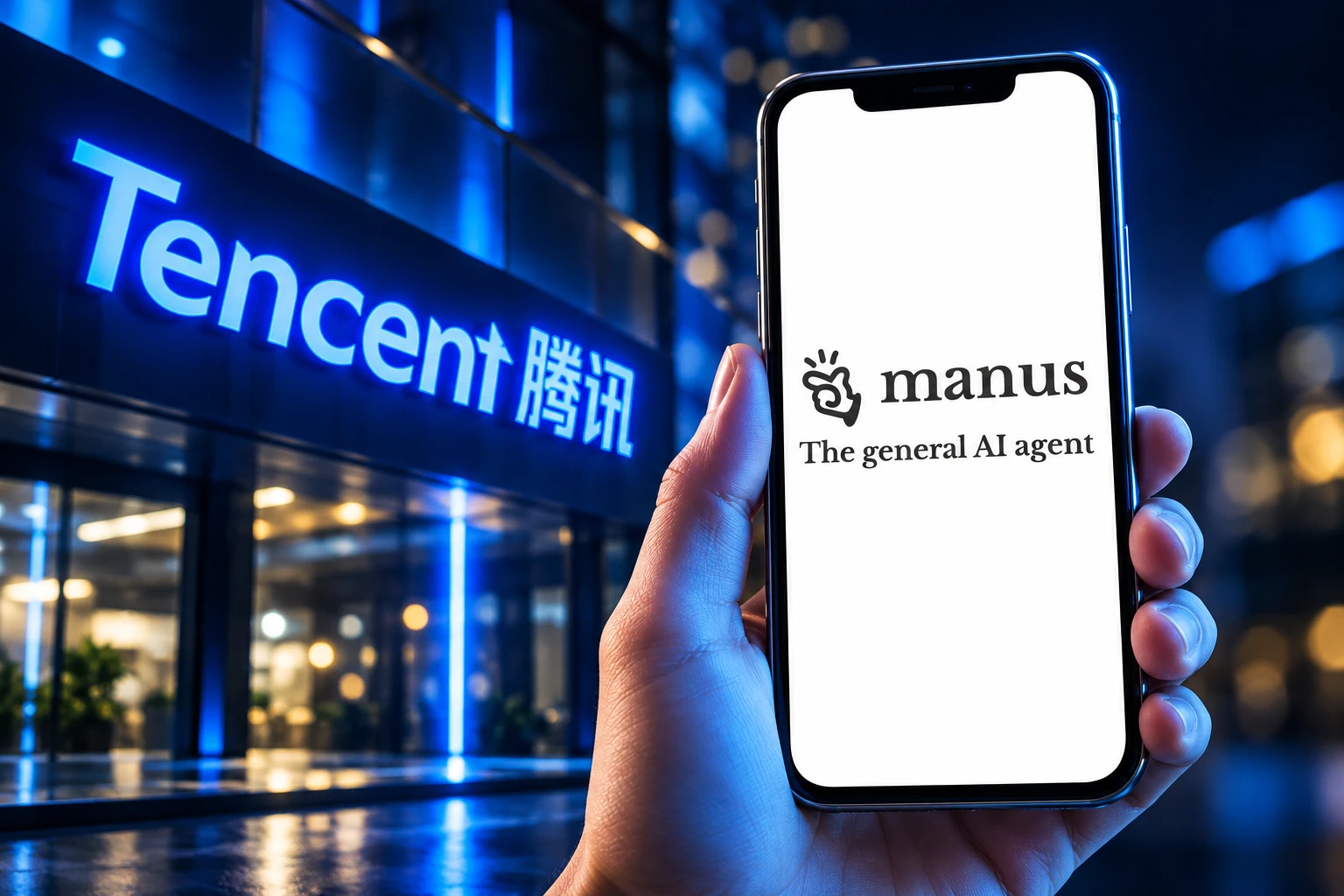
Tencent has become the largest shareholder in Manus, according to people close to the company, after a $2 billion buyback that reversed Meta’s blocked purchase of the AI agent startup. China’s National Development and Reform Commission ordered the parties in April to withdraw the deal. On September 1, Manus said it had formally resumed independent operations, still led by its founders and still based in Singapore.
The structure is the story. Tencent sits at the top of the cap table and remains a minority owner. Manus is not being folded into WeChat.
Tencent Becomes Manus’s Largest Shareholder Without Control
In July, people familiar with the talks said Tencent was lining up with ZhenFund and HSG, the firm formerly known as Sequoia China, to buy Manus back from Meta at the same $2 billion price. Tencent and Meta did not comment then. Tencent still has not confirmed the size of its holding.
By August, a person close to Manus said that buyback had gone through. Tencent took the stake that US venture firm Benchmark had held before the Meta sale and became the largest shareholder, while staying a minority owner. ZhenFund and HSG came back in. Benchmark did not. Manus has not published a new cap table of its own.
WHO IS IN AND WHO IS OUT
| Party | Before the Meta deal | After the unwind |
|---|---|---|
| Tencent | Early backer | Largest shareholder, still a minority |
| Benchmark | Lead investor in the April 2025 round | Did not re-enter |
| HSG (HongShan) | Early backer | Back in the buyback group |
| ZhenFund | Seed and early backer | Back in the buyback group |
| Meta | Buyer on December 29, 2025 | Out |
That is a capital nationality swap, not a classic acquisition. Meta is gone. The original Chinese funds are back. The product company is still supposed to run as its own lab in Singapore, which is the arrangement Beijing’s order left standing once US ownership was stripped out.
Beijing’s First Public AI Ban Forced Meta Out
Meta announced the Manus purchase on December 29, 2025. The financial terms were never disclosed by either company. People briefed on the sale put the price at $2 billion, which later became the working figure for the unwind. Xiao Hong, Manus’s chief executive, was in line to become a Meta vice president reporting to chief operating officer Javier Oliván. About 100 Manus staff had already moved into Meta’s Singapore offices by March.
Relocation did not end the argument in Beijing. Manus had shifted its headquarters from China to Singapore in mid-2025 after a $75 million round led by Benchmark that valued the company at about $500 million. China offices were shut. Dozens of local staff were laid off. Mainland access to the product was blocked. The National Development and Reform Commission still treated the Meta purchase as a foreign investment in a Chinese-origin AI project.
On April 27, 2026, the office of the foreign-investment security review working mechanism, housed at the commission, said it would prohibit foreign investment in the Manus project and required the parties to withdraw the transaction.
The Office of the Foreign Investment Security Review Working Mechanism (National Development and Reform Commission) has, in accordance with laws and regulations, made a decision to prohibit the investment in the foreign acquisition of the Manus project, and requires the parties to withdraw the acquisition transaction.
National Development and Reform Commission, April 27, 2026
Legal specialists have described the ruling as the first public “prohibit investment” outcome for an AI deal under the Foreign Investment Security Review Measures, which took effect on January 18, 2021. Meta said the transaction had complied with applicable law and that it expected an appropriate resolution. In June it cut Manus off from internal systems, told its own staff to stop using the agent on internal work, and moved existing Manus projects onto Meta tools.
Xiao Hong and chief scientist Ji Yichao had already been summoned to Beijing in March and restricted from leaving the country while the review ran. Singapore paper did not put the founders, or the model stack they had built in China, beyond that reach.
A Two-Day Wipe Erased Meta-Era User Data
The unwind was not only a share transfer. It showed up in the product as a scheduled deletion. On August 11, Manus told customers it would return to operating as an independent company serving millions of users, and that some accounts would be hit because of rules in specific jurisdictions.
The cut was dated to the Meta close. Manus said data generated after Meta bought Manus on or after December 29, 2025, had to be deleted for certain users. It said this was not a breach. Storage, the company added in the same note, sits in the United States and Singapore.
THE BACKUP AND DELETION WINDOW
- Backup close: Affected users could copy their work until 7:59 a.m. Singapore time on August 23, 2026.
- Deletion window: That data was to be wiped from 8:00 a.m. on August 23 through August 24, 2026, Singapore time.
- Access gap: Affected accounts were expected to be dark for those two days; other users were told to keep working as normal.
- Restore open: Restoration was due to start at 8:00 a.m. Singapore time on August 25, 2026, with later word that there is no deadline to bring backed-up work back.
People who had signed up with an Apple ID or a Facebook login were told to watch in-app alerts, because Manus did not have those email addresses. Affected subscribers were not billed during the backup stretch, and the company promised welcome-back bonuses after a restore. Paying users in the United States still had to archive their work, let the Meta-period copy be destroyed, and upload the archive if they wanted the same threads again. That is what a completed unwind looks like at account level.
How Manus Went From Invite Codes to a $2 Billion Deal
Manus is a general AI agent. It does not wait for a chat reply. Give it a job, and it plans steps, opens the web, writes code, builds charts, and hands back finished work. The March 6, 2025 launch demo showed resume screening and stock analysis. The clip passed one million views in 20 hours. Invite codes were resold for more than $1,000.
Xiao Hong founded Butterfly Effect in 2022, first around the Monica browser assistant, then around Manus. Ji Yichao joined as co-founder and chief scientist. Zhang Tao joined as the product lead. The name comes from the Latin for hand, and from MIT’s motto “mens et manus,” mind and hand. Early money came from ZhenFund, then from HSG and Tencent. Benchmark’s $75 million round in April 2025 brought a US lead investor and a board seat for general partner Chetan Puttagunta.
THE PATH FROM LAUNCH TO UNWIND
- March 6, 2025: Manus launches in invite-only beta.
- April 2025: Benchmark leads a $75 million round at a valuation of about $500 million.
- Mid-2025: Headquarters move to Singapore; China operations are wound down.
- December 29, 2025: Meta completes the purchase, later unwound at $2 billion.
- April 27, 2026: The NDRC prohibits the foreign investment and orders the deal withdrawn.
- August 11, 2026: Manus warns users of the Meta-era data cut.
- September 1, 2026: The founding team says the independent agent lab is running again.
At the Meta sale, people around the company put annual recurring revenue at $100 million. During the buyback talks, figures shared with investors put annualized revenue near $400 million. Those are different dates and different briefings, not two readings of one audited number. The $2 billion buyback price did not move with the higher run-rate talk. Meta left at the same headline figure it had paid, after a few months in which it could not keep the team or the data pipeline.
Benchmark Stayed Out as Chinese Backers Returned
Benchmark had already taken its exit proceeds from the Meta sale. It did not write a new check to reverse that exit. Tencent absorbed the economic space Benchmark left, which is how a longtime Chinese strategic investor became the largest holder without needing a new control fight.
HSG and ZhenFund, people close to the process said, used fresh fund money rather than clawing back cash they had already distributed to their own backers. That is a second-fund repurchase of an asset those firms had already marked as sold. It is also why the July talks could be priced at $2 billion even after the product’s revenue talk had moved.
The July conversations, including the Tencent-led buyback of Meta’s Manus stake, already sketched this ending: Tencent first among outsiders, no single owner with a majority, Singapore still the operating base, Benchmark on the sideline. August supplied the claim that the shares had actually changed hands. September supplied the product company’s own line that the lab was independent again.
Tencent’s interest is distribution optionality, not a need to rebrand the agent as a WeChat feature. The company already tests agents on its own apps. Holding the largest minority slice in a lab that sells a general agent worldwide is a way to keep a seat without triggering another control review. ByteDance and Alibaba are building agents too. A WeChat-only fork of Manus would throw away the overseas subscriber base the Singapore move was meant to protect.
Manus Is an Independent Agent Lab Again
On September 1, Manus said it had formally resumed independent operations. The founding team, it said, would keep leading, with a brief to push general agents that live inside daily work, touch the outside world more directly, and act with less waiting for a prompt. Users who had backed up Meta-era data were pointed to a restoration portal. The company said there is no deadline to restore.
Today, Manus resumes independent operations, entering a new chapter driven by the same spirit of innovation.
Our founding team @Red_Xiao_ @hidecloud @peakji will continue to lead the company, with a relentless commitment to product innovation and advancing general AI agents for…
— Manus (@ManusAI) September 1, 2026
The post named Xiao Hong, Zhang Tao, and Ji Yichao as the people still in charge. It did not name Tencent, HSG, or ZhenFund. That silence matches the minority structure people close to the company described: the lab speaks as a product company, not as a Tencent division.
Customer-support complaints landed in the same thread as the welcome-backs, which is a reminder that the eight months inside Meta, then out of Meta, were not free for the people paying for the agent. The cap table can be cleaned in a buyback. Task histories from the Meta window could not be left in place if regulators wanted the acquisition undone in data as well as in equity.
Manus has not published a new shareholder list. Tencent has not confirmed the size of its stake. The restoration portal is still the practical leftover of the split, and the company said users who backed up can bring that work back with no cutoff date.
Frequently Asked Questions
What Is Manus, and What Does the Agent Do?
Manus is a general-purpose AI agent from Butterfly Effect, a firm founded in China and now based in Singapore, and the product name is Latin for hand, taken from MIT’s motto “mens et manus.” It is built to finish multi-step jobs rather than only answer a prompt, and it calls on existing large models instead of training its own foundation model, which is the distinction Benchmark’s counsel used when arguing that an earlier US round sat outside outbound-investment rules.
Who Founded Manus and Who Runs It Now?
Xiao Hong founded Butterfly Effect on April 20, 2022 after earlier work on Nightingale Technology, Ji Yichao is co-founder and chief scientist and previously built Peak Labs and the Mammoth Browser, and Zhang Tao is the product co-founder with prior product jobs at Tencent, Wandoujia, and ByteDance. Manus said on September 1 that those three still lead the independent lab.
What Did China’s NDRC Order on April 27, 2026?
The working-mechanism office at the National Development and Reform Commission issued a prohibit-investment decision on the Manus project and told the parties to revoke the acquisition, the strictest of the three outcomes set out in the 2020 measures (pass, pass with conditions, or prohibit). The same rules let the office order a sale of equity or assets to restore the pre-deal state if parties refuse to comply.
Does Tencent Control Manus After the Buyback?
People close to Manus said Tencent became the largest shareholder by taking Benchmark’s former stake and that it remains a minority owner, with the company still operating independently from Singapore rather than being absorbed into Tencent’s consumer apps. Manus’s own September 1 note names the founding team as the people running the lab and does not describe a Tencent takeover.
Where Is Manus User Data Stored After the Split?
Manus told users in its August 11 note that its data is stored in the United States and Singapore and pointed to its Trust Center for handling practices. The August deletion covered only certain users’ data created on or after December 29, 2025, which the company tied to the Meta close and to rules in specific jurisdictions, not to a security incident.
Disclaimer: This article is news reporting and analysis of a completed share buyback and a regulator-ordered unwind. It is for information only and is not investment advice, a recommendation to buy or sell Tencent, Meta, or any private Manus interest, or legal advice on foreign-investment review. Readers who may act on deal, listing, or portfolio questions should speak with a licensed financial adviser and, where a filing or review is involved, qualified counsel in the relevant jurisdiction. Shareholdings, revenue figures, and operating status are those described by the cited companies, regulators, and people close to the process as of the dates given, and they can change.

Instagram Plus Tests a Read-Only Mode That Cuts Stories

Altman Asks the Public to Accept Some AI Harm

Google Freezes OSS VRP Product Reports After AI Flood

AI Agents Make Payment Rails the Scarce Prize

Turkey’s Crypto Boom Now Runs Through Three Banks

Fable 5 Came Back Under a Commerce On-Off Switch

Google’s SpaceX GPU Lease Has a Sept. 30 Deadline

Plasma One’s XPL Locks Face a 1.81 Billion Cliff

DGO’s Rs 549 World Cup Pass Cost Fans Sleep and Data

Moonshot AI’s $30 Billion Ask Became a $35 Billion Close
-
 AI4 months ago
Fable 5 Came Back Under a Commerce On-Off Switch
-
 AI5 months ago
Google’s SpaceX GPU Lease Has a Sept. 30 Deadline
-
 CRYPTO4 months ago
Plasma One’s XPL Locks Face a 1.81 Billion Cliff
-
 APPS5 months ago
DGO’s Rs 549 World Cup Pass Cost Fans Sleep and Data
-
 AI5 months ago
Moonshot AI’s $30 Billion Ask Became a $35 Billion Close
-

 NEWS5 months ago
ColorOS 17 Device List Spans Oppo, OnePlus and Realme
-

 GAMING4 months ago
The RTX 4050 Under Rs 70,000 Hides a Wattage Gap
-
 AI4 months ago
Boris Cherny’s Loops Still Demand a Higher Production Bar