
NEWS
Globe Backs DepEd’s Responsible Gadget Use Policy in Schools
Globe backs DepEd Order 006, the Philippine policy that bans phones during class but allows educational and emergency use, and ties it to Digital Thumbprint.

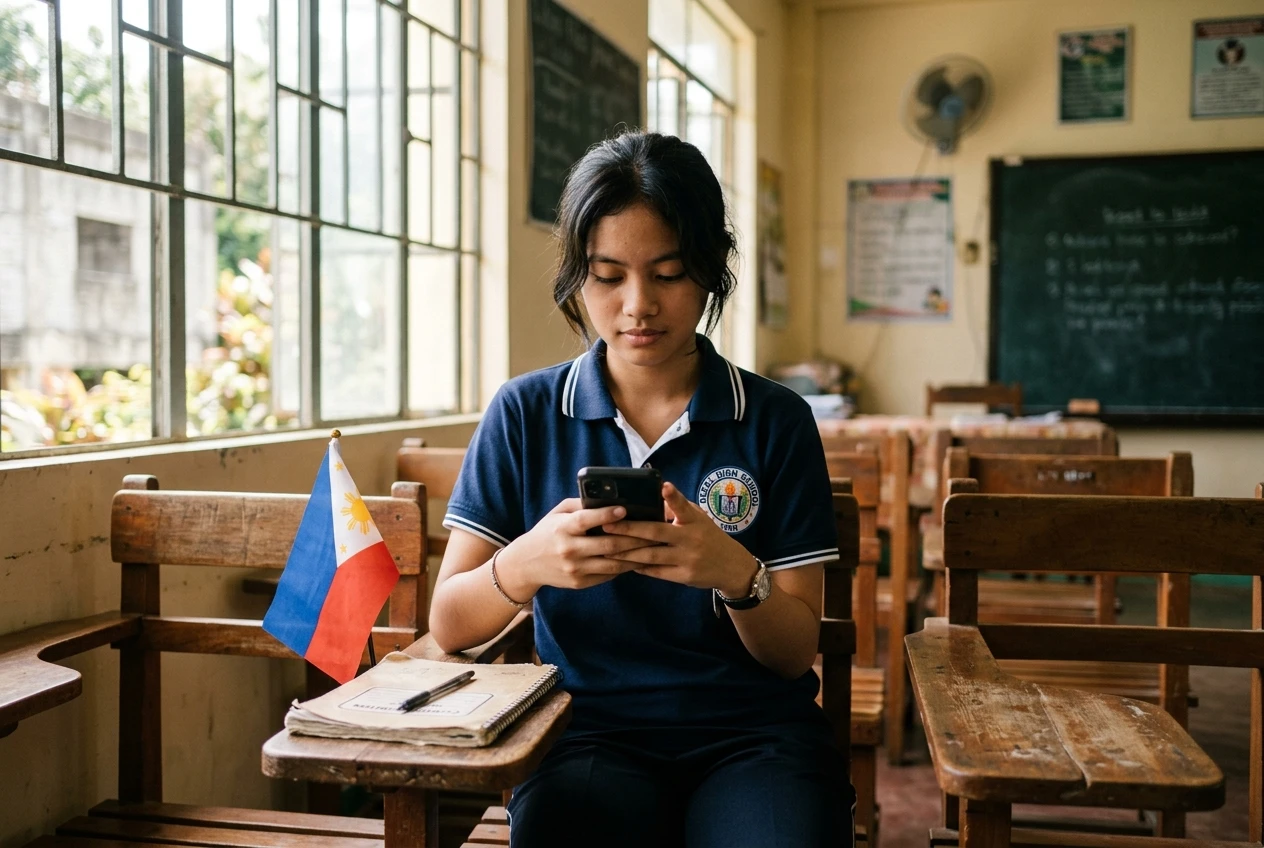
Globe Telecom Inc. has thrown its weight behind the Department of Education’s new policy that bars students and teachers from using phones during class hours in Philippine public schools, calling the framework a model for keeping children safe online without cutting them off from digital learning. The policy is laid out in DepEd Order No. 006, s. 2026, also called the Guidelines on Ensuring a Safe and Motivating Learning Environment, and DepEd reiterated it on July 1, 2026 as the new school year opened.
Crisanto, Globe’s chief sustainability and corporate communications officer, framed the endorsement as a stance against blanket bans and for “responsible use.” The endorsement ties the policy to a decade-long push by Globe inside Philippine schools, through the Digital Thumbprint Program that has now reached more than two million students and educators.
What the New DepEd Order Covers
DepEd Order No. 006, s. 2026 covers all public schools and runs for the duration of instructional hours. The memo, restated on July 1, 2026 by DepEd through a memorandum reported by DepEd Order 006 details and exemptions for educational use, prohibits students and school personnel from using portable electronic devices during class. The agency tied the policy to protecting learners’ online safety amid a series of school-related violence.
The ban reaches more than texting and calls. The scope of prohibition covers the use of social media platforms, online games, content creation, and vlogging during class hours. Devices stay allowed when used for educational purposes, such as accessing educational platforms and digital resources, and during emergencies, including disasters, medical crises, and other safety concerns. DepEd’s memo also asked parents, local government units, law enforcement agencies, non-government organizations, and other stakeholders to help guide learners.
Education Secretary Juan Edgardo “Sonny” M. Angara called for a “whole-of-society approach” to put the guidelines into practice. DepEd plans to deploy 10,000 new school counselor positions for School Year 2026-2027 alongside the gadget rules, with the Civil Service Commission already approving Schools Division Counselor and School Counselor Associate posts.
Permitted During Class
- Educational platforms and digital resources
- Online learning activities
- Emergency use (disasters, medical crises, safety concerns)
- Teacher use for instruction
Prohibited During Class
- Social media platforms
- Online games
- Content creation and vlogging
- Personal texting, calls, casual browsing
Globe Adds Its ‘Responsible Use’ Frame
Globe’s support comes with a specific framing. In a statement carried by Globe’s statement backing DepEd’s new gadget policy, the telecom said it “advocates a balanced approach that promotes responsible use of the internet and digital devices through stronger platform safeguards, informed parental guidance and consent and digital literacy.” That language points away from access restrictions and toward design choices and parental controls.
The framing borrows from a global policy chorus. Globe cited UNICEF on child online safety and OECD guidance on age-based restrictions, both of which call for pairing safeguards with platform accountability rather than relying on access limits alone. The company also pointed to its work with the Child Rights Network in the Philippines on the same agenda. Globe’s own communications channel, speed.ph, added that “creating safer digital spaces is key to preparing young Filipinos for the future.”
The “responsible use” frame keeps devices in classrooms for learning, even as social media and games stay out of instructional hours. Crisanto made the case directly in her statement.
We aim to give the youth and students access to technology, alongside the need to be responsible online. In the age of AI and digital learning, connectivity opens doors to education, innovation, and equal opportunities.
Crisanto, Globe’s chief sustainability and corporate communications officer, said the statement, reported by Manila Standard on July 2, 2026, ties the endorsement to the wider agenda of preparing young Filipinos for an AI-driven economy. The “responsible use” language she used is the same framing Globe applies across its programs, including Digital Thumbprint, and it is what the company now wants to anchor its policy work to.
Globe’s Decade With Digital Thumbprint
The substantive piece of Globe’s contribution is the Digital Thumbprint Program, or DTP, which the company launched in 2016 as a corporate initiative on online safety and responsibility. According to Globe’s Digital Thumbprint Program reaching two million students, DTP has now reached more than two million students and educators across the country. The 10-year mark landed in March 2026, with Globe framing the milestone as the moment its classroom workshops became a national program. The program equips learners with practical skills on protecting personal data, practicing cyber ethics, and using technology responsibly.
The curriculum has changed with the threat landscape. The 2026 version of DTP features 36 stackable modules covering AI ethics, digital etiquette, Philippine cyber laws, and digital rights, structured across basic, intermediate, and advanced levels. Globe also launched the Digital Thumbprint Student Ambassador Program in 2025, with the Technological Institute of the Philippines as pilot school, to turn students into peer mentors.
The program was already wired into DepEd before the new order. In 2019, Globe partnered with the Department of Education to integrate DTP lessons on responsible online behavior into the K-12 values formation curriculum, giving millions of students structured guidance on digital spaces. The DepEd Order 006 endorsement lines up with that earlier integration. In 2025 alone, 16,560 students and teachers participated in DTP workshops and learning sessions nationwide. Globe contributed to GSMA’s “The Business Imperative for Digital Inclusion” report, drawing on its DTP experience.
- 2M+ students and educators reached since 2016
- 16,560 participants in 2025
- 36 modules in the 2026 curriculum
- K-12 integration since 2019
- Excellence in Digital Literacy and Safety, Consumer Choice Awards 2026
Reaching the 10-year mark is a testament to the urgency and importance of our mission. When we started in 2016, we talked about passwords; today, we are talking about AI ethics and digital empathy.
Crisanto, Globe Chief Sustainability and Corporate Communications Officer, said the program is now training a generation of student ambassadors to extend the safety work into their own networks.
Where the Classroom Ban Stops Short
The order covers the hours between bell and bell. Most of the online risks that DepEd and Globe say they are worried about happen outside that window. The agency tied the policy to a series of school-related violence, including a shooting attack in Tacloban City on June 16, 2026 that killed three students. CICC, the country’s cybercrime agency, has separately moved against content linked to school threats, including a Philippines ban on GoreBox after Tacloban school shooting.
That split matters for how the policy actually protects children. Exposure to OSAEC and CSAEM, the online sexual abuse and exploitation of children and child sexual abuse material categories that Globe said it works with government and industry partners to combat, sits outside the school day and outside the school gate. The classroom gadget ban does not touch those issues, nor does it reach the platforms themselves, which DepEd Order 006 does not regulate. Parental controls and content moderation in the home are the actual levers. The order tells schools what to do during instructional hours; it does not change what a child sees on a phone at 9 p.m.
The Harder Ban Already in the Pipeline
Globe’s “responsible use” stance sits next to a parallel legislative push for a harder line. Senate President Sherwin T. Gatchalian has renewed his call to ban smartphones in both public and private schools through Senate Bill 627, or the Electronic Gadget-Free Schools Act. The bill would prohibit kindergarten to senior high school students from using smartphones during school hours.
Gatchalian tied the renewed push to recent school-related violence, including the Tacloban shooting. BusinessWorld reported on July 1, 2026 that Gatchalian previously filed the bill and has also proposed a separate social media ban for minors, which would extend beyond the classroom. The harder ban would cover private schools too, where DepEd Order 006 does not apply.
DepEd’s order sets the policy floor in the current debate. Gatchalian’s bill represents a harder ceiling. Globe’s Digital Thumbprint Program operates in the space neither rule covers, training students in safety skills for online use inside and outside school hours.
How the Philippines Fits a Global Child-Safety Frame
Globe’s support for the order echoes a wider international frame on child online safety. The OECD’s 2024 report “Towards Digital Safety by Design for Children” lays out eight components for safer digital service design, including practical tools, default protections, and transparency. OECD has separately written that age-based restrictions work best when paired with safer platform design, digital literacy, and family engagement, a position Globe cited in its DepEd statement. The full OECD framework for digital safety by design in children sets out those eight components in detail.
UNICEF’s work on child online safety calls for safety-by-design, stronger platform accountability, and meaningful parental involvement. Globe said the new DepEd circular reflects that principle. In the Philippines, the Child Rights Network has pushed the same agenda domestically, advocating for safer online environments for minors. The international frame fits the Philippines, where the connectivity base is large and the safety infrastructure is still catching up to usage. The OECD report expects digital service providers to increasingly embed safety by design, a position Globe’s existing programs already align with.
Frequently Asked Questions
What is DepEd Order No. 006, s. 2026?
DepEd Order No. 006, s. 2026 is the Philippine Department of Education memorandum titled Guidelines on Ensuring a Safe and Motivating Learning Environment, issued to govern gadget use during instructional hours. DepEd reiterated it on July 1, 2026, on the eve of School Year 2026-2027, and tied the policy to a wave of school-related threats and violence since mid-June.
What gadgets and activities are exempt from the ban?
The order lists two carve-outs: instructional use, including access to educational platforms and digital resources, and emergency use, including disasters, medical crises, and other safety concerns. DepEd’s order restated both exemptions on July 1, 2026 and asked parents, LGUs, law enforcement, NGOs, and other stakeholders to help enforce them.
What is Globe’s Digital Thumbprint Program?
Digital Thumbprint Program (DTP) is a Globe Telecom initiative that started in 2016 with three workshops for high school students and has grown into a 36-module curriculum covering AI ethics, digital etiquette, Philippine cyber laws, and digital rights. It reached more than two million students and educators as of its 10-year mark in March 2026, including 16,560 students and teachers in 2025 alone, and added a Student Ambassador Program in 2025 with the Technological Institute of the Philippines as pilot school.
Is there a bill to ban phones in schools more broadly?
Senate Bill 627, also called the Electronic Gadget-Free Schools Act, is a separate legislative push from Senate President Sherwin T. Gatchalian. It would prohibit kindergarten through senior high school students from using smartphones during school hours in both public and private schools. BusinessWorld reported on July 1, 2026 that Gatchalian had also proposed a separate social media ban for minors, which would extend beyond the classroom and is not part of DepEd Order 006.
What did Globe say about the DepEd policy?
Globe endorsed DepEd Order 006 through a statement issued in July 2026 and reported by Manila Standard on July 2, 2026. Globe’s position is consistent with its earlier public stances: a “balanced approach” that combines stronger platform safeguards, informed parental guidance and consent, and digital literacy, rather than blanket bans. Globe has cited UNICEF and OECD guidance, as well as the Child Rights Network in the Philippines, as the policy framework behind that position.


Workers Still Trust Judgment Over the AI Tools They Use

DigitalOcean’s $894 Million Backlog Rewrites the Old Cloud

Companies Froze Job Design and Called AI a People Problem

AI Capex Looks Unique Because the Chips Wear Out

Samsung Medison’s HERA Z10 Aims at the Sonographer Shortage

GPT-6 Astra Ships as OpenAI’s First Critical Cyber Model

Palms Sells Clean Air Without Ending Casino Smoking

OnlyFans Promo Bots on X Now Pass the Humanity Tests

Datamaran Drops the ESG Label After Winning the Argument

Xiaomi’s Own Chip Lands While Apple Argues Over Color

Oracle Cuts 21,000 Jobs in a Year, Cites AI in 10-K Filing

Fable 5 and Mythos 5 Return as US Lifts Anthropic Export Controls

SpaceX’s Google Deal Turns a Rocket Company Into a Cloud Landlord

CD Projekt Red Co-CEO: Redemption Arc Isn’t Done, Witcher 4 in 2027

XPL Rallies 30% Ahead of Plasma One Card Tier Launch

Google Search Profiles Build a Follow Graph Inside Discover

DGO App Brings Rs 549 Mobile Pass for FIFA World Cup 2026 in Nepal

Moonshot AI Targets $30 Billion in China’s Fastest AI Funding Sprint

Oppo’s ColorOS 17 Eligibility List Leaves A-Series Buyers Behind

Microsoft Xbox Layoffs Start in July as Sharma Slams 3% Margin
-
 AI3 months ago
Oracle Cuts 21,000 Jobs in a Year, Cites AI in 10-K Filing
-
 AI2 months ago
Fable 5 and Mythos 5 Return as US Lifts Anthropic Export Controls
-
 AI3 months ago
SpaceX’s Google Deal Turns a Rocket Company Into a Cloud Landlord
-
 GAMING3 months ago
CD Projekt Red Co-CEO: Redemption Arc Isn’t Done, Witcher 4 in 2027
-
 CRYPTO3 months ago
XPL Rallies 30% Ahead of Plasma One Card Tier Launch
-
 NEWS3 months ago
Google Search Profiles Build a Follow Graph Inside Discover
-
 APPS3 months ago
DGO App Brings Rs 549 Mobile Pass for FIFA World Cup 2026 in Nepal
-
 AI3 months ago
Moonshot AI Targets $30 Billion in China’s Fastest AI Funding Sprint