
APPS
Korea Opens a Second Google Case Over Project Hug
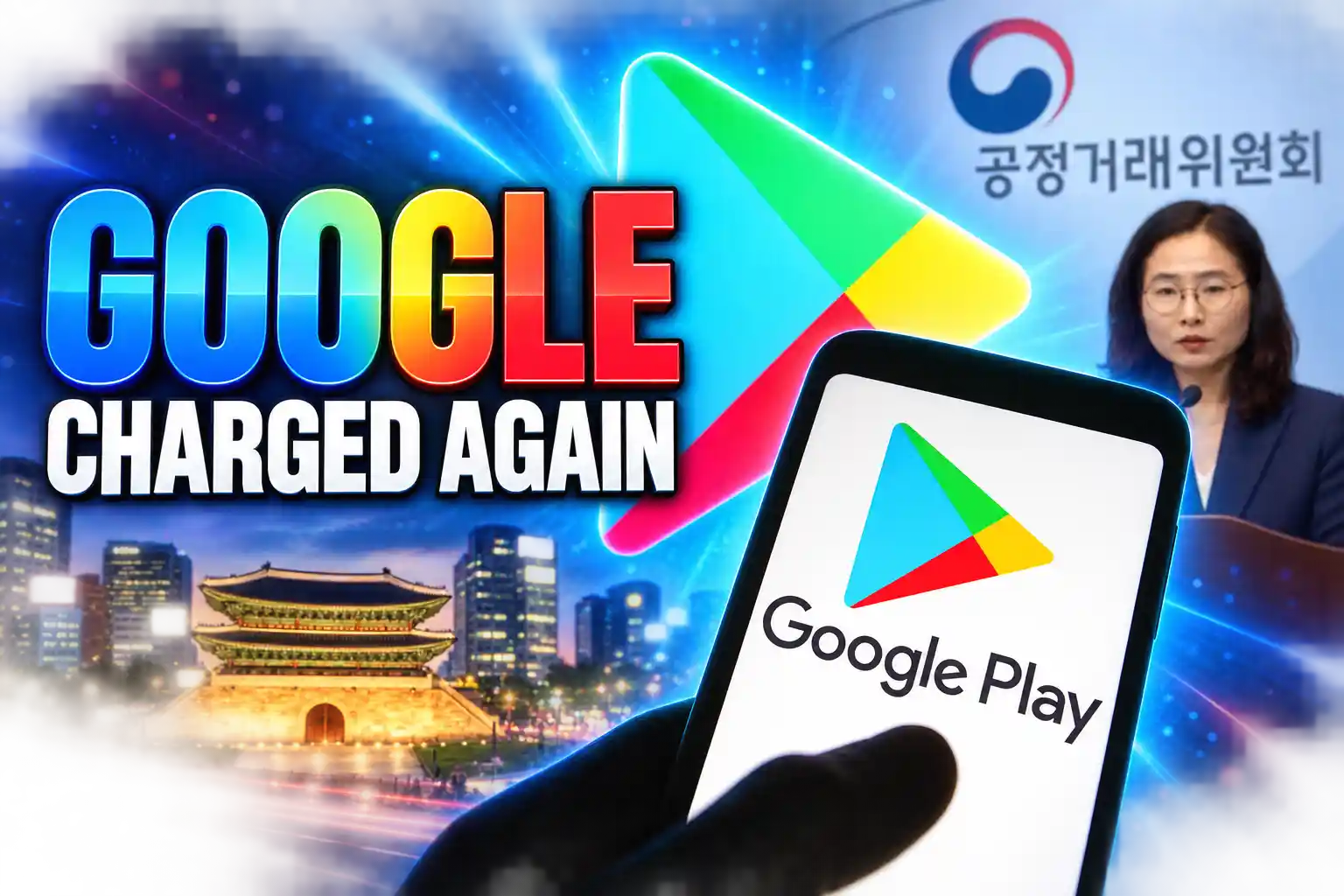
Korea’s examiner treats Project Hug as a sequel to the 2023 OneStore exclusivity case, putting 14.16 trillion won of Play revenue in scope.

South Korea’s antitrust examiner charged Google on July 1, 2026, over Project Hug, a games incentive program that ran until March. The file treats the Games/Google Velocity Program as abuse of a dominant Android store and puts 14.16 trillion won ($9.21777 billion) of relevant revenue in scope.
The same watchdog already punished exclusive Play deals meant to freeze out OneStore. This case is the sequel, built around subsidies and most-favored terms rather than a written ban.
Examiners Say Project Hug Locked Android Games to Play
The secretariat of the Korea Fair Trade Commission submitted an examiner’s report dispatched on July 1 to Google LLC, Google Asia Pacific Pte. Ltd., and Google Korea LLC. The paper does not bind the commissioners. It is the staff accusation, with proposed sanctions, that starts a formal hearing.
Staff say Google signed GVP contracts to stop big game firms from leaving Play over high in-app fees. Support for Google Cloud, Ads, and YouTube was tied to most-favored-nation terms on release dates, quality, and in-app benefits. Money then rose as a studio’s Play revenue rose.
THE EXAMINER’S FILE
- The window: Staff timed the conduct at about six years and nine months, from July 2019 to March 2026.
- The legal hooks: They cite interference with business activities and exclusive dealing under Article 5 of the Fair Trade Act.
- The share claim: Google’s slice of Korea’s Android app market is described as generally more than 80 percent.
- The fine math: A surcharge may reach 6% of relevant revenue, a ceiling of about 849.6 billion won if the 14.16 trillion won base holds.
Jeong Hee-eun, director general of the Market Surveillance Bureau, told a briefing the staff found suspected Fair Trade Act breaches after complaints, overseas case files, on-site checks, and witness interviews. The complaints arrived in November 2024 from the Citizens’ Coalition for Economic Justice and the Korea Game Consumers Association.
Google can file written views and copy evidence for eight weeks from receipt of the report. The commission said it will call a full hearing once that defense window is done.
The 42.1 Billion Won Case Already Covered OneStore
On April 11, 2023, the commission fined the same three Google entities 42.1 billion won and issued a corrective order. Staff said that from June 2016 to April 2018, Google traded featuring and overseas marketing help for a promise not to put new games on OneStore, the store launched in 2016 by SK planet’s spin-off with Korea’s three carriers and Naver.
In that earlier window, Google’s spending share in the local app market rose from 80 to 85 percent in 2016 to 90 to 95 percent in 2018, the commission said then, while OneStore fell from 15 to 20 percent to 5 to 10 percent. Games made more than 90 percent of sales on both Play and OneStore. The 2023 order told Google to stop buying exclusivity, to build an internal watch system, and to report back.
THE KOREA STORE FIGHT
- June 2016: OneStore launches as the carrier-backed Android alternative.
- June 2016 to April 2018: The commission later finds Play featuring tied to keeping new games off OneStore.
- July 2019: GVP, or Project Hug, contracts begin.
- March 2022: The 2021 Telecommunications Business Act billing rules take effect.
- April 11, 2023: The 42.1 billion won exclusivity fine and corrective order land.
- November 3, 2025: The Seoul High Court upholds the illegality finding and a 2.3 percent surcharge rate, then cancels the 42.1 billion won amount as calculated because the revenue base was too wide.
- November 2024: Civic groups complain about GVP.
- March 2026: The examiner’s GVP window ends.
- July 1, 2026: The new examiner’s report goes to Google and to the commission.
The High Court sent the 2023 surcharge back for a narrower base. The commission has been weighing a Supreme Court appeal. OneStore has said it will use the liability finding in civil claims. Jeong drew a clean line between the two files: the old case paid studios not to launch on OneStore, while GVP allowed other stores but demanded timing and terms at least equal to Play, which she said could be read as Google looking for other means after the 2023 sanction.
Most-Favored Terms Replaced an Outright Store Ban
Under GVP, a studio agreed that launch timing and in-app quality on Play would be better than, or at least equal to, any rival Android store. Google then offset costs on Cloud, Ads, and YouTube. The kicker was the slope: support grew as Play revenue grew, so the fattest titles had the most to lose by feeding another store first.
The progressive structure itself is not a violation of the law, but we viewed the demand for it on the condition of most-favoured treatment as containing elements that restrict competition, and the effect became larger because it was designed with a progressive structure.
Jeong Hee-eun, director general, KFTC Market Surveillance Bureau
Staff say that mix cut the incentive to put games on rival markets, hurt stores such as OneStore, and blocked contracted publishers from launching a store of their own. They call it de facto exclusive dealing even though the contracts did not always say “do not list elsewhere.”
The Money Rose With Play Revenue
Project Hug did not start in Seoul. An Australian Federal Court judgment on Epic’s fight with Google traces the Hug plan after Fortnite left Play in 2018, when Google feared other studios would follow a direct Android download. A United States appeals court, recounting the Epic trial, described Hug as special deals with 22 top game developers in the Epic trial, including Activision.
Trial evidence in that case put a Hug package with Activision Blizzard King at about $360 million over three years. A Google executive testified the commercial flow between the firms was larger. Google told the US court the program bought early access for Play users, not a ban on rival stores. Activision called claims that it had agreed not to compete “nonsense.”
Examiners Separate Billing From Store Access
Forced in-app billing is a different Korean file. The 2021 amendment to the Telecommunications Business Act bars big app markets from requiring their own checkout. Those rules took effect in March 2022 and sit with the Korea Communications Commission, which in October 2023 floated surcharges of up to 47.5 billion won on Google and 20.5 billion won on Apple, then delayed a decision again on August 13, 2026.
Jeong said the Fair Trade Commission will keep talking with the communications regulator. The Hug case is about where a game launches and on what terms, not which wallet sits inside the purchase screen.
OneStore Takes Nearly Half When Titles Dual-List
OneStore is the local store this file keeps circling. It cut its in-app purchase fee of 20 percent in 2018, from the 30 percent industry norm, and lists a 5 percent fee on external payments. Annual gross merchandise volume passed 1 trillion won in 2022. Chief executive Park Tae-young has set a 2 trillion won transaction target by 2030 and is pushing web checkout at about 8 percent plus instant-play games inside the store.
A Korea Development Institute review of app markets found games making 93 percent of Play sales in its Korea cut, which is why a games incentive program is the whole store fight in this country. IGAWorks Mobile Index figures, released with OneStore in August 2025, put OneStore at about 12.6 percent of game transaction value from the second half of 2020 through the first half of 2025, just above Apple’s App Store at about 12.3 percent.
KOREA APP STORE SHARES BY YARDSTICK
| Yardstick | Google Play | OneStore | Apple App Store |
|---|---|---|---|
| Spending share, 2016 (KFTC, 2023 case) | 80 to 85 percent | 15 to 20 percent | Not stated |
| Spending share, 2018 (KFTC, 2023 case) | 90 to 95 percent | 5 to 10 percent | Not stated |
| Android app market, 2026 examiner | Generally more than 80 percent | Rival named, no share given | Outside Android scope |
| Developer revenue mix, 2024 communications survey | 67.5 percent | 2.9 percent | 28.2 percent |
| Game transactions, 2H 2020 to 1H 2025 (IGAWorks) | Not separately stated | About 12.6 percent | About 12.3 percent |
| Top 50 dual-listed games, 1H 2025 | Not separately stated | 49.2 percent of that pair’s volume | Not in that pair |
Among the top 50 highest-grossing games listed on both Play and OneStore in the first half of 2025, OneStore took 49.2 percent of transaction value. OneStore also said its average paying user spent about five times as much as on Play, with dual-listed shares of 50.9 percent in RPG, 64.8 percent in simulation, 49.2 percent in strategy, and 74.3 percent in sports. Cumulative fee cuts for developers were put at 380 billion won, and user discounts at 690 billion won.
Those dual-list numbers only exist when the game is actually on OneStore. The examiner’s theory is that Hug made that second listing late, thin, or not worth the lost Play credits. Galaxy Store sat at 1.5 percent of developer revenue in the same 2024 communications survey, a reminder that a preloaded Samsung shop has not broken Play either.
Five Korean Studios and 17 Foreign Publishers Signed
The examiner counted 22 top game companies by Play sales. Five are Korean: NCSOFT, listed as NC in the briefing, plus Nexon, Netmarble, Pearl Abyss, and Com2uS. Seventeen are overseas, including Activision Blizzard King and Riot Games.
WHO SAT ON THE CONTRACTS
- Korean five: NCSOFT, Nexon, Netmarble, Pearl Abyss, and Com2uS, the local hit factories the 2023 case also circled.
- Named foreign pair: Activision Blizzard King and Riot Games, both already in the US Hug record.
- The rest: Fifteen other overseas publishers, unnamed in the public briefing, inside the same 17-firm foreign tally.
- Who is not charged: The studios. Jeong said it would have been practically hard to refuse the money, and that this is a dominance case against Google, not a collusion case against publishers.
That last point matters for anyone looking for a Korean scapegoat. Staff are not accusing Nexon or Activision of a cartel. They are saying Google’s share made a “yes” the only commercial answer, then used that yes to keep Play first.
Civic Groups Want the 2023 Order Checked Again
Twenty-four civic groups filed a request with the commission on September 22, 2026, asking it to test whether the 2023 corrective order was actually carried out. They want GVP contracts and subsidy files from after that order, and they want checks on whether most-favored terms and sliding support were a workaround. They note that Hug did not always forbid a rival listing, which is why the new file looks different on paper from the 2016 to 2018 bans.
Google’s Korea docket now sits inside a wider fight in Washington over Korean platform cases. US trade groups have told American officials that the Fair Trade Commission leans on US firms while local platforms grow. The Hug papers cut against a simple protection story in one respect: the named publishers include Korean majors as well as Activision and Riot, and the harm theory is that a carrier-backed store could not get equal games, not that a Korean studio was barred from Play.
The tension still sits on the table. OneStore is owned by the same telecom-and-portal group that wanted a national Android shop in 2016. A large surcharge on Play would land as a win for that shop even if the legal test is dominance, not industrial policy.
Commissioners Still Have to Vote on a Fine
Google rejected the staff case. In a statement it said Play competes fairly with other stores and brings benefits to Korean developers and users, that it cooperated with the investigation, and that it will show the commissioners there was no legal breach.
Google Play competes fairly with other app stores and delivers numerous benefits to developers and consumers in Korea. We have cooperated diligently with the KFTC’s investigation, and we will continue to show the Commissioners that there has been no violation of the law.
Google statement
Staff still asked for a corrective order plus a surcharge, and they flagged the 2023 record as a possible aggravating factor. The statutory ceiling on this file remains 6 percent of the relevant revenue the examiner set at 14.16 trillion won. No public final vote had issued by the September 22 civic filing, and the 2023 surcharge itself is back in court for a tighter sum.
The program the staff described had already stopped in March 2026. What the commission still has to decide is whether most-favored Play terms plus sliding Cloud, Ads, and YouTube money were exclusive dealing by another name, and how much of that 14.16 trillion won, if any, should be the base for a bill.
Disclaimer: This article is news reporting on an examiner’s report and related court and market facts. It is informational only and is not legal advice, a prediction of a fine, or a view on any party’s liability. Readers who need advice on competition law, platform contracts, or a possible claim should consult a qualified antitrust or commercial lawyer in the relevant country. Figures, shares, and case statuses reflect the official report, court accounts, and company materials cited above and can change when the commission votes or a court recalculates a surcharge.

Instagram Plus Tests a Read-Only Mode That Cuts Stories

Altman Asks the Public to Accept Some AI Harm

Google Freezes OSS VRP Product Reports After AI Flood

AI Agents Make Payment Rails the Scarce Prize

Turkey’s Crypto Boom Now Runs Through Three Banks

Fable 5 Came Back Under a Commerce On-Off Switch

Google’s SpaceX GPU Lease Has a Sept. 30 Deadline

Plasma One’s XPL Locks Face a 1.81 Billion Cliff

DGO’s Rs 549 World Cup Pass Cost Fans Sleep and Data

Moonshot AI’s $30 Billion Ask Became a $35 Billion Close
-
 AI4 months ago
Fable 5 Came Back Under a Commerce On-Off Switch
-
 AI5 months ago
Google’s SpaceX GPU Lease Has a Sept. 30 Deadline
-
 CRYPTO4 months ago
Plasma One’s XPL Locks Face a 1.81 Billion Cliff
-
 APPS5 months ago
DGO’s Rs 549 World Cup Pass Cost Fans Sleep and Data
-
 AI5 months ago
Moonshot AI’s $30 Billion Ask Became a $35 Billion Close
-
 NEWS5 months ago
ColorOS 17 Device List Spans Oppo, OnePlus and Realme
-
 GAMING4 months ago
The RTX 4050 Under Rs 70,000 Hides a Wattage Gap
-
 AI4 months ago
Boris Cherny’s Loops Still Demand a Higher Production Bar