
NEWS
iOS 27 Trust Insights: How iPhone Spots Scams Before Money Moves
Apple detailed iOS 27 Trust Insights at WWDC 2026. The framework watches iPhone behavior for coaching scams in real time, runs on-device, returns one risk value.

Apple detailed Trust Insights at WWDC 2026 as the iOS 27 framework that watches an iPhone user being coached through a scam, and steps in before the money moves. The system is part of iOS 27, which sits in developer beta today ahead of a public release scheduled for September 2026.
The pitch inverts how scam defenses usually work. Most call-screening apps scan what a message says. Trust Insights watches how the person holding the phone is acting, and asks each app to decide what to do with that signal.
What Trust Insights Watches For
Trust Insights is the framework Apple engineering manager Mike Armstrong walked developers through in the WWDC26 session the Meet Trust Insights developer session. Apple describes social engineering scams as attacks that target people, not systems, because the user is the one carrying out the action, authenticated and legitimately.
Real-time coaching makes detection especially difficult. Attackers guide victims through voice calls, chat, or messaging, and the victim performs the actions themselves. Apple’s answer is to watch behavioral signals on the device, including interaction patterns, response timing, context, and basic sensor data. The framework is meant to spot the moment when a real user stops acting like themselves.
Apple tells developers to call the framework at critical moments: high-value financial transactions such as peer-to-peer payments, irreversible actions like account deletion, permission grants, and sensitive data sharing. The call can take a couple of seconds and requires internet reachability, which is why Apple recommends pairing the evaluation with an existing animation or interstitial screen.
Authentication confirms who, but not whether they’re acting freely.
Armstrong used the line to open the WWDC26 session, and it captures the gap Apple is trying to close. Trust Insights sits beside multi-factor authentication and biometrics rather than replacing either, layered with Apple Account signals and the developer’s own risk logic.
How the iPhone Knows Without Reading
Privacy is the central design choice. Trust Insights processes device data locally and discards the inputs after evaluation. None of the device-derived signals are shared with Apple or third parties, and the system never reads content within Photos, Messages, or Mail.
Only a single output value leaves the phone. That value may then be combined with Apple Account signals and velocity checks for additional context before Trust Insights returns its final assessment. Apple’s documentation requires apps to submit a real-time reportConsumption call after each evaluation, with six possible values describing how the app handled the insight. Offline fraud labels, submitted later through Apple Business Register, are how individual evaluations help the model improve over time.
Five Operation Buckets, Three Risk Values
Trust Insights groups the moments where it can help into five operation categories. The list comes directly from Apple’s developer documentation:
- payment: any exchange of assets, content, or money, including in-game purchases.
- account: updating account details or security information.
- resourceUse: requests to costly or constrained infrastructure, such as AI inference.
- communication: sending messages, submitting forms, or signing documents.
- other: a fallback for operations that don’t fit the above.
Each request returns one of three values. unknown means the system has no evidence of scam risk but should not be interpreted as low risk. medium means some evidence of coaching risk; Apple recommends that apps consider introducing friction, additional verification, or adjusting risk scoring. high means significant evidence of coaching risk, and the user should be informed of the determined risks before proceeding. Apple’s recommended pattern is to integrate Trust Insights into existing risk and decision logic, not to act as the sole determinant. Outright blocking based solely on a trust insight is not recommended.
Banks Hold the Real Switch
The hidden stakeholder is the app developer. Trust Insights is opt-in at the integration level. An app must declare an entitlement in Xcode, import the framework, build a parameter pack with a schema, and call the Swift API. Until a bank does that work, transfers inside its app will not generate a Trust Insights request at all.
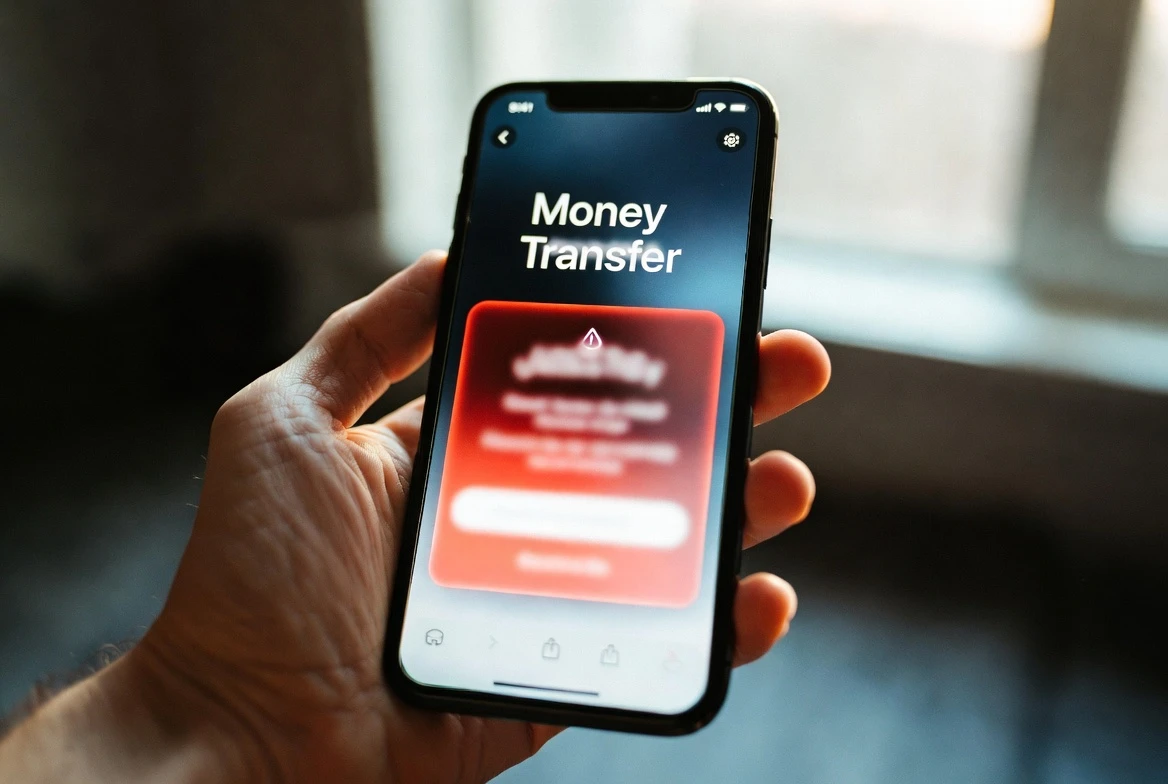
Apple’s WWDC demo runs inside a banking app, the use case the company most wants to illustrate. The example sets up a large money transfer to someone claiming to be a doctor treating a family member. A medium result prompts the app to display a warning and add a delay to the transaction. A high result brings up the warning and the friction.
The wider industry is already building parallel defenses inside the app runtime. The LexisNexis and Promon mobile app fraud alliance pairs identity intelligence with tamper-resistant telemetry from inside the running application, targeting six attack categories including overlay manipulation, malware, and reverse engineering. Trust Insights sits above that stack, watching the user’s behavior while partners like Promon Shield watch the app itself.
None of that matters if the bank does not integrate. The iPhone can detect coaching signs all day long, but the framework is invisible inside any app that has not adopted it. For most users in most markets, that is still the default state.
The Cooldown Built to Block Coached Disabling
One design detail stands out. Users can disable Trust Insights in Settings, but a cooldown period applies after disabling. Apple says the delay is meant to protect users who may have themselves been coached into turning the protection off.
The detail closes off a specific failure mode. The most common real-world coercion pattern runs through a voice call, chat, or messaging session while the victim is still on the line with the attacker. A scammer who can talk a victim into disabling protection mid-conversation has already won, and the cooldown turns that conversation into a dead end.
Where Trust Insights Fits in Apple’s On-Device AI Push
Trust Insights sits inside a broader WWDC26 story. Apple’s three headline themes this year were Apple Intelligence and Siri, platform improvements, and trust and safety. On-device processing of sensitive signals has become the consistent thread, from Apple Creator Studio’s on-device AI features running locally to Trust Insights keeping behavioral data on the phone.
Other platforms are moving in the same direction. WhatsApp, which counts three billion users across 180 countries, said in late June 2026 that it would begin letting people reserve usernames so they can chat, call, and connect without ever handing out a phone number. The shape overlaps with Trust Insights, as covered in this WhatsApp username privacy rollout for three billion users: a platform company absorbing more identity work on the user’s behalf.
Apple’s broader advice to developers is that behavioral context is just one input, layered with Apple Account signals and the developer’s own risk logic. The pitch to users is simpler. The phone notices when something feels wrong, before the money leaves.
Open Questions Before iOS 27 Ships
Three things remain unconfirmed. The WWDC session does not give a release date for Trust Insights specifically, beyond iOS 27’s broader beta timeline. iOS 27 beta 2 shipped on June 22, 2026, and Apple has said the first iOS 27 public beta is expected in July 2026, with the final version following in September 2026.
False positives are the second open problem. A high warning on a legitimate transfer would erode trust in the system quickly. Apple tells developers to integrate Trust Insights into existing risk and decision logic rather than treat it as the sole determinant, which is the right hedge but not a guarantee.
The third is the feedback loop. Apple requires real-time insight feedback through reportConsumption, and apps that skip the call may be rate-limited. That requirement only works if developers actually integrate, and Apple’s documentation recommends that apps contribute offline fraud labels when possible.
Apple’s own services have already been running Trust Insights, the company says, and the WWDC session is in part a handoff to third-party developers. Adoption inside the apps that move money, hold credentials, or sign documents will decide whether Trust Insights becomes an iPhone feature or a quiet footnote. For anyone who has watched a parent hand over a banking password to a fake support caller, the framework’s guide to recognizing social engineering schemes sits one click away.
Frequently Asked Questions
What is iOS 27 Trust Insights?
Trust Insights is an Apple framework introduced at WWDC 2026 that analyzes iPhone behavior for signs a user is being coached through a scam. It returns a risk value that apps can use to add friction, warnings, or delays before the transaction completes.
Does Trust Insights read the content of my messages, photos, or emails?
Apple’s documentation states that Trust Insights never reads content within Photos, Messages, or Mail. It analyzes interaction patterns, timing, context, and basic sensor data, all on-device, and discards the inputs after evaluation.
Can I turn Trust Insights off?
Yes. Users can disable Trust Insights in Settings, but a cooldown period applies afterward. Apple says the delay is meant to protect users who may have been coached into disabling the feature during a scam call.
Will my banking app work with Trust Insights automatically?
No. Each app must integrate the framework by declaring an entitlement, importing Trust Insights, and calling the Swift API. Until banks adopt it, transactions inside their apps will not trigger Trust Insights.
When does Trust Insights reach iPhones?
iOS 27 is in developer beta now, with iOS 27 beta 2 shipped on June 22, 2026. Apple has said the first iOS 27 public beta is expected in July 2026, with the final release in September 2026. Apple has not given a separate release date for Trust Insights within the iOS 27 cycle.


Workers Still Trust Judgment Over the AI Tools They Use

DigitalOcean’s $894 Million Backlog Rewrites the Old Cloud

Companies Froze Job Design and Called AI a People Problem

AI Capex Looks Unique Because the Chips Wear Out

Samsung Medison’s HERA Z10 Aims at the Sonographer Shortage

GPT-6 Astra Ships as OpenAI’s First Critical Cyber Model

Palms Sells Clean Air Without Ending Casino Smoking

OnlyFans Promo Bots on X Now Pass the Humanity Tests

Datamaran Drops the ESG Label After Winning the Argument

Xiaomi’s Own Chip Lands While Apple Argues Over Color

Oracle Cuts 21,000 Jobs in a Year, Cites AI in 10-K Filing

Fable 5 and Mythos 5 Return as US Lifts Anthropic Export Controls

SpaceX’s Google Deal Turns a Rocket Company Into a Cloud Landlord

CD Projekt Red Co-CEO: Redemption Arc Isn’t Done, Witcher 4 in 2027

XPL Rallies 30% Ahead of Plasma One Card Tier Launch

Google Search Profiles Build a Follow Graph Inside Discover

DGO App Brings Rs 549 Mobile Pass for FIFA World Cup 2026 in Nepal

Moonshot AI Targets $30 Billion in China’s Fastest AI Funding Sprint

Oppo’s ColorOS 17 Eligibility List Leaves A-Series Buyers Behind

Microsoft Xbox Layoffs Start in July as Sharma Slams 3% Margin
-
 AI3 months ago
Oracle Cuts 21,000 Jobs in a Year, Cites AI in 10-K Filing
-
 AI2 months ago
Fable 5 and Mythos 5 Return as US Lifts Anthropic Export Controls
-
 AI3 months ago
SpaceX’s Google Deal Turns a Rocket Company Into a Cloud Landlord
-
 GAMING3 months ago
CD Projekt Red Co-CEO: Redemption Arc Isn’t Done, Witcher 4 in 2027
-
 CRYPTO3 months ago
XPL Rallies 30% Ahead of Plasma One Card Tier Launch
-
 NEWS3 months ago
Google Search Profiles Build a Follow Graph Inside Discover
-
 APPS3 months ago
DGO App Brings Rs 549 Mobile Pass for FIFA World Cup 2026 in Nepal
-
 AI3 months ago
Moonshot AI Targets $30 Billion in China’s Fastest AI Funding Sprint