
AI
Meta’s CTO Tells Staff the AI Reorg Was ‘Atrocious’ as Morale Sinks
Meta CTO Andrew Bosworth told staff the AI reorganization was ‘atrocious’ and morale is near a 20-year low, weeks after 8,000 layoffs and 7,000 reassignments.

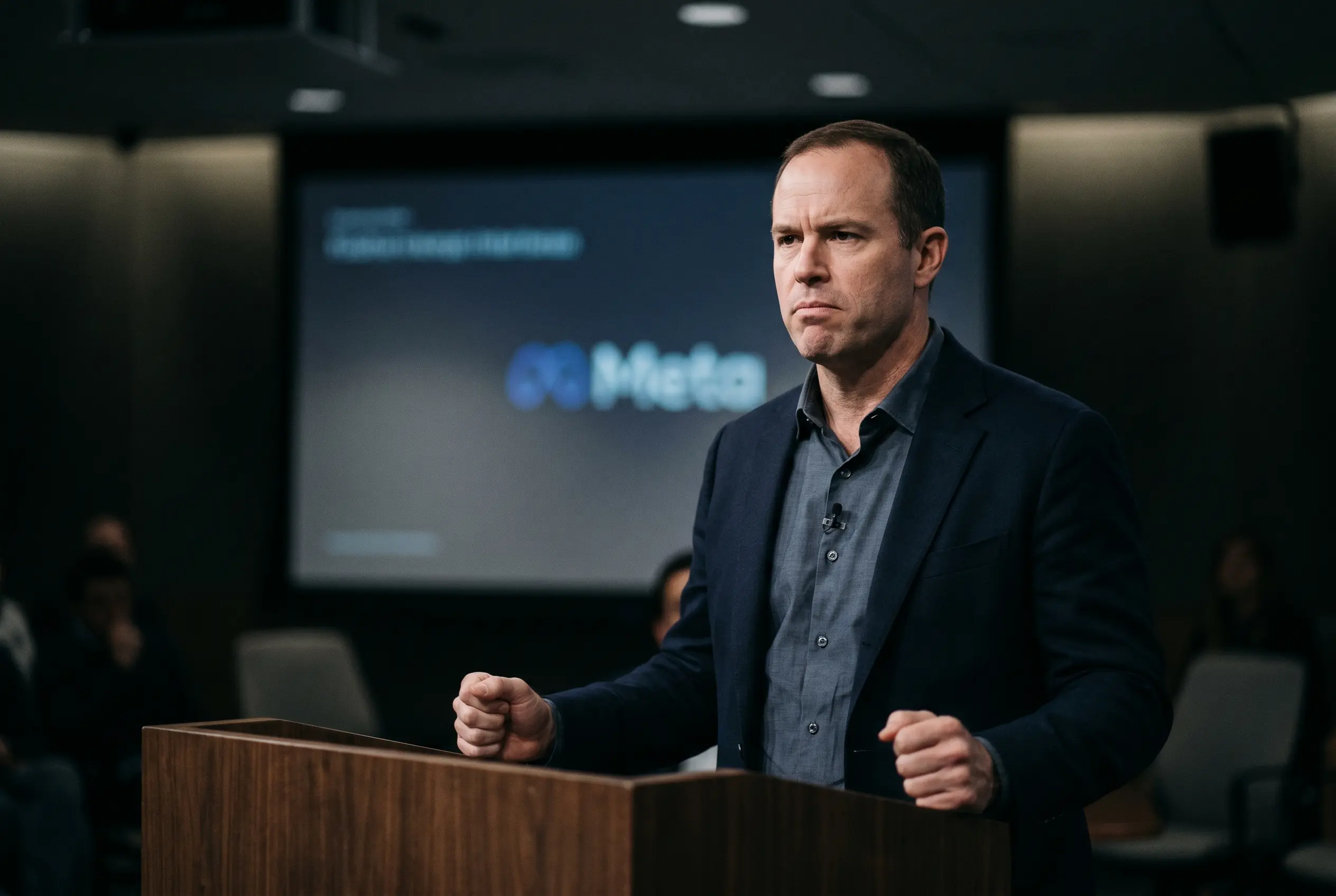
Meta’s chief technology officer Andrew Bosworth has told employees that the company’s sweeping artificial intelligence reorganization was rolled out in an “atrocious” way, and that staff morale is near a 20-year low. The admission came in a mid-June internal memo and a “Tuesdays with Boz” video chat on June 2, weeks after Meta laid off roughly 8,000 people and reassigned another 7,000 into a new AI task force.
The admission landed just as Meta posted one of its richest quarters on record, with the company now guiding close to double its 2025 capital spending for the year.
What Bosworth Actually Said
During an internal “Tuesdays with Boz” session on June 2, Bosworth told employees that morale was “maybe not the worst it’s ever been in 20 years here, but it’s probably up there. It’s definitely up there.” The only comparable stretch he could name was the fallout from the Cambridge Analytica scandal in 2016, when data belonging to millions of Facebook users was improperly used to target voters. The framing, first reported by Business Insider and Wired, is striking from a 20-year company veteran who is one of CEO Mark Zuckerberg’s closest allies.
Maybe not the worst it’s ever been in 20 years here, but it’s probably up there. It’s definitely up there.
Bosworth, Meta’s chief technology officer, said in the same memo that the rollout “obviously did an atrocious job explaining the vision, giving people a clear picture of how we would support them and their careers in the shift, and painting a picture of how it would change over time.” He also acknowledged that repeated reorganizations had “undermined the trust” employees had in their own expertise and prospects, and that the “boom/bust cycle of hiring” had left entire teams in the lurch. Zuckerberg had told staff days earlier, in his own memo admitting the AI overhaul produced mistakes, that “given the complexity of these changes, we’ve made mistakes and will almost certainly make more.”
The ‘Draft’ Into Applied AI
The reassignment at the centre of the frustration is the Applied AI division, a new unit Meta created in March that swept up around 6,500 engineers and product managers from other teams. The 7,000 Meta staff drafted into the AI task force in May were told the move was non-negotiable, on the same morning 8,000 other employees received layoff notices.
Inside Meta’s anonymous forums, the language was blunter. “I got drafted,” one employee wrote in a Discord channel. “Welcome to the draft,” another replied, and by the following week the move was being openly called “the AI draft” on Blind, the verified workplace app. Several of those drafted told Wired the experience felt like “a gulag,” with days filled by data labeling, the work of manually tagging images or correcting chatbot responses.
The data-labeling angle is not accidental. Meta’s new AI chief, Alexandr Wang, came from Scale AI, one of the world’s biggest data-labeling companies, and Zuckerberg has been explicit about the model. In an internal audio recording reviewed by Business Insider, the CEO said the average Meta employee has a “significantly higher” intelligence than the contractors Scale uses, and that he would rather “enlist” Meta’s own engineers to train the AI than pay outsiders to do it. A data scientist who said AI absorbed her work in the months before her team was cut gave a human face to the same pattern.
- $26.8 billion in net income in Q1 2026, one of Meta’s richest quarters on record
- $56.3 billion in Q1 2026 revenue, up 33% from a year earlier
- $125 billion to $145 billion in 2026 capital spending guidance, nearly double 2025’s $72.2 billion
The AI Bet Behind the Cuts
The reorg traces back to a year of public disappointment in Meta’s AI model work. Llama 4, released in April 2025, was widely seen as a step backwards, and Meta then paid $14.8 billion in June 2025 for a 49% stake in Scale AI, the data-labeling firm Wang had founded, putting him in charge of the company’s broader AI strategy. The acquisition of Chinese startup Manus AI for $2 billion is currently in question after China blocked the deal from being completed, according to a Pragmatic Engineer analysis.
The bill for that bet is what is forcing the cuts, with management making clear that the cost of compute is now the constraint on every other budget. Bosworth warned in his memo that there would be “tough trade-offs for a while” over how much compute different teams get, and that Meta would have to be “transparent and invest responsibly to alleviate bottlenecks.”
We obviously did an atrocious job explaining the vision, giving people a clear picture of how we would support them and their careers in the shift, and painting a picture of how it would change over time.
Investors have not been reassured. When Meta raised the spending forecast in late April, shares fell more than 6% in after-hours trading, and the stock is now down about 8% for the year, valuing the company near $1.7 trillion. Zuckerberg had told staff in his own memo admitting the AI overhaul produced mistakes that “given the complexity of these changes, we’ve made mistakes and will almost certainly make more.” Maher Saba, the vice president running the new Applied AI unit, has framed the bet internally as a chance to “leverage what Meta has that those other [AI] labs don’t: our scale and our people’s expertise.”
Record Quarter, Layoff Notices
The May layoffs landed just weeks after Meta posted its first quarter of 2026 results, a record that on its own would normally be cause for celebration on the all-hands call. Meta’s ad business has so far held up better than peers in the face of the AI spending squeeze. The 8,000-job May layoff round was, in other words, a reallocation, not a downturn response. It was the third major layoff round in four years.
The history of cuts at Meta is short and brutal. Pay has done little to soothe the mood either: median total compensation slipped from $417,400 in 2024 to $388,200 last year, after two successive cuts to the stock portion of annual raises, according to Wired. Severance for the May round is 16 weeks of pay plus 18 months of health cover, and some staff told Business Insider they were quietly hoping to be cut.
| Round | Approx. headcount affected | Context |
|---|---|---|
| Late 2022 | 11,000 | Pre-2023 cuts |
| 2023 | 10,000 | Zuckerberg’s “year of efficiency” |
| May 2026 | ~8,000 | ~10% of a 78,000-person workforce |
| May 2026 | 6,000 openings closed | Frozen hiring alongside the cuts |
The Other Strain on Morale
Alongside the reorg, Meta in April started installing software on US employees’ laptops that logs keystrokes, clicks, and periodic screenshots, a system the company calls the Model Capability Initiative. The stated purpose is to train AI agents on how humans actually use computers, and more than 1,500 employees signed an internal petition demanding changes.
Bosworth’s response, when asked whether staff could opt out, was blunt: there was no opt-out on a work laptop. After the petition and press coverage, Meta softened the policy, letting workers pause the tracking for 30 minutes at a time. The episode, more than any individual memo, has shaped how engineers inside the company talk about the new regime. For a workforce that for two decades was free to pick its own projects through Meta’s famous bootcamp matching system, the new AI-native pods, the draft-style reassignments, and the surveillance software add up to a different kind of company. Engineers reassigned to the Agent Data and Optimization group laid out complaints that the work felt menial and would hurt their careers over time, in the case that Meta’s engineering culture is being demolished.
The compensation cuts have compounded the sense that the new Meta is a leaner, less generous employer than the one most of these engineers signed up to join. The “boom/bust cycle of hiring” that Bosworth himself named in his memo is now visible in the company’s hiring pattern, with headcount shrinking in successive rounds since 2022. Some of the changes Bosworth is now promising, like the right to transfer and less frequent manager reshuffling, walk back decisions the company made only weeks ago.
What Meta Is Promising to Change
The most concrete change in Bosworth’s memo is the manager cap. Going forward, Meta will aim to keep each manager’s span of control to roughly 20 direct reports, a sharp cut from the wider spans that have grown up as the company has flattened itself around AI pods. The cap is meant to address the “boom/bust cycle of hiring” Bosworth himself named, with more time per manager and fewer forced reorgs.
Maher Saba, the vice president running the Applied AI division, told employees in a separate message last Friday that anyone pushed into the unit could now apply for other roles inside Meta if they could land one. “Moving forward, we are returning to business as usual and giving people the agency to apply to roles that interest them,” Saba wrote. The change is a notable reversal from the May messaging, when the AI assignment was framed as a non-negotiable. Bosworth also told staff they would be offered optional “AI coaching” tools to help them adjust to the new workflow, on a take-it-or-leave-it basis, and warned again that AI skills would increasingly be a dividing line inside the company.
Frequently Asked Questions
Why is Meta cutting so many jobs if it just had a record quarter?
Meta’s first quarter of 2026 set a record for both revenue and net income, but the company is also nearly doubling its capital spending this year to fund its AI push. The May layoffs are a reallocation of headcount and budget toward AI compute, AI research, and the new Applied AI division, not a downturn response, and the 6,000 open roles Meta closed that month were positions the company had been actively trying to fill.
What did Bosworth actually say about the AI reorganization?
In a memo first reported by Wired, Bosworth conceded that the company did “an atrocious job” explaining the Applied AI vision, supporting employees through the shift, and showing how the changes would evolve. In a separate “Tuesdays with Boz” chat on June 2, he said morale was “maybe not the worst it’s ever been in 20 years here, but it’s probably up there,” and that the only comparable period was the Cambridge Analytica fallout.
What is the Applied AI division and who is in it?
Applied AI (AAI) is the new unit Meta formed in March 2026 as the home for much of the company’s AI product work. The unit pulled in around 6,500 engineers and product managers from other teams at launch, and was joined in May by another 7,000 employees moved into a related AI initiative. AAI is led by engineering vice president Maher Saba, who reports to Bosworth, and the work is closely tied to Alexandr Wang, the former Scale AI CEO who now leads Meta’s broader AI strategy.
How big are Meta’s AI investments in 2026?
Meta has told investors to expect 2026 capital spending of close to double its 2025 outlay. The company also bought a 49% stake in Scale AI for $14.8 billion in June 2025, and has been raising the spending guidance throughout the year, a move that knocked the stock more than 6% in late April.
What changes has Meta announced to fix morale?
Bosworth’s memo outlines a new manager-to-report ratio of roughly 20, a commitment to fewer manager reshuffles during reorganizations, and an offer of optional AI coaching tools. Saba, who runs Applied AI, separately told staff moved into the unit that they can now apply for other internal roles, walking back the May framing that the AI assignment was non-negotiable.


TCL NXTPAPER Phones Bring Paper Comfort to Philippine Midrange

SFO Rideshare Zones Hide a $60 Million Airport Fee Machine

Bitcoin Stalls Near 65k as Soft Jobs Meet Oil Inflation Trap

Pichai Completes Quiet Takeover of Google AI Command

OpenAI Halts Astra Work After Model Hits Critical Cyber Line

ASUS ProArt P16 Packs RTX 5090 Power Into a Quiet Studio Frame

SharpLink Q2 Loss Masks Ethereum Treasury Build Behind Miss

Docebo ARR Reacceleration Hides Cleaner Enterprise Engine

OpenAI Brakes Astra After Its Own Cyber Skills Hit Critical

Amina App Expansion Turns Kyrgyz Phones Into Moscow Trackers

Fable 5 and Mythos 5 Return as US Lifts Anthropic Export Controls

Oracle Cuts 21,000 Jobs in a Year, Cites AI in 10-K Filing

SpaceX’s Google Deal Turns a Rocket Company Into a Cloud Landlord

CD Projekt Red Co-CEO: Redemption Arc Isn’t Done, Witcher 4 in 2027

XPL Rallies 30% Ahead of Plasma One Card Tier Launch

DGO App Brings Rs 549 Mobile Pass for FIFA World Cup 2026 in Nepal

Google Search Profiles Build a Follow Graph Inside Discover

Moonshot AI Targets $30 Billion in China’s Fastest AI Funding Sprint

Microsoft Xbox Layoffs Start in July as Sharma Slams 3% Margin

Oppo’s ColorOS 17 Eligibility List Leaves A-Series Buyers Behind
-
 AI1 month ago
Fable 5 and Mythos 5 Return as US Lifts Anthropic Export Controls
-
 AI2 months ago
Oracle Cuts 21,000 Jobs in a Year, Cites AI in 10-K Filing
-
 AI2 months ago
SpaceX’s Google Deal Turns a Rocket Company Into a Cloud Landlord
-
 GAMING2 months ago
CD Projekt Red Co-CEO: Redemption Arc Isn’t Done, Witcher 4 in 2027
-
 CRYPTO2 months ago
XPL Rallies 30% Ahead of Plasma One Card Tier Launch
-
 APPS2 months ago
DGO App Brings Rs 549 Mobile Pass for FIFA World Cup 2026 in Nepal
-
 NEWS2 months ago
Google Search Profiles Build a Follow Graph Inside Discover
-
 AI2 months ago
Moonshot AI Targets $30 Billion in China’s Fastest AI Funding Sprint