
AI
Microsoft’s 2024 Mistral Bet Grows Into a Multibillion Dollar Deal
Microsoft’s once dismissed 2024 stake in Mistral has grown into a multibillion-dollar infrastructure deal, arriving weeks after a US export ban rattled European AI sovereignty.

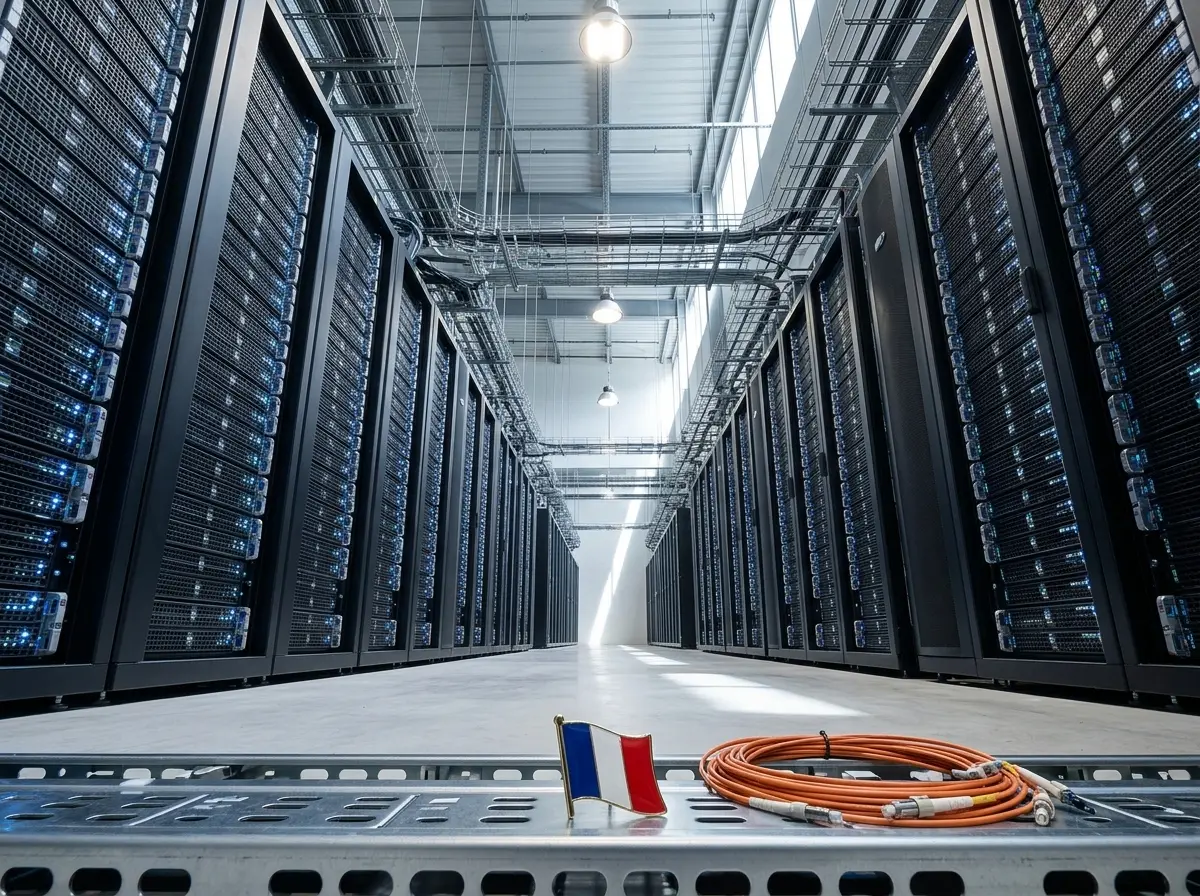
Microsoft will spend billions of dollars building out Mistral’s data centers in France, the two companies said Tuesday, an infrastructure bet that dwarfs the 15 million euro stake Microsoft bought in the French startup back in February 2024. Azure customers will soon build software on Mistral’s own French data centers. Two of Mistral’s models, Medium 3.5 and OCR 4, are moving into Microsoft’s app building tools, and businesses running their own servers get the option to run Mistral’s open models offline.
The deal lands about three weeks after Washington demonstrated exactly why European buyers wanted this kind of insurance in the first place, when a US export control order briefly cut off global access to two of Anthropic’s most powerful models. Mistral’s version of the fix still runs on Microsoft’s cloud and Nvidia’s chips.
Mistral’s Models Move Deeper Into Microsoft’s Stack
Microsoft and Mistral described the agreement as an expansion of a partnership that started in 2024, and the mechanics stretch across nearly every product Microsoft sells to business customers. According to Microsoft’s own announcement of the expanded partnership, the goal is letting regulated industries run frontier AI with more control over where their data actually sits.
- Azure customers will be able to develop software using Mistral’s data centers in France, giving Microsoft more capacity in Europe and giving regulated industries an alternative to US controlled infrastructure.
- Mistral’s Medium 3.5 and OCR 4 models have joined Microsoft Foundry, the company’s platform for building and deploying AI applications and agents.
- Medium 3.5 has also been added to Microsoft Copilot Studio, Microsoft’s tool for building chat based assistants.
- Businesses with independent data centers that connect to Microsoft through Azure Local now have the option to run Mistral’s open models, including in fully disconnected environments with no internet connection at all.
The buildout reportedly draws on thousands of Nvidia’s newest Vera Rubin chips inside European data centers, and the companies say they are working on a joint go to market plan, funding for customer proof of concept projects, Azure credits, and adoption workshops. Brad Smith, Microsoft’s president, confirmed the agreement carries no new equity investment in Mistral, a distinction that matters given what came next in 2024.
Why Does Sovereign AI Still Run on Nvidia Chips?
Because the hardware underneath every model, French, American, or otherwise, still comes from the same handful of American suppliers. Nvidia’s chips power Mistral’s French buildout the same way they power everything else in the global AI boom, and Nvidia, like Microsoft, is a Mistral investor. Full decoupling from US technology was never really on the table.
Smith and Mistral CEO Arthur Mensch made that trade off explicit in a joint interview with Reuters Tuesday, framing the deal as sovereignty with American parts included rather than sovereignty without them. Wait, that reference needs correcting.
“By putting Mistral’s models on Azure Local and on Mistral’s computational capacity, we can combine American and European technology and do it in a way that provides continuous and assured access,” Smith said.
The urgency behind that framing traces to a real episode from weeks earlier. On June 12, 2026, the US Commerce Department ordered Anthropic to block all foreign nationals, including its own non-US employees, from using its two most advanced models, Claude Fable 5 and Mythos 5, citing national security concerns tied to a jailbreak vulnerability that officials worried could be turned into a cyberattack tool. Anthropic could not verify every user’s nationality fast enough, so it shut both models down worldwide for every customer.
Washington reversed course in stages. A small group of American companies regained partial access around June 26. Commerce Secretary Howard Lutnick then lifted the restriction entirely on June 30, after Anthropic agreed to strengthen safety guardrails, coordinate with the government on future model standards, and report malicious activity. By the time Microsoft and Mistral announced their deal, the ban that supposedly made European AI independence urgent had already been resolved for three weeks. It still worked as a warning: a single US agency, acting overnight and without any European input, had shown it could switch off frontier AI access for an entire continent and switch it back on again once Washington was satisfied.
A 15 Million Euro Toehold Regulators Waved Through
This is not the first time Microsoft has bought its way into Mistral’s story at a moment of European anxiety about American tech power. In February 2024, Microsoft invested 15 million euros, about $16 million, for a stake that would convert to under 1 percent of Mistral at its next funding round. In exchange, Mistral’s models went on Azure and gained access to Microsoft’s supercomputers.
Brad Smith called it one of the most important days for Microsoft’s technology support in Europe at the time, and said the point was to prove the relationship was not just about Microsoft or American products. Regulators were not convinced it was that simple. The European Commission folded the Mistral deal into a broader review of the generative AI sector days later, the same review already covering Microsoft’s far larger, roughly $13 billion investment in OpenAI. The UK’s Competition and Markets Authority opened its own inquiry that April.
By May 2024, the CMA closed its file, concluding Microsoft had not acquired material influence over Mistral’s commercial policy and that the deal did not qualify for a full merger investigation. A Microsoft spokesperson had argued at the time that fractional investments and hiring talent were common industry practice, not the same as a merger. Competition lawyer Alex Haffner of Fladgate said the finding suggested Microsoft’s stake did not grant it sufficient rights or influence to trip UK merger rules.
Two years later, the question regulators dismissed at a 15 million euro scale is being asked again at a multibillion dollar one, just with less public attention the second time around.
Mistral’s Valuation Climbed From 5.8 Billion to a Possible 20 Billion
Mistral’s financial trajectory helps explain why Microsoft wanted back in with a bigger check. The startup, founded in Paris in 2023, has moved from scrappy challenger to one of Europe’s most valuable private tech companies in about two years.
| Date | Round | Amount | Valuation | Lead Investor |
|---|---|---|---|---|
| June 2024 | Series B | €600 million | €5.8 billion | General Catalyst |
| September 2025 | Series C | €1.7 billion | €11.7 billion (about $13.8 billion) | ASML led round with Nvidia participating |
| March 2026 | Debt facility | $830 million | Not applicable (debt) | Seven bank consortium including BNP Paribas and HSBC |
| Reported, unconfirmed | New round in talks | About €3 billion | About €20 billion | Unconfirmed, per Bloomberg |
ASML, the Dutch chipmaking equipment giant, took roughly an 11 percent stake for 1.3 billion euros in that September 2025 round, becoming Mistral’s largest outside shareholder and putting a board seat on Mistral’s strategic committee. Nvidia, Andreessen Horowitz, Bpifrance, General Catalyst, Index Ventures, Lightspeed, and DST Global all returned as investors. Mensch declined to comment Tuesday on Bloomberg’s report that Mistral is now in talks to raise around 3 billion euros at a 20 billion euro valuation. Even at that number, Mistral’s valuation would still be dwarfed by US rivals like Anthropic.
Gigawatts Mistral Cannot Fund Alone
Mistral spent much of 2025 trying to reduce its reliance on any single outside cloud provider, not just Microsoft. It built its own AI cloud, Mistral Compute, turned to CoreWeave for additional GPU access, and lined up hundreds of millions in debt rather than more dilutive equity to pay for physical infrastructure.
The company secured $830 million in debt financing in March 2026 to expand a 44 megawatt data center at Bruyères le Châtel outside Paris, a site expected to run on more than 13,000 Nvidia chips. In February 2026 it committed 1.2 billion euros to a first data center outside France, in Sweden, with local operator EcoDataCenter. Mistral had already struck a joint venture in 2025 with Abu Dhabi’s MGX fund, France’s Bpifrance, and Nvidia to build a much larger, gigawatt scale campus in France. The near term target is 200 megawatts of capacity across Europe by 2027, on the way to Mensch’s stated goal of 1 gigawatt of compute capacity by 2030.
Getting there requires capital at a scale few companies outside the largest cloud providers can write checks for, which is the gap Mensch says Tuesday’s agreement helps close. “Working together on closing the gap on the infrastructure side in Europe” is how he described it, specifics of the dollar figure withheld.
What This Deal Leaves Unsettled
Brussels’ unease with American tech dominance runs well beyond one AI startup. Apple has spent this year tangled in its own version of the fight, with its Siri AI rollout stuck behind EU digital rules that echo the same regulatory instincts that first greeted Microsoft’s Mistral investment in 2024.
Several parts of Tuesday’s announcement remain open questions, and the companies were careful about what they would and would not confirm.
- What we know: Microsoft will spend billions on Mistral’s French infrastructure with no new equity stake; Medium 3.5 and OCR 4 are live in Foundry and Copilot Studio; Azure Local customers can run Mistral’s open models offline; the companies are building a joint go to market plan with proof of concept funding and Azure credits.
- What’s unconfirmed: the exact dollar value of the infrastructure commitment; whether it connects in any way to the reported 3 billion euro fundraising talks at a 20 billion euro valuation, which Mensch declined to address; and a firm timeline for when Mistral’s data centers reach the full 1 gigawatt target.
Nothing announced Tuesday changes who owns what. Microsoft’s stake stays wherever it landed after 2024, unchanged by billions in fresh infrastructure spending. Mistral gets the compute it could not easily finance alone. Whenever the reported 20 billion euro round actually closes, Microsoft will already own the pipes the money runs through.
Frequently Asked Questions
What Does Mistral AI Do?
Mistral AI is a Paris based artificial intelligence lab founded in 2023 by former Google DeepMind and Meta researchers. It builds open weight large language models and the Le Chat chatbot, and has sold into manufacturing, financial services, defense, and France’s armed forces, making it Europe’s most closely watched homegrown AI challenger to US labs.
Does Microsoft Own a Stake in Mistral?
Yes, a small one. Microsoft invested 15 million euros in February 2024, converting to under 1 percent of Mistral at the company’s next funding round. Brad Smith confirmed Tuesday’s expanded infrastructure agreement adds no new equity investment on top of that original stake.
What Is Azure Local and Why Does It Matter Here?
Azure Local lets organizations run Microsoft’s cloud tools, and now Mistral’s open models, inside their own data centers rather than the public cloud, including in environments with no internet connection at all. That matters most to governments, banks, and hospitals that are legally or practically barred from sending sensitive data outside their own walls.
How Much Compute Is Mistral Trying to Build by 2030?
Mistral is targeting 1 gigawatt of compute capacity by 2030. That builds on a 44 megawatt data center already running near Paris, a 1.2 billion euro Swedish site announced in February 2026, and a separate gigawatt scale campus project with Abu Dhabi’s MGX fund, Bpifrance, and Nvidia, with a nearer term goal of 200 megawatts across Europe by 2027.
Why Did the US Restrict Anthropic’s AI Models in 2026?
The Commerce Department ordered Anthropic on June 12, 2026 to block all foreign nationals from its Claude Fable 5 and Mythos 5 models over national security concerns tied to a jailbreak vulnerability. Anthropic shut both models down worldwide to comply, then regained full access for all customers by June 30 after adding safety guardrails, a resolution that arrived weeks before the Microsoft Mistral deal was announced.


Workers Still Trust Judgment Over the AI Tools They Use

DigitalOcean’s $894 Million Backlog Rewrites the Old Cloud

Companies Froze Job Design and Called AI a People Problem

AI Capex Looks Unique Because the Chips Wear Out

Samsung Medison’s HERA Z10 Aims at the Sonographer Shortage

GPT-6 Astra Ships as OpenAI’s First Critical Cyber Model

Palms Sells Clean Air Without Ending Casino Smoking

OnlyFans Promo Bots on X Now Pass the Humanity Tests

Datamaran Drops the ESG Label After Winning the Argument

Xiaomi’s Own Chip Lands While Apple Argues Over Color

Oracle Cuts 21,000 Jobs in a Year, Cites AI in 10-K Filing

Fable 5 and Mythos 5 Return as US Lifts Anthropic Export Controls

SpaceX’s Google Deal Turns a Rocket Company Into a Cloud Landlord

CD Projekt Red Co-CEO: Redemption Arc Isn’t Done, Witcher 4 in 2027

XPL Rallies 30% Ahead of Plasma One Card Tier Launch

Google Search Profiles Build a Follow Graph Inside Discover

DGO App Brings Rs 549 Mobile Pass for FIFA World Cup 2026 in Nepal

Moonshot AI Targets $30 Billion in China’s Fastest AI Funding Sprint

Oppo’s ColorOS 17 Eligibility List Leaves A-Series Buyers Behind

Microsoft Xbox Layoffs Start in July as Sharma Slams 3% Margin
-
 AI3 months ago
Oracle Cuts 21,000 Jobs in a Year, Cites AI in 10-K Filing
-
 AI2 months ago
Fable 5 and Mythos 5 Return as US Lifts Anthropic Export Controls
-
 AI3 months ago
SpaceX’s Google Deal Turns a Rocket Company Into a Cloud Landlord
-
 GAMING3 months ago
CD Projekt Red Co-CEO: Redemption Arc Isn’t Done, Witcher 4 in 2027
-
 CRYPTO3 months ago
XPL Rallies 30% Ahead of Plasma One Card Tier Launch
-
 NEWS3 months ago
Google Search Profiles Build a Follow Graph Inside Discover
-
 APPS3 months ago
DGO App Brings Rs 549 Mobile Pass for FIFA World Cup 2026 in Nepal
-
 AI3 months ago
Moonshot AI Targets $30 Billion in China’s Fastest AI Funding Sprint