
AI
Apple’s Siri AI Freeze in the EU Echoes Its Own 2024 Playbook
Apple’s Siri AI freeze in the EU repeats its 2024 playbook, with iPhone Mirroring still dark two years later, as Google faces binding 2027 DMA deadlines.

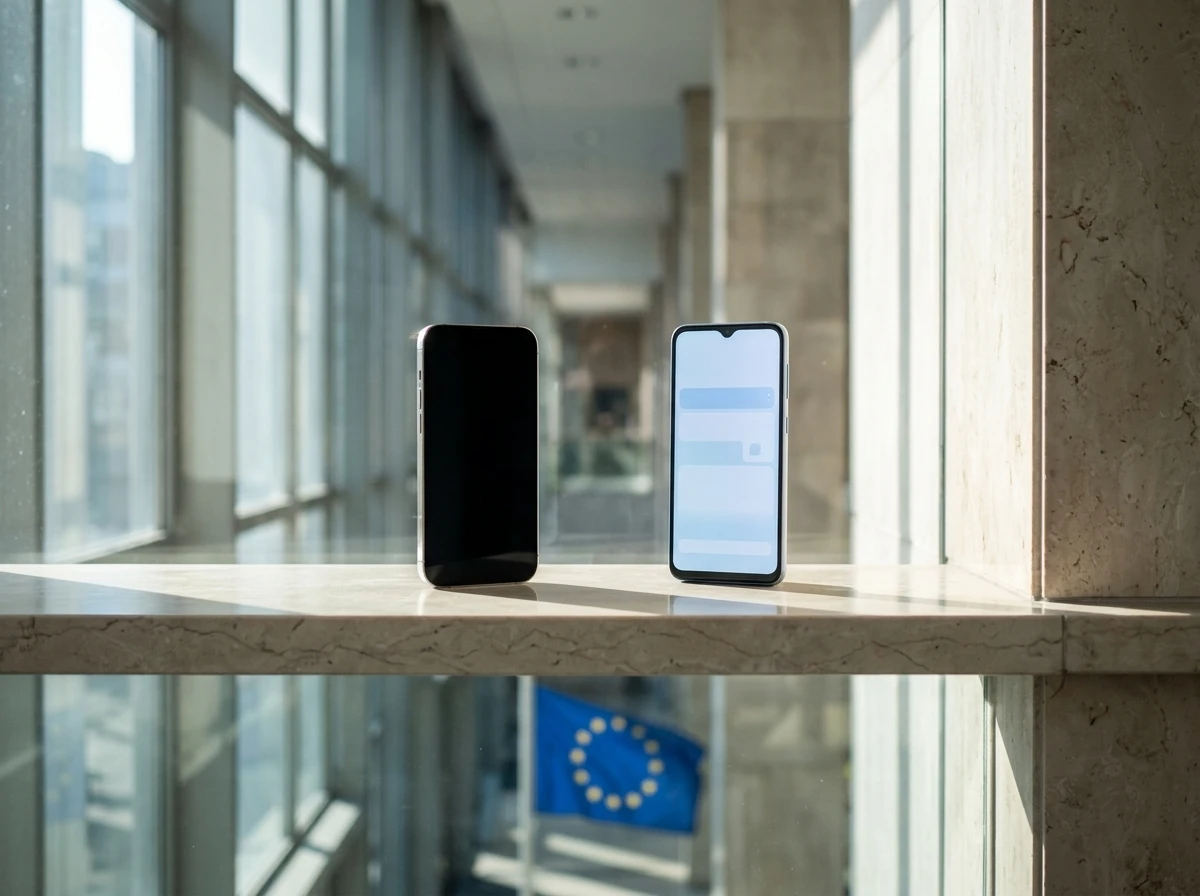
Apple will not put its new Siri AI on a single iPhone or iPad in the European Union this year. Google, on the same continent, now has a legally binding deadline to hand rival AI assistants the same access to Android that it gives its own Gemini. Both companies say Brussels is forcing the change at the expense of user privacy and device security.
Apple has run this exact play before. In 2024 it froze Apple Intelligence, iPhone Mirroring and SharePlay Screen Sharing in the EU over the same law, and one of those three, iPhone Mirroring, is still missing from European phones more than two years later. That precedent, more than anything either company said this month, is the clearest guide to how long a new freeze on Siri AI might last.
Brussels Finalizes What It Drafted Months Ago
The European Commission adopted two binding specification decisions against Google on July 16, 2026, closing six months of proceedings it opened in January of that year. The first spells out exactly how Google must open eleven Android features, things like wake word activation and on screen context, to competing AI assistants. The second sets out how Google must share anonymized search ranking, query, click and viewing data with rival search engines and AI chatbots.
“Our decision will help smaller competitors, search engines, or AI assistants, to compete and provide that choice, while protecting the user’s privacy,” said Teresa Ribera, the Commission’s executive vice president overseeing competition policy. The measures include a fair formula to calculate the price of the shared data and a vetting step that lets Google screen recipients for cybersecurity risk before handing anything over.
Google’s president of global affairs, Kent Walker, rejected the framing. The decisions, he said, risk undermining vital privacy and security guardrails for millions of Europeans, and Google says it repeatedly offered its own safeguards that regulators turned down. The stakes are unusually high because roughly 60% of EU mobile users carry an Android phone, making the operating system the main battleground for which AI assistant becomes a daily habit.
The 2024 Precedent
This is not Apple’s first standoff with Brussels over an AI feature. In June 2024, weeks after unveiling Apple Intelligence, Apple told the world it would not ship that product, iPhone Mirroring or SharePlay Screen Sharing in the EU that year, citing regulatory uncertainty tied to the DMA. CNBC reported at the time that Apple pointed to concerns about safety and interoperability rather than a single fixed objection.
Two years later, Apple used the same reasoning for Siri AI, its overhauled assistant unveiled at WWDC26. The company proposed an intermediary system called Trusted System Agent, meant to let rival assistants reach Siri level capability over an eighteen month rollout while Apple kept tighter control of the handoff.
We’re deeply disappointed that our EU users won’t have Siri AI on iPhone or iPad when we share our new software releases later this year.
Craig Federighi, Apple’s senior vice president of software engineering, said that in the company’s official statement, adding that Apple hopes to eventually bring Siri AI to the EU but currently has no timeline for its availability on iOS or iPadOS there. The European Commission rejected every version of the Trusted System Agent plan Apple put forward.
The clearest sign of how these freezes actually resolve sits in a feature nobody is arguing about anymore. iPhone Mirroring, one of the three features Apple paused in 2024, remains unavailable in the European Union today, more than two years after Apple first said the pause would be temporary.
| Feature | First Announced | Current EU Status |
|---|---|---|
| Apple Intelligence | June 2024 | Delayed at EU launch, cited DMA concerns |
| iPhone Mirroring | June 2024 | Still unavailable in the EU as of mid 2026 |
| SharePlay Screen Sharing | June 2024 | Delayed at EU launch, cited DMA concerns |
| Siri AI | June 2026 | No timeline for iPhone or iPad in the EU |
Apple has told EU users they will still get pieces of the new assistant. Siri AI is coming to macOS 27 and visionOS 27 in Europe. It is iOS, iPadOS and the paired watchOS experience that stay dark, because Apple designed the watch version to depend on an iPhone already running Siri AI.
Two Years, Same Fight
The dispute did not start this month, and it will not end with it either. The two companies and Brussels have been circling the same argument since 2023.
- September 5, 2023: The European Commission designates Alphabet a gatekeeper under the DMA for eight services, including Android and Search.
- March 7, 2024: Google’s DMA obligations for those services, including anonymized search data access, take full legal effect.
- June 2024: Apple delays Apple Intelligence, iPhone Mirroring and SharePlay Screen Sharing in the EU, citing the same law.
- January 27, 2026: The Commission opens formal specification proceedings into how Google must open Android to rival AI assistants.
- June 2026: Apple unveils Siri AI at WWDC26, then confirms it will not reach EU iPhones or iPads with iOS 27.
- July 16, 2026: The Commission adopts binding decisions on Android interoperability and Google Search data sharing.
- January 2027: Google must finalize pricing and begin sharing search data with qualifying rivals.
- August 1, 2027: Google must implement most of the eleven Android measures, timed to the Android 18 release.
- August 2028: Android 19 must support multiple assistants activated by their own wake phrases.
Read against that timeline, the Commission says it will monitor Google’s rollout for two full years after this month’s decision, which pushes final scrutiny of Android 19 compliance well into 2028 regardless of how quickly Google moves.
Who Actually Gets Into Your Phone First?
The Commission’s decision does not open Android to Google’s rivals alone. It opens the wake word and app action layer to any AI assistant that clears a security check, and it hands anonymized search data to qualifying search engines and chatbots too. Several of the best funded names in AI already qualify.
- OpenAI’s ChatGPT – named specifically as a qualifying recipient of anonymized Google Search data under the new rules
- Anthropic’s Claude – positioned to seek the same wake word and app action access Gemini currently holds alone
- Perplexity – already a popular standalone app, but currently blocked from the system level integration Gemini enjoys
- Mistral’s Le Chat – a Europe built assistant that gains a distribution channel long reserved for Google
There are limits built into the deal. Rivals will not get Google’s search algorithms, and the rules bar them from using shared data for unrelated advertising, consumer profiling, or training general purpose AI models outside search itself.
The Fine Neither Company Has Paid Yet
Specification decisions like the ones issued on July 16 clarify how a company must meet an obligation it already has. They are not non-compliance findings, and neither carries a monetary penalty by itself.
The money sits one step further down the road. Under the DMA’s enforcement framework, a confirmed non-compliance finding can carry a fine of up to 10% of a company’s global annual turnover, rising to 20% for a repeat offense, plus daily penalty payments of up to 5% of average turnover until the company falls in line. Tech Times calculated that a first offense fine at Alphabet’s scale could top $40 billion.
These are not abstract numbers for either company. The Commission fined Apple 500 million euros in April 2025 over App Store anti-steering rules, and fined Meta 200 million euros the same month over its advertising consent model. Apple appealed that fine. A July 8, 2026 ruling from the EU’s General Court, arising out of Apple’s own gatekeeper litigation, already settled whether an appeal pauses compliance: it does not. Designated gatekeepers must keep meeting DMA obligations while their appeals play out, not after.
Google is expected to challenge the July 16 decisions the same way. Google’s first real deadline lands in January 2027, when it must finalize pricing for search rivals. Apple, on Siri AI, has not set one at all.
Frequently Asked Questions
Hasn’t Google Already Had to Share Search Data Since 2024?
Yes. Article 6(11) of the DMA obligated Google to provide anonymized search data access starting in March 2024, but the Commission judged Google’s original offer ineffective, which is why it issued a far more detailed pricing and access formula this month.
Which Apple Devices Will Actually Get Siri AI in the EU?
Siri AI is still coming to macOS 27 and visionOS 27 for EU users. iPhone, iPad and Apple Watch miss out, because the watchOS 27 version of Siri AI only works when paired to an iPhone already running it, and Apple has not said when that will change.
Does This Month’s Decision Come With a Fine?
No. Specification decisions like this one only clarify how Google must meet a rule it is already bound by. A separate, ongoing Commission case over Google Search self-preferencing and Play Store steering rules is expected to produce an actual fine, in the hundreds of millions of euros according to Tech Times reporting.
Is the UK Imposing the Same Rules on Google?
Not yet. Britain’s Competition and Markets Authority gave Google strategic market status for search in October 2025 and for Android, Play and Chrome later that month, but it has not issued a conduct requirement covering search data sharing or Android interoperability the way Brussels just did.
What Happens If Google Misses the January 2027 Deadline?
Missing a deadline does not trigger an automatic fine. The Commission would first need to open a separate non-compliance investigation and give Google a chance to respond, the same process now running in parallel over Google’s Search rankings and Play Store rules.


Sony’s 10 Percent Disc Drop Leaves the 2028 Cutoff Intact

Chip Allocation Sidelines the Base iPhone 18 This Fall

Miami-Dade Fights the Vice City Brand It Already Wears

IFA 2026 Awards Put Tecno Ahead of Flagship Phones

USB-C Gadgets Made the Junk Drawer Rechargeable

Pixel 11 Pro Asks $1,099 for a Light Google Locked

The iPhone Ultra Sells Two Retired Minis as One Foldable

Google Opens Gmail to Voice and Gates Docs Live

Lenovo Prices the IdeaPad Vibe Against Apple’s $699 Neo

Xbox Caps Game Pass Cloud Gaming at 15 Hours

Oracle Cuts 21,000 Jobs in a Year, Cites AI in 10-K Filing

Fable 5 and Mythos 5 Return as US Lifts Anthropic Export Controls

SpaceX’s Google Deal Turns a Rocket Company Into a Cloud Landlord

CD Projekt Red Co-CEO: Redemption Arc Isn’t Done, Witcher 4 in 2027

XPL Rallies 30% Ahead of Plasma One Card Tier Launch

Google Search Profiles Build a Follow Graph Inside Discover

DGO App Brings Rs 549 Mobile Pass for FIFA World Cup 2026 in Nepal

Moonshot AI Targets $30 Billion in China’s Fastest AI Funding Sprint

Oppo’s ColorOS 17 Eligibility List Leaves A-Series Buyers Behind

Microsoft Xbox Layoffs Start in July as Sharma Slams 3% Margin
-
 AI3 months ago
Oracle Cuts 21,000 Jobs in a Year, Cites AI in 10-K Filing
-
 AI2 months ago
Fable 5 and Mythos 5 Return as US Lifts Anthropic Export Controls
-
 AI3 months ago
SpaceX’s Google Deal Turns a Rocket Company Into a Cloud Landlord
-
 GAMING3 months ago
CD Projekt Red Co-CEO: Redemption Arc Isn’t Done, Witcher 4 in 2027
-
 CRYPTO3 months ago
XPL Rallies 30% Ahead of Plasma One Card Tier Launch
-
 NEWS3 months ago
Google Search Profiles Build a Follow Graph Inside Discover
-
 APPS3 months ago
DGO App Brings Rs 549 Mobile Pass for FIFA World Cup 2026 in Nepal
-
 AI3 months ago
Moonshot AI Targets $30 Billion in China’s Fastest AI Funding Sprint