
NEWS
Pinterest Rolls Out Amazon Storefront Linking for Creators
Pinterest now lets Amazon Influencer Program creators link their Amazon Storefronts to their profiles, with affiliate tags auto-applied. Here’s how it works.

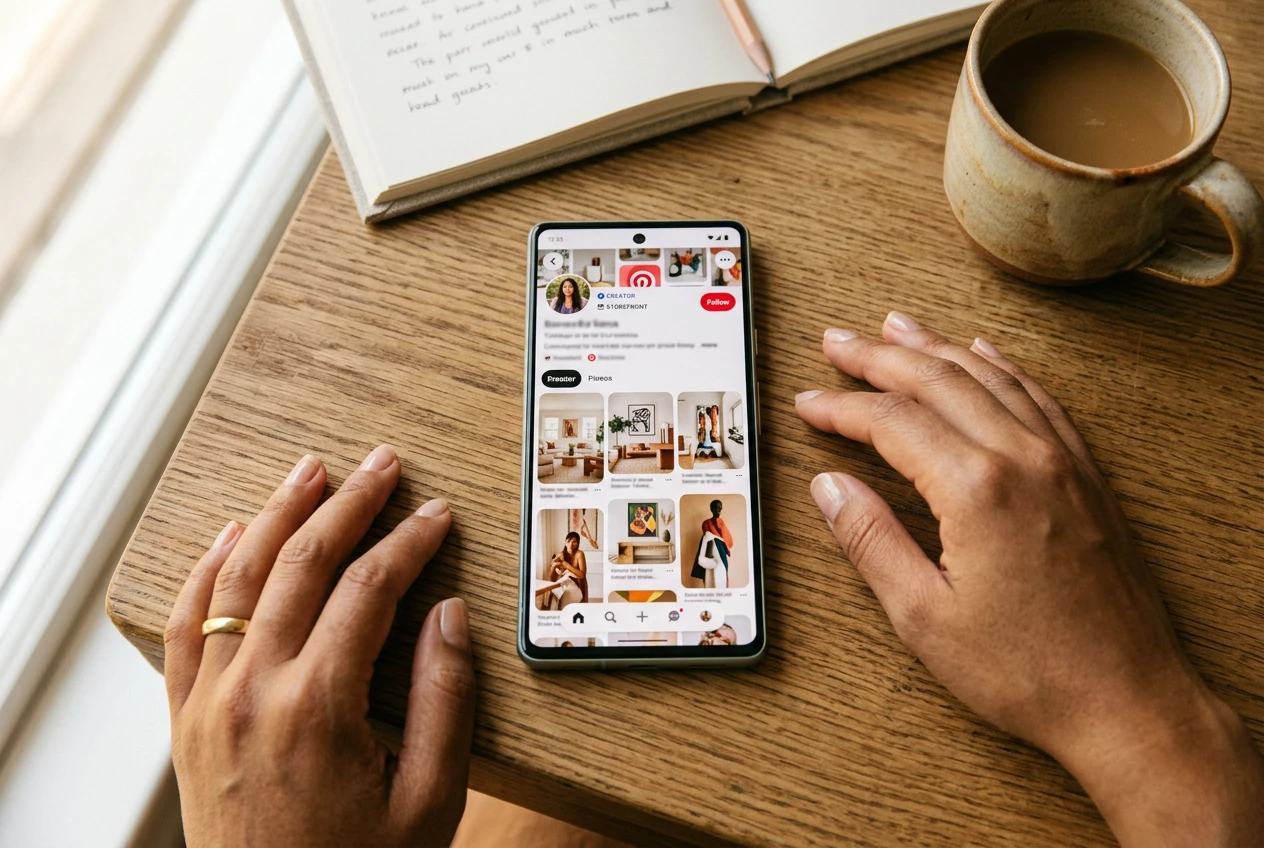
Pinterest began offering Amazon Storefront linking for creators on Wednesday. The new tool lets eligible creators connect their Amazon Storefront to their Pinterest account and have their affiliate link auto-applied whenever they tag an eligible Amazon product on a Pin. The rollout extends a partnership that has been quietly thickening since Pinterest and Amazon signed a multi-year ads deal in 2023, and it lands at a moment when the company is competing harder to hold on to creator mindshare.
The change removes one of the longest-running chores in affiliate marketing: copying and pasting individual Amazon affiliate IDs into each Pin. It also tightens the link between Pinterest’s shopping intent and Amazon’s checkout engine. The numbers are the reason: more than 50% of Pinterest’s users come to the site to shop, and the service fields more than 80 billion searches a month.
What Pinterest Shipped
Pinterest’s newsroom announcement frames the new tool as a cleaner path from inspiration to earnings. Once a creator’s Amazon Storefront is connected, Pinterest handles the rest. Tagging an eligible Amazon product on a Pin is enough to attach the creator’s affiliate link automatically.
Three things change for a connected creator. They are listed below. The full list is short and mechanical: each one removes a manual step from the affiliate workflow.
- Link their Amazon Storefront once inside Pinterest settings, in a few steps.
- Tag Amazon products on Pins and have their Amazon affiliate link applied automatically, with no manual IDs to copy in.
- Showcase the Amazon Storefront handle directly on their Pinterest profile, so shoppers can browse the creator’s recommendations in one place.
Lauren Glaubach, Pinterest’s vice president of global content partnerships, framed the move in the announcement as a way to reach people at the moment of intent. The full quote makes the case directly.
This means Pinterest sits closer to decision-making than other platforms. That helps creators reach audiences at the moment inspiration turns into action.
Pinterest says more than 50% of its 631 million monthly active users come to the platform to shop. The 80 billion monthly searches are the proof text. On a service that size, the difference between inspiration and checkout is mostly a matter of plumbing. The new tool is that plumbing.
Who Can Link and How It Works
The new tool is gated. To connect an Amazon Storefront, a creator needs a Pinterest business account, must be a participant in the Amazon Influencer Program, and must already have an Amazon Storefront. Pinterest’s help center setup guide walks creators through the rest of the process.
On the desktop, the linking flow runs five steps. The help page lists them in order.
- Log in to the Pinterest business account.
- Click the chevron-down icon at the top-right of the screen and select Settings.
- Click “Link to Pinterest” at the left of the screen.
- Next to Amazon Storefront, select Link, then click “Link accounts.”
- Follow the prompts to authenticate and link the Amazon Storefront.
Once the storefront is linked, an Amazon filter appears inside the Pin creation flow. Any Pin carrying an affiliate link will automatically display an affiliate link disclosure, per the help center. Creators with more than one Amazon Storefront cannot choose which one connects: Pinterest automatically picks the account that matches the location on their Pinterest profile.
Why Now: Chasing Creators From Instagram and TikTok
The timing tells a story. As TechCrunch noted, creators have largely built their shopping and affiliate businesses on Instagram, TikTok, YouTube and Facebook, not on Pinterest. The new tool is a direct bid to make Pinterest a more useful place to do that work. It is a defensive move on Pinterest’s part, with the company trying to keep the creators it has and lure back the ones who drifted.
The Amazon relationship has been deepening for years. The companies introduced a multi-year ads partnership in 2023, making Amazon the first partner on third-party ads on Pinterest, then signed a similar advertising deal with Google in 2024. Last week the company committed $4 billion to Amazon Web Services through 2031 to power its AI roadmap, including future AI visual search.
The wider context is rougher. TechCrunch’s coverage also pointed to a year of user complaints about “AI slop” on Pinterest, with the company rolling out a series of tools last year to fight AI content and put users in control.
Inside the company, the deal is being framed as a creator economy lever. By removing the affiliate-link friction, Pinterest is making a pragmatic argument to creators weighing where to spend their time: tagging is cheaper here, attribution is automatic, and the storefront display gives them a second storefront next to their Pin boards. Creators can keep their Amazon Influencer Program identity while gaining a Pinterest-native presence.
A Shoppable Pinterest Becomes a Mall
The new tool is also a quiet shift in what Pinterest is. The company says its users visit the platform to “find or shop for products” at more than twice the rate seen on other major social platforms. Adding a native storefront handle to creator profiles pushes that commerce bent even further into the product itself. The line between inspiration and a digital mall keeps moving.
Social Media Today described the move as part of Pinterest’s broader effort to become “the mall of the internet,” with shopping activity sitting in-stream rather than at the end of a click. The auto-applied affiliate links, the storefront displays, and the planned expansion to “other partners” all point in the same direction: a more shoppable Pinterest with checkout handled natively in the app. The profile-level storefront is the most concrete version of that idea so far.
For longtime Pinterest users who came for the inspiration and stayed for the mood boards, the shift is also a trade. The same platform that has fielded a year of complaints about AI slop is now leaning harder into commerce signals. The result is a feed where real-person storefronts are easier to find than they were a month ago.
Other Partners Are Lining Up
Pinterest has said the storefront linking tool will not be Amazon-only for long. “Storefront linking with other partners will be available soon,” the company wrote in its newsroom post on the rollout, without naming them. MediaPost reported that the expansion is on the roadmap, though Pinterest did not share a timeline.
For creators, the affiliate disclosure is the same for every partner: any Pin with an affiliate link will automatically carry the disclosure, per the help center. The auto-tagging flow is designed to make partner onboarding invisible to the creator. For Pinterest, the broader catalog is the play. Each new storefront partner adds a batch of product recommendations the platform can surface natively, with the same disclosure applied across the board.
Frequently Asked Questions
What is Amazon Storefront linking on Pinterest?
Amazon Storefront linking is a Pinterest tool, announced June 10, 2026, that lets eligible creators connect their Amazon Storefront directly to their Pinterest account. The feature auto-applies the creator’s Amazon affiliate link to any eligible Amazon product tagged on a Pin, and the storefront handle shows up on the creator’s profile. Creators no longer need to manage a separate Amazon affiliate link in each Pin they post.
Who is eligible to connect an Amazon Storefront to Pinterest?
Three things are required, per Pinterest’s help center: a Pinterest business account, an existing Amazon Storefront, and active participation in the Amazon Influencer Program. Creators also need to comply with applicable Amazon policies. The linking flow works on both the Pinterest mobile app and the desktop site, though some steps are only available on one or the other.
How are affiliate links applied once a creator is connected?
Creators tag an Amazon product on a Pin the same way they would tag any product. The affiliate link is added in the background, and the Pin automatically displays an affiliate link disclosure, according to Pinterest’s help documentation. Creators do not paste in affiliate IDs.
Will other storefronts be available for linking?
Yes. Pinterest said in its newsroom post that storefront linking with “other partners” will be available soon. MediaPost reported the expansion is on the roadmap, though the company has not named any new partners or shared a timeline. The same automatic affiliate disclosure applied to Amazon Pins will apply to any future partner integrations as well.
Can creators unlink their Amazon Storefront from Pinterest?
Yes. The Pinterest help center describes a separate unlink flow. Creators go to Settings, then “Link to Pinterest,” then next to Amazon Storefront, select Unlink, and the Amazon Storefront no longer features on their Pinterest profile. Data updates on the Amazon side, not Pinterest’s, are what remove lingering references to Pinterest on the Amazon Influencer profile.


South Korea Retail Investors Face Reckoning After KOSPI AI Rally Collapses

Surrey AI Maps Three Heart Attack Paths and Their Molecular Roots

Germany Locks Neutral Apple ATT Prompts Across Most of Europe

Apple’s 5% EU Fee Quietly Rewrites Alternative App Store Math

Apple’s EU Fee Truce Cuts Complexity but Leaves Rivals Fuming

Pixel 11 Pro Fold Trades Thinness for Durability and Seven-Year Stay

Mayo AI Flags HCM Obstruction From Everyday Ultrasound Videos

Indian Brands Quietly Scale Landmark Screens and Home Tech

Navin Vatsa Turns Grief Into a Lifetime of Quiet Seeing

Google Bets Pixel 11 Agentic AI Will Redefine Phones

Oracle Cuts 21,000 Jobs in a Year, Cites AI in 10-K Filing

Fable 5 and Mythos 5 Return as US Lifts Anthropic Export Controls

SpaceX’s Google Deal Turns a Rocket Company Into a Cloud Landlord

CD Projekt Red Co-CEO: Redemption Arc Isn’t Done, Witcher 4 in 2027

XPL Rallies 30% Ahead of Plasma One Card Tier Launch

Google Search Profiles Build a Follow Graph Inside Discover

DGO App Brings Rs 549 Mobile Pass for FIFA World Cup 2026 in Nepal

Moonshot AI Targets $30 Billion in China’s Fastest AI Funding Sprint

Oppo’s ColorOS 17 Eligibility List Leaves A-Series Buyers Behind

Microsoft Xbox Layoffs Start in July as Sharma Slams 3% Margin
-
 AI2 months ago
Oracle Cuts 21,000 Jobs in a Year, Cites AI in 10-K Filing
-
 AI2 months ago
Fable 5 and Mythos 5 Return as US Lifts Anthropic Export Controls
-
 AI3 months ago
SpaceX’s Google Deal Turns a Rocket Company Into a Cloud Landlord
-
 GAMING2 months ago
CD Projekt Red Co-CEO: Redemption Arc Isn’t Done, Witcher 4 in 2027
-
 CRYPTO2 months ago
XPL Rallies 30% Ahead of Plasma One Card Tier Launch
-
 NEWS3 months ago
Google Search Profiles Build a Follow Graph Inside Discover
-
 APPS2 months ago
DGO App Brings Rs 549 Mobile Pass for FIFA World Cup 2026 in Nepal
-
 AI3 months ago
Moonshot AI Targets $30 Billion in China’s Fastest AI Funding Sprint