
AI
Singapore’s Foreign Minister Bet His Diplomacy on AI
Singapore’s foreign minister published an AI diplomatic assistant on GitHub. It handles what junior diplomats used to do, and that tension is the story.

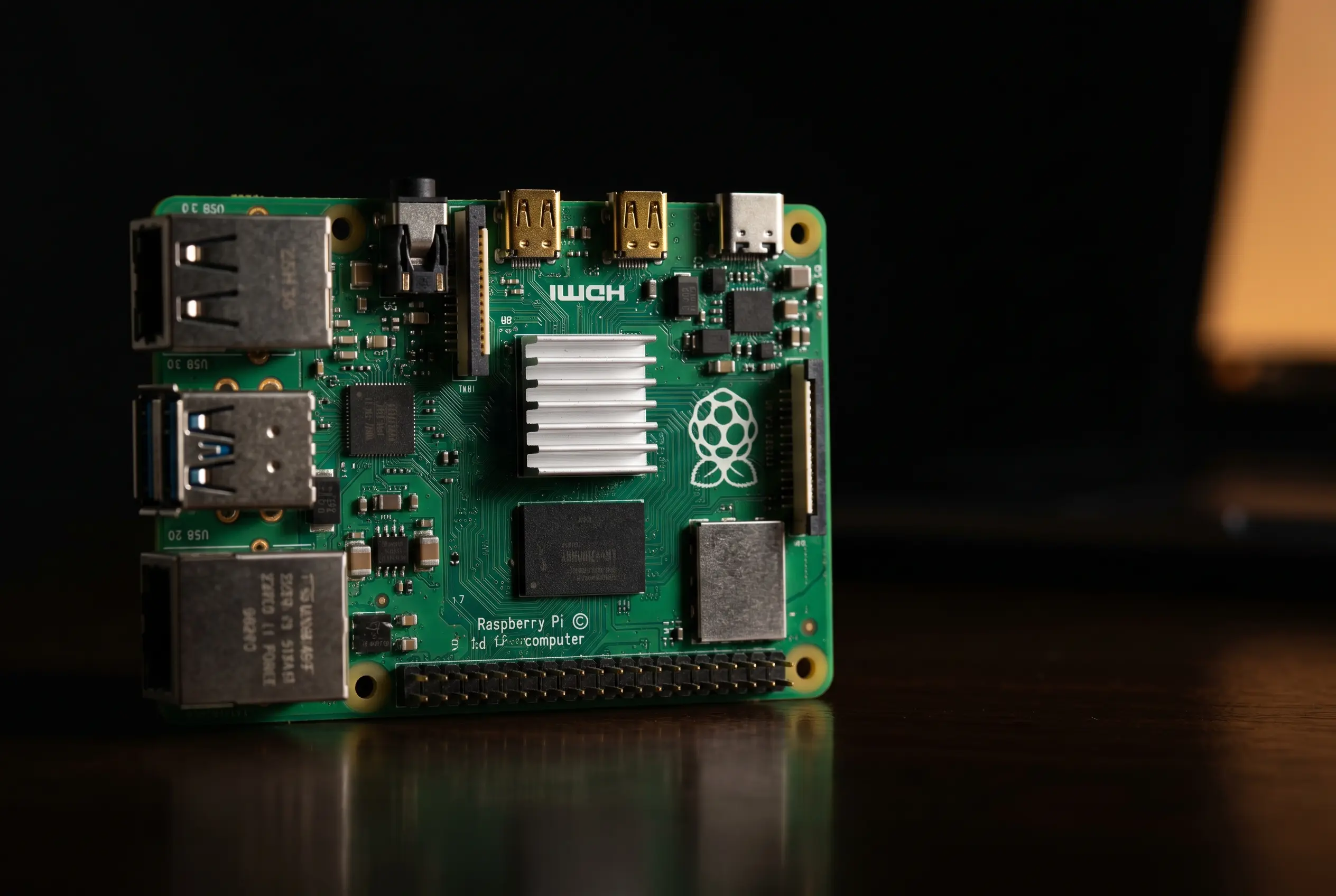
On April 21, 2026, Singapore’s Foreign Affairs Minister, Vivian Balakrishnan, published the complete architecture for an AI diplomatic assistant called NanoClaw on GitHub, with instructions any developer could follow. The system runs on a Raspberry Pi 5 on his home network, connects to his WhatsApp and Gmail, processes his speeches and country briefings into a searchable knowledge graph, and sends daily updates automatically. It drafts speeches, prepares parliamentary responses, and compiles daily briefings on counterparts and events. The minister hasn’t dared switch it off since.
The list of tasks the system handles maps closely onto what foreign ministries have traditionally asked of first- and second-year officers who learn, through the doing of those tasks, how to become senior diplomats.
A Diplomat Who Codes
Balakrishnan trained as an ophthalmologist at the National University of Singapore and has served as Foreign Affairs Minister since 2015, but his more distinctive professional habit is that he codes. He maintains a personal GitHub account and built the AI system himself rather than commissioning it from a ministry IT team, posting the full architecture for public replication.
The tool is built on two open-source components. The first, NanoClaw, is an agent framework by developer Gavriel Cohen that runs on Anthropic’s Claude API, managing messaging channels and conversational task loops. In his May 16 speech at AI Engineer Singapore, the minister described it as the component that routes communication from WhatsApp and Gmail into usable interactions with the underlying model. The second is the LLM Wiki pattern devised by Andrej Karpathy, the former director of AI at Tesla, which extracts structured facts from source text rather than indexing documents wholesale, producing a knowledge base that grows more precise with each addition. Speeches, country briefings, and bilateral meeting notes feed the system continuously.
He runs the entire system locally on a Raspberry Pi 5 with eight gigabytes of RAM, not through a commercial cloud service, because a foreign minister’s working documents and WhatsApp messages cannot pass through third-party servers without creating real security exposure. By keeping the model on hardware he physically controls, diplomatic content stays on his own network. “I have not dared to switch it off,” he told the conference audience.
The cognitive load he described: visiting twelve countries in a single month, meeting hundreds of officials, each requiring advance knowledge of the country’s political economy, history, and each counterpart’s personal background. “There is a huge cognitive overload on every single diplomat,” he said. The question his system was built to answer is how much of that load can be automated.
AI Goes to Work in the Field
Diplomatic AI already operates far beyond any single minister’s workstation.
In June 2020, the United Nations Department of Political and Peacebuilding Affairs ran the first AI-assisted diplomatic consultation using the Remesh platform, holding a live conversation with hundreds of Yemeni civil society representatives on ceasefire terms and humanitarian access. Later that year, the UN Support Mission in Libya used the same platform during the peace process that seated the Libyan Political Dialogue Forum, running sessions with up to 1,000 participants at a time, surfacing views on foreign intervention and governance in near real-time, as documented in peer-reviewed analysis of AI-assisted peace dialogues published in the journal Data & Policy. The algorithm clustered responses with similar meanings, supported local Arabic dialects, and required only a smartphone web link to participate, reaching populations that traditional remote consultations could not have accessed during an active conflict.
The World Bank took a predictive approach. Its machine learning model for Uganda ingests more than 90 variables (conflict data, food prices, economic indicators, climate patterns, and online language) to forecast daily refugee arrivals from South Sudan and the Democratic Republic of Congo. When inflows crossed defined thresholds, contingency funds were released for schools, health centers, and water capacity before arrivals peaked, per the World Bank’s brief on AI-powered refugee forecasting.
| Organization | Tool or Approach | Purpose | Scale and Result |
|---|---|---|---|
| UN Dept. of Political and Peacebuilding Affairs | Remesh AI platform | Citizen consultation in Yemen and Libya | Up to 1,000 participants per session; local dialect support |
| World Bank | Machine learning forecasting model | Refugee flow prediction into Uganda | 90-plus variables; over 80% accuracy on UNHCR test data |
| Singapore Ministry of Foreign Affairs | NanoClaw (Claude-based agent) | Personal diplomatic knowledge system | Daily active use; speech drafts, briefings, parliamentary responses |
Singapore’s Accumulating Bets
No government has committed more concentrated AI capital in a shorter window. Three overlapping investments between March and May 2026 define a structurally different category of national commitment.
- S$300M+: OpenAI’s commitment for its first Applied AI Lab outside the United States, in Singapore, creating more than 200 technical roles, formalized at the ATx Summit on May 20
- $300M: target size of a Korea-Singapore joint AI fund-of-funds to be based in Singapore, backed by South Korea’s Ministry of SMEs and Startups, announced March 2 at the Korea-Singapore AI Connect Summit
- S$1B+: Singapore’s own government commitment to AI research and talent development by 2030
- 77%: share of Singapore’s employed workers classified as highly exposed to AI, per IMF analysis of the country’s 2022 labor force survey
The OpenAI for Singapore partnership focuses on national priorities including public service, finance, healthcare, and digital infrastructure. Singapore’s wider plan to deploy AI agents across government ministries includes the foreign ministry. The minister has written that ‘the diplomat who learns to work with AI will have a meaningful edge.’
What Gets Automated Is an Apprenticeship
In the same May 16 speech, the minister laid out what the system handles for him daily: answering every question, researching topics, providing daily updates, drafting speeches, condensing information, and preparing answers to parliamentary questions. Remove the ministry letterhead and that list reads as a first-year diplomatic officer’s standard duties.
A first-year diplomat writing country briefs develops judgment about which political facts matter. Drafting ministerial speeches for review teaches how the foreign ministry frames arguments to specific audiences. Parliamentary Q&A preparation builds familiarity with the politics of public accountability. None of those tasks is quick. Singapore’s plan to deploy AI agents across public-sector ministries stands to accelerate the automation of all three, in a labor market the IMF has found to be among the most AI-exposed in the world.
According to IMF analysis of Singapore’s 2022 labor force survey, about 38.6 percent of employed workers are in occupations with high AI exposure and low AI complementarity, the category where substitution is more likely than augmentation. Those roles skew toward newer, less-tenured workers in drafting, administrative support, and information synthesis functions. An AI system that automates those functions removes the specific jobs through which a foreign service officer accumulates the judgment that makes them effective a decade into the career.
Asha Hemrajani, a senior fellow at the Centre of Excellence for National Security (CENS) at Singapore’s S. Rajaratnam School of International Studies, told Bloomberg Opinion that the core vulnerability is the quality of the data a model is trained on. “Garbage in, garbage out,” she said. “It depends on the data you input into the AI model you are building.” The quality of the knowledge graph is inseparable from the quality of what goes into it.
The Garbage-In Problem
Hemrajani extended the concern further. AI systems deployed in diplomatic environments are “vulnerable to hacking and manipulation, which could lead to strategic miscalculations,” she added. A knowledge graph fed with intercepted and altered communications, or with manipulated documents, produces analysis built on false premises. Catching the error requires the accumulated judgment that the system is supposed to be supplementing.
Balakrishnan’s architecture is an explicit response to the data sovereignty problem. By running the model on locally hosted hardware under his personal control, using containerized code he selected specifically because its codebase was short enough to audit himself, he keeps diplomatic material off third-party servers where interception carries a more credible risk. That choice works because he is a technically literate minister who reviews his own stack. A foreign ministry deploying the same approach across hundreds of officers faces a different and harder trust problem.
“You cannot govern a technology that you have only been briefed on,” Balakrishnan told the AI Engineer Singapore conference. The remark was aimed at government officials who depend entirely on IT departments for their AI picture. It carries a second implication: an officer who has absorbed a country’s political situation through AI-generated briefings, rather than by writing and revising them, has a different relationship to that knowledge than one who did the work.
What a Room Feels Like
Kennedy and Khrushchev navigating the Cuban Missile Crisis in 1962 did so partly through back-channel signals that required reading the other side accurately under severe uncertainty and time pressure. Kissinger and Zhou Enlai’s 1971 meetings in Beijing, which built the framework for Sino-American normalization, required Kissinger to judge in real time what Zhou needed to offer domestically and what the American side could yield without political damage at home. Those calls were improvisational and irreversible, and they required contextual judgment that only builds over years of doing smaller versions of the same work.
That judgment develops in the years a diplomat spends writing country briefs, drafting ministerial speeches, and preparing parliamentary responses for senior officials who send them back with corrections. Remove that workload and you also remove the iteration where errors get made, caught, and absorbed.
You can delegate work, but you cannot delegate accountability.
Those are the minister’s words, from his remarks at the Asia-Pacific Programme for Senior National Security Officers in April 2026. The system on his home network is still running, pushing out briefings and speech drafts on a daily schedule. The accumulation of judgment that decides whether those outputs are right still builds one country brief at a time.


Google Opens Gmail to Voice and Gates Docs Live

Lenovo Prices the IdeaPad Vibe Against Apple’s $699 Neo

Xbox Caps Game Pass Cloud Gaming at 15 Hours

GTA 6 DualSense Controllers Follow Sony’s Usual $84.99 Script

South Korea Retail Investors Face Reckoning After KOSPI AI Rally Collapses

Surrey AI Maps Three Heart Attack Paths and Their Molecular Roots

Germany Locks Neutral Apple ATT Prompts Across Most of Europe

Apple’s 5% EU Fee Quietly Rewrites Alternative App Store Math

Apple’s EU Fee Truce Cuts Complexity but Leaves Rivals Fuming

Pixel 11 Pro Fold Trades Thinness for Durability and Seven-Year Stay

Oracle Cuts 21,000 Jobs in a Year, Cites AI in 10-K Filing

Fable 5 and Mythos 5 Return as US Lifts Anthropic Export Controls

SpaceX’s Google Deal Turns a Rocket Company Into a Cloud Landlord

CD Projekt Red Co-CEO: Redemption Arc Isn’t Done, Witcher 4 in 2027

XPL Rallies 30% Ahead of Plasma One Card Tier Launch

Google Search Profiles Build a Follow Graph Inside Discover

DGO App Brings Rs 549 Mobile Pass for FIFA World Cup 2026 in Nepal

Moonshot AI Targets $30 Billion in China’s Fastest AI Funding Sprint

Oppo’s ColorOS 17 Eligibility List Leaves A-Series Buyers Behind

Microsoft Xbox Layoffs Start in July as Sharma Slams 3% Margin
-
 AI2 months ago
Oracle Cuts 21,000 Jobs in a Year, Cites AI in 10-K Filing
-
 AI2 months ago
Fable 5 and Mythos 5 Return as US Lifts Anthropic Export Controls
-
 AI3 months ago
SpaceX’s Google Deal Turns a Rocket Company Into a Cloud Landlord
-
 GAMING2 months ago
CD Projekt Red Co-CEO: Redemption Arc Isn’t Done, Witcher 4 in 2027
-
 CRYPTO3 months ago
XPL Rallies 30% Ahead of Plasma One Card Tier Launch
-
 NEWS3 months ago
Google Search Profiles Build a Follow Graph Inside Discover
-
 APPS3 months ago
DGO App Brings Rs 549 Mobile Pass for FIFA World Cup 2026 in Nepal
-
 AI3 months ago
Moonshot AI Targets $30 Billion in China’s Fastest AI Funding Sprint