
CRYPTO
Geoffrey Auyeung Gets 5 Years for $97M Oil-and-Gas Crypto Fraud
A federal judge sentenced Geoffrey Auyeung to five years for laundering $97 million from a fake oil and gas scheme through crypto wallets.

A federal judge in Seattle sentenced a Newcastle, Washington man to five years in prison for laundering nearly $100 million meant for phantom oil investments. Geoffrey K. Auyeung, 47, ran the money through 81 bank accounts and 19 crypto wallets instead of the escrow funds he promised investors, according to federal prosecutors.
Auyeung tried to bury the trail in Bitcoin, Tether and Ethereum. Investigators followed it anyway, and prosecutors say his victims will still recover less than half of what they lost.
Nine Shell Companies Sold Storage That Never Existed
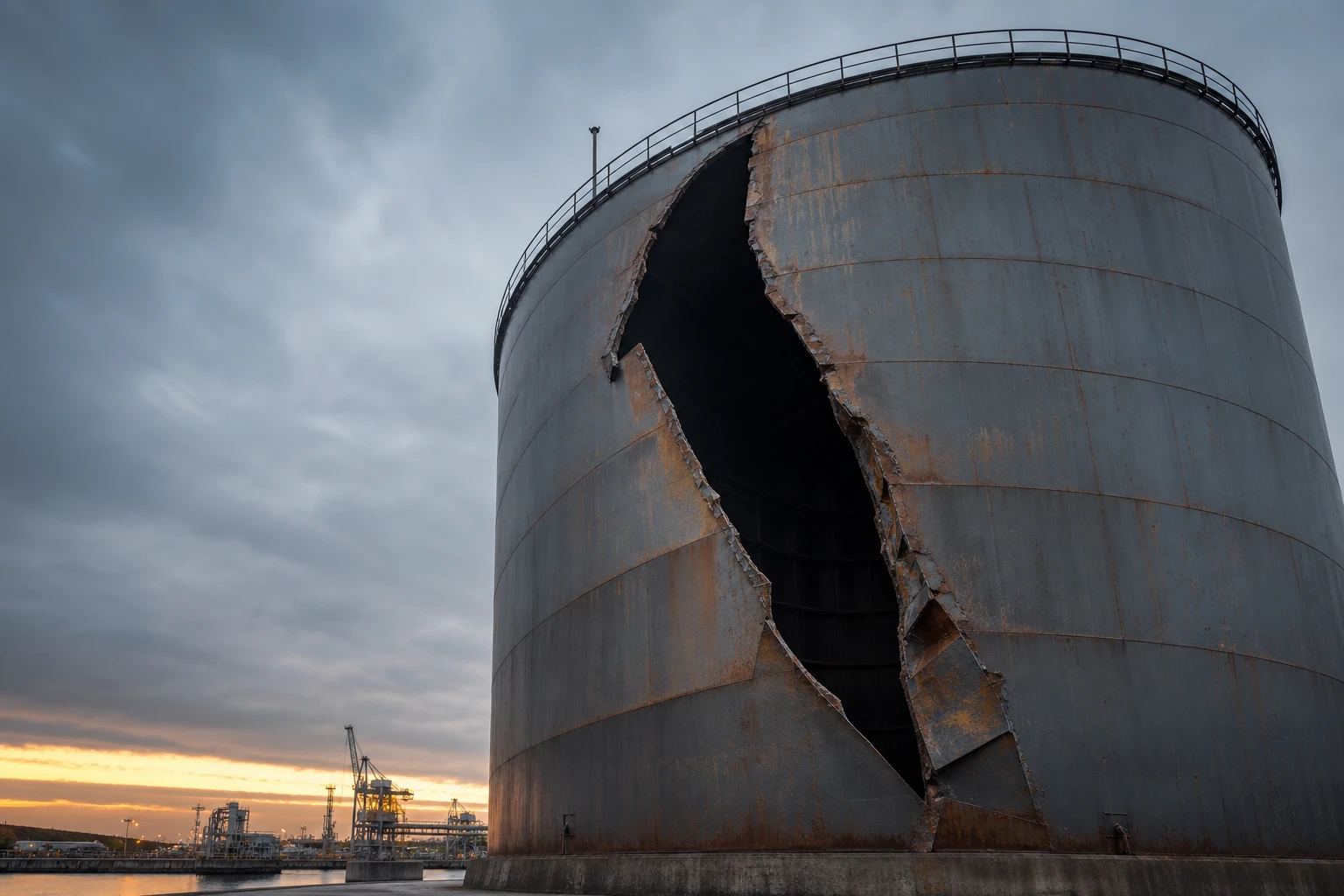
Nearly $100 million in fraud proceeds passed through bank accounts he set up and linked to cryptocurrency exchanges, the U.S. Attorney’s Office for the Western District of Washington said. From at least August 2022 through August 2024, co-conspirators pitched investors on a simple idea: wire money into an escrow account, and it would buy space in oil storage tanks in Rotterdam or Houston.
Renting that tank space back out to shippers, the pitch went, would generate steady profits. Auyeung admitted setting up nine entities to receive the money, each dressed up to sound like a genuine energy or logistics operator:
- Sea Forest International LLC
- Apex Oil and Gas Trading LLC
- Navigator Energy Logistics LLC
- Terminal Energy International Escrow Service LLC
- Energo Horizons Logistics (EA) LLC
- Legacy Energy Logistics Transport Group LLC
- Green Tree Gateway LLC
- Dragon Timbers International LLC
- ANS and Partners International Limited
None of it was real. Oil and gas storage cons are an old genre in fraud circles; the SEC has warned investors about tank storage and drilling pitches for decades, long before crypto gave fraudsters a faster way to move money once it landed. Once a victim’s wire hit one of Auyeung’s accounts, the cash moved fast, into other accounts, offshore, or straight into Bitcoin, Tether, USD Coin and Ethereum.
Eighty-One Accounts, Nineteen Wallets
The scale of the plumbing was the point. Auyeung opened at least 81 bank accounts at 24 different financial institutions and 19 accounts across eight cryptocurrency exchanges, including Gemini, Bitstamp and Coinbase. Between June 2022 and July 2024, those accounts took in $97.1 million in wire transfers and other deposits.
Most of the converted crypto eventually landed at Binance. Homeland Security Investigations’ (HSI) Seattle field office and IRS Criminal Investigation (IRS-CI) unwound the network by tracing those wallets, an approach that ended up cracking the case even after the cash went digital.
“Contrary to popular belief, tracing funds is often easier on a public blockchain than in traditional finance,” Andrew Lunardi, head of growth at blockchain platform Immutable, told Decrypt after prosecutors first moved to seize crypto tied to the scheme. Every transaction on a public ledger stays there permanently, which is exactly what let agents rebuild Auyeung’s money trail years after the wires went out.
He Kept Collecting Fees After His Own Indictment
Auyeung was arrested on a criminal complaint in August 2024 and indicted by a grand jury weeks later. That should have ended his role. It did not.
For the next 16 months, through December 2025, Auyeung kept communicating with his co-conspirators and with victims who still believed they owned oil storage space, prosecutors said. He collected another $400,000 in commissions during that stretch by routing payments through bank accounts opened in his wife’s name.
“And even after he was indicted and arrested, Auyeung spent 16 months secretly still communicating with his co-conspirators and continuing to get his illicit fees by having the money go to his wife’s bank accounts,” First Assistant U.S. Attorney Neil Floyd said. “He showed utter disrespect for the law.”
U.S. District Judge John C. Coughenour cited that exact conduct at sentencing. The penalty, he said, came down to “the scope and magnitude of this fraud,” adding that Auyeung “had every reason to know there was something wrong here… even taking money after the indictment.” Prosecutors had asked for a 63-month sentence. Coughenour handed down five years.
You caused a lot of pain.
One victim flew in from the United Kingdom to tell Auyeung that directly at sentencing, according to a news release from the U.S. Attorney’s Office. Investigators have traced the scheme’s reach to roughly 35 people and entities worldwide, though only about $24.7 million of the $97.1 million in deposits has been tied to confirmed victims so far. The government believes the rest is fraud money too.
How Much Will Victims Recover?
Not the full amount, and not soon. Prosecutors asked the court for $24.7 million in restitution, the figure tied to confirmed victims. Auyeung’s forfeitures, cash, a car and uncontested crypto wallets, add up to what the government calls approximately $10 million so far, and a magistrate judge still has to work out how any of it reaches victims.
| Asset or Claim | Amount | Status |
|---|---|---|
| Cash and funds seized at arrest | $2.3 million | Forfeited, plus an Audi SQ8 |
| Cryptocurrency wallets | $7.1 million | Forfeiture uncontested |
| Current bank account funds | $300,000 | Pledged toward restitution |
| Restitution sought by prosecutors | $24.7 million | Pending magistrate judge calculation |
The gap between what prosecutors asked for and what has actually been recovered is typical in crypto fraud cases, where money crosses into jurisdictions the United States cannot easily reach. Earlier filings tied some of the seized crypto accounts to individuals in Russia and Nigeria who moved funds to exchanges in their home countries and have not been charged in the Seattle case.
Crypto Fraud Just Had Its Costliest Year
Auyeung’s case landed in the middle of a broader surge. The FBI’s Internet Crime Complaint Center logged more than a million complaints in 2025 for the first time in its 25-year history, and cryptocurrency-linked losses made up more than half of the total money lost.
- $11.37 billion in cryptocurrency-related fraud losses reported to the FBI in 2025, up 22 percent from 2024.
- $62,604 average loss per crypto fraud complaint, with 18,589 victims reporting losses over $100,000.
- $4.43 billion of that total came from Americans 60 and older, nearly double what the same age group lost in 2024.
- $500 million in losses the FBI says it has prevented since 2024 through Operation Level Up, a proactive victim-notification program.
Investment schemes dressed up as legitimate businesses, not just romance-driven plots, drove a large share of that total, according to the bureau’s own accounting. Auyeung’s scheme fits that pattern precisely: no romance, just a business pitch and a wire instruction.
The DOJ’s Narrower Playbook Still Covers This Case
The Justice Department is prosecuting fewer crypto cases than it once might have, at least on paper. An April 2025 memo from Deputy Attorney General Todd Blanche disbanded the Department’s National Cryptocurrency Enforcement Team and told prosecutors to stop treating exchanges and wallet providers as targets for their customers’ conduct.
That memo carved out an exception wide enough to cover the Auyeung case. The Department said it would continue to prioritize investment frauds and other fraud schemes involving cryptocurrency that victimize investors, along with money laundering tied to transnational criminal networks. A laundering conspiracy that moved $97 million meant for duped investors fits that description exactly.
A magistrate judge still has to work out how Auyeung’s forfeited assets get divided among victims scattered across multiple countries. Auyeung, for his part, is due to begin serving his five-year sentence.
Frequently Asked Questions
Was Geoffrey Auyeung the Mastermind of the Scheme?
No. Prosecutors describe Auyeung as the person who received and laundered victim funds inside the United States on behalf of others. Earlier forfeiture filings tied some of the crypto accounts to individuals in Russia and Nigeria who allegedly moved funds to exchanges in their home countries and have not been charged in the Seattle case.
How Is This Different From a Typical Pig Butchering Scam?
Classic pig butchering scams build a fake romance or friendship over weeks before the investment pitch arrives. Court records in Auyeung’s case describe a straightforward business solicitation without a romance angle, though it shares the same core mechanic: guide a victim into wiring cash that gets converted into crypto and never comes back.
Will Auyeung’s Victims Get Their $97 Million Back?
Not in full. Forfeited cash, a vehicle and uncontested crypto wallets add up to roughly what the government calls $10 million, well under half of the $24.7 million in restitution prosecutors requested, and a magistrate judge still has to finalize how any recovery is divided among victims.
Were Any Cryptocurrency Exchanges Accused of Wrongdoing?
No. Prosecutors say Auyeung used mainstream exchanges, including Gemini, Bitstamp and Coinbase, to buy crypto before moving most of it to Binance. None of the exchanges were named as defendants or accused of knowingly assisting the scheme.


Quanta and Quantinuum Move Quantum Into the Factory

MLBB brings back optimized Jujutsu Kaisen skins for third run

Kazakhstan minerals force US hand in AI side-picking letter

Nintendo Unlocks 10 Free Pictonico Mini-Games Until Mid-September

Young adults dread AI job cuts while landing the $177k roles

Trade Me taps Kul Singh Kargil as CEO after Anders Skoe exit

Windows 11 Experimental build finally toggles Win32 camera access app by app

A20 Pro’s 18% Gain Is Process Math, Not a Chip Promise

OnePlus Nord and N hikes push major-brand sub-20K 5G out of reach

Snowflake routes AI tasks to cut spend inside its data cloud

Fable 5 and Mythos 5 Return as US Lifts Anthropic Export Controls

Oracle Cuts 21,000 Jobs in a Year, Cites AI in 10-K Filing

SpaceX’s Google Deal Turns a Rocket Company Into a Cloud Landlord

CD Projekt Red Co-CEO: Redemption Arc Isn’t Done, Witcher 4 in 2027

XPL Rallies 30% Ahead of Plasma One Card Tier Launch

Google Search Profiles Build a Follow Graph Inside Discover

DGO App Brings Rs 549 Mobile Pass for FIFA World Cup 2026 in Nepal

Moonshot AI Targets $30 Billion in China’s Fastest AI Funding Sprint

Oppo’s ColorOS 17 Eligibility List Leaves A-Series Buyers Behind

Microsoft Xbox Layoffs Start in July as Sharma Slams 3% Margin
-
 AI2 months ago
Fable 5 and Mythos 5 Return as US Lifts Anthropic Export Controls
-
 AI2 months ago
Oracle Cuts 21,000 Jobs in a Year, Cites AI in 10-K Filing
-
 AI2 months ago
SpaceX’s Google Deal Turns a Rocket Company Into a Cloud Landlord
-
 GAMING2 months ago
CD Projekt Red Co-CEO: Redemption Arc Isn’t Done, Witcher 4 in 2027
-
 CRYPTO2 months ago
XPL Rallies 30% Ahead of Plasma One Card Tier Launch
-
 NEWS2 months ago
Google Search Profiles Build a Follow Graph Inside Discover
-
 APPS2 months ago
DGO App Brings Rs 549 Mobile Pass for FIFA World Cup 2026 in Nepal
-
 AI2 months ago
Moonshot AI Targets $30 Billion in China’s Fastest AI Funding Sprint