
CRYPTO
XRP Rebounds 1.38% to $1.06 on MiCA Nod and ETF Demand
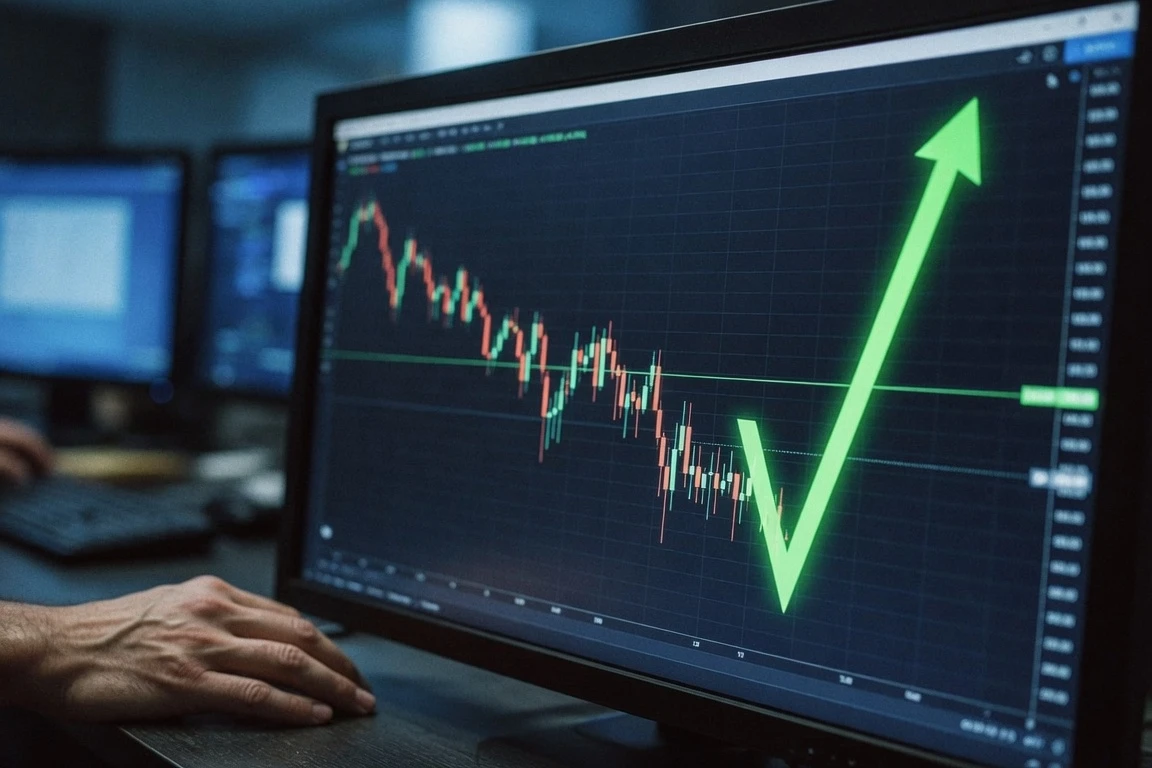
XRP rose 1.38% to $1.0589 on June 27, 2026 after testing $1.00. Underneath: Ripple’s Luxembourg MiCA approval, ETF inflows, and a joint SEC-CFTC margin request.

XRP closed at $1.0589 at midnight ET on June 27, 2026, up 1.38% on the day. The token rebounded after a deleveraging cascade pushed the price to test the $1.00 psychological support level. A 7-day window showed a decline of 7.53%, a reminder that the rebound sat inside a broader downtrend rather than a clean reversal.
Underneath the intraday bounce sits an institutional and regulatory layer that did not exist when XRP last traded at these levels. U.S. spot XRP ETFs have held net inflows against a broader market in retreat, with cumulative net subscriptions above $1.4 billion since the products launched in November 2025. Ripple just secured preliminary MiCA approval in Luxembourg, and the SEC and CFTC named XRP by ticker in a joint request for comment on portfolio margin rules. None of those three developments move today’s tape on their own, but together they describe a different floor than the one traders drew on the chart. The short-term tape still reads as a leveraged washout with a sell-signal MACD and an oversold Williams %R.
The 1.38% Bounce That Almost Wasn’t
The move that closed at $1.0589 had the shape of a short-covering rally, not a fresh bid. Recent liquidations wiped out the majority of leveraged long positions, flushing speculative froth from the derivatives market and letting the spot price stabilize. The intraday rebound followed a setup the narrow intraday band priced into June 26 had already framed as a contest between the round-number support and the next resistance.
The MACD (12,26,9) reading sits at -0.010 with a sell signal, the RSI at 36.645 in neutral territory, and Williams %R at 82.106 marking oversold conditions. That combination describes a relief move out of an oversold tape, not a confirmed trend reversal. The bounce is real, and the floor held, but the tape has not yet turned. The derivatives market is cleaner than it was, with XRP open interest down nearly 60% from its July peak and forced sellers largely worked through. A $1.06 close on June 27 puts the round-number support back inside the trading band rather than at the edge of it.
Why ETF Inflows Are Doing the Heaviest Lifting
The XRP spot ETF complex has held a pattern of consecutive net inflows through most of 2026, even as Bitcoin and Ethereum products bled. While Bitcoin ETFs ended a record 13-day outflow streak that pulled $4.4 billion out of the funds, XRP ETFs ran a five-week inflow streak through May before posting a $5.34M outflow on June 3. By the end of May, the seven funds had logged $131.94M in net inflows for the month, their best month of the year. May’s tally accelerated from April’s $81.59M and culminated in the largest weekly print of 2026 at $60.5M in the week ending May 16.
That streak finally broke on June 3, when XRP ETFs recorded a $5.34M net outflow, the first negative print since April 30. The break arrived the same week XRP slid below $1.20, a coincidence XRP ETF flows and the May stress test flagged at the time. Bitwise led the outflow at $4.06M, with Grayscale’s GXRP shedding another $699,000.
The cumulative numbers still looked healthy underneath. Cumulative net inflows reached $1.43 billion across the complex since the November 2025 launch, with total net assets of $927.78M across five active funds as of June 5, 2026. By June 27, the picture had reshuffled: seven spot XRP ETFs traded in the U.S. with combined AUM of $990M and 938.7M XRP tokens locked in vaults, per the live XRP spot ETF holdings and AUM tracker. The ETFs have now outlived the largest concentrated institutional seller of the cycle: Goldman Sachs disclosed $153.8M in spot XRP ETF shares in its Q4 2025 13F, then exited the entire position by mid-May when it filed its Q1 2026 report. The week Goldman’s exit hit the tape, the funds still absorbed $60.5M in new buying.
- Bitwise (XRP): 270.1M XRP in vaults, AUM $278.1M
- Canary Capital (XRPC): 225.1M XRP, AUM $231.9M
- Franklin Templeton (XRPZ): 221.6M XRP, AUM $228.2M
- 21Shares (TOXR): 108.3M XRP, AUM $123.3M
- Grayscale (GXRP): 53.1M XRP, AUM $60.1M
- REX-Osprey (XRPR): 38.8M XRP, AUM $44.1M
Luxembourg Hands Ripple the MiCA Key
On June 23, 2026, Ripple said it received a preliminary green light from Luxembourg’s Commission de Surveillance du Secteur Financier for a Crypto Asset Service Provider (CASP) license under the EU’s Markets in Crypto Assets (MiCA) regulation. The license will allow the company to offer its stablecoin payment systems to European institutions and to expand into broader crypto functions once final approval lands. The license is preliminary, and full authorization is still pending, but the regulatory lane is now formally open.
MiCA lets a company approved in one EU state offer its services across the bloc, which converts a Luxembourg filing into a continent-wide passport. Ripple’s stablecoin business has been the strategic prize, with cross-border, euro-denominated settlement as the long-promised use case, and Ripple’s preliminary CASP license from Luxembourg’s CSSF is the regulatory piece that opens that lane. MiCA’s CASP rules took effect on December 30, 2024, with a transitional window running until July 1, 2026. Days before that deadline, Ripple joins roughly 210 firms that have secured MiCA-compliant status in some form. The approval comes with EU stablecoin rules tightening on reserve requirements, including a demand that issuers hold as much as 60% of backing assets in cash deposits at commercial banks.
The strategic context matters because the Luxembourg approval arrived inside a brutal tape for crypto equities. Ripple’s home market has not been friendly to altcoins through June, with the broader market cap dropping below $2.2 trillion and Bitcoin off 25.5% over the last 30 days. The MiCA nod does not lift XRP’s price today, but it changes the regulatory ceiling in one of the world’s most consequential capital markets. The buy-side read on April’s $81.59M in spot XRP ETF inflows and the stalled Senate CLARITY vote is the closest comparable analog, since both signaled that the institutional bid was holding steady while the spot tape sold off.
For XRP, the longer-run implication is that euro-denominated institutional settlement rails are now closer than they were a week ago. The stablecoin will need a token to settle against, and that token is the one that just rebounded off a dollar. The same EU framework that licensed Ripple is also the framework that will gate competing stablecoins, and XRP’s liquidity profile makes it the natural settlement asset for Ripple’s RLUSD.
The SEC-CFTC Letter That Named XRP by Ticker
On June 23, 2026, the SEC and CFTC issued a joint request for public comment on portfolio margin rules covering securities, swaps, futures, and connected products. The agencies specifically named Bitcoin and XRP as products whose futures and perpetual contracts are drawing regulator attention, alongside Ethereum. The 60-day comment window opens a formal process that could shape how broker-dealers, futures commission merchants, and clearing members handle margin across crypto and traditional products. SEC Chairman Paul S. Atkins framed the joint request as a way to prevent jurisdictional overlap from limiting innovation and efficiency. CFTC Chairman Mike Selig said closer cooperation could release capital while keeping risk management intact.
The mechanics matter as much as the headlines, and the joint SEC-CFTC portfolio margin request and its 60-day comment window opens a specific channel for market participants to weigh in. Portfolio margining lets risk be assessed across multiple positions rather than treated per account. Cross-margining can let related exposures offset each other and reduce collateral locked in separate buckets. The comment period runs for 60 days after the request is published in the Federal Register.
The agencies are also reviewing how margin rules should apply when products fall near the line between securities and commodities regulation, and the broader debate covers event contracts and perpetual contracts. CFTC approval of crypto perpetual futures for U.S. platforms has drawn a federal lawsuit from CME Group, which argues such products should be treated as swaps. XRP sits at the center of that classification fight.
Cross-margining offers a way to unlock liquidity that remains separated across accounts and encouraged market participants to submit ideas on improving coordination between the SEC and CFTC.
Atkins made the comments in the agencies’ joint request for public comment. The request creates no immediate rules, but it codifies the direction of travel: XRP is being treated as a federally regulated commodity and derivatives class in the agencies’ joint rulemaking process. The same framework also names Bitcoin and Ethereum, but XRP’s regulatory perimeter is the one that moved inside the last week.
The Macro Cross-Currents XRP Can’t Trade Around
The intraday bounce sits on top of a market that is still in retreat elsewhere. The total crypto market cap has crashed below $2.2 trillion and is testing the $2 trillion zone, an area that marked February’s panic lows. Spot Bitcoin ETFs ended a record 13-day outflow streak that pulled $4.4 billion out of the funds, the longest run since launch. Bitcoin itself trades at $61,000, down 25.5% over the last 30 days.
The Crypto Fear and Greed Index has shifted into Extreme Fear territory, and a fresh supply event landed in the same week as the broader selloff. On June 1, Ripple executed its scheduled monthly escrow release, unlocking 1 billion XRP worth roughly $1.33 billion at the time. The typical pattern is for Ripple to re-lock 60-80% of each release, which means 200-400M XRP is now potentially circulating into a falling market.
| Asset | Recent move | ETF position |
|---|---|---|
| Bitcoin | -25.5% over 30 days, $61,000 | Record 13-day outflow streak, -$4.4B |
| XRP | -7.53% over 7 days, $1.0589 | $1.43B cumulative net inflows since Nov 2025, $990M AUM |
The divergence is the story. The spot complex’s footprint is small compared with the broader crypto market cap below $2.2 trillion, but the direction of travel is opposite. The on-chain footprint is moving in the opposite direction of the price tape, and how the May wallet spike played into network follow-through shows the same divergence between participation and price. The macro pressure is bigger than the bounce, so the table matters more than the candle.
What the Technical Tape Is Saying at $1.06
The technical snapshot on June 27 paints a relief bounce more than a confirmed reversal. MACD (12,26,9) sits at -0.010 with a sell signal, RSI at 36.645 reads neutral, and Williams %R at 82.106 puts the tape in oversold territory. Together they describe a market that has stopped falling hard, not one that has turned.
The round-number psychology matters more than usual this time. The $1.00 level aligns with the Bollinger lower band on the monthly chart and the macro demand zone that held February’s panic lows near $1.11. It is the same floor that held the last time XRP looked broken, and analysts have flagged it as the level deciding whether this is a deep correction or a structural break. Bitwise CIO Matt Hougan had a single line for the May buying window, and the week Goldman Sachs exited its $153.8M position was the week he said it.
Would have been impossible without the ETF wrapper.
That line came from Hougan, and he used it to characterize the May 17 buying window, the week the complex absorbed Goldman Sachs’ $153.8M exit and still printed $60.5M in new inflows. As of June 27, the live ETF dashboard shows seven U.S. spot products holding the bulk of the locked supply. The institutional plumbing that absorbed Goldman’s exit has not flinched at $1.06. A leaner, ETF-dominated float is the structural reason the round-number support still held.
Frequently Asked Questions
What drove XRP’s 1.38% gain on June 27, 2026?
XRP rose after a deleveraging cascade pushed the price to test the $1.00 psychological support level, with forced selling exhausting itself and spot buyers stepping in to defend the round-number floor. The MACD sell signal and the Williams %R oversold reading both describe a relief bounce rather than a confirmed trend reversal.
Is XRP’s price floor at $1?
The $1.00 level aligns with the Bollinger lower band on the monthly chart and the demand zone that held the February 2026 panic lows near $1.11. XRP did not break $1 on June 26 or June 27, but analysts have flagged the level as the line between a deep correction and a structural break. ETF flows at the same level remain positive.
What is the Ripple MiCA license for?
The license lets Ripple offer regulated stablecoin payment services across the European Economic Area once final authorization is granted. Ripple received preliminary CASP approval from Luxembourg’s CSSF on June 23, 2026 under the EU’s MiCA regulation. The license is preliminary, not final, but converts into a continent-wide passport under MiCA’s single-market rules.
How are XRP spot ETFs performing in June 2026?
Seven U.S. spot XRP ETFs trade with combined AUM of $990M and 938.7M XRP locked in vaults as of June 27, 2026. Cumulative net inflows since the November 2025 launch sit above $1.43 billion, with May 2026’s $131.94M the strongest month of the year. A June 3 outflow of $5.34M ended a five-week streak of positive flows.
What did the SEC-CFTC joint portfolio margin request change?
The June 23 request opens a 60-day public comment period on aligning portfolio margin across securities, swaps, futures, and related products, with Bitcoin and XRP named by ticker. The request creates no immediate rules, but it formalizes a path toward treating XRP as a federally regulated commodity and derivatives class in the agencies’ joint rulemaking process.
Disclaimer: This article is for informational purposes only and does not constitute investment advice. Cryptocurrency markets carry substantial risk, including the potential loss of principal. Past ETF flows, regulatory milestones, and price levels do not guarantee future performance. Readers should consult a qualified financial professional before making investment decisions. Figures are accurate as of publication on June 27, 2026.


Nintendo Already Tested These NES Remakes, With Mixed Results

South Korea’s Crypto Framework Bill Hinges on a Bank Standoff

Court of Appeal Restores Imo APP Ahead of 2027 Polls

Vivo’s X300 Costs $647, but No US Carrier Sells It

Super Micro’s Bargain Stock Price Rests on One Hidden Customer

Resident Evil’s Remake Profits Just Vindicated Capcom’s Pragmata Bet

XRP Stalls Near $1 While Ripple’s Own Stablecoin Surges

WhatsApp Web’s Free Calling Update Takes Aim at Zoom

Hiya Toys’ Fox Figure Ships the Same Year as Persona 6

ARRI Hands Honor Its First-Ever Smartphone Camera Deal

Fable 5 and Mythos 5 Return as US Lifts Anthropic Export Controls

SpaceX’s Google Deal Turns a Rocket Company Into a Cloud Landlord

CD Projekt Red Co-CEO: Redemption Arc Isn’t Done, Witcher 4 in 2027

Oracle Cuts 21,000 Jobs in a Year, Cites AI in 10-K Filing

XPL Rallies 30% Ahead of Plasma One Card Tier Launch

DGO App Brings Rs 549 Mobile Pass for FIFA World Cup 2026 in Nepal

Google Search Profiles Build a Follow Graph Inside Discover

Moonshot AI Targets $30 Billion in China’s Fastest AI Funding Sprint

Microsoft Xbox Layoffs Start in July as Sharma Slams 3% Margin

Oppo’s ColorOS 17 Eligibility List Leaves A-Series Buyers Behind
-
 AI4 weeks ago
Fable 5 and Mythos 5 Return as US Lifts Anthropic Export Controls
-
 AI2 months ago
SpaceX’s Google Deal Turns a Rocket Company Into a Cloud Landlord
-
 GAMING1 month ago
CD Projekt Red Co-CEO: Redemption Arc Isn’t Done, Witcher 4 in 2027
-
 AI1 month ago
Oracle Cuts 21,000 Jobs in a Year, Cites AI in 10-K Filing
-
 CRYPTO2 months ago
XPL Rallies 30% Ahead of Plasma One Card Tier Launch
-
 APPS2 months ago
DGO App Brings Rs 549 Mobile Pass for FIFA World Cup 2026 in Nepal
-
 NEWS2 months ago
Google Search Profiles Build a Follow Graph Inside Discover
-
 AI2 months ago
Moonshot AI Targets $30 Billion in China’s Fastest AI Funding Sprint