
AI
Zuckerberg Breaks His X Silence as Instagram Opts Everyone In
Zuckerberg’s first X post since 2023 sold cheap Muse Spark 1.1 while Instagram auto-enrolled public accounts in Muse Image, a tagging path Meta pulled on July 10.

Mark Zuckerberg posted on X on July 9, 2026, for the first time since 2023, to launch Muse Spark 1.1. Two days earlier, Instagram had already enrolled every eligible public account in Muse Image tagging by default.
The X thread sold a cheap coding model. The Instagram switch treated public posts as prompt material, until Meta withdrew that path on July 10.
Zuckerberg Broke a Three-Year Silence to Sell a Cheap Model
Zuckerberg wrote from his old @finkd account that Muse Spark 1.1 is “a strong agentic and coding model at a very low price,” now in the new Meta Model API and in Meta AI. He had not used the account since 2023, when Meta was still busy building Threads as the rival text app.
(1) Today we're releasing Muse Spark 1.1 — a strong agentic and coding model at a very low price. It's available through our new Meta Model API and in Meta AI.
— Mark Zuckerberg (@finkd) July 9, 2026
A second post filled in the pitch. He said the model is strongest at agent work, tool use, and computer use, holds a 1 million token context window, can hand work to sub-agents running in parallel, and is trained to drive desktop, mobile, or browser interfaces. A third post said the API lets outside developers build on Muse Spark for the first time, with the stated goal of “strong agentic and multimodal models at very low cost.”
Nikita Bier, who has run product at X, replied, “Hello Mark, would you like me to enable Creator Monetization on your account.” Elon Musk added a one-word “Jinx,” a nod to xAI’s Grok 4.5, which had landed on July 8 with its own coding and research claims. The joke wrote itself. Meta’s CEO still needed Musk’s site to put a developer model in front of the people who ship software.
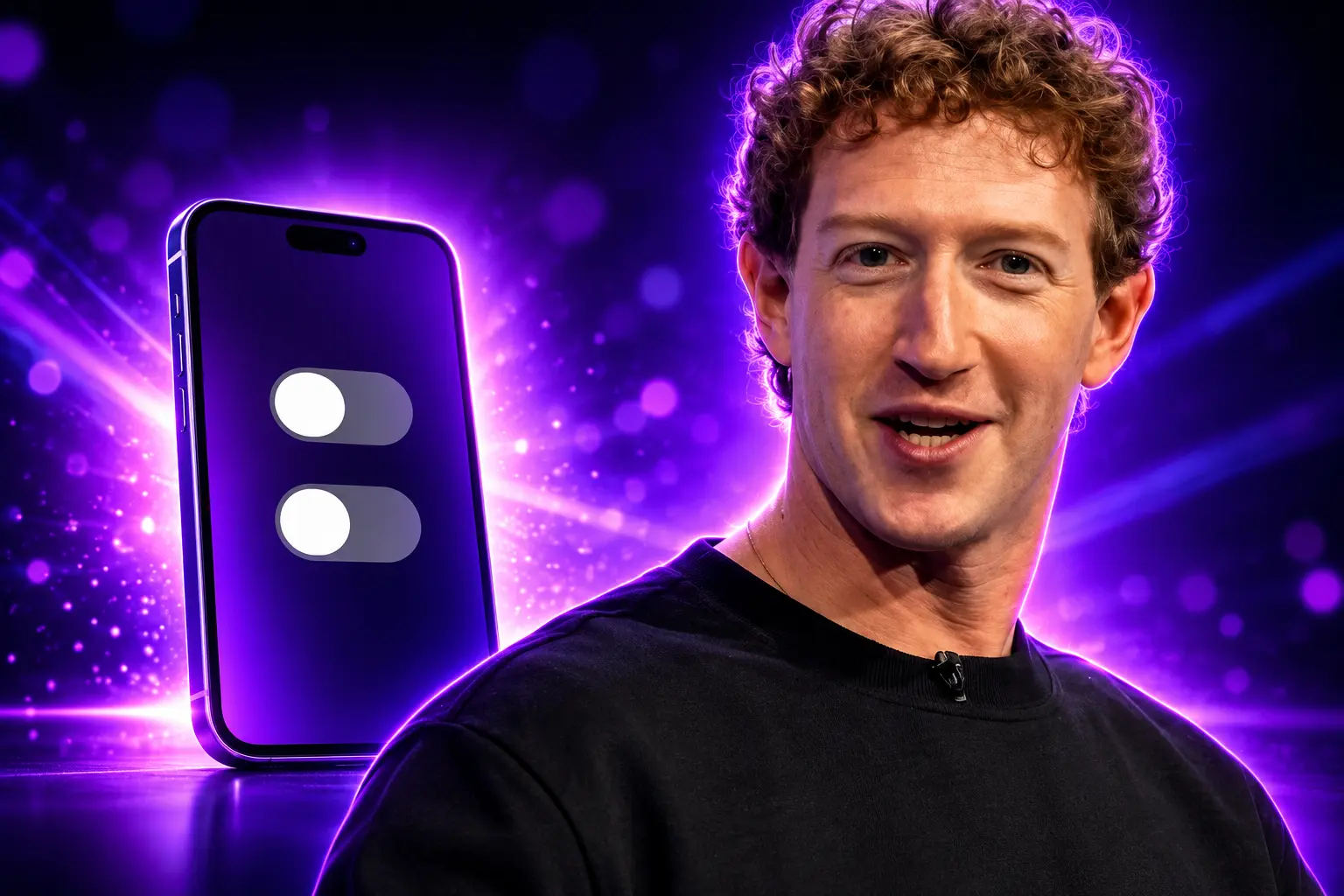
What Muse Spark 1.1 Puts in Developers’ Hands
Meta Superintelligence Labs presented Muse Spark 1.1 as a multimodal reasoning model built for agent tasks, with gains in tool use, computer use, coding, and reading across text, images, and video. It is live in Thinking mode in the Meta AI app and on meta.ai. The public API preview is the new paid door.
As the main agent, the model is trained to gather context, make a plan, and split execution across parallel sub-agents. As a helper, it is trained to stay on its job and send hard calls back up. Meta says it manages that 1 million token window by remembering earlier steps and compacting the rest so long jobs do not fall apart. On a computer, it is trained to write a script when that is faster and to click the interface when it is not.
MUSE SPARK 1.1 AT A GLANCE
| Item | Detail |
|---|---|
| Context window | 1 million tokens |
| Standard input price | $1.25 per 1 million tokens |
| Standard output price | $4.25 per 1 million tokens |
| Cached input | $0.15 per 1 million tokens |
| Where it runs | Meta Model API public preview; Meta AI Thinking mode |
Meta’s own rate card lists $1.25 per million input tokens and $4.25 per million output tokens on the standard tier, with prompts and completions not used to train Meta models. Saoud Rizwan, CEO of Cline, said Meta is “building for serious agentic coding” at “a price point that makes it viable to run real coding workloads at scale.” Early API partners named in the lab post were Replit, Cline, and Box.
Meta shares closed July 9 at $631.48, up 4.70%, and traded at $639.36 in after-hours, up 1.25%. That tape does not sort how much was the model, how much was the week’s image launch, and how much was the broader tape.
A Buried Toggle for Every Public Account
On July 7, the same lab shipped Muse Image and a Muse Video preview. Muse Image is the company’s image model with tool use, self-refinement, and a claimed No. 2 spot on Arena for text-to-image, single-image editing, and multi-image editing as of July 5, 2026. It went live in the Meta AI app and on meta.ai, in Instagram Stories in the US, and on WhatsApp in limited countries.
The social hook sat under that launch. Anyone could @-mention a public Instagram account inside a Meta AI prompt and generate a new image from that profile’s public photos. Event invites and “collaborative concepts” were the examples Meta used. Public accounts for people 18 and older were on by default. Private accounts and users under 18 were left out.
Tech reviewer Marques Brownlee (MKBHD) wrote the version that spread.
Instagram decided to roll out a new “Muse AI” feature, that lets users create AI images based on people’s Instagram photos. Then they opted in EVERYONE with a public account
Marques Brownlee, @MKBHD, on X
His opt-out path was short: profile, three-line menu, Sharing and reuse, then turn off Posts and Reels. The labels in the app were longer than that. The switches sat under wording about allowing people to reuse content on Instagram and with AI features at Meta. Plenty of how-to posts pointed at remix menus instead. The control was easy to miss if you were not already looking for it.
WHAT THE DEFAULT OPENED
- The trigger: An @-mention of a public Instagram account inside a Muse Image prompt pulled that profile’s public photos into a new generation.
- Who was in: Public accounts for adults 18 and over were enrolled automatically; private accounts and under-18 accounts were not.
- The bury: The off switch lived under Sharing and reuse, with separate Posts and Reels toggles, not in an AI settings home.
- The leftover: Turning the switches off stopped future use through this path and did not take down images already made.
Instagram’s own help text said people “may be able to create content with your Instagram content using AI features at Meta” if a public account stayed on the default. It also said users would not get a notice when someone did it. That is a quiet product. Public reach is the job of a public account. Being dropped into a stranger’s image prompt is a different job, and Meta did not ask.
Meta Pulled the Tagging Feature on Friday
By July 10, three days after the July 7 image launch, Meta cut the @-mention path. A spokesperson said the company had meant to give people a creative tool and control over whether public content could be used that way.
We’ve heard the feedback that this feature missed the mark, so it’s no longer available.
Meta spokesperson, July 10, 2026 statement
Muse Image itself was not pulled. It stayed in the Meta AI app and on WhatsApp. Instagram Stories filters from the same model stayed in the mix. What died was the shortcut that let one user aim the model at another user’s public grid without a prior ask.
Talent agency CAA and the performers’ union SAG-AFTRA had already objected while the switch was live. The complaint was not abstract. A public actor, musician, or creator account is a working likeness. Default-on tagging turned that likeness into a reference library for anyone with Meta AI. Meta had said adult public users could opt out “with just a couple clicks.” After the Friday statement, the couple of clicks were beside the point. The tagging door was shut.
Who Was Enrolled Without a Prompt?
The people in the blast radius were not only celebrities. Any public personal account, shop, band, or local restaurant grid in the US rollout was raw material unless someone found Sharing and reuse. Creators who need to be public to be found had the worst trade. Going private kills reach. Leaving the default on handed strangers a generator pointed at your face, your products, and your rooms.
The lab’s own testers made the design obvious. Muse Image could render people who are not already famous in model weights because the @-mention fetched real Instagram photos. That is a product advantage if you are making a party invite of friends. It is also how a public grid becomes a face database with no extra consent step. Meta said teens could not use the tagger and that private accounts were blocked. It did not say public adults would be asked first.
Opting out never promised a clean slate. Help pages said older generations would stay up. There was no in-app alarm when someone used your posts. For the days the feature was live, the only practical defense was a buried toggle, a private account, or luck.
Nine Months of Superintelligence Labs Shipping
Spark 1.1 is not the lab’s first model. Meta’s first Muse Spark model in April was sold as the start of a new series after a nine-month rebuild of the company’s AI stack. That April model powered Meta AI in the app and on meta.ai, with a private API preview for select partners. July 9 opened the paid public API and pushed agent and computer-use work that the April post still listed as gaps.
THE MUSE CALENDAR THROUGH JULY 10
- April 8, 2026: Meta Superintelligence Labs debuts Muse Spark and puts it in Meta AI, with a private API preview.
- July 7, 2026: Muse Image launches and Muse Video is previewed; Instagram Stories in the US get the new image model.
- July 8, 2026: xAI ships Grok 4.5 into the same coding-and-agents window.
- July 9, 2026: Zuckerberg posts on X for the first time since 2023 and opens Muse Spark 1.1 plus the Meta Model API.
- July 10, 2026: Meta disables @-mention tagging of public Instagram accounts after saying the feature missed the mark.
Read that week as one campaign, not two product blogs. The cheap API is how Meta buys developers who already pay OpenAI and Anthropic. The Instagram default was how Meta tried to make Muse Image feel native to a social graph it already owns. One of those bets is still on the price sheet. The other lasted until Friday.
Muse Image still watermarks generations in the Meta AI app and on meta.ai with Content Seal, an invisible mark Meta says survives crop, compression, resize, and screenshots. That is a receipt for images Meta itself made. It is not a consent screen for the public photos that almost became free reference stock.
Zuckerberg kept using X after July 9. In September, Meta went further with a Muse agent that can open your inbox and run checkout, still sold as personal help on top of Spark. The July lesson sits underneath that pitch. When Meta ships an agent into a social app, the default still does a lot of the work, and users still find out from a reviewer thread.
The model and the API stayed. The shortcut that treated a public Instagram grid as a prompt library did not. Anyone who flipped Sharing and reuse off in those three days was not being dramatic. They were answering a setting Meta had already answered for them.
Frequently Asked Questions
When Did Mark Zuckerberg Return to X With Muse Spark 1.1?
He posted the launch thread on July 9, 2026, from @finkd, his first X activity since 2023. The Meta Model API public preview opened the same day and was limited to developers in the United States at launch, with a waitlist for new accounts rather than instant global access.
Did Meta Shut Down Muse Image After the Backlash?
No. Meta disabled only the @-mention path that pulled public Instagram accounts into image prompts. Muse Image remained in the Meta AI app, on meta.ai, and on WhatsApp, and Instagram Stories still used the model for filters and related effects.
Were Private Instagram Accounts Included in Muse Image Tagging?
Private accounts were excluded automatically, and so were accounts belonging to users under 18. Meta also said teens could not tag or reference other accounts with the feature while it was live, which left adult public profiles as the only group enrolled by default.
How Is Muse Spark 1.1 Priced Beyond the Headline Rate?
On top of $1.25 input and $4.25 output per 1 million tokens, cached input is $0.15 per 1 million tokens, and web search grounding is billed at $2.50 per 1,000 search queries in addition to token charges. Standard-tier prompts and completions are not used to train Meta models.
Did Opting Out Remove AI Images Already Made From Your Posts?
No. Instagram’s help pages said changing reuse settings or switching an account to private only blocked future generations through this feature. Images already created from your public content stayed up, and Meta did not notify people when their posts were used.
Disclaimer: This article is news reporting and analysis of Meta’s July 2026 Muse launches and Instagram settings. It is informational only and is not investment advice, legal advice, or a recommendation to buy, sell, or hold Meta shares or any other security. Readers who are making financial or privacy decisions should consult a licensed financial adviser or a qualified privacy attorney before acting on product settings, API pricing, or share-price moves mentioned here. Figures, feature status, and prices reflect the company pages and statements cited as of the dates in this piece and can change without notice.

Instagram Plus Tests a Read-Only Mode That Cuts Stories

Altman Asks the Public to Accept Some AI Harm

Google Freezes OSS VRP Product Reports After AI Flood

AI Agents Make Payment Rails the Scarce Prize

Turkey’s Crypto Boom Now Runs Through Three Banks

Fable 5 Came Back Under a Commerce On-Off Switch

Google’s SpaceX GPU Lease Has a Sept. 30 Deadline

Plasma One’s XPL Locks Face a 1.81 Billion Cliff

DGO’s Rs 549 World Cup Pass Cost Fans Sleep and Data

Moonshot AI’s $30 Billion Ask Became a $35 Billion Close
-
 AI4 months ago
Fable 5 Came Back Under a Commerce On-Off Switch
-
 AI5 months ago
Google’s SpaceX GPU Lease Has a Sept. 30 Deadline
-
 CRYPTO4 months ago
Plasma One’s XPL Locks Face a 1.81 Billion Cliff
-
 APPS5 months ago
DGO’s Rs 549 World Cup Pass Cost Fans Sleep and Data
-
 AI5 months ago
Moonshot AI’s $30 Billion Ask Became a $35 Billion Close
-

 NEWS5 months ago
ColorOS 17 Device List Spans Oppo, OnePlus and Realme
-

 GAMING4 months ago
The RTX 4050 Under Rs 70,000 Hides a Wattage Gap
-
 AI4 months ago
Boris Cherny’s Loops Still Demand a Higher Production Bar