
NEWS
Apple and Met Police Sign Deal to Render Stolen iPhones Useless
Apple and the Metropolitan Police have agreed to share IMEI data to track and disable stolen iPhones, building on iOS 26.4’s default-on kill switch.

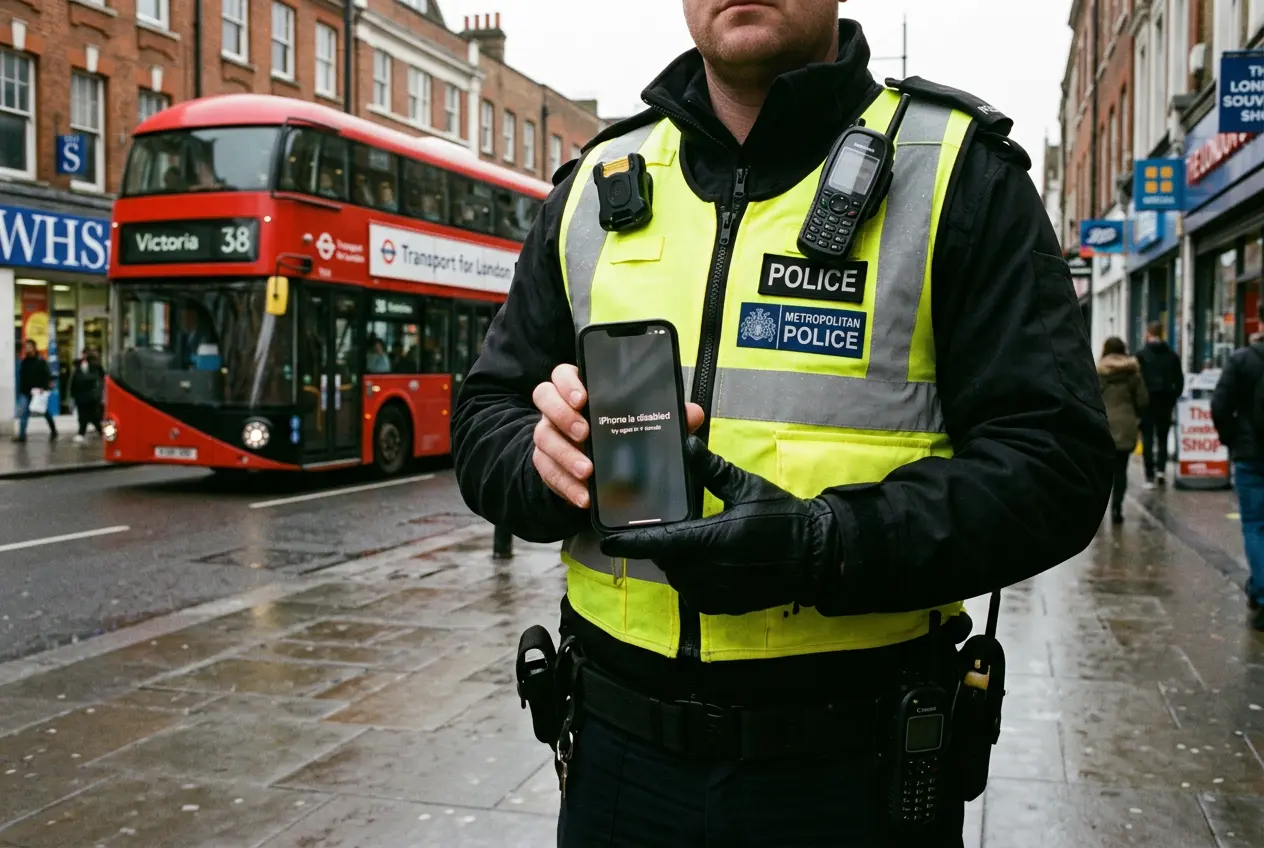
Apple and the Metropolitan Police have agreed to share stolen-device identifiers, a UK data-sharing deal that lets officers track a snatched iPhone the moment it tries to come back online. The agreement, announced Thursday, lets the two parties share International Mobile Equipment Identity (IMEI) numbers and other device data to follow stolen handsets and shut them down if they resurface, complementing a default-on iOS 26.4 setting that turned Apple’s Stolen Device Protection into a baseline for every iPhone user in February.
The deal answers months of pressure from Met Commissioner Sir Mark Rowley, who in March gave the industry a 1 June deadline to make stolen phones “unusable bricks” or face legislation. Apple has now answered, and the Met says the result is already visible: phone thefts in London fell by 18 per cent in the year to May 2026, with Westminster recording a 45.8 per cent drop in the first five months of the year.
What the Apple and Met Deal Actually Does
The agreement lets the Met and Apple cross-reference IMEI data with the force’s own records on stolen devices, building a single, shared picture of where a phone has been, what networks it has touched, and whether it is being broken down for parts. Kate Adams, Apple’s Senior Vice President of Government Affairs, framed the move as a continuation of work Apple has done on device security for years. “Keeping our users, their devices, and their data safe is at the heart of what we do,” Adams said.
The shared data set lets the Met check whether a phone reported stolen has been reactivated, exported, or resold, anywhere a stolen handset can land. That is the lever police have lacked, and the lever that has made iPhone theft a low-risk, high-reward offence in London for years. Of 587,498 phones stolen in London between 2017 and February 2024, the Met recovered 13,998, with 573,500 never returned to their owners. The new pipeline targets the export and resale step, and is built on top of an iPhone setting Apple switched on for every user in February.
The Met’s enforcement has scaled alongside the technical work. Officers arrested 248 people in a four-week crackdown that ended in mid-February and recovered 770 stolen devices, then seized 1,000 more phones in a single raid on a north-west London shop in April. Three men have since pleaded guilty to handling stolen goods in a £180 million trafficking ring that moved as many as 40,000 devices, around 40 per cent of all phones stolen in London between 2024 and 2025, to China.
The iPhone Switch That Made It Possible
The deal lands on top of a feature Apple quietly turned into a default for every iPhone in February. iOS 26.4’s Stolen Device Protection rollout enabled the safeguard by default for all iPhone users, a security layer Apple first shipped in 2023 as an opt-in toggle in the Face ID and Passcode settings. The feature requires Face ID or Touch ID for sensitive actions, blocks several options entirely without biometric authentication, and adds a one-hour security delay to the highest-risk changes, a delay that can’t be skipped with a passcode. Stolen Device Protection was designed for thieves who spy on victims to learn their passcode, then use it to drain bank accounts and turn off Find My. The default rollout is the technical foundation the Met’s new data feed now sits on top of.
Prior to iOS 26.4, the setting lived in Settings and had to be switched on manually, leaving most iPhones vulnerable to a known attack pattern. Apple now enables it for every iPhone user by default. The change matters because the security step the Met needed most, a way to prevent a thief from using a stolen passcode to change account settings and disable Find My, is one of the actions the feature already covers.
- Viewing or using passwords and passkeys stored in iCloud Keychain
- Applying for a new Apple Card, or viewing an Apple Card virtual card
- Turning off Lost Mode, or erasing all content and settings
- Apple Cash and Savings actions in Wallet, and using saved Safari payment methods
- Setting up a new device using the iPhone
- Changing the Apple ID password, with a one-hour security delay that requires two biometric authentications
- Updating Apple ID account security settings, including adding or removing a trusted device, phone number, Recovery Key, or Recovery Contact
- Changing the iPhone passcode, adding or removing Face ID or Touch ID, turning off Find My, or turning off Stolen Device Protection itself
The Numbers That Just Tipped
The Met says the deal is already biting, and it has a year of falling theft figures to back that up. Phone thefts and robberies across London fell by 14,000 in the 12 months to May 2026, an 18 per cent reduction on the previous year. The first five months of 2026 alone saw 6,700 fewer offences, a 20.6 per cent drop on the same period in 2025.
Theft and robbery offences where a phone was taken dropped from 81,365 in 2024 to 71,391 in 2025, a fall of 12.3 per cent, before the steeper year-on-year decline recorded by the Met through May. Westminster, where between 69 and 72 per cent of all weekly thefts-from-the-person and personal robberies already involve a phone, has seen a 45.8 per cent reduction in the first five months of 2026, equal to 4,500 fewer phones stolen. The Met’s commissioner has called the trend a direct result of the security improvements in iOS and Android. Aware that the industry is watching, the force has set a baseline: it wants the same level of protection from every phone on sale in the UK.
One reason the headline numbers are moving is that the cases that used to clear the system no longer do. The Met identified a suspect in 6.9 per cent of personal robbery cases in the year to December 2025, and in 0.9 per cent of theft-from-the-person cases, with phone-theft charges closing at 0.3 per cent for the force.
Six Months of Pressure That Led to the Deal
Apple’s data-sharing deal is the most concrete answer to a pressure campaign led by Sir Mark Rowley, who gave the industry a 1 June deadline at the Met’s first International Mobile Phone Crime Conference in March. The conference, held in Bloomsbury on 10 and 11 March, brought together delegates from countries including Japan, Brazil, Spain, and the United States, alongside the Mayor of London, Sadiq Khan, and senior staff from Apple, Samsung, and Google. Rowley’s message was blunt: if phone makers did not act, the Met would ask the Home Secretary to legislate, with the force now putting that threat in writing. The commissioner’s next step, captured in the Met’s original ultimatum to phone makers, was a written request to the Home Office for new laws requiring minimum technical standards on every reported-stolen device.
Apple’s response, in the form of iOS 26.4, was already in motion when the conference opened. The deal announced this week is the second half: a real-time data feed that gives the Met a way to find a stolen device even after it has been resold, broken for parts, or shipped overseas. Khan, who backed the ultimatum, said the agreement was overdue.
- 16 February 2026: Apple releases the iOS 26.4 developer beta, enabling Stolen Device Protection by default for all iPhone users
- Mid-February 2026: A Met four-week phone-theft operation ends with 248 arrests and 770 recovered devices
- 11 March 2026: Sir Mark Rowley delivers a 1 June ultimatum to phone manufacturers at the International Mobile Phone Crime Conference
- April 2026: Met officers seize 1,000 suspected stolen phones in a single raid on a north-west London shop
- April 2026: Three men plead guilty to handling stolen goods in a £180 million operation that trafficked up to 40,000 devices to China
- 11 June 2026: Apple and the Metropolitan Police announce the IMEI data-sharing deal
Where the Kill Switch Cannot Reach
The data Apple can now share and the protections iOS 26.4 enables by default haven’t stopped the criminal market, only redirected it. The Met’s enforcement teams now run regular raids on London phone shops accused of reselling stolen devices, and Snapchat has hosted adverts offering children £380 to snatch a single iPhone, with a £100 bonus for stealing ten. The Met has said the children being recruited are part of the criminal pipeline from the start. The pattern matches what officers have seen over the past year, with each new safeguard producing a corresponding shift in the criminal playbook.
The economic model the deal doesn’t touch is the parts trade, where the iPhone kill switch doesn’t apply. A stolen iPhone that can’t be reactivated is still worth something broken down: screen, battery, camera, and logic board all carry resale value to overseas repair networks. The same logistics chains that used to ship working phones to China and the Gulf now ship components. Sir Mark Rowley has asked the Home Secretary for legislation that would force phone makers to ship parts with cryptographically tied serial numbers, a step that would make stripped iPhones traceable too. The current agreement doesn’t require it.
For the first time, we are routinely sharing intelligence on stolen devices, building a joint picture of how these phones move and whether they reappear in circulation. That partnership is already making a difference. If stolen phones cannot be reactivated, their value collapses, and so does the incentive to steal them. We are driving up the risk for offenders while cutting off the reward.
Sir Mark Rowley, Commissioner of the Metropolitan Police, in a statement on the new agreement.
The deeper cost, the one the deal doesn’t address, falls on the children being recruited to do the snatching. A Snapchat advert that pays a child as much as £380 to grab a single iPhone, plus a £100 bonus for stealing ten, is offering, in real terms, a wage for an afternoon’s work. Sir Mark Rowley said the recruitment of children to snatch phones is an ‘entry point into organised crime’, a description that treats each snatch as the first step in a longer criminal career. The Met’s recent raids have arrested adult handlers alongside the teenagers they manage, but the supply of young recruits isn’t slowing. The guilty pleas of Amir Muhammad Khadikhel, Ismat Miakhel, and Mansoor Mohammed, the three men behind the 40,000-device trafficking ring, closed one chapter, with the next set of cases now moving through the courts.
The Standard Apple Just Set for Samsung and Google
The deal leaves Samsung and Google in an awkward spot, with the iPhone maker now in a class of its own for cooperation with the Met. The March conference brought both companies to the same table as Apple, and both have already taken steps the Met has cited as progress. Khan, who has been pushing for industry-wide kill switches since the start of the year, said Apple’s deal was overdue. The same expectation now sits with the other two.
| Company | Anti-theft feature | Police partnership status |
|---|---|---|
| Apple | Stolen Device Protection, default-on in iOS 26.4 | Data-sharing deal with the Met signed June 11, 2026 |
| Samsung | Visible IMEI numbers on locked screens, security guidance to 40 million UK customers | Direct Home Office requests fulfilled, per the Met |
| “Advanced security features” acknowledged by the Mayor of London | No public data-sharing deal with the Met as of June 11, 2026 |
What neither Samsung nor Google has matched, yet, is Apple’s commitment to share live device data with the Met. That is the lever Rowley is most likely to use when he writes to the Home Secretary if his 1 June deadline passes without a follow-on agreement. A second phone maker signing on would, in effect, complete the data set the Met needs to track a stolen device from London to wherever it ends up.
The 1 June deadline has now lapsed, and the Met has its first agreement, not a complete industry response. That puts the pressure on Samsung and Google to match what Apple has offered, or to argue for a different technical path. Either way, the political and commercial stakes have risen: a phone sold in the UK without equivalent protection will be a phone the police have flagged as easier to steal, a marketing problem as much as a security one. The Met’s preference is for the industry to deliver, and its fallback is legislation that mandates minimum technical standards. Rowley has now written to the Home Office to ask for those minimums.
Frequently Asked Questions
Will the Apple and Met deal change anything for my iPhone today?
Yes, if your iPhone runs iOS 26.4 or later, Stolen Device Protection is already on by default and you do not need to change anything. The Met agreement works in the background, comparing stolen-device reports against Apple’s records once a phone is reported missing. Users with older iOS versions can still switch the feature on manually in Settings under Face ID and Passcode.
What does iOS 26.4’s Stolen Device Protection actually do?
It adds a second layer of biometric authentication to the most sensitive iPhone features, the kind of actions a thief who has watched you type your passcode might try first. Changing your Apple ID password, turning off Find My, applying for an Apple Card, and emptying the iCloud Keychain all require Face ID or Touch ID, with a one-hour security delay on the riskiest changes. The passcode no longer works as a fallback for any of these actions. There is an option to opt out of the extra security in familiar locations, but the default in iOS 26.4 is on, for every user, everywhere.
How do I check if Stolen Device Protection is enabled?
Open Settings and look for the Face ID and Passcode section, or Touch ID and Passcode on older iPhones. If Stolen Device Protection appears in the list, it is enabled on your device. Apple’s own guide to Stolen Device Protection walks through the same steps in more detail. If the entry is missing, your iPhone may not be running a version of iOS new enough to include the default setting.
What happens when I report a stolen iPhone?
The moment you flag a device as stolen, its serial and IMEI numbers are added to the Met’s database, and under the new deal, that data is cross-referenced with Apple’s own records. If the device reappears on a network, is reactivated, or is broken for parts, the Met can trace the chain in real time. The Met says the cross-referencing is the new piece, with Find My tracking and account-level protections unchanged from before.
Will a stolen iPhone be rendered completely useless?
An iPhone reported stolen and added to the Met’s database can no longer be reactivated, according to the terms of the new data-sharing deal, which is what kills the resale value the criminal market is built on. The new agreement tightens that further by tracking where stolen devices end up, but it doesn’t stop the parts trade, which is the gap the Met’s proposed legislation is meant to close.


Croc 2 Remaster Unlocks Argonaut’s Full Revival Path

Scale AI Names Google Cloud Veteran deSouza CEO for Enterprise Push

Epic Store Hits Brazilian iPhones Amid Apple’s Familiar Friction Play

LORDNINE Helena Server Races Players Toward Real USDT Rewards

Perplexity Numbat Makes Coding Agents Auditable Endpoints

Gemini Setup Assistant Turns Android Onboarding Into a Live Funnel

Huawei’s Active Cooling Plan Could Quietly Reset Mid-Range Phones

Pixel 11 Pro Fold Thins Out While Rivals Go Wider and Lighter

Hanwha Life Turns IOI Gold into Its AI Talent Pipeline

Zuckerberg Rails at AI Centralization While Meta Sells Closed Models

Fable 5 and Mythos 5 Return as US Lifts Anthropic Export Controls

SpaceX’s Google Deal Turns a Rocket Company Into a Cloud Landlord

Oracle Cuts 21,000 Jobs in a Year, Cites AI in 10-K Filing

CD Projekt Red Co-CEO: Redemption Arc Isn’t Done, Witcher 4 in 2027

XPL Rallies 30% Ahead of Plasma One Card Tier Launch

DGO App Brings Rs 549 Mobile Pass for FIFA World Cup 2026 in Nepal

Google Search Profiles Build a Follow Graph Inside Discover

Moonshot AI Targets $30 Billion in China’s Fastest AI Funding Sprint

Microsoft Xbox Layoffs Start in July as Sharma Slams 3% Margin

Oppo’s ColorOS 17 Eligibility List Leaves A-Series Buyers Behind
-
 AI1 month ago
Fable 5 and Mythos 5 Return as US Lifts Anthropic Export Controls
-
 AI2 months ago
SpaceX’s Google Deal Turns a Rocket Company Into a Cloud Landlord
-
 AI1 month ago
Oracle Cuts 21,000 Jobs in a Year, Cites AI in 10-K Filing
-
 GAMING1 month ago
CD Projekt Red Co-CEO: Redemption Arc Isn’t Done, Witcher 4 in 2027
-
 CRYPTO2 months ago
XPL Rallies 30% Ahead of Plasma One Card Tier Launch
-
 APPS2 months ago
DGO App Brings Rs 549 Mobile Pass for FIFA World Cup 2026 in Nepal
-
 NEWS2 months ago
Google Search Profiles Build a Follow Graph Inside Discover
-
 AI2 months ago
Moonshot AI Targets $30 Billion in China’s Fastest AI Funding Sprint