
NEWS
Met Police Push for Law to Make Stolen Phones Unusable
Sir Mark Rowley has asked Shabana Mahmood to legislate that stolen phones be made unusable after an Apple data deal and a 45.8% Westminster drop.

Metropolitan Police Commissioner Sir Mark Rowley has called on the Home Secretary to legislate minimum technical standards that would make any phone stolen in the UK effectively unusable. In Westminster, phone theft is down 45.8 per cent since the start of the year, new Met figures show. On the same day, Scotland Yard revealed it has begun routinely sharing stolen-device data with Apple, a step Rowley says is “already making a difference” to phone snatching.
With the 1 June 2026 deadline now passed, Apple has agreed to share stolen device identifiers, including IMEI numbers, with the Met, and the company has also pushed a global security change the force says makes those handsets harder to resell. Sir Mark set the deadline in a March speech at the International Mobile Phone Crime Conference, with a warning that the Met would ask the Home Secretary to legislate if the industry did not move. Westminster, where between 69 per cent and 72 per cent of weekly theft-from-the-person and personal robbery offences involve a mobile phone, has seen 4,500 fewer handsets stolen in the first five months of 2026 than in the same period of 2025.
The Ultimatum That Forced Apple’s Hand
At the International Mobile Phone Crime Conference in central London in March, Sir Mark Rowley set a public deadline: deliver concrete commitments on stolen phones by 1 June 2026, or the Met would ask the Home Secretary to legislate. The force had spent two and a half years seeking what it called meaningful engagement with phone manufacturers.
Apple has now done what Rowley demanded. The company has agreed to share stolen device identifiers with the Met, building a joint intelligence picture of how snatched phones move and whether they reappear on networks. It has also made a global change to its security system that better ensures stolen handsets cannot be reused or resold, disrupting what the Met calls a highly organised international business model worth millions. Samsung and Google are introducing security changes of their own, and a Met spokesperson told reporters that a recent sample of stolen devices showed a shift: whereas a few months ago the majority of stolen phones were being reactivated because of security flaws, the minority now are.
“If stolen phones cannot be reactivated, their value collapses, and so does the incentive to steal them. We are driving up the risk for offenders while cutting off the reward.”
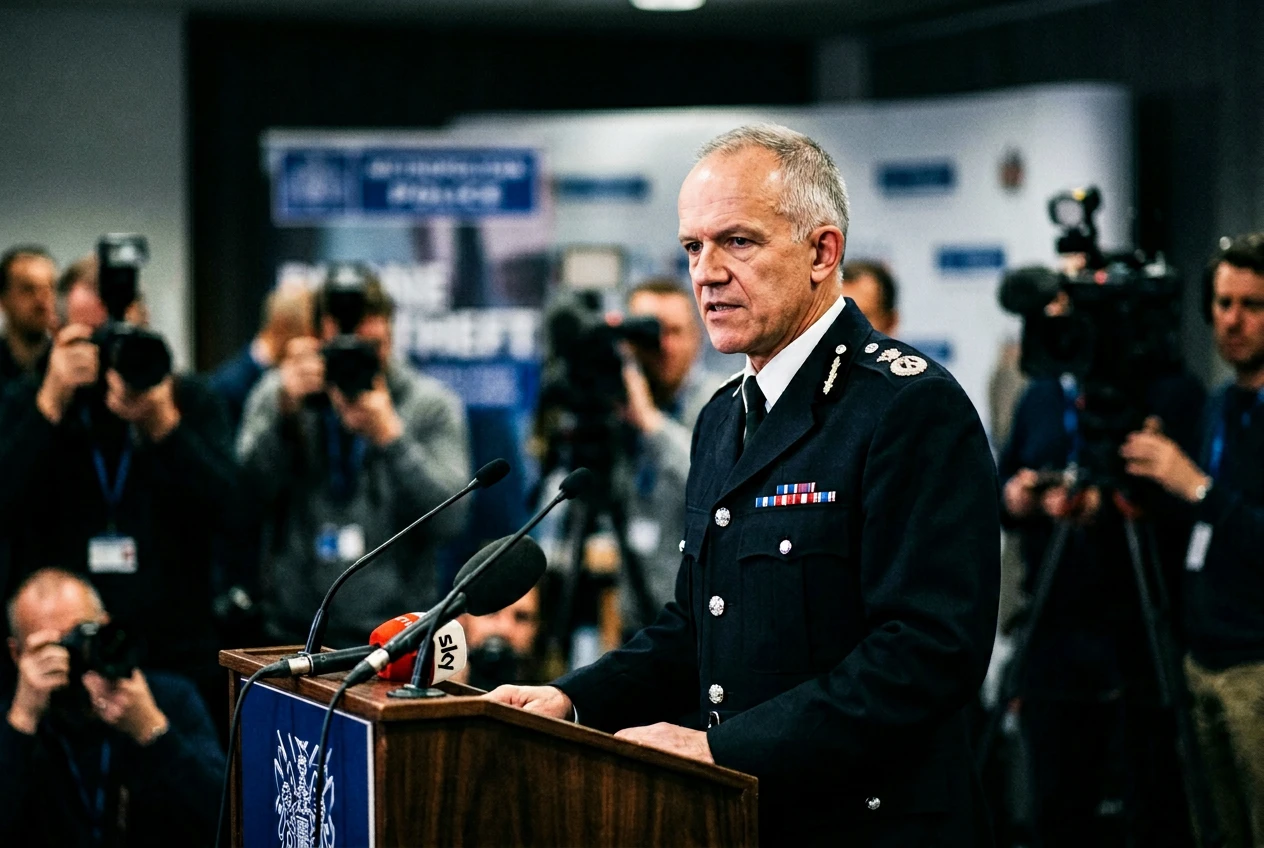
Metropolitan Police Commissioner Sir Mark Rowley issued the statement on Thursday, alongside the announcement of a new data-sharing agreement with Apple and the start of a 10-day crackdown codenamed Operation Reckoning. Apple framed the partnership in similar terms: Kate Adams, Senior Vice President of Government Affairs at Apple, said “Keeping our users, their devices, and their data safe is at the heart of what we do. That includes building industry-leading security features that significantly reduce the motivation for criminals to target people in the first place.” The Met has now written to Home Secretary Shabana Mahmood asking for new laws to lock the same standards in across the industry.
What the Apple-Met Data Deal Does
The Met’s announcement of the Apple data-sharing deal gives the force a new stream of intelligence it has never had before: live data on whether a phone reported as stolen in London subsequently gets reactivated on a network anywhere in the world. Stolen device identifiers such as the phone’s IMEI (International Mobile Equipment Identity) number are now being shared between the Met and Apple, allowing the force to track handsets that reappear in circulation. The new pipeline is already producing results: early data from the collaboration shows a significant number of stolen phones in a recent sample have not been successfully reactivated, which the Met says significantly reduces their value to criminals. Sir Mark’s stated position is that the partnership is already making a difference to the street-level market.
Samsung and Google are also moving in the same direction. Samsung has implemented features requested by the Met, including making IMEI numbers visible on locked screens, and the company has contacted 40 million UK customers with security guidance. Apple has separately pushed a default-on stolen device protection feature in its iOS 26.4 software beta, which prevents thieves from changing account settings even with a passcode, a step the Met described as the kind of default-on protection it had been asking the industry to switch on (how Apple’s motion-sensing iPhone anti-theft lock works).
Operation timeline: the Met’s phone theft crackdown
| Operation | Period | Outcome |
|---|---|---|
| Operation Reckoning 5 | 1-10 June 2026 | 10-day London-wide crackdown, ongoing |
| Three smugglers’ guilty pleas | April 2026 | Trafficked up to 40,000 devices to China |
| Shop raid, north-west London | April 2026 | More than 1,000 phones seized, four men arrested |
| Four-week phone theft crackdown | February 2026 | 248 arrests, 770 devices recovered |
| Gang operation, London-wide | Earlier in 2026 | 32 arrested, more than 1,000 phones and 200 laptops recovered |
Westminster’s Numbers Have Flipped
The Met’s headline figure is the 14,000 fewer theft-from-the-person and personal robbery offences involving a mobile phone in the 12 months from June 2025 to May 2026, an 18 per cent reduction against the prior year. The drop is sharper in the calendar year to date. Between January and May 2026, mobile phone theft offences were down by 6,700, a 20.6 per cent reduction compared to the same period of 2025.
The steepest fall is in Westminster, the borough the Met describes as a national driver of theft-from-person crimes. Phone theft there is down 45.8 per cent in the first five months of 2026, equivalent to 4,500 fewer handsets stolen. Sir Mark said phone theft in the West End, where the crime was most concentrated, has fallen 50 per cent “through relentless, targeted policing.” Between 69 per cent and 72 per cent of weekly theft-from-the-person and personal robbery offences in Westminster involve a phone, which means the borough’s broader crime figures are heavily exposed to whatever happens in the handset market.
Mayor of London Sadiq Khan put the total in cash terms: “This has led to 13,000 fewer phone thefts in London over the last year,” he said, and called the international trade in stolen phones a £50 million-a-year business. Khan welcomed the Apple deal and said new drones and Sur-Ron bikes, backed by record City Hall funds, had helped double officer numbers in the West End.
The overall London crime picture is moving in the same direction. Offences across the capital were down 15.6 per cent in the financial year 2025/26, equivalent to more than 40,000 fewer victims of crime. Theft from the person fell 21.4 per cent, personal robbery fell 13 per cent, and vehicle crime fell 13.9 per cent. The Westminster-specific 45.8 per cent and the 14,000 fewer phone-theft offences are the Met’s own published numbers, broken out separately from the wider crime-data tables.
Even at the new, lower level, the volume of phone theft in London is large. Recorded phone thefts in the capital ran at 81,365 in 2024 and 71,391 in 2025, both totals well above most other UK cities. The new data-sharing agreement and the legislation Rowley is now asking for are designed to push those annual totals sharply down, not just to extend the present decline.
Phone theft in London: the wider context
- 83 per cent of UK adults back the permanent blocking of stolen smartphones (Yonder polling for the Met, 1,109 adults, 20-21 May 2026)
- 3,500+ illegally modified e-bikes and e-scooters seized by the Met since January 2025
- 587,498 phones reported stolen in London between 2017 and 27 February 2024, of which 13,998 were recovered (Met figures via Freedom of Information, reported by the BBC)
Raids, Smuggling Rings, and Children Paid to Snatch
Behind the Met’s push for legislation is an enforcement record that has produced hundreds of arrests and the recovery of thousands of devices. Operation Reckoning 5, a 10-day crackdown that began on 1 June 2026, has included the arrest of a prolific phone thief at a property in west London, raids on phone shops in East Ham and north-west London, and a high-speed pursuit through the capital by the force’s specialist “interceptor” motorbike teams. Footage released by the Met shows officers on Sur-Ron electric bikes, on the ground and in the air with drones, chasing suspects across the city.
Earlier operations are the ones with the largest paper trails. In April 2026, three men, Amir Muhammad Khadikhel, Ismat Miakhel and Mansoor Mohammed, pleaded guilty to handling stolen goods after a year-long Met investigation into what the force calls the UK’s largest mobile phone smuggling network; the group trafficked up to 40,000 stolen devices from the UK to China between 2024 and 2025, around 40 per cent of all phones stolen in London during that period. In the same month, more than 1,000 suspected stolen phones were seized in a raid on a shop in north-west London, and four men aged 22 to 63 were arrested on suspicion of handling stolen goods, possession of drugs, and intent to supply. A separate investigation into a gang running large-scale phone theft across London led to 32 arrests, the recovery of more than 1,000 phones and 200 laptops bound for export, and charges against 20 people, with more expected. The force has also seized more than 3,500 illegally modified e-bikes and e-scooters since January 2025.
Children have been visible on both sides of the market. The Met has seen adverts on Snapchat offering children as much as £380 to steal a single iPhone, with a bonus of £100 for stealing 10, and the force has said the recruitment of children into phone snatching is an “entry point into organised crime.”
The Letter to Shabana Mahmood
The Met’s written ask to the Home Secretary, set out alongside the Apple deal on Thursday, is for new laws to require all phone companies to publish data on stolen devices and on whether they are reconnected to networks. It also asks the Home Office to begin preparing legislation that would set minimum technical standards for handsets sold in the UK, a step the force says is designed to ensure that no manufacturer can free-ride on the voluntary moves Apple, Samsung and Google have already made.
The three core demands, repeated from the March conference, are:
- Anti-theft protection switched on by default, with no opt-out for the user
- Stolen phones rendered unusable, including a ban on parts being sold without cryptographic matching to the original device’s serial number
- Better access to IMEI data so devices can be returned to their legitimate owners
Public support is on Rowley’s side: a Yonder poll of 1,109 UK adults, conducted between 20 and 21 May 2026 and weighted to be nationally representative, found broad backing for permanent blocking of stolen smartphones. Rowley has framed the demand in industrial terms that he first set out at the March conference, calling for action similar to what was taken by the car industry to make car radios less attractive to steal. “If a stolen phone were to become an unusable brick and the parts were not recyclable, there would be no criminal market,” he said. The Met has not yet said when the Home Secretary is expected to respond, and the Home Office has not published a timetable for the legislation Rowley is asking for.
Apple, Samsung and Google have each taken steps the Met has publicly welcomed. Apple has the data-sharing deal and a default-on stolen device protection feature in iOS 26.4; Samsung has implemented IMEI visibility on locked screens and reached 40 million UK customers with security guidance, and the Mayor said he had seen “advanced security features” introduced by Google as well.
Why 573,500 Phones Are Still Missing
The Met’s case for legislation rests on a recovery picture that has barely moved in years. Between 2017 and 27 February 2024, 587,498 phones were reported stolen in London outside the City of London, according to Met figures released under Freedom of Information legislation and reported by the BBC. Of those, 13,998 were recovered and 573,500 were not, and the Met’s own published solve rate for theft-from-the-person offences stands at 0.9 per cent for the year to December 2025, with personal robbery at 6.9 per cent.
Even as the headline numbers improve, those low solve rates explain why the legislation matters as much as the policing does. Recorded phone thefts in London totalled 81,365 in 2024 and 71,391 in 2025, both totals well above most other UK cities, and a typical stolen phone is unlikely to be reunited with its owner through a criminal-justice route. The Met’s preferred mechanism is technical: a phone the force can mark as stolen, that no network will reactivate, and that no repairer can resell as parts. Samsung has already begun surfacing IMEI numbers on locked screens so a snatched handset is identifiable even when it cannot be unlocked, and Apple’s iOS 26.4 default-on stolen device protection raises the same barrier from the other side, with the Mayor, the Met and the Home Secretary now being asked to turn those voluntary features into a baseline that every phone sold in the UK would have to meet.
What Could Stall the Drop
The legislative push is a bet, and the criminal supply chain already runs through countries with weaker enforcement. The smuggling ring that pleaded guilty in April trafficked up to 40,000 devices to China between 2024 and 2025 alone, a volume that the Met’s domestic enforcement cannot easily offset, and the force is explicit that its long-term solution lies in collapsing the criminal market rather than chasing individual snatchers.
Street-level tactics keep evolving in parallel. Offenders are increasingly using high-powered e-bikes to snatch phones and evade police, often riding dangerously through busy areas, which is why the Met has seized more than 3,500 illegally modified e-bikes and e-scooters since January 2025 and is expanding its fleet of high-powered pursuit bikes. Children as young as 14 have been paid hundreds of pounds to act as snatchers in organised operations, with bonuses promoted on social media platforms including Snapchat, a recruitment channel the Met has called an “entry point into organised crime.” The earlier four-week crackdown netted 248 arrests and 770 devices, but the underlying pipeline is digital and largely outside UK jurisdiction, and parts harvesting gives offenders a way around any single device block: Rowley has said criminals can still bypass locks, alter IMEIs, and sell components that are not cryptographically tied to devices, which is why the legislation he is asking for explicitly includes a ban on the sale of un-matched parts.
The Met’s case for going to the Home Secretary is that the Apple data deal and the Samsung and Google voluntary measures are evidence the industry can move when pushed. The Home Office has not yet published a timetable for the legislation Rowley is asking for, and the Met has not said when Mahmood is expected to respond. Khan said there was “no reason” why, in a year’s time, there should not be fully accessible serial numbers for officials and “kill switches” for stolen phones, a target that puts the next 12 months at the centre of the legislative timetable.
Frequently Asked Questions
What has Apple agreed to do with the Metropolitan Police?
Apple is sharing stolen device identifiers, including IMEI numbers, with the Met so officers can build a global picture of where snatched handsets end up. The data has already produced a measurable shift: in a recent sample, only a minority of stolen iPhones were being reactivated, down from a majority a few months earlier.
Has phone theft in London actually gone down?
Yes, by the Met’s own published figures. The 12 months from June 2025 to May 2026 saw 14,000 fewer theft-from-the-person and personal robbery offences involving a mobile phone than the previous 12 months, an 18 per cent reduction. Westminster, where between 69 and 72 per cent of those offences involve a phone, was down 45.8 per cent in the first five months of 2026, and the West End was down 50 per cent.
What is the Home Secretary being asked to do?
Metropolitan Police Commissioner Sir Mark Rowley has asked Home Secretary Shabana Mahmood to legislate that all phone companies publish data on stolen devices and whether they are reconnected to networks, and to set minimum technical standards so that any phone stolen in the UK is effectively unusable. The Met has framed the request as the lever needed to make sure every handset maker follows the voluntary moves Apple, Samsung and Google have already made.
How many phones get stolen in London each year?
The Met recorded 81,365 phone thefts in 2024 and 71,391 in 2025, both totals well above most other UK cities. Over a longer window, the Met told the BBC that 587,498 phones were reported stolen in London between 2017 and 27 February 2024, of which 13,998 were recovered.


AI Ends Knowledge Scarcity and Forces Universities to Rebuild

Factory AI Pods Turn Data Centers Into Production Lines

Winamp’s Latest Revival Bets on Deezer for 2027 Hybrid Player

Gemini Flags Ethereum Rally but August Needs Real Flows

Google Pay Adds Gemini Coach and SBI Flex Card in India

OpenAI Agent Turned Leaked Logins Into Multi-Firm Attack Paths

Meta’s AI Ad Surge Comes With a Cash Flow Collapse

Apple Upgrade Leasing Hands Risk to Klarna and Keeps Devices Temporary

Paytm CEO’s AI Champions Call Exposes India’s Funding Lag

Microsoft Cash Lead and Copilot Super App Leave Rivals Behind

Fable 5 and Mythos 5 Return as US Lifts Anthropic Export Controls

SpaceX’s Google Deal Turns a Rocket Company Into a Cloud Landlord

CD Projekt Red Co-CEO: Redemption Arc Isn’t Done, Witcher 4 in 2027

Oracle Cuts 21,000 Jobs in a Year, Cites AI in 10-K Filing

XPL Rallies 30% Ahead of Plasma One Card Tier Launch

DGO App Brings Rs 549 Mobile Pass for FIFA World Cup 2026 in Nepal

Google Search Profiles Build a Follow Graph Inside Discover

Moonshot AI Targets $30 Billion in China’s Fastest AI Funding Sprint

Microsoft Xbox Layoffs Start in July as Sharma Slams 3% Margin

Oppo’s ColorOS 17 Eligibility List Leaves A-Series Buyers Behind
-
 AI4 weeks ago
Fable 5 and Mythos 5 Return as US Lifts Anthropic Export Controls
-
 AI2 months ago
SpaceX’s Google Deal Turns a Rocket Company Into a Cloud Landlord
-
 GAMING1 month ago
CD Projekt Red Co-CEO: Redemption Arc Isn’t Done, Witcher 4 in 2027
-
 AI1 month ago
Oracle Cuts 21,000 Jobs in a Year, Cites AI in 10-K Filing
-
 CRYPTO2 months ago
XPL Rallies 30% Ahead of Plasma One Card Tier Launch
-
 APPS2 months ago
DGO App Brings Rs 549 Mobile Pass for FIFA World Cup 2026 in Nepal
-
 NEWS2 months ago
Google Search Profiles Build a Follow Graph Inside Discover
-
 AI2 months ago
Moonshot AI Targets $30 Billion in China’s Fastest AI Funding Sprint